• Skip to primary navigation
  • Skip to main content
independent left logo

Independent Left

Environmentalism, socialism, freedom and equality. #liveablecity

  • About
  • Featured Articles
    • How Farming Must Change to Save the Planet
    • The Housing Crisis: Causes and Solutions
    • Socialism in Ireland
  • Contact Us
  • Podcast
  • Animal Rights
  • Archive
    • Irish Socialist History
    • Dublin City Council Housing
    • Ukraine
    • Protests Ireland
    • Reviews
    • Irish Political Parties
    • All Posts
    • Independent Left Policies
  • Why join?

Did Seamus Heaney write political poems?

10/10/2020 by Ciarán O'Rourke 3 Comments

A review of On Seamus Heaney by Roy Foster

Roy Foster's On Heaney skirts the Seamus Heaney's Political Poems
Roy Foster’s On Seamus Heaney is an insightful biography but fails to address Seamus Heaney’s Political Poems

Although known for his active support of the South African anti-Apartheid movement and for his open opposition to the American invasion of Iraq in 2003, Irish poet and Nobel-prize winner Seamus Heaney was not famous for his politics. This has led some sceptics to dismiss the political content in the poems of Seamus Heaney on the grounds of his willing proximity to centres and figureheads of power: from his tenureships in Oxford and Harvard Universities to his warm relations with American Presidents, including Bill Clinton and Barack Obama (although footage can still be found of a fresh-faced Seamus Heaney expressing his sympathy for the socialistic tendencies of the early civil rights movement in Northern Ireland).

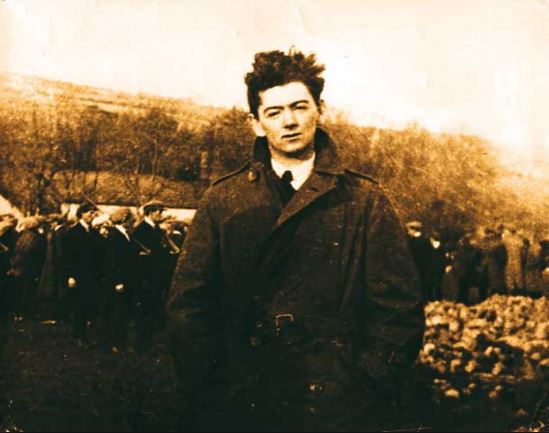
Seamus Heaney Nobel Prize Winning Poet
Seamus Heaney’s politics were relevant to several of his poems

Such critiques are valid in shining a light on the embedded nature of the arts, at least at an institutional level, in the power structures of capitalism, as well as the risks that trail in the wake of creative endeavour as a result, whereby after a period of time (as Adrienne Rich once wrote) the artist “simply decorates the dinner table of power which holds it hostage”, becoming a kind of living fig leaf to cover the “radical disparities of wealth and power” in their society. In this case, however, it would be a mistake to oversimplify or overlook the poems of Seamus Heaney in which political ideas are present and important. This is the weakness of an otherwise insightful new book by Roy Foster on the poems of Seamus Heaney.

Imperialism, Roy Foster and Seamus Heaney

In some ways, Foster is an unlikely candidate for elucidating the development and concerns of so complicated a cultural force as Heaney. Deeming Dublin’s 1916 Rising against British imperialism an act of righteous folly, an event he views as derailing the proper course of constitutional nationalism from achieving its promised reward, Foster has long been in the habit of articulating establishment positions on history (and revolution) with a consistency and quasi-literary aplomb that are in themselves impressive, if hardly winning. Such a tendency may partly be seen remarks such as: ‘the advent of apocalypse after 1968 is … an avoidable lurch into violence rather than the inevitable bursting of a boil’; and in the lapidary aside that the conflict in Northern Ireland ‘fed on ancient antipathies as well as recent injustices.’

Foster’s intention is to offer sympathetic clarification of Heaney’s evolving predicaments as a conscientious nationalist averse to armed violence, which these comments partly do, but they also bear hints of a cosmopolitan sanctimony entirely Foster’s own. We might qualify and contextualise Foster’s historicising by reference to another historian, Daniel Finn: ‘Ancestral voices do not call out to people from beyond the grave: they have to be summoned by the living to legitimize a present-day political stance.’ Foster’s reflexive urge to associate Irish anti-imperialism in general, and however subtly, with the “ancient antipathies” of religious prejudice is as much an act of de-legitimizing as any, and should itself be subject to critical scrutiny.

Modern Ireland by Roy Foster
Foster’s Modern Ireland adopts an outlook unsympathetic to the United Irishmen

In a similar vein, it’s surely notable that Foster’s criticism, in Modern Ireland: 1600-1972, of United Irishman Wolfe Tone for his supposed ‘inability to recognise the sectarian underpinning of all political activity in Ireland’ in the lead-up to the 1798 rebellion, conflating revolutionary nationalism once again with religious sectarianism, stands in stark contrast to Heaney’s simmering memorial of the same in ‘Requiem for the Croppies’, whose propulsive beginning is:

The pockets of our greatcoats full of barley

No kitchens on the run, no striking camp

We moved quick and sudden in our own country.

Although Heaney would later refrain from public readings of this piece, lest it be interpreted as an endorsement of the IRA’s armed campaign (to which he was opposed), its atmosphere of inspired anti-imperialism still retains a quivering power and assurance, while the poem’s seemingly instinctive joy in the mass agency of the rebels (‘We moved quick and sudden in our own country’) immediately calls to mind the stirrings of civil disobedience in Northern Ireland, and elsewhere, in the late 1960s when it was written.

Seamus Heaney’s politics misread

If Heaney vacillated between a disdain for British imperialism as such and a distaste for the tactics and righteous rhetoric of the Provisional IRA, the combative spirit and perception of dignity in struggle that animates ‘Requiem for the Croppies’ persisted in his work, finding a guarded echo in his collection of a decade later, Field Work. In ‘The Toome Road’, Heaney (or at any rate, the expressive conscience that permeates his poems) meets:

…armoured cars

In convoy, warbling along on powerful tyres

This patrol disturbing the natural soundscape as well as the political ecosystem of a locale that, nonetheless, remains an ‘untoppled omphalos’, as the British forces swerve into view,

approaching down my road

As if they owned them.

The poem encapsulates Heaney’s groundedness in the landscape of his origins (it is not, contra Foster’s interpretation of Irish nationalism above, an expression of sectarian pride), as well as striking a clear chord of collective, political defiance against colonial incursion. Importantly, however, in its recourse to classical tradition – in ancient Greek, omphalos means, roughly, a navel and the centre of a social order – Heaney is also making legible and understandable, for an insulated intellectual elite typified by Foster as much as for onlooking political communities in Dublin and London more broadly, the feelings of anti-colonial resentment and communal pride-of-place that define the hinterlands of his first home, in the Derry/Antrim area.

Foster, then, is sometimes inclined to miss or misread the anti-imperialistic charge animating crucial sections of Heaney’s oeuvre.

The experience of empire, Civil Rights and republicanism creates a tension in Heaney’s career and legacy, about which Foster has little to say beyond suggesting that increasing demands on the poet’s time in later years had a debilitating effect on his personal well-being, and citing (fascinatingly, if without further comment) an interview in which the bard indicates his interest in new academic trends that stress, in his own words, ‘the connivance between the promotion of art and the prevailing structures of capitalist society’. No doubt a compelling study could be made of Heaney’s evolving attitude to such issues, and the spectrum of political stances his career incorporated, but they form only a peripheral part of Foster’s focus in this volume.

A richness in Heaney’s poems that escapes narrow politics

By following the line of critique outlined above too rigidly, of course, we risk diluting the richness of Heaney’s work, as well as overlooking the strong current of self-interrogation and self-reproach that courses through it. One of Heaney’s recurring fixations is that of the implication of the poet in the violences (and silences) of history: the sharded nature of his own reflective life. ‘I am the artful voyeur’, he famously writes, in pained remorse,

who would connive

in civilized outrage

at sectarian killing and sacrifice,

yet understand the exact

and tribal, intimate revenge.

For all the rootedness and consistency of its motifs, Heaney’s work refuses any easy faith in its own rituals, or in the integrity of his own position. I…

gather up cold handfuls of the dew

To wash you, cousin

and

plait

Green scapulars to wear over your shroud

… reads ‘The Strand at Lough Beg’, an elegy for his murdered relative, Colum McCartney, whose ghost returns in another poem a decade later to ‘accuse’ the poet: ‘“…for the way you whitewashed ugliness [and] saccharined my death with morning dew.”’ Questions of ethical complicity and redress, of failure and rebuke, haunt and define this most acclaimed of literary laureates, who never presumed to take the accomplishments of his craft for granted.

Seamus Heaney turf cutting
Seamus Heaney’s poems were nuanced and rarely concerned with explicitly political themes

Where Foster’s study is exemplary is in its praise and foregrounding of the nuanced nature of the work, and its human value. Such qualities have not always given their due.

The development of Seamus Heaney as a poet

‘There is a Proustian exactness in [Seamus Heaney’s] evocation of the texture and detail of his early life’, writes Roy Foster, an ‘unerring memory’ that lends his every reminiscence a living gleam. Here, Foster’s interpretation of Heaney’s work is commendable for its clarity and concision, and noteworthy for its close-focussed appreciation of the skill and achievement of a figure widely regarded as Ireland’s national poet. The compressed format of the Princeton Writers on Writers series, it should be said, is a comfortable fit for Foster’s style, which favours suggestive aphorism over in-depth analysis (which would, in this case, perhaps be cumbersome anyway). As such, the volume serves as a fluent personal response to Heaney on Foster’s part, while also offering an accessible and stimulating reader’s guide to the work: elegant, career-spanning, and lucid, if also somewhat breezily assured of the durability of its own impressions.

Heaney emerges from Foster’s account as ‘a poet’ possessed of ‘a novelist’s perception of circumstance and psychology’, a writer ‘whose complexities stretch far beyond the charm of his early poems’, a ‘charm which itself is never simply what it seems’, an artist whose Catholic upbringing and ground-breaking explorations of his own memory and shaping landscapes Foster finds comparable, intriguingly (although sadly without elaboration), to those of Italian film director, Federico Felini.

Foster is a sensitive reader of the work, from the ‘lush and winsome wordplay’ of juvenilia to ‘the voice [that is] steadying and readying itself for a journey into another dimension’ in Human Chain (2010), Heaney’s final book. Additionally, On Heaney presents an often compelling trajectory of the poet’s development, emphasising his generosity as a public figure (a trait likewise acknowledged by cultural figures as far-flung as the writer, Dermot Healy, and the anti-apartheid campaigner, Kader Asmal), the emotional and intellectual nuance of both the books and the individual poems he produced, and the sharp, sometimes vexed awareness of cultural status and responsibility that increasingly accompanied his literary fame. Foster interweaves these strands of the Heaney story deftly, concluding he was possessed of ‘a strong sense of the shape of his life’ as well as the ‘completely defensible’, if frequently disguised ‘ambition of the major talent’.

Were Seamus Heaney’s poems influenced by Yeats?

Foster’s apparently effortless savvy and decisiveness in such matters is of course in great part due to his playing to his own strengths throughout. The case for Heaney’s ‘Yeatsian’ qualities and ‘Yeats-like’ development as a poet is made repeatedly, although not, to my mind, entirely convincingly. The Heaney canon is full of probing (and dutiful) responses to Yeats, in both prose and poetry: a landmark piece such as ‘Casualty’, for example, adopts the rhythm of the elder songsmith’s ‘The Fisherman’, albeit as much as a means of demarcating its own difference in approach and historical context as for any accompanying literary resonance.

W B Yeats portrait
Foster’s attempt to link the poems of Seamus Heaney to those of Yeats is unconvincing

In fact, the resemblance between the two writers is limited at best: only to the extent that Foster has written a biography of one national poet and now is presenting an interpretation of another (both, of course, having been awarded a Nobel Prize in Literature), does Heaney’s work appear to grow from and comes to mirror that of Yeats. In their sensibilities, their sources, their historical backgrounds and perspectives, they are hardly alike. Yeats, oracular and shape-shifting, is forever taking flight, searching for new myths to illuminate and inhabit, before passing on; Heaney, intuitive and cautious, is always hunkering down, his slow roots thirsting in the dark for something sure and known, whose existence he frequently both doubts and yearns for.

In this and in other respects, as Foster’s commentary suggests, Heaney’s work rings true, entering the world with a palpability and force all its own. The observational intensity of his poems is often unforgettable: from the ‘water’ that,

Honeyed

in the slung bucket

of a sunlit farmyard, to the ‘surface of a slate-grey lake’ that’s been,

lit

By the earthed lightning of a flock of swans.

Heaney’s poetry is as much a mode of memory as an act of imagination, giving dramatic life to the sensuousness of longing, both romantic and elegiac: a longing he often acknowledges as being somehow unreachable, ‘Its heft and hush become a bright nowhere’, impossible to bring to a state of fulfilment or permanent healing. Most people experience a version of this feeling, in love or mourning, in aspirations glimpsed or denied. For revolutionaries, it forms a prelude to the complex hope they carry: a realisation that the world to be won encompasses the irreparable losses of past sacrifice and unsuccess as well as the promised gains of mutuality and a common future: we bring them forward with us as we go. Heaney’s poem in dedication to his sons, ‘A Kite for Michael and Christopher’, captures something of this, blending a hard-edged vision with soft, sad faith:

Before the kite plunges down into the wood

and this line goes useless

take in your two hands, boys, and feel

the strumming, rooted, long-tailed pull of grief.

You were born fit for it.

Stand in here in front of me

and take the strain.

Reading Heaney can be a way of preparing ourselves, and recognising one another; his work clarifies the frequent perilousness and hoped-for (never guaranteed) continuity of our own humanity. We would do well to pay heed.

Filed Under: Reviews

DCC’s Oscar Traynor Road Development Plan

06/10/2020 by John Lyons 1 Comment

And why public land should be used for public housing

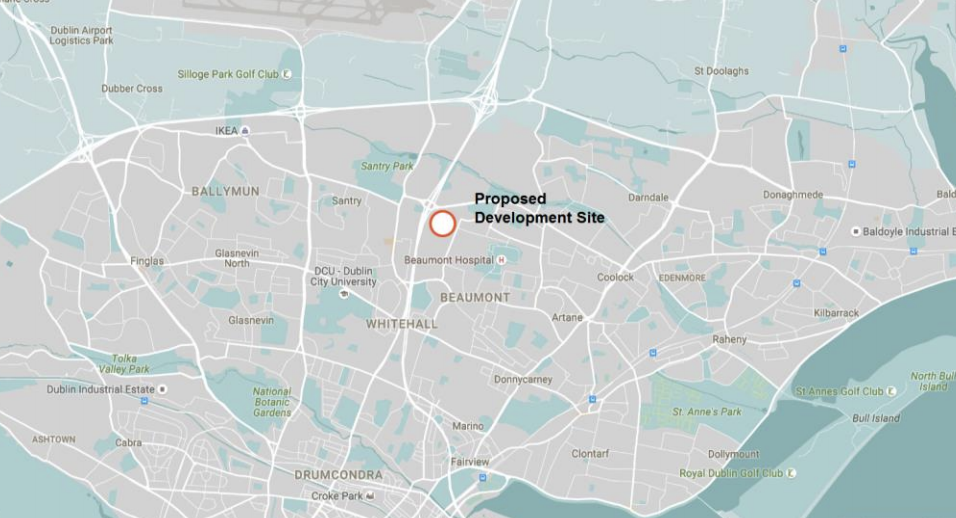
Oscar Traynor Road Proposed Development Site Location
The proposed development site of Dublin City Council’s land at Oscar Traynor Road.

Oscar Traynor Development: A Broken Promise

At the end of June 2024, Councillor John Lyons discovered the outrageous house prices Dublin City Council officials and the Fine Gael-Fianna Fail-Green government think are affordable for the proposed development at Oscar Traynor Road.

We are talking about homes being built on a 42 acre site on the Oscar Traynor Road that was once owned by Dublin City Council until councillors from Fine Gael, Fianna Fail, the Green Party and Labour Party voted in favour of giving away the public land to a private developer in 2021. And for what?

1 BED €204,000 – €238,000 in October 2021 is now €264,358 – €308,750 in June 2024;

2 BED €227,000 – €284,000 in October 2021 is now €355,769 – €427,500 in June 2024;

3 BED €250,000 – €306,000 in October 2021 is now €399,731 – €475,000 in June 2024.

Councillor John Lyons said he was “shocked” when he heard the figures.

John submitted a series of questions asking DCC how it ended up in a situation where supposedly “affordable housing” on what was once public land will be completely out of reach of the vast majority of people on middle incomes. He tabled a motion for the meeting of Dublin City Council in City Hall on Monday 1 July 2024 that calls on the city manager to pause the commencment of the Phase 1 launch on July 16th and convene a special meeting of the city council to explore and establish how the price range for the affordable purchase homes have changed so dramatically.

Oscar Traynor Housing Development 2024

The Council Meeting of 2020 on Oscar Traynor

On 16 November 2020, at a meeting of Dublin City Council, by a vote of 48 to 14 (1 abstention) councillors voted not to gift the 42 acres of prime council-owned land of the Oscar Traynor Road Development in Coolock to the property developer Glenveagh. Instead, we have the opportunity to develop the site to deliver some of the affordable housing so many Dubliners desire and require.

Thanks to the Oscar Traynor Road Housing Campaign, Uplift and dozens of independent activists, the proposed development was halted. In the original plan, of 853 proposed homes, 50% (428) would have been sold privately by the developer on the open market at unaffordable prices, only 30% (253) would have been allocated to social housing and 20% (173) were categorised as affordable purchase: yet with asking prices of 320,000 for a three-bed home this was hardly affordable. And we did not know how much the city council would pay the developer for each of the social housing homes. 

My thoughts on the future of the Oscar Traynor Road site, immediately after the successful vote on 16 November.

Oscar Traynor Road Housing Campaign

A Facebook page was set up by an alliance of activists who wanted to challenge the giveaway plans for the Oscar Traynor Road development and which will now advocate for a plan that leads to hundreds of affordable homes being built.

Video of the Oscar Traynor Road Housing Campaign

They said in advance of the vote on 16 November:

To allow this to happen would be unconscionable: precious, finite resources like public land should be used for the common good and not to further enrich already wealthy private interests. We can and must do better.

We can create a better plan for the Oscar Traynor site but we will have to fight for it. We are calling on everyone who wants to see social and truly affordable housing built in the city to get involved.

Please share the video, tweet #SaveOscarTraynor and call your local councillors to vote no!

Thanks to the campaign and especially the work by Uplift, #saveoscartraynor trended as the number 1 political issue in Ireland on the day of the vote.

#SaveOscarTraynor trended as number 1 on Twitter for Irish political news 16 November

The History of DCC’s Oscar Traynor Road Development Plan

Oscar Traynor Road Feasibility Study published by DCC in 2016
The 2016 Feasibility Study for the Oscar Traynor Road, Coolock, development published by Dublin City Council is available here.

In January 2017, a majority of political parties in Dublin city council – Sinn Fein, Fianna Fail, the Labour Party, the Greens, Fine Gael and Social Democrats – supported a public-private model of housing delivery for the land around Oscar Traynor Road, despite attempts by myself and other left-wing councillors to offer alternative models of delivering social and affordable housing to the tens of thousands of people in Dublin who so desperately need it.

We did so because supporting a model of housing development that allows private developers to profit by gifting them prime public land on which they build and sell half the homes built is not only a poor use of public resources but, more importantly, does not deliver the number of social and affordable homes we need in the city.

After local opposition in Inchicore to the proposal to allow half of the St Michael’s Estate site to be sold privately by a developer, a new plan was drafted which envisaged the site remaining in council-ownership and developed 100% publicly, between social housing and a new cost-rental model. That’s now what we should aim for with the Oscar Traynor site.

Last November, after much controversy, a majority of city councillors voted for the disposal of the land at O’Devaney Gardens to Barta Capital, the preferred bidder for that site. Controversy arose when it emerged that Barta would be selling its 50% of units, all apartments, on the open market with an asking price of €450,000 each, whilst the social housing units were going to cost the council 350,000 each and the ‘affordable’ housing units were to range between €270,000 – €420,000 each.

To have allowed such a situation to arise again would have been unconscionable: precious, finite resources like public land should be used for the common good and not to further enrich already wealthy private interests. We can and must do better.

Affordable housing is needed for the Oscar Traynor Road site

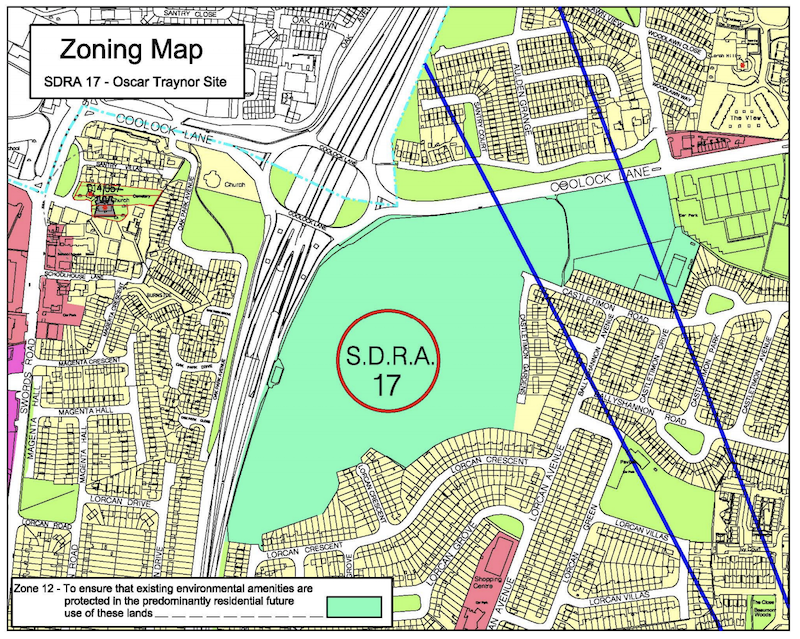
Zoning map Oscar Traynor Road near Coolock Lane
Zoning map for the Oscar Traynor Road area near Coolock Lane

We know that if the profit-motive is removed, affordable housing is possible: O Cualann Co-operative housing was able to deliver affordable housing on council-owned land in Poppintree for €178,000 (3-bed semi-detached).

We know that there are many not-for-profit entities willing to work with the city council to build the social and affordable housing we need.

It is on the public record that O Cualann engaged in the tender process for the Oscar Traynor Road site but was excluded from the process due to a requirement in the Competitive Dialogue model that demanded candidates have an annual turnover of €40 million for two of the last three financial years.

City council officials chose a procurement model that excluded small operators and not-for-profits, a model that would have resulted in: a) half the units constructed being sold at unaffordable prices out of the reach of many on middle incomes; b) expensive social housing in insufficient number; and c) an affordable purchase scheme that is in no way affordable.

No clear-thinking person could have viewed the original proposal as a good one. We can now create a better plan for the Oscar Traynor site but will have to organise the community to win it. To that end the Oscar Traynor Road campaign will keep going with the aim of achieving a better plan and uniting all forces who want to see social and truly affordable housing built in the city.

Podcast About the Oscar Traynor Deal

Reboot Republic’s podcast on the Oscar Traynor Road plan, with interviews with Councillor John Lyons (Independent Left); architect and analyst, Mel Reynolds; and Emily Duffy, former deputy director of Uplift,.

Oscar Traynor Road Podcast on Reboot Republic
The Reboot Republic podcast can be found at: https://tortoiseshack.ie/reboot-republic-podcast/

The Politics of the Oscar Traynor Road Development Plan

The housing crisis that has developed in Ireland over the last decade is a direct result of a series of decisions taken by Fine Gael, the Labour Party, the Greens and Fianna Fail to place the provision of housing in the hands of profit-seeking property developers, vulture funds and others. This dependency on market forces has failed miserably to deliver the social and affordable housing Dubliners need but has made a lot of wealthy folk a whole lot richer. 

The last five years have seen an exponential increase in rents and house prices. Tens of thousands of individuals, couples and families have experienced difficulties in accessing affordable housing, with many forced to live in overcrowded accommodation, others forced into homelessness, some deciding return to the family home as the private rental market left them with little to live on after the landlord’s rent was paid, whilst many have left the city to make their lives in a less expensive place.

Despite a decade of disastrous decisions, it would appear that despite all the evidence to the contrary, ministers and officials at national and local government firmly wedded to their pro-market housing policy positions believe that the only way to solve the housing crisis is to depend on developers. The thinking behind the defeated Oscar Traynor Road, Coolock, development plan was massively skewed by the outlook and self-interest of a small but powerful lobby group, the developers.

We can and must to better than this.

For details on the campaign or more information about the Oscar Traynor Road development you are welcome to contact me – Councillor John Lyons, Independent Left.

To read about the previous sell off of O’Devaney Gardens, click this link.

Report on development of Dublin City Council land at Oscar Traynor Road in Coolock

Report on Development of Dublin City Council land at Oscar Traynor road
The full report by Dublin City Council of their development plan for Oscar Traynor Road published in September 2020 is available here.

To view a copy of the full report of Dublin City Council of the development plan for Oscar Traynor Road click this link.

Public Meeting on the Oscar Traynor Road Development Plan

Dublin’s Housing & Planning Crises: Causes & Solutions.

Councillor John Lyons, TBA

The housing and planning systems in Ireland have been completely captured by market forces, with public policies that prioritize profits over people devastating the lives and well being of ordinary families, couples and individuals, as well as communities in general.

It is clear that Fine Gael and Fianna Fail have no interest in changing their policies as the people they truly represent – landowners, landlords, property developers and international speculators – are making fortunes out of the our housing crisis

So what can be done?

John Lyons, Independent Left councillor on Dublin’s northside, will explore the causes of the crisis in housing and planning, present the current state of play and will outline how we can collectively challenge the powers that be who prioritises property rights and and profits over the well being and health of people.

This public meeting on housing has been postphoned pending DCC’s deferred vote on the Oscar Traynor site, now scheduled for 22 November 2021.

Oscar Traynor Road Development on the Virgin Media 5.30pm News

Filed Under: Dublin City Council Housing

The best revolutionary film of all time?

10/09/2020 by John Flynn 1 Comment

A review of Gillo Pontecorvo’s The Battle of Algiers and Queimada

Queimada Poster: Marlon Brando, Evaristo Marquez directed Gillo Ponecorvo
Queimada is an awesome-looking spectacle; a neglected classic, one of the best revolutionary films of all time

If you are looking for a recommendation for socialist or revolutionary cinema, then you should start with The Battle of Algiers and Queimada by Gillo Pontecorvo, both of which are contenders for the best revolutionary film of all time.

He’s the most dangerous kind of Marxist, a Marxist poet.

Pauline Kael

Pontecorvo’s The Battle of Algiers (1965-66) and Burn! (1969) are, in my opinion, the two greatest political films ever made.

Edward Said

When I’m asked if the film was difficult to make. I honestly explain that it wasn’t as difficult as it looks, even though you see a lot of people, because, once you have chosen this theme, you decide you must tell the truth.

Gillo Pontecorvo, talking about The Battle of Algiers
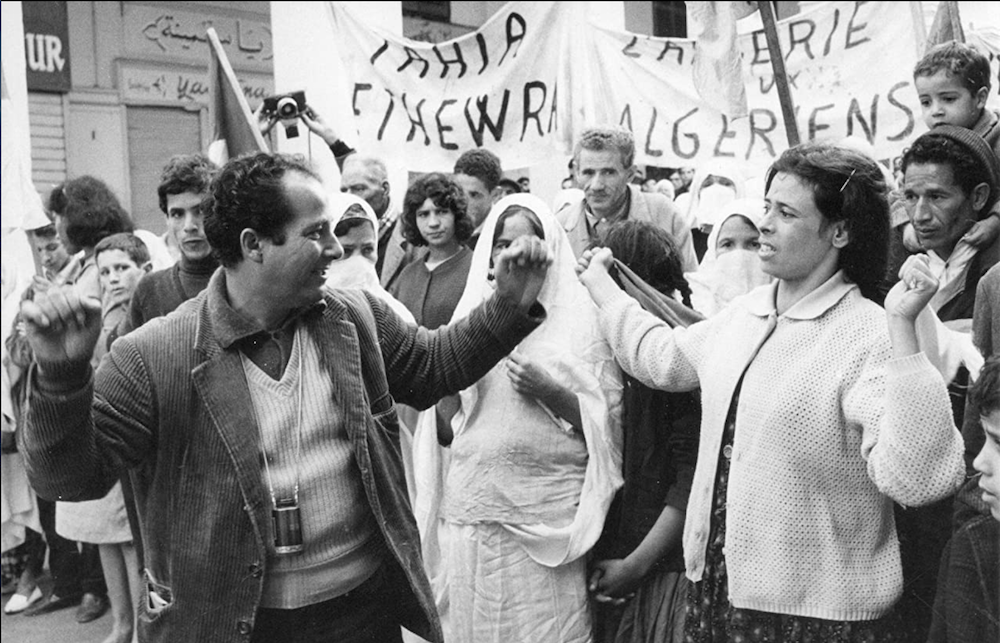
Gillo Pontecorvo on the set of The Battle for Algiers in front of a demonstration
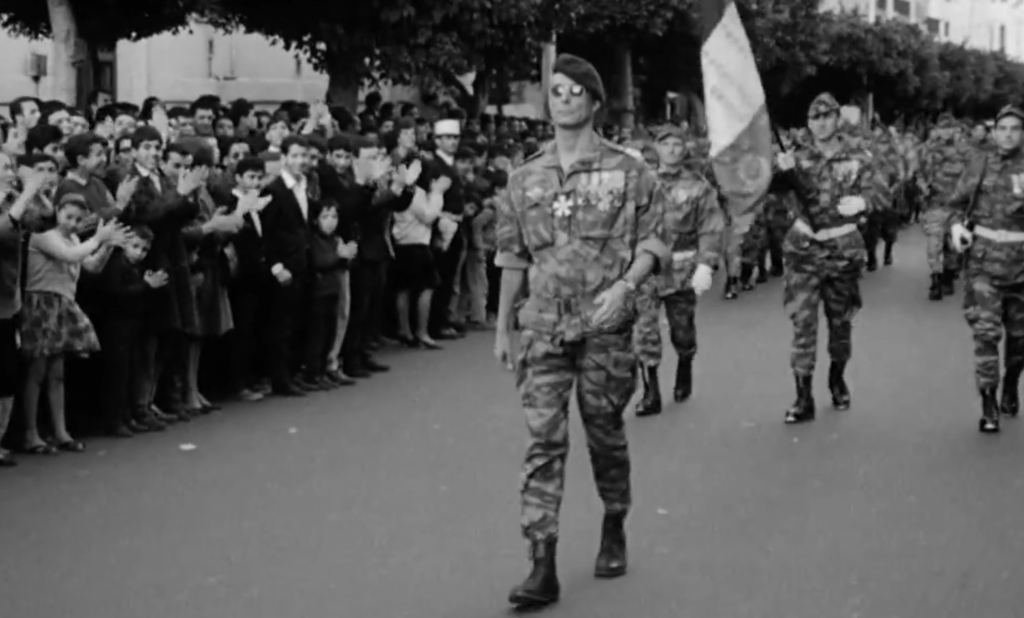
In 1965-6 Gillo Pontecorvo directed the best revolutionary film to date, The Battle of Algiers

Despite a long career as a director, Gillo Pontecorvo made only five dramatic feature films and a dozen or so documentaries. In a profile of him written by Edward Said, ‘The Quest for Gillo Pontecorvo’, Pontecorvo described how he found it difficult to commit to a project. In the 1960s, however, Pontecorvo collaborated with screenwriter Franco Solinas to make two imperishable classics about the dialectics of imperialism and revolution: The Battle of Algiers and Queimada (or Burn!). The first of these is revered as one of the all-time great political films while the latter has been criminally neglected.

Together, both films still have so much to teach us about the age of anti-colonial revolutions in the 1950s and 60s as well as about the insidious stranglehold of big capital over post-colonial countries.

In the late 1930s, Gillo Pontecorvo was transformed from a handsome, young, tennis-playing bon vivant into a communist militant and resistance leader when confronted by the existential threat of fascism (‘the cancer of humanity’). His elder brother, Bruno Pontecorvo, was both a dedicated communist and a renowned nuclear physicist who defected to the Soviet Union in 1950. Gillo Pontecorvo, like many another, left the Italian Communist Party in 1956, after the Russian invasion of Hungary; Franco Solinas remained in the party until his death in 1982. Pontecorvo remained an independent leftist for the rest of his life. After Queimada, he made only one further feature film, Ogro (1979) about the Basque separatist group ETA.

Cover of Algiers Third World Capital
Elaine Mokhtefi’s Algiers, Third World Capital is a beautifully written book that gives some context to the great political film, The Battle of Algiers

I was reminded of Pontecorvo’s two films while reading Elaine Mokhtefi’s beautiful memoir, Algiers, Third World Capital. Mokhtefi was an assistant to the press and information adviser to Algeria’s president from 1963 – 5, Ahmed Ben Bella. Algiers was then ‘the capital of revolutions’. As Amilcar Cabral (a major figure in Africa’s anti-colonial movements of the 1960s) famously observed at the pan-African festival in Algiers in 1969, ‘Pick a pen and take note: The Muslims make the pilgrimage to Mecca, the Christians to the Vatican, and the national liberation movements to Algiers.’

Elaine Mohtefi’s memoir and the making of The Battle of Algiers

Mokhtefi writes ‘Every imaginable liberation organisation had an office in Algiers, from the National Liberation Front of South Vietnam (the Vietcong) to the ANC, SWAPO, FRELIMO, the MPLA, student hijackers from Ethiopia and Palestinian liberation organisations’. The world she moved in was hectic and exciting, which she describes beautifully: ‘life was exciting and eventful. I was a fly on the window, looking in, beating its wings.’ Her memoir is unique both for its lack of bitterness or self-aggrandizement. She writes with love for Algeria and its people, one of whom, Mokhtar Mokhtefi, she married.

During the filming of The Battle of Algiers, there was a coup by General Henri Boumediene who ousted President Ahmed Ben Bella. This caused some consternation among supporters of the revolution. Fidel Castro was indignant. In France the former Trotskyist turned libertarian communist Daniel Guerin was equally perplexed. He was close to two advisers of Ben Bella who were the theoreticians of the autogestion movement in Algeria. Daniel Guerin was a fabulous character who had great faith in the people of Algeria to self-organise towards something vital,

You should make the land of Algeria a fertile experience of true socialism, that is of libertarian socialism. I have no confidence in your leaders, whoever they are. But I have always confidence in the depth and authenticity of the Algerian revolution.

There is a fascinating book published by AK press called Eyes to the South: French Anarchists and Algeria that discusses Guerin’s deep, lifelong engagement with Algeria. The author, David Porter, posits that Guerin’s classic text Anarchism: From Theory to Practice (1965) maybe have been in part influenced by the self-management experiments post revolution.

With the coup of 1965 there was a purging of left wingers in the government, but Boumedienne was eager to underline his Internationalist credentials by his open support for liberation movements worldwide. Algiers became a mecca for anti-colonial revolutionaries.

Elaine Mokhtefi describes as her brief cameo in The Battle of Algiers as her claim to fame: ‘I appear in that film of films for at least thirty seconds (!), clearly visible in the lower right-hand corner of the screen’. She also worked closely with Frantz Fanon whose writings are the theoretical underpinning for both of Pontecorvo’s films. According to Mokhtefi, a dying Fanon told Claude Lanzmann, ‘the lumpenproletariat of the cities and the poor, illiterate peasantry will take up arms and transform the world’. She also shares a lovely anecdote of another side of Fanon, in Ghana, where he was the first Algerian ambassador.

One night Fanon and I went dancing. A Ghanaian photographer focused his camera on us. Frantz caught him on the edge of the dance floor, and warned him to destroy the photo (it appeared nonetheless in an Accra newspaper a few days later). The FLN had placed a boycott on all French cigarettes. When I shared my Gauloises with him, we became partners in guilt, breaking the ban together.

Poster La Battaglia di Algeri The Battle of Algiers
Poster for the powerful revolutionary film, The Battle of Algiers

People’s opinions of The Battle of Algiers can be radically divergent. I remember reading an egregious attack on Edward Said by Clive James who smeared him as a terrorist sympathizer. His proof: Said’s favourable opinion of The Battle of Algiers and no doubt his lifelong commitment to the Palestinian struggle. The Pentagon screened the film in 2003 to prepare its troops for the invasion of Iraq. It is often said the Black Panthers treated The Battle of Algiers as a manual of urban insurrection.

For every person who thinks that it offers excuses for terrorism someone else will point out that it takes away any imprimatur for violent revolution. It is tempting to quote the Wilde line: ‘diversity of opinion about a work of art shows that the work is new, complex and vital.’ As Sohail Daulatzai writes in his book Fifty Years of “The Battle of Algiers”: Past as Prologue,

The Battle of Algiers is an itinerant film, a nomadic text that has migrated around the world, and has, echoing Edward Said’s ‘travelling theory’ been embraced by a diverse group of revolutionaries, rebel groups and leftists, as well as revanchist, right wing dictators, military juntas and imperial war machines. The film has always been a battleground for competing ideas about power and politics at different historical junctures and in varying places around the globe.

The importance of Franz Fanon’s revolutionary liberation theory for The Battle of Algiers

It is the writings of Frantz Fanon that inspire both films. Obviously The Wretched of the Earth is a key text, but also A Dying Colonialism, a work that Daniel Guerin compared with Trotsky’s A History of the Russian Revolution. The portrayal of female revolutionaries in the film is very influenced by Fanon’s essay ‘Algeria Unveiled’, which is the first chapter of the book. This examined the vexed question of the veil in the colonial situation. Fanon says that,

There is thus a historic dynamism of the veil that is very concretely perceptible in the development of colonization in Algeria. In the beginning, the veil was a mechanism of resistance, but its value for the social group remained very strong. The veil was worn because tradition demanded a rigid separation of the sexes, but also because the occupier was bent on unveiling Algeria. In a second phase, the mutation occurred in connection with the Revolution and under special circumstances. The veil was abandoned in the course of revolutionary action. What had been used to block the psychological or political offensives of the occupier became a means, an instrument. The veil helped the Algerian woman to meet the new problems created by the struggle.

Gillo Pontecorvo on the set of The Battle for Algiers
Gillo Pontecorvo directing veiled women on set of the revolutionary The Siege of Algiers

We can see this dramatized brilliantly in a stunning sequence where three women make themselves up in European dress in order to carry bombs to three locations. Originally this scene had a lot of dialogue but Pontecorvo made the audacious decision to cut the dialogue and instead to use baba saleem music, a ‘piece that closely resembles a heartbeat’. 

There is so much tension in the scene but also a depiction of solidarity amongst the women. Pontecorvo manages to balance so many different elements: the humanity of colonised and colonisers within the pitiless logic of this struggle. We see assassinations, bombings and torture but nothing is ever crude or simplistic. I don’t think it will shock anyone to discover Pontecorvo’s support for anti-colonial revolution, yet the director of The Battle of Algiers doesn’t hesitate to show the horror of bombing a café or cold-blooded assassinations. In the café, before one of the women leaves her bomb under someone’s chair the camera lingers on the face of a child eating ice-cream. It is one of the many instances where Pontecorvo points to the awful toll of this kind of struggle. We see images of bodies under rubble and mourners keening the dead. The same music is played for the French and Algerian dead.

Jean Martin From Battle of Algiers
Jean Martin played the part of the ruthless commander of the French imperial forces, Colonel Mathieu in The Siege of Algiers. Ironically, Jean Martin was a radical and an opponent of French policy in Algeria.

In 1964, two years after the achievement of independence by Algeria, former revolutionary fighter Salah Baazi arrived in Italy looking for a suitable director to make a film about the revolution. Italy was the biggest film producing nation in Europe at the time. He had three directors in mind: Francesco Rosi, who had recently made the masterpiece Salvatore Giuliano; Luchino Visconti, director of neorealist classic film about a Sicilian fishing community,La Terre Trema; and Gillo Pontecorvo, recently Oscar nominated for his harrowing concentration camp drama, Kapo.

The whole story of how Pontecorvo and screenwriter Franco Solinas came to make the film is fascinating. They had a project called Para, about a former parachutist in Indochina who is working as a journalist in Algiers during the war. The two even made a surreptitious trip to Algeria disguised as Journalists during the last months of the war. What became The Battle of Algiers is based on Saadi Yacef’s memoirs. He was the FLN commander in Algiers and, fascinatingly, plays a version of himself in the film. Thanks to Yacef’s prestige, Pontecorvo gained unprecedented access to the Casbah.

Pontecorvo was a most fastidious filmmaker. He worked on every aspect of the film to ensure it had the look and feel of a ‘found’ document of a struggle.  The Battle of Algiers is often discussed in relation to the Third cinema movement which proposed the decolonization of both the world and the medium of film. In the end, though, Pontecorvo was probably too much of a European auteur to fit into this film movement. Though he advocated a collectivist politics he was somewhat autocratic in his artistic approach. This would cause considerable turbulence on the set of Queimada when his working methods clashed with those of Brando. But every decision he made on The Battle of Algiers seems the correct one. It is a perfect a work of film art, if such a thing is even possible.

Brahim Hadjadj in The Battle of Algiers
First time actor Brahim Hadjadj is stunning in the major role of Ali La Pointe, a new revolutionary recruit to the National Liberation Front (FLN).

The Battle of Algiers is traditionally described as having two stories: one is the story of the defeat of the FLN in ‘battle of Algiers’ (1954-1957) by the Paras and the second is the chorale portrait of the growth of collective consciousness of the Algerian people that eventually culminates in victory over the French, the fourth biggest military power in the world. The closing scenes of the film are justly revered as some of the most astonishing ever captured on film. The pitiless logic of an anti-colonial struggle is represented by Ali La Ponte (a stunning performance by Brahim Hadjadj), unemployed boxer and street hustler turned implacable revolutionary versus Colonel Mathieu, the leader of the Paras. An intriguing aspect of Pontecorvo’s film is the very sympathetic portrayal of the Mathieu character whom film critic J Hoberman describes as ‘a Marxist in reverse’. Ironically, the actor who plays the representative of imperial authority, Jean Martin, was a leftist and a signatory to the petition of the 121 against the Algerian war.

Of course, the logic of Colonel Mathieu’s position is horrific: if you believe that Algeria belongs to France then you must accept to use of torture to defeat the secretive cell structure of the FLN. The film opens on a scene of a man who has been broken by torture to reveal the location of Ali La Pointe. Later, in the film, we see incredibly stark images of torture which recall the grisly scenes at Abu Ghraib.

Queimada an unjustly neglected classic revolutionary film

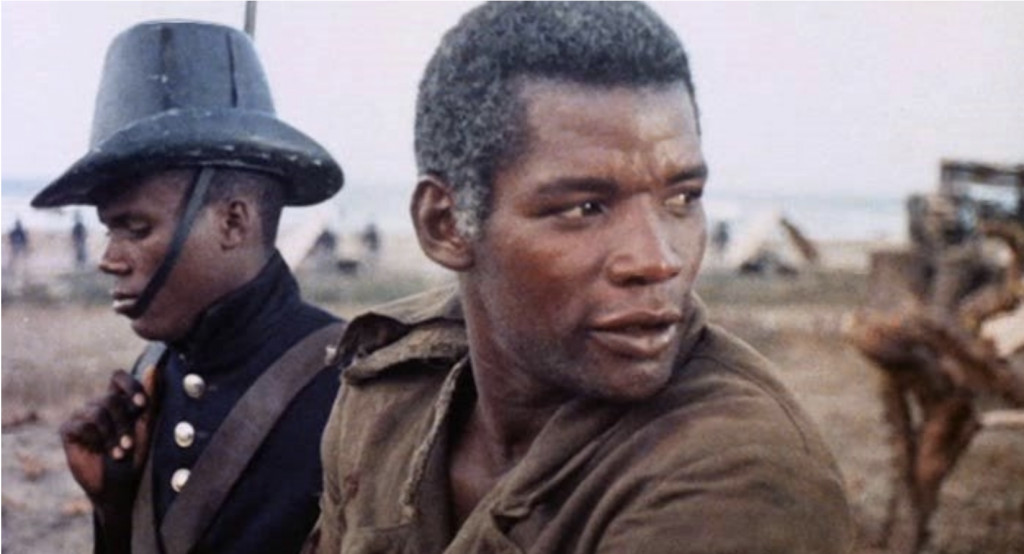
After the huge critical success of The Battle of Algiers, Pontecorvo was offered and turned down countless projects. With the war in Vietnam raging he was still keen to tackle further the topic of imperialism. Screenwriter Franco Solinas developed a story around the transition to a post-colonial situation. Queimada dramatizes the Hegelian master-slave dialectic in the curious Pygmalion-style relationship between Brando’s Sir William Walker, a British agent, and Evaristo Márquez’s Jose Dolores, a water-carrier.

Brando and Gillo Pontecorvo on set Queimada
Marlon Brando (William Walker) and director Gillo Pontecorvo on the set of Queimada, a powerful film about empires and revolutions

Brando’s character is a variation of William Walker, the US adventurer who invaded Nicaragua in the nineteenth century. In the film, he molds the Dolores character into an anti-colonial revolutionary who overthrows Portuguese rule on the Island of Queimada, which ultimately helps facilitate the exploitation of the Island by the Royal Antilles’ Sugar Company. Jose Dolores and his band of revolutionaries eventually rebel against this new post-colonial administration and Sir William Walker (now under the pay of the Royal Antilles Sugar Company) has to return to the Island to put down the revolt.

Queimada is an amazing big-budget spectacle, a leftist Conradian style epic that has a fascinating central relationship between Brando and Marquez. Franco Solinas’ dialogue is brilliant: there are several bravura speeches by Brando, who plays a seductive, villainous, super-intellectual. There are traces of this character carried over from Solinas and Pontecorvo’s abandoned Algerian screenplay, Para. This was to have starred Paul Newman.

Marlon Brando is superb in the film, ‘the greatest actor in the history of cinema’ according to Pontecorvo. The filming process was notoriously difficult, with locations being switched from Columbia to Morocco late in the shoot. Also, fascist dictator Franco’s ludicrous preciousness about the perception of Spanish imperial history meant that the film became about the Portuguese empire and not the Spanish. Thus, the title changed from Quemada to Queimada.

Evaristo Márquez as Jose Dolores Queimada
Evaristo Márquez as the heroic Jose Dolores in one of the best revolutionary films of all time: Queimada

Queimada dramatises both the transition from slavery to wage labour and from colonialism to post-colonialism. The film uses Brando’s incredible acting skills to great effect in two particularly powerful scenes. In one, Sir William Walker utilizes a very patriarchal metaphor to make the argument in favour of wage labour and freedom from foreign domination. In the other, he outlines the transformations than can occur over ten years and how these can reveal the contradictions of a century. He concludes: ‘and so often we have to realize that our judgements and our interpretation and even our hopes may have been wrong – wrong, that’s all’.

In the intervening ten years, Sir William has become ‘a changed man’, disillusioned, but he still pursues Jose Dolores with the savage counterinsurgency where he burns the island in a similar fashion to the behavior of the Portuguese centuries before. When the representative of Royal Sugar objects to this, Walker responds with a speech to General Shelton about the dangers of ships transmitting messages about successful revolutions around the Antilles,

Do you know why this island is called Queimada? Because it was already burnt once, and do you know why? Because even then, it was the only way to conquer the resistance of the people and after that, the Portuguese exploited the island in peace for nearly three hundred years.

That’s the logic of profit, isn’t it, my dear Shelton? One builds to make money. And to go on making it or to make more, sometimes it’s necessary to destroy.  You know that fire can’t cross the sea because it goes out! But certain news, certain ideas travel by ships’ crews.

The revolutionary politics of the film Queimada

Queimada features some extraordinary Carnival scenes that lead up to the assassination of the Portuguese governor of the Island. It is the world turned upside down. As historian Natalie Zemon Davies writes of the scene, ‘it is infused with African motifs, the slaves are brilliantly costumed, their children covered with white fluid to make them look like ghosts, and their cries and dances transfix the soldiers until it is time for the attack’. There are scenes of both ceremonial keening (after the death of the rebel Santiago) and brilliant celebratory scenes around the dead Portuguese soldiers.

We know from histories of the Haitian revolution that Voodoo songs and spirits played a huge role in consciousness raising. Historian Carolyn E Fick writes, ‘insofar as voodoo was a means of self-expression and of psychological or cathartic release from material oppression’ it was still necessary to ‘translate that consciousness into active rebellion and, finally, into the life-and-death struggle of revolution aimed at the total destruction of their masters and slavery, that emancipation could and did become a reality’.

Queimada dramatizes this brilliantly, when Jose Dolores looks on at the villagers dancing in celebration around the bodies of the vanquished Portuguese soldiers. When we see Dolores and his band of revolutionaries’ marching along the beach it is with a realBlack Jacobin–style majesty of a people transformed. Ennio Morricone‘s beautiful music provides perfect accompaniment.

In some ways the scenes of Jose Dolores’ capture from his mountain redoubt and transferal into custody recall similar scenes in Viva Zapata, which also starred Brando. Though Walker is seemingly the victorious character in this long dialectical tussle, it is Jose Dolores who seems the wiser, he is quoted by a villager as saying,

José Dolores says that if what we have in our country is civilization, civilization of white men, then we are better uncivilized because it is better to know where to go and not know how than it is to know how to go and not know where.

Walker, one the other hand, is essentially a spent, cynical character. Dolores refuses to concede to Walker when offered a chance to escape: Sir William is conscious of the implications of Jose becoming a martyr and then a myth. Speaking to General Shelton, Walker makes the observation,

Walker: The man that fights for an idea is a hero. And a hero who is killed becomes a martyr and a martyr immediately becomes a myth. A myth is more dangerous than a man because you can’t kill a myth. Don’t you agree, Shelton? I mean, think of his ghost running through the Antilles. Think of the legends and the songs.

General Shelton: Better songs than armies.

Walker: Better silence than songs.

Earlier, after the initial vanquishing of the Portuguese, Walker spoke to Jose Dolores,

Walker: Who’ll govern your island, José? Who’ll run your industries? Who’ll handle your commerce? Who’ll cure the sick? Teach in your schools? This man? Or that man? Or the other? Civilization is not a simple matter, José. You cannot learn its secrets overnight. Today civilization belongs to the white man – and you must learn to use it. Without it, you cannot go forward.

Walker’s questions strike at the pernicious reality of the post-colonial situation. European civilization is based on the predation of other countries (‘what civilisation?’ asks Jose Dolores). This recalls Eduardo Galeano’s passage about ‘Europe’s legacy’ in Mirrors: A History of the World, Refracted,

When Belgium left the Congo, a total of three Congolese held positions of responsibility in government.

When Great Britain left Tanzania, the country had but two engineers and twelve doctors.

When Spain left Western Sahara, the country had but one doctor, one lawyer, and one specialist in commerce.

When Portugal left Mozambique, the country had a 99 percent illiteracy rate, not a single high school graduate, and no university.

A systematic underdevelopment of the colonies they exploited was a feature of empire. When the slaves of St Domingue made the greatest slave revolution in history they were ever after punished cruelly by the French and the Americans.

The ending of the film is ambiguous: Walker is stabbed as he walks along the port towards his ship. He hears a voice saying: ‘your bag, senor?’ which is exactly what Jose Dolores says to him on two earlier occasions: once, when he first arrives; the second, when he first leaves the island. This time, it is another, who stabs him, perhaps in revenge for Jose Dolores?

The Battle of Algiers and Queimada are two very different, yet revolutionary, films. Whereas Battle has the incendiary bite of third cinema combined with Italian neorealism, Queimada is an awesome-looking spectacle, more expansive and intellectual. Together they make a fabulous double feature. Hopefully, someone will produce a restored version of Queimada in the future. Until then, you can watch it on Youtube, either the American or European version.

Filed Under: Reviews

David Graeber’s Politics, An Appreciation

05/09/2020 by Ciarán O'Rourke 3 Comments

David Graeber City Lights Bookshop 2012. David Graeber's politics were those of a self-proclaimed anarchist and anti-capitalist
David Graeber’s politics were those of a self-proclaimed anarchist and anti-capitalist

“Say what you like about nurses, garbage collectors, or mechanics,” declared anthropologist David Graeber in 2013,

it’s obvious that were they to vanish in a puff of smoke, the results would be immediate and catastrophic. A world without teachers or dock-workers would soon be in trouble, and even one without science fiction writers or ska musicians would clearly be a lesser place. It’s not entirely clear how humanity would suffer were all private equity CEOs, lobbyists, PR researchers, actuaries, telemarketers, bailiffs or legal consultants to similarly vanish. (Many suspect it might markedly improve.)

Graeber, who died in Venice on 2 September 2020, was writing specifically of what he called “Bullshit Jobs” and in the process demonstrated many of those characteristics for which his life and work were already famous and now are mourned. His dissections of capitalist operations, ideological and material, had a bright-honed clarity and incisiveness: qualities magnified in turn by how intuitively he seemed to offer support, in practice (and in person when possible), to struggles for self-determination, from Seattle in 2001 to the heroic “social revolution” of Rojava in 2014. Graeber’s account of the anti-globalisation campaigns that erupted and expanded at the turn of the twenty-first century are particularly vivid in this regard, blending self-deprecating literary flair with an incendiary (and infectious) perception of the potential of mass power to derail what he categorised as the ruthless imperialism of Euro-American political and financial elites. “The IMF”, Graeber wrote, “was always the arch-villain of the struggle”:

David Graeber 2011
David Graeber, anthropologist and revolutionary in 2011

It was their job to ensure that no country (no matter how poor) could ever be allowed to default on loans to Western bankers (no matter how foolish). Even if a banker were to offer a corrupt dictator a billion dollar loan, and that dictator placed it directly in his Swiss bank account and fled the country, the IMF would ensure a billion dollars (plus generous interest) would be extracted from his former victims. If a country did default, for any reason, the IMF could impose a credit boycott whose economic effects were roughly comparable to that of a nuclear bomb… [In] the world of international politics, economic laws are only held to be binding on the poor.

Graeber’s versatile irreverence for the institutions and narratives of neoliberal civilization made him one of the most radical (and humane) of anthropological and economic commentators. His writing dances, in furious delight, with the recognition of capitalism not only as a broken system, but one ready to collapse in ruins at the slightest pressure of “the poor”, whom he counted as his educators and comrades. There is “no possible way we could have an anti-capitalist revolution”, he observed decisively, “while at the same time scrupulously respecting property rights”.

Debt The First 5000 Years Book Cover. David Graeber's politics and knowledge of Anthropology allowed him to write widely on subjects across thousands of years of history, such as his 2011 book: Debt - The First 5,000 Years
David Graeber’s politics and knowledge of Anthropology allowed him to write widely on subjects across thousands of years of history, such as his 2011 book: Debt – The First 5,000 Years

In the days since his death, the internet and other outlets have hummed with personal tributes and reminiscences, a vast chorale of grief and celebration, that place Graeber without fail as a voice of warmth, insight and non-didactic solidarity among the internationalist Left. He had a gift for practicing what he preached, in short, but also for avoiding the instructional pretensions that so often accompany the analyses of Euro-American intellectuals, convinced not only of the complicated rottenness of capitalistic civilisation, but of the exclusive expertise undergirding their own pronouncements. If Graeber’s concerns were prodigiously far-ranging (from his intricately woven history of debt to his interpretation of “fun” as both an evolutionary and revolutionary phenomenon), his interventions were refreshing, always, for the humour, the air of dishevelled enthusiasm, which accompanied their presentation. His wit, his ability to demystify the reigning economic and political superstitions of our time, is often best encountered in full flow, as here:

[Rather] than allowing a massive reduction of working hours to free the world’s population to pursue their own projects, pleasures, visions, and ideas, we have seen the ballooning of not even so much of the ‘service’ sector as of the administrative sector, up to and including the creation of whole new industries like financial services or telemarketing, or the unprecedented expansion of sectors like corporate law, academic and health administration, human resources, and public relations….These are what I propose to call ‘bullshit jobs’…. It’s as if someone were out there making up pointless jobs just for the sake of keeping us all working. And here, precisely, lies the mystery. In capitalism, this is precisely what is not supposed to happen.

In a single stroke, Graeber dissipates the self-delusional fog that passes for capitalist thought, and does so with utter lightness and lucidity. As a result, and quite understandably, many of the re-prints and obituaries that have emerged since last Wednesday have emphasised the eloquence and egalitarianism that shine across his life and works. No doubt there is some justice in this perspective. Graeber’s writing flares with the freshness and powerful urgency of a true student of humanity in action, and rebellion itself: a person accustomed to thinking of themselves as a participant in a community, a part of a larger whole. “Odd though it may seem,” he wrote,

the ruling classes live in fear of us. They appear to still be haunted by the possibility that, if average [people] really get wind of what they’re up to, they might all end up hanging from trees.

“The ultimate, hidden truth of the world,” he elaborated elsewhere (once again evidencing his willingness to think in collective categories),

is that it is something that we make, and could just as easily make differently.” With such gifts – of expression and vision, faith in the crowd and humility before its might – it’s surely no accident that he is credited as an originator (among others, as he often emphasised) of the rallying cry, “We are the 99%”.

Anarchism at the core of David Graeber’s politics

To give full service to David Graeber’s politics, it is essential to recognise the self-proclaimed anarchism that informed and motivated Graeber’s approach and grapple with its implications. “At their very simplest,” he noted, “anarchist beliefs turn on to two elementary assumptions”:

The first is that human beings are, under ordinary circumstances, about as reasonable and decent as they are allowed to be, and can organize themselves and their communities without needing to be told how. The second is that power corrupts.

Occupy Wall Street Logo 99 percent. David Graeber's politics led him to champion protests such as the Occupy Wall Street movement of 2011.
David Graeber’s politics led him to champion protests such as the Occupy Wall Street movement of 2011

It is to Graeber’s credit that he applied such principles as readily in his critiques of leftist campaigns and organizations (in America and farther afield) as in his exposés of the violence and distortion inherent in so many of capitalism’s most prized practices and presumptions. In contrast to what he termed “Marxist sectarians”, for instance, with their “top-down popular front groups” and “old-fashioned activist organizing styles” seemingly designed to generate “steering committees and ideological squabbles”, Graeber was clear and characteristically persuasive in his fundamental commitments, declaring himself a glad member of the “horizontalist, direct-action-oriented wing of the planetary movement against neoliberalism”. For this branch (or root, perhaps) of “the planetary movement”, our chances of surviving and even defeating capitalist hegemony, a project necessarily both local and global in its coordinates, are infinitely greater if the campaigns – along with the modes of self-organisation and mutual aid – we adopt now foster and embody values of transparency, equality, democratic participation as a matter of standard practice. Vitally, for Graeber, such political tenets were neither lofty nor aspirational, but could be discerned over and over, and in concrete terms, throughout human history. “When you can actually test them, most of the usual predictions about what would happen without states or capitalism turn out to be entirely untrue”, he wrote, in a passage worth quoting in full:

For thousands of years people lived without governments. In many parts of the world people live outside of the control of governments today. They do not all kill each other. Mostly they just get on about their lives the same as anyone else would. Of course, in a complex, urban, technological society all this would be more complicated: but technology can also make all these problems a lot easier to solve. In fact, we have not even begun to think about what our lives could be like if technology were really marshalled to fit human needs. How many hours would we really need to work in order to maintain a functional society — that is, if we got rid of all the useless or destructive occupations like telemarketers, lawyers, prison guards, financial analysts, public relations experts, bureaucrats and politicians, and turn our best scientific minds away from working on space weaponry or stock market systems to mechanising away dangerous or annoying tasks like coal mining or cleaning the bathroom, and distribute the remaining work among everyone equally? Five hours a day? Four? Three? Two? Nobody knows because no one is even asking this kind of question. Anarchists think these are the very questions we should be asking.

As is arguably true of anti-capitalists in general, Graeber’s radicalism was most manifest, and most valuable, in his urge to frame new questions about the world – including our revolutions within and across it – rather than regurgitating pre-approved answers about the same. His working assumption, moreover, is compelling: that the more vigorously democratic (as opposed to hierarchical) and inclusively action-centered (rather than stage-managed and conciliatory) our radical practice is, the more cohesive, resilient, and effective our struggles will become.  Revolutionaries of all stripes would do well to take heed.

Amsterdam Protest 2015, students listening to David Graeber's politics.
David Graeber speaking at a protest in Amsterdam in 2015

Graeber’s life and work seem to touch and illuminate so many strands of radical thought and endeavour that the notion of offering a final word on either seems flawed, if not plainly ridiculous. Indeed, the unflagging zest and comradeliness, insight and interconnection, of his approach are such that he seems one of the few figures in the present day whose utopian realism can truly be seen as living on, to be borne out and extended, in the actions of mass resistance and mutual support that flourish beyond his own individual, immediate involvement. No doubt this is at best a complex consolation to the friends, comrades, and shipmates on the voyage of his one life, now closed. But if nothing else, it reminds us that the greatest tribute we can pay to Graeber, and those from whom he himself drew inspiration, is to practice and develop the politics and political culture he exemplified when living.

Filed Under: Reviews

What can Irish anarchists offer Revolutionaries?

14/08/2020 by Conor Kostick 3 Comments

Irish socialists Independent Left discuss revolution with Irish anarchists
Independent Left’s Conor Kostick discusses left politics, revolution, organising and Lenin with longstanding anarchist Kevin Doyle

Conor Kostick of Independent Left, former member of the SWP, and Kevin Doyle, a long time anarchist, former member of the Workers Solidarity Movement (WSM), in conversation about the question of how socialists and revolutionaries in Ireland – and beyond – should organise in order to be effective. And how Irish anarchists can contribute to left politics in answering this question.

What are the prospects for revolutionaries in Ireland?

CK: The conversation I’m hoping to have is about how socialists in Ireland can build a radical organisation. But what should it look like? A far left organisation that’s democratic, that involves everybody, that doesn’t have a hierarchy and a controlling small group of people with material interests in keeping the thing going? So, we’ll get onto all that. But maybe first we can start with something that I’m sure we agree on, which is that the world right now feels that it’s very much in need of a deep and profound change, a complete reorganisation, away from a capitalist society. It’s got all sorts of crazy things happening, as we record this. What’s your take on the state of the world today and the need for change?

KD: Well, I think one of the things that’s framed my current perspective is, on the one hand, there appears to be a growing sense out there generally, that there is no alternative to this capitalist system that’s there, despite the fact that it’s leading us to ruin, certainly in terms of the climate crisis. When I was first getting involved in politics, left ideas had a strong currency.

CK: When was that?

KD: I guess it would be the late 70s; I got involved in the Social Society in University College Cork. That was my early involvement. It was mainly Marxism, but there was a very good debate between Marxists and anarchists that I was just listening to, a bit gobsmacked because I didn’t really know too much about it. But, I learned a huge amount back then, about the debates in the socialist movement generally, between Marxist and anarchists, about how could you bring about fundamental change, could you use the state or not? They were very informative.

To me – I think maybe it was just my youthfulness – I certainly felt very optimistic then. I think a lot of left-wing people felt there was real opportunities ahead, but of course, very serious things happened, like Thatcherism and the defeat of the miners: these were milestones along the way that saw the collapse of the Soviet Union, which to some extent is a big issue, and which played a big part in undermining the dream of an alternative world being possible. Certainly, I feel I’ve come through a period in my life where left-wing ideas now are much more sort of marginalized to the big debate in society, on the one hand, and are not out there offering a real concrete alternative anymore like they were.

I certainly believe a revolutionary change is possible, and also a very credible alternative. But, I do think it’s a big uphill struggle for us to get ourselves better known, get our ideas more influential.

CK: Right. But, looking at the speed at which emergency measures had to be taken to cope with COVID, I think society has had a shock. You were saying people kind of just accept life as normal: that you can change a little bit here, a little bit there, but nothing fundamental can change. Then suddenly, people are talking about, ‘Well, can we nationalize all the private healthcare?’ ‘Can we give everybody 350 Euros a week?’

KD: Absolutely.

CK: If someone had told me five years ago that Leo Varadkar was going to give everybody in the country 350 Euros a week if they needed it, forget it. That would have seemed impossible.

KD: Impossible. They’d have locked you up and said, ‘He’s lost his head.’

CK: So, this is heartening to me because we keep talking about the ‘new norm’ in terms of our behaviour under the COVID rules. There could be other types of ‘new norm’, including our behaviour under socialism; our behaviour under anarchism. The idea that we’re so inflexible, that we’re locked into one way of behaving, I think that’s weakened considerably.

I suspect – although no one carries out these interesting surveys – that young people in particular will be quite open minded to the idea that there could be other ways of living, a new normal, where it’s normal to be kind and generous and not greedy.

KD: I think there’s always been surveys coming out every now and again, but I think there is a feeling among younger people that things should be different, and it could be different. We saw a bit of a glimpse of that in the recent election and so on and so forth. There is a fatigue with the way things are.

Let’s face it, people are being impoverished in the sense of their future, given the way things are now at. You’re going through an education system that ultimately can leave people with lots of debt, and the opportunities when you come out the other end of it are becoming much more difficult, much more limited, and the job market is extremely difficult for people. I think there’s a build-up of frustration that I think is there, and as perhaps you’re seeing, can easily tip off into quite a different way of looking at things.

CK: Now, when people start looking around for alternatives, what’s on offer? Well, it’s Sinn Féin here in Ireland, which occupies the space that Social Democracy occupies in a lot of other countries. Then, there is a very weak Social Democracy here in the form of – literally – the Social Democrats and Labour. Anarchists and revolutionary socialists would have a much more fundamental message than these parties. Do you want to just say a little bit about the end goal for you, if you could transform the world? If you could achieve an anarchist’s world; what are the main features of that?

Irish anarchists WSM Mayday
Irish Anarchists in the Workers Solidarity Movement marching Mayday 2007

What is the goal of anarchism?

KD: I think it is the idea of communism, but it’s communism with freedom. So, what do we mean by communism? I think the best way now to consider communism – if we leave aside the jargon and the extent to which the word has been hollowed out – what we’re seeing is that there is huge wealth in the world, and there are vast resources there. It would easily be possible for the reorganisation of how society is being run, to be done in such a way as to give everyone on the globe, a decent, comfortable living, and at the same time, not end up destroying the planet. I think anarchism is the idea that we could organise things better; we could give everyone more or less a lot of what they want; and also let people have a say in the type of society they are in. Abolish of many of the ills that are there: which is massive poverty, dreadful catastrophes that are happening to people, that are all really solvable.

Anarchism is about creating a very democratic, free form of socialism, that is probably very decentralised in terms of its organisational base, but does have a lot of coordination. A co-ordination that’s based on a participatory democratic model and sort of a horizontal form of democracy.

CK: That’s a fine aspiration that I would share and I think the technology that we have today makes it much easier to have a transparent, democratic mass movement. The examples in history we always look to would be the Soviets in Russia, the Workers’ Councils in Hungary in ‘56, and the Spanish takeovers, and even going back to the Paris Commune. But, imagine you could see those reps on your phone debating in the assemblies, all of it unfolding live in front of everyone.

KD: Technology is a massive boon to an alternative form of organisation. Twenty-five years ago it was like you would be thinking, ‘Oh, that’s science fiction,’ but there’s so much that is possible now.

CK: When we talk about democracy, we’re talking about a different kind of democracy to voting every now and again, one with real-time consultations, debates, forums, the ability to recall people who you can see misrepresenting you. So, that’s our shared aspiration and it’s a much deeper transformative vision than is offered by Sinn Féin, Labour, the Social Democrats and the Greens obviously.

So, let’s go into the question of how are we going to get this vision across, because the revolutionary left have an opportunity to articulate this more radical idea of a classless society, of a free society, and of a society that gets rid of poverty.

How do anarchists organise? Are there lessons for Irish socialists?

CK: The possibilities are amazing now, but how can we get that kind of socialist – really radical socialist – idea across now? A lot of people in Ireland are currently discussing how to do this. How does anarchism go about organising the radical left? How do you build… what I would call a ‘revolutionary party’. I don’t know if you would even share that language, but how do you coordinate this voice?

KD: In the Workers Solidarity Movement, we basically set about building an organisation. We didn’t describe it as a political party, but it was a political organisation and it sought to engage in all current activities in terms of what political struggles were happening. It was very much based on education, organising, explaining, trying to popularise our vision. We didn’t engage in standing in elections, but we did engage in the discussion around parliamentary elections or council elections, and tried to talk to people about why we weren’t interested in those particular avenues.

In terms of day-to-day work, it was very much about trying to spread ideas and then meeting probably every week. We were doing it in a very democratic way, and we spent time talking about meeting properly and meeting in a non-hierarchical way, inclusive of people. So, it was very much that sort of an engagement.

CK: I’ll just pause you just there because I’m really interested in that last point. Independent Left want to do this.

And I think other groups around the radical left now, such as RISE, are trying to think about this as well. You just said that you’d spend some time making sure that the organisation wasn’t hierarchical, and that it was inclusive. So, could you spell out what you’ve learned about how you do that?

KD: I’ll talk about the positives first, and then I’ll also just talk about what I think were definite problems. I think it probably is an important part of being an anarchist that you try and create an environment where people do feel they can participate. We put this into a lot of our organising political statements for the Workers Solidarity Movement: that we would try and keep each task practical and real, not just simply an aspiration. That is an important thing I feel myself, and I think it’s one of the attractive things about anarchism: that, there is a sense that you must actively try to work against the evolving of any hierarchy. Because, you can have the organisation changing all the time. Maybe some people are more experienced; maybe others get a bit more media attention than others, maybe different things can happen.

I think there’s obviously particular problems with the parliamentary model where, if you’re standing a candidate, it can change the dynamic. As an anarchist organisation, we try to actively work against hierarchy and we set that down in our written work.

CK: Apart from being conscious of the problem – which is valuable in itself – were there any actual structural procedures that you arrived at that helped give an equality of voice to every single member?

KD: Well, we rotated as many of the administrative positions and also as much of the practical political work as we could, and that was really almost everything. We did have elected personnel, a secretary or treasurer for periods of time, but no one was in these positions for longer than a couple of terms. Generally, it was about the more experienced or longer-involved members in the branches, taking a bit of an interest in involving other people. So, that meant just looking after people that they didn’t feel isolated.

I think there are a lot of basic things that can be done. It surprises me often that they’re not. I think people need to be treated decently. I’ve seen people in political parties been treated appallingly, and I just don’t understand how people put up with it. You do see people being treated very roughly and we would be completely against that.

The importance of Irish anarchists and socialists being part of the working class

CK: Bullying inside of revolutionary parties is not just a psychological phenomenon, it has its roots in what you were saying about the elected members: if there’s a status to be achieved, especially if with that status comes material effects on your lifestyle – employment by the party, celebrity roles in terms of meetings, publications and so on – that’s a very negative pull, and it gets people to behave badly, to jockey for these kinds of positions.

I think class comes into this question as well, because working class communities and activists are much less tolerant of bullying and generally inappropriate behaviours. You know the way that several of these far left parties recently have been wobbling because of sex scandals, because of abusive men? Now, I think if there was a closer connection between these socialists and the working class communities that they claim to be representing – a reality that they should be living and breathing – that kind of stuff is much less tolerated, it’s called out and it’s knocked on the head. So I wonder, if part of the solution is to be rooted, is to be connected. Not living in a lefty bubble.

KD: I think you’re absolutely right. The anarchist kind of movement as much as anyone else, can easily find itself within a ghetto of its own making. Probably one of the best experiences for me as an activist and as an anarchist was when the water tax campaign really started to get going. I think that was a very good thing for us as anarchists as well.

We played a part in it in Cork and Dublin, and in a few other places, and you’re absolutely right that, I think it sort of gave us a breath of fresh air as to how politics were connecting with people, and also about just taking us out of a slight sense of, “Oh, we’re part of the anarchist community,” so it’s a slightly rarefied environment that was immediately dispensed when you’re out there and you’re in a very big campaign, and people are interested in radical ideas, and they’re interested in the fact that you’re part of the campaign, and you’re saying things that are actually useful for them.

But, they’re also much more down there and they’re saying things, they’re challenging you all the time such as, ‘well, why aren’t you standing for election? For Christ’s sake, explain why?’ That’s good for people. It’s no longer theory, it’s actual, you’re being challenged, and it’s really good.

Can anarchist organising principles help left politics in Ireland work at large scales?

CK: Now, something we might disagree on, but maybe not, is, we’ve got this group (Independent Left), we are conscious that no person should dominate this organisation, that everybody – we mean this sincerely as opposed to rhetorically – that everybody has got life experience and skills that add something to the group. Therefore, you don’t have a guru, you don’t have someone who gives the line. We formulate our positions by kind of workshopping the ideas. So, we’ve got this model of complete involvement. Is it scalable to thousands, which it’s going to need to be? Or is this a model that only works when you have a small group?

KD: We have to practice a politics that is participatory, that is to some extent like the society we’re trying to create in the future. We have to like where we’re going. That’s part of the whole process, where we’re in a form of kind of pre-figuring the society of the future. The society of the future has to be a generally very positive, good place for people, that’s empowering to them.

But, the amount of work we used to have to do in the WSM, the pace at which we were trying to do things, I think in some ways the unrealistic aims we often had, created a dynamic that was very difficult to engage all the time in a very good way. We also had a lot of pressures. Work did fall on too few people. We had issues with the same people being too often the people who wrote the articles, and not enough time was put into other people learning skills, developing in ways that they wanted to. So, we had all those problems too. I think the Workers Solidarity Movement didn’t spend enough time resourcing itself as an organisation, because I think you get so caught up with the aims of growing, building, getting more of whatever is your next step, whether you want to get a counsellor elected or whatever: these become the only things that you judge yourself by.

But, the actual health of the organisation at a local level, is actually more important, and can get left behind if you spend too much time on pressing goals. A big thing for us back then used to be getting out newspapers. We were almost judging our progress by how many newspapers we could get out.

CK: I used to write the internal bulletin for the Socialist Workers Party in England. It was just all about that. About putting pressure on the branches to deliver. ‘Doncaster sold 70 papers on Saturday, York 42’, and it was always like trying to twist the arms of the branches that hadn’t done so well. It does create an atmosphere that is not fun. It’s hard work, and it’s a very dour, kind of serious, ‘we are sacrificing ourselves’ tone, which is actually a form of elitism.

Whereas, the revolution is going to be full of memes, it’s going to be funny: we’re going to mock the other side and we’re going to be inspiring each other with humor, instead of this whip lashing, ‘did you get out on the Saturday stall and get enough names?’

So, you’re saying that there are problems when you’re trying to scale. That there’s a minority perhaps really doing disproportionate amounts of work. Is there any way around this? Imagine you’ve got 1,000 anarchists in Ireland. Is there any avoiding having some sort of elected group of people running the show, some sort of apparatus of full timers, some sort of infrastructure with bank accounts and income?

KD: I think so. What’s very interesting, even if you look, say, at the Spanish anarchist movement (of the 1930s). It had really positive aspects in the fact that it had a very empowered, grassroots space. It was a big mass space, a working mass space, and when the revolution came, or when it came to taking on Franco, it was really that grassroots that won the day. People from that movement were ready to run and take on the fascists. And in certain areas the revolution followed. But there was no leader within the Spanish anarchist movement; there were personalities who were dominant, and there were all the sorts of problems that you get at scale: which are some areas being ignored, and other areas being far more influential.

I think when things do get big, it’s probably naive to think we won’t have these things. The point is that we don’t ignore them. I think we have to actively work against them and recognize that they are a problem of the society we’re coming from, and we need to deal with them if we’re ever going to get to the society we want to get to. Because definitely those personality issues and uneven power dynamics within the Spanish Anarchist movement certainly did have a negative effect when it came to the key moments of the revolution. So, it’s in the interest of all of us: if we put in all this effort to be successful, we don’t want to be beaten at the last hurdle because we haven’t dealt with these issues of participation and a horizontal organisation in the lead up to the revolution.

CK: Well, I do see the general spirit of what you’re saying, but I’d like us to think through what does it look like, a mass revolutionary party in the 2020s? I don’t think it looks like the Bolshevik model. I do think it could draw something from anarchism, because we could use technology to genuinely have constant levels of participation: no discussions behind the backs of the members. There’s no reason for that anymore. If you’re operating in a police state, fair enough, but we’re not. Even if we were, we could still have horizontal communication through different technological tools. On the other hand, I’m not advocating a kind of free for all. For example, do you remember, let’s take as a case study, there was someone in the name of anarchism, van Spronsen, attacked a US detention centre last year? He was openly anarchist and got himself killed.

People will come, especially when you’re a mass movement, with all sorts of baggage, some of which has to be called out. We don’t tolerate bullying, sexist behaviour and so on. If someone’s doing a solo run in the name of the WSM or mass anarchist movement, what does everybody else do about that?

Is anarchism individualist?

KD: Obviously for us in the WSM, we were very clear that we’re part of the ‘platform tendency’, which I suppose really is in essence that you agree principles and you agree to abide by them and you agree to work for them. Now, that might seem like a very straightforward proposal, but there are obviously currencies within anarchism that are individualists. There has been a tradition in anarchism where there is no authority, but this is a very marginal side to the anarchist movement actually. It gets far higher profile than it should do.

I think the general collectivist traditions of anarchism are very clear, that you cannot have people going off doing things that are harming other people in the name of the movement, or the revolution. The organisation has a right and a role in either reigning people in or removing them.

CK: Revoking their membership.

KD: That’s very necessary I think, and actually it’s a reality that one has to deal with. We’ve all come across people who go off doing a bad thing, and you can’t ignore that.

CK: So, a code of conduct basically, that people agree to, and if they don’t adhere to it, then they’re out. But, the decision making again has to be transparent because one of the ways in which the SWP controlled the breaches of code of conduct, both in the UK and Ireland, was through lack of transparency in that process, in fact literally, they had a body called the ‘Control Commission’ (a bit of a giveaway in hindsight), which would be four or five people who would meet in judgment in a very secretive way. That’s not going to work. It has to be the decision of everyone pretty much.

KD: The left: anarchists, socialists, Marxists have to have that as the bottom line.

WSM Irish Anarchist Poster No to Europe
Irish anarchist poster, participating in a referendum on Europe.

Irish revolutionaries, anarchists, left politics and elections

CK: Let’s look at election strategy, because we differ on this. I actually enjoyed my last two election outings a lot. I got a lot out of them when talking to people. We met some people who joined us, so lots of positives came out of it. In certain patches, we are pretty strong. John Lyons in particular and Niamh McDonald have a voice that’s heard, which is for the good when you’ve got all sorts of crazy right wing ideas surfacing now as well.

But you’re against it still, are you?

KD: Well, I suppose I see where you’re coming from in a sense. I was there during the ‘Together For Yes’, the Repeal movement, and we were all out as well. I found it actually a great experience to be knocking on people’s doors and talking to them. So, I totally identify with what you’re saying, that elections, whether they are for the councillor or for the Dáil, the parliament, they are great opportunities to get out there, and people are thinking and talking about politics. What’s the harm in that? That’s a great thing.

In the WSM, we never had the attitude that we should ignore elections. We tried to engage in them, but obviously we didn’t stand candidates. I don’t think anyone ever proposed that we even stand sort-of straw candidates. We always engaged with what was going on, but said, ‘Look, it’s not the way to bring change.’ I can see why many people are attracted to standing candidates, because you do get a lot of media attention, what’s wrong with that? It is an opportunity to measure a bit of your support, it’s an opportunity to engage with people. But parliamentary democracy is also there to draw resistance into a safer channel. I think that’s without a doubt the case, that the state is happy that many on the left and the far left are engaging with the state on its terms.

I think probably for us, there’s maybe a couple of points in addition there. First of all, look, it’s a very limited form of democracy that we’re asking people to adopt and buy into. Parliamentary democracy is a bit of a media circus and has become more so. It does create a bit of a dynamic, and then, it does tend to focus a lot of the resources of organisations. Now you might say, ‘well, that could be contained. We could keep that just to a small section.’ But generally, there has often been a tendency that organisations that start out small and with a bit of a parliamentary interest, then gradually become more and more orientated towards the parliament. The German Greens will be the classic example of how far that went in the end. A very grassroots, direct actionist movement in the beginning, and then towards the end they voted for coalition with the SPD and all that.

People Before Profit call for left coalition

CK: No, I totally share your critique of that trajectory. I’m concerned that People Before Profit are pulling like this on people like Richard Boyd Barrett. I knew Richard as a revolutionary for years, but I was quite shocked after the last election, when he came out with the idea of a left government in which they would participate. That’s just crazy, going into a coalition with the Sinn Féin, Greens, Labour and Social Democrats.

KD: I remember seeing a very good interview with Claire Daly a number of years back, I think it was just after she first got elected and she was saying, ‘Look, there’s no doubt. I won’t deny it. Once you go into the Dáil, you feel different. It’s a different place, and there are people looking at you and they’re watching you, and they’re interviewing you.’ She was just making the point quite well, that frankly, it is different when you get elected. No point in saying it’s not. They end up in this bubble of their own in this rarefied environment of the Dáil, and the media, and the whole array.

Anti Nazi League Ireland 1991
Irish Anti Nazi League 1991 with Conor Kostick (beside banner, right) and Richard Boyd Barrett (kneeling)

CK: I’ve known these people for decades and been side by side with them when we had nothing. In fact, I saw an old picture from the Irish Anti-Nazi League of 1991 recently, with Richard in it, and we’re all wearing scruffy jumpers with holes in; we were all on the dole. I think that what happens is not that they ever say, ‘I’m a reformist now,’ of course they don’t say that. It’s more like:  ‘I’m a revolutionary, but you’ve got to understand this is where people are at, people want a left alternative right now, so we’ve got to go along with that. But, we’re going to come out as revolutionaries when the right time is right.’

The problem is, if you commit to that kind of a strategy, you’re sending the wrong message. You’re not giving the critique that you used to give of the parliamentary system, of the need for a radical, fundamental alternative. You’re hoping to spring out like a Jack-in-the-box, and announce that you’ve actually been revolutionary all along. That’s not going to work because you’ve recruited a load of people who aren’t following you in that direction. Then, you end up accommodating them.

KD: An important point for me was with the water tax campaign, Cork is a little bit of a fish bowl in its own way. We had quite a good grassroots movement, very community based, but there was the Socialist Party running Mick Barry and so on, very much in the sense of, ‘Look, Mick’s involved in the water tax campaign in Cork,’ and he was. He was very involved and the party was very involved. But, you could see that very strong factor developing within the campaign after a while, which was the question: is the campaign going to really keep focusing on direct action and spreading its influence among communities, or is it more about getting Mick Barry elected for the Socialist Party?

It’s unrealistic to think that’s not going to happen, but certainly it created a bad environment inside the campaign.

CK: I’ve absolutely seen this dynamic at work myself. I’ve sat in committees  where the issue is a campaign or strike or something, but the conversation gets skewed towards how the party is going to benefit from it. So if your goal, concentration and focus is about winning seats, it’s very distorting on your campaigning. You inevitably start to jockey for position with potential rivals, which is not conducive to a healthy alliance between different people within the socialist left.

KD: I gather it was a much bigger problem in Dublin. It was limited enough in Cork, but it certainly had its own negative impact that I think we could have done without, that’s if it was going well enough anyway.

Revolutionaries, anarchists and hierarchies

CK: Moving on from elections, I suppose the main thing I wanted to gain from the conversation was advice on the involvement of all the members, of avoiding hierarchies. I haven’t really taken that away in any deeper way, at the moment. Your emphasis has been on the spirit, which is right I think. If you have the right spirit, that does go a long way towards keeping an organisation on track.

KD: I suppose what I could add from some of the things that came up, say, in the Workers’ Solidarity Movement over the years is that there was definitely instances where we put more into a written document, to say, ‘Look, bad behaviour is unacceptable. Here are the procedures for dealing with complaints in the organisation.’ We didn’t have that in the early days. It was much more of an aspirational thing, a couple of lines stating that there can’t be any bullying, sexism, anything, just a revolutionary organisation, and so on and so forth. But, it was necessary with time to put in more detailed procedures. I think that was a good thing. Some of that arose out of things that had happened outside the campaign, or outside the WSM I think, but had involved, I think in one case, an activist who was sexually assaulted, and then that made us all think about this.

It was difficult. I think not everyone was on-board right away with some of the things. It was a good example of how within revolutionary organisations you’d think, ‘Well, we should all be on one page on these things,’ but often that’s not what happens. Many women comrades will say it’s simply not that straightforward. We all have to deal with sexism in the organisation. These things don’t just go away because it’s a revolutionary organisation. They’re real problems and you have to actively campaign against them. Actually, I think it’s often been around issues of gender that these aspects of unspoken power in organisations are now appearing.

CK: I think that’s right. That’s been the weak link for the people who are controlling these far left groups.

KD: I think that maybe we on the left haven’t faced up to the challenge that the ideas of revolutionary change are the possession of a minority of people. Now, this is a bigger problem I think in some traditions than others. But it can often be the case that some people do know a lot more about the theory and are more articulate and so on. In a way, they are often the people who come to control an organisation over time.

I think we’re naive in any organisation not to see that that’s a possible problem, and being vigilant about it. Having a good way with ideas, or being able to talk about them and being able to be articulate about them, has to be really watched, because it can be the biggest pull. That’s a very significant issue I think, that perhaps within the Leninist tradition was hidden under the whole notion of the ‘cadre’ and that cadre based on the Vanguard and a great deal of ill was caused by that hierarchical format.

Lenin stroking a cat

Lenin, the revolutionary party and anarchism

CK: I’m actually a fan of Lenin. But, the Lenin I’m a fan of is not the Lenin that you get in the SWP. I wrote about this, about Tony Cliff’s version of Lenin.

KD: Which part do you like about him?

CK: This is very relevant for us now. When really big events are unfolding, you start with the Larry Goodmans and the billionaires, and they influence the government, and they influence the heads of the media. They have their agenda and their policy, and it’s very, very powerful. That pulls the middle class, the well-meaning, the liberal. The liberals then pull the left and everybody ends up being drawn behind the solutions to the crisis of the most powerful. It’s like when the Great War began, the left got pulled in behind the agenda of the capitalist powers, and very few people stood out against it. Lenin was one of them. That’s just to take one of the biggest issues.

So, he was fiercely independent of capitalism. When he thought something was right, he stuck to his guns, and he didn’t cave in to the pressures that we talked about earlier in terms of electoral pressure or any softening of the revolutionary message. At the same time as holding to his revolutionary position, he strove to try and communicate that. People don’t read Lenin that much anymore, but I do, and I find him inspiring. It’s inspiring that you can face such incredible odds and believe in such fundamental change, and then see it realized.

KD: He had a decisive influence.

CK: I’m not going to defend him after the revolution, but especially in the build up to it, and particularly when he’s quoting anarchists and Marx in State and Revolution – which is a brilliant anarchist pamphlet – that’s all great stuff. Lenin did some terrible things as the revolution was going down, that I absolutely wouldn’t stand over. But that’s not who he was for most of his life, coming up to 1917 and in 1917 itself. In 1917, he’s brilliant. He was really brilliant. Like I was saying about the Great War, somebody in Russia had to say, ‘Down with Kerensky’. ‘All power to the soviets’. ‘Down with the constitutional assembly’. And even his own party weren’t saying this. So, that’s a very big difference with anarchists, because they hate Lenin, right? They don’t see any good in any part of his life, because they’re retrospectively viewing him back from Kronstadt, all the way to 1903 and the split with the Mensheviks, they are seeing a dictator. But there’s quite a big difference in my mind between Lenin and Stalin. I would never make the same case for the young Stalin. When you read about the young Stalin, he was still a thug. He never had the kind of integrity that I find in Lenin’s writings.

KD: I’ve been recently reading some material connected with the Kronstadt Rebellion and so on, so I was looking again at the period after, once the revolution had happened. I agree with you to a considerable extent about Lenin’s role in the lead up to the revolution, but I think you could certainly see the real dangers of his format of organizing, and his personality, and how they had a catastrophic effect on the revolution afterwards, because they very much did, I think, undermine the grassroots or the factory committees and so on. Now, I think it was a difficult time for the revolution…

CK: When you frame it that way, yes. But when you say it was a difficult time, it was an awful time. As early as 1919, only ten percent of the people who made that revolution were still in the factories. So, the possibility of having a recallable delegate system had collapsed. All the faults, all the poison that may have existed in embryonic form flourished without being checked, without being challenged.

KD: We’ll have to go through it another time.

Leadership within revolutionary and anarchist organisations

CK: Yes, because what I’d like to keep the focus on is something that you said there before we got into this, which is that the Leninist model as propounded by the Socialist Party, the Socialist Workers Party, and so on, had this guru-like effect. It has a language that justifies leadership in very revolutionary terms, ‘cadre’, the ‘university of the working class’. There’s a self-importance which is reinforced by this kind of political model. ‘We are the university of the working class’, and therefore within that, we’ve got our university lecturers.

So, I’m agreeing with you that this kind of model of Lenin that’s been adopted since whenever, probably from the ‘80s, probably post Miners’ Strike, has distorted them. Therefore, you’ve got this dynamic inside of an organisation where people who’ve read a lot and have maybe been around a lot are very influential inside of their organisations, very. To the point that they’re not challenged as much as they should be.

Your approach to dealing with that is to consciously say, ‘it doesn’t matter how much you’ve read, you’re going to make mistakes. Who is going to correct those mistakes?’ It’s got to be the new members and the class itself, the communities you’re in, calling you on your mistakes, right?

The internal history of the Socialist Party and the Socialist Workers Party, is seamless. They never made any mistakes . Whereas, human history or individual history is full of painful mistakes. So I think you’re on the right track in saying you want to have a spirit that does not ever defer to that figure (who is usually male) and is the authority in these parties. Now, having said all that, obviously we’re very respectful of people’s experience and of their passions and their interests. If someone has had an interest in revolution, and is maybe a big fan of Rosa Luxemburg, and has really read a lot about her, obviously we defer to that. We listen to that. We want to benefit from that, not just in an educational way. The pace at which the world changes means you’ve got to make quick decisions and they’ve got to be right. If you’re on the streets in Seattle, or somewhere in Portland and Trump invades with the National Guard, you may be heading towards insurrection in a matter of weeks.

You’ve got to call that. You can be in a situation that’s moving very, very fast and people lose their bearings in those situations. Sometimes someone who has read a lot about revolutions, and has had maybe a certain amount of life experience and glimpses of revolutionary struggle, is a very good person to have in your party to call it. So, there’s a contradiction here between needing expertise in revolution, which doesn’t come easily, and not giving that expert free license.

KD: I agree there’s a tension there, but I don’t think it’s a problem that can’t be handled because I do think, if one puts in place the ethos, and, also, if the process of involvement of people in an organisation and in the campaigns that your organisation is involved in is one of empowerment, and one where they’re listened to, then they won’t become passive to the process of being in a political organisation. They’ll become what we want people to become, which is more empowered and more likely to speak up. It’s not to say that setting things up the right way is the solution, but it certainly is half the battle, because I think then the process of keeping people more involved will occur. One of the things I would say that I feel now from my years of involvement is that I think it’s vital to spend more time on resourcing organisations than we do.

I think we get too caught up in winning the next battle against capitalism, which is always a great thing to do if you can win them, but our organisations are vital in terms of their inner harmony, but also in terms of their inner health, in terms of what we want. Because if we don’t have health in our own organisations, it becomes a toxic environment. As you say, we all know where that can lead.

CK: I think we’ve arrived at somewhere which is helpful to me now. This is good. We’ve got past the obstacles. I’ve suddenly got an image of what a mass revolutionary left looks like as opposed to our small little ones. Because, for years, the Socialist Party and Socialist Workers Party, they elect the same committees (insofar as it’s an election). It’s a contrived form of election, because it’s a presented panel, which has never had serious opposition in twenty years. But if you’re conscious that this is a problem and alert to it, then I think that the contradiction I drew attention to is solvable. I agree with you. It’s solvable partly technologically these days, because you could rotate those positions, so you can have a completely different leadership, whilst still involving the experienced members. Why not give new people the experience of leading a party?

KD: In the long run, it’s better. The whole thing about that system is that the other side can say, ‘Take me to your leader so we can cut your head off’. The many-headed hydras are much more difficult, if I’m using the right analogy.

CK: Yeah, exactly. So why would the TDs and the counsellors necessarily be the leadership? They don’t have to be. Let’s have a fresh, exciting new leadership. Maybe they will make mistakes, but because we’re in a constant flow of dialogue with one another, we’re chatting on Facebook, we’re swapping memes on WhatsApp, therefore we can have an argument about it. We can have a special Zoom meeting about it in the COVID era, and we all come. You can have no problem calling 50 people at 24 hours’ notice. The older people who maybe have got some experience could win the argument. You don’t have to be the general secretary – with your hands on the purse strings, appointing the full timers – to still have political leadership.

So, I absolutely do see that it should be a model where we’re sharing these roles, and there’s no person who stays in a significant position for long. What is sad to see is my old comrades who seem to have a policeman in their heads so that it’s not that the leadership of these parties is unchallengeable because they’re manipulating the democratic structures. It’s because people have become so accustomed to a lack of really passionate arguments, and a lack of voting, and a lack of swapping things around, they’ve just sat still through it all. They think that’s the best revolutionary practice. The best revolutionary practice is for me to go along with what the long-established leadership is saying.

KD: That’s the thing, isn’t it? I think you’ve hit upon another important thing as well is that, I think you’ll attract certain people to certain things. You do attract more passive people to more hierarchical party structures. I know of a number of individuals within parties I won’t mention, but I often do feel like saying, ‘Look, why have some of them stayed in there and allowed themselves to be treated so badly?’ I think that’s the other side, the flip side of the coin is that, sometimes these hierarchically structured parties actually attract in people who accept an awful lot of things that they shouldn’t be accepting, because they’re in parties of social change, but they end up with very passive, meek people, who then get further bullied.

So in a way, if you create that sort of party at the beginning, you’re going to have the two sides. You’re going to attract power hungry people, and you’re also going to attract meek people who will be bullied. But, we can flip the whole thing upside down and create the opposite type of a political organisation, and really create the environment where people who are sort of megalomaniacs don’t thrive in it. The opposite happens actually, they leave because no one’s listening to them.

CK: That’s a good note to end on!

Filed Under: Irish Political Parties

  • « Go to Previous Page
  • Page 1
  • Interim pages omitted …
  • Page 9
  • Page 10
  • Page 11
  • Page 12
  • Page 13
  • Interim pages omitted …
  • Page 23
  • Go to Next Page »

Copyright © 2026 · Aspire Pro on Genesis Framework · WordPress · Log in