• Skip to primary navigation
  • Skip to main content
independent left logo

Independent Left

Environmentalism, socialism, freedom and equality. #liveablecity

  • About
  • Featured Articles
    • How Farming Must Change to Save the Planet
    • The Housing Crisis: Causes and Solutions
    • Socialism in Ireland
  • Contact Us
  • Podcast
  • Animal Rights
  • Archive
    • Irish Socialist History
    • Dublin City Council Housing
    • Ukraine
    • Protests Ireland
    • Reviews
    • Irish Political Parties
    • All Posts
    • Independent Left Policies
  • Why join?

THE SYRIAN REVOLUTION 2011

13/04/2021 by Colm Breathnach 3 Comments

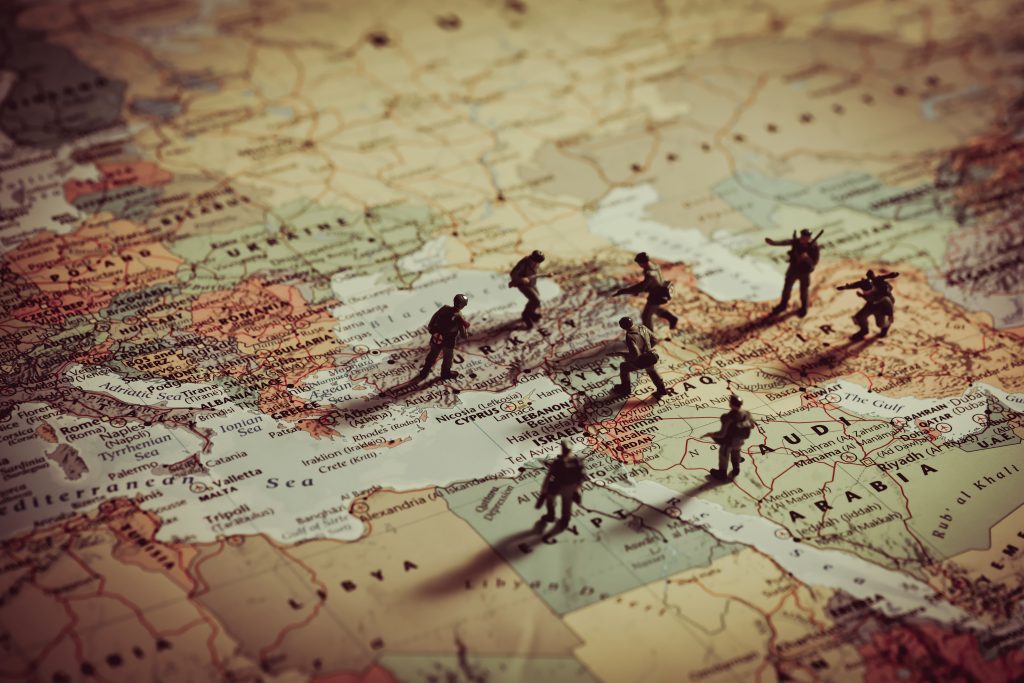
Military intervention followed the Syrian Revolution of 2011
Military Interventions followed the Syrian revolution of 2011

Socialists and the Syrian Revolution

The Syrian revolution 2011 was a genuine people’s uprising: one that was crushed by the al-Assad regime; a corrupt neo-liberal clique backed by Russian imperialism; and Iranian clerico-military oligarchy. The intervention of the US and its Saudi and Gulf allies also undermined the revolution and bolstered reactionary fundamentalist forces. Socialists support the Syrian masses in their struggle against all of these oppressive forces.

Timeline of the Syrian Revolution 2011

2000: Bashar al-Assad inherits family-run dictatorship from father, Hafez al-Assad.

2000-2011: Under Bashar, regime modifies the state-capitalist system with neo-liberal reforms – largely to benefit family and crony-capitalist class. Withdrawal of subsidies, drought etc. leads to exodus of impoverished peasants into cities.

March 2011: Inspired by Arab Spring revolutions, mass peaceful protests demanding democratic reform and end to repression sweep across Syria.

May 2011: Regime launches massive military attacks to crush peaceful protests.

July 2011: Defecting troops form Free Syrian Army to resist regime attacks. Local Coordinating Committees establish popular democratic control across Syria.

2012-2013: Conflict escalates into full scale civil war with rebels taking control of large parts of the country. Regime abandons north-east to left-wing Kurdish PYD and encourages sectarianisation of conflict. Foreign intervention begins with Iran and Hezbollah supporting regime, Saudi’s and Gulf states arming opposition jihadi groups.

2014: Creation of ISIS caliphate in northern Iraq and eastern Syria. US intervention focused on supporting Kurdish PYD to defeat ISIS.

2015: Russian military intervention turns tide of civil war in favour of regime. Secular rebels and democratic local councils squeezed between jihadis and regime.

2016-2021: Turkish military interventions creates buffer zone of pro-Turkish/jihad militias on northern border. Regime gradually restores control over much of Syria, displacement of half of Syria’s population.

Assad was nearly overthrown by the Syrian Revolution of 2011
The Arab Spring of 2011 quickly led to revolution in Syria

What is the principled socialist position on the Syrian revolution?

To understand the Syrian revolution 2011, it is necessary to understand the al-Assad regime. It is based on a narrow ruling clique made up of the al-Assad family and its cronies, a section of the Sunni bourgeoisie, with a support base in the Alawite minority (the Alawites are a heterodox religious community based in the coastal regions of Syria, Lebanon and Turkey, regarded by fundamentalist Muslims as heretics).

Under the original dictator, Hafez al-Assad the regime could be characterised as state capitalist as it combined severe repression with some degree of social protection. Hafez’s son, Bashar al-Assad, opted for full-scale neo-liberal policies and basically since then Syria has experienced a corrupt carve-up of the country’s resources and assets by the family and its cronies, often working with multi-nationals (as long as there was a big cut for the cronies).

The regime, though formally secular, has always been at its core sectarian, with its base in the Alawite community: this made it inherently unstable since the majority of the Syrian population were Sunni Muslims. Far from being anti-imperialist, despite the rhetoric, the regime cooperated with American imperialism during the first Iraq war, was developing cooperation with Saudi Arabia before the revolution, and had a tacit non-aggression understanding with Israel.

Revolution or proxy war?

The Syrian Revolution of 2011 was part of the Arab Spring
Map of Syria in 2011

Rarely does one come across a full-on defence of the al-Assad regime from leftists, rather the argument is put thus: “Yes, the regime is bad, but they are fighting against worse, the jihadis and western imperialist intervention”. This narrative only makes sense, however, if you leave out the Syrian masses and their revolution.

Like all of the mass rebellions of the Arab Spring, the original 2011 uprising in Syria resulted from the huge hardships caused by Al-Assad-imposed neo-liberalism, as well as a simple desire to be rid of a corrupt unrepresentative regime. This is the crux of the whole conflict: it began as a peaceful revolution by Syrian people of all religions. With their overthrow imminent, the ruling clique tried to supress the uprising with indiscriminate violence. As one eyewitness from Daraa put it: “Many people were slaughtered. They just ran over them with the tanks. Walking home from school to my mother’s home that day, blood ran in the streets”. This then precipitated an armed uprising as people scrambled to defend themselves, the armed element mainly coming from the defection of rank-and-file troops.

Now facing a popular uprising that was taking on an increasingly armed character, the regime saw its salvation in unleashing sectarian conflict, which it did by a number of means, including the release of a large tranche of jihadi prisoners. This gave a huge boost to jihadi forces who gradually replaced the secular rebels in many areas, with the Saudis and Gulf states happily pouncing on the opportunity to get a slice of the action by backing various jihadist factions, as did Turkey. The popular revolt continued, mainly in the form of local popular councils but now facing devastating violence and repression from both the regime and the jihadis. Finally, with the regime looking increasingly shaky, the Iranians and then the Russians intervened to save it. Ironically today the Saudis and Gulf states are moving towards reconciliation with the regime, eyeing up the profits to be made from “reconstruction”.

Some accounts of the revolution cast the Syrian masses as dupes from the beginning, pawns in an imperialist intervention to overthrow Assad but the facts, as outlined above, show the opposite. As soon as the regime’s power began to recede, people all over Syria set up organs of popular power, with little initial formal input from parties or armed groups in that process: it was a grassroots-based democratic revolution. The Syrian writer Leila al-Shami has compared these popular institutions to the Paris Commune: “as people took up arms and forced the state to retreat from their communities, Syrians engaged in remarkable experiments in autonomous self-organisation despite the brutality of the counter-revolution unleashed upon them”. The regime, and later the jihadis, always supressed these grassroots institutions when they won back control but the fact that the revolution was defeated does not make it any less of a people’s revolution, no more than the defeat of the Paris Commune negates the nature of that popular revolution.

Imperialist interventions

A popular revolution was transformed into a vicious war against its own people by the regime, leading to outside intervention. In terms of financing, arming, training etc. the primary imperialist intervention in Syria has been by Russia. Put simply, without its air power the regime would have been defeated. On the ground, Iran and its fundamentalist proxies from Iraq, as well as Hezbollah, also played a key role in rescuing a regime that was on its last legs.

US intervention, though real, was unfocussed and ineffective. This was largely because the American state didn’t really have clear aims: what they feared most of all was the vacuum that would be left if the regime collapsed and a victory for the popular revolution or for jihadi forces hostile to America. Its ideal scenario was a compromise between the regime and conservative elements of the opposition, with al-Assad himself gone. The arms and training US provided for some elements of the opposition had minimal effect because the Americans were scared of the weapons getting into the hands of jihadists who would turn them on US forces. Ironically, the only decisive intervention by the US was to back the left-wing Kurdish PYD forces in their war with ISIS: American weaponry and airpower was an important factor in the Kurdish victory over ISIS in the north east. This was because the key US goal was the defeat of ISIS, not the overthrow of the regime. One can’t blame the Kurdish forces for taking help from anywhere they could, but the US dropped them like hot potatoes once ISIS was defeated, allowing the Turks to invade the border areas.

The geopolitical context of the Syrian revolution 2011

Some leftists tend to take a “geopolitical” view of conflicts happening throughout the world. This “geopolitical” view is a version of what was called “campism” during the Cold War. This was a view that socialists had to side with the Soviet Union because, imperfect as it was, it was the only opponent of US imperialism and capitalism. So, the details of class struggle on the ground did not really matter: everything was a struggle between the USSR vs USA.  This led some leftists to support the military suppression of workers in Poland or the brutal pro-Soviet military regime in Ethiopia in its war against the national liberation movements of Tigray and Eritrea etc.

Since the fall of the Soviet Union, “campism” has evolved as there are now a number of contending imperialist and regional powers in the world – US, Russia, China, the EU etc. – but the basic view is the same you “pick sides” on the basis of who seems to be opposed to US imperialism. So, in any conflict one’s position is decided not by the interests of the worker and peasants in the conflict but simply by the interests of the great powers. If the US, even rhetorically, seems to adopt a certain position then, by default, the opposite position must be correct. Ironically, this is also the position of far-rightists, many of whom see Russia as a new nationalistic world power that acts as a counter to “decadent” liberal democracy, leading parties such as the BNP and the Front National to strongly support the Al-Assad regime.

“Geo-political” leftists see the world in terms of the relative merits of competing powers but internationalist socialists like Independent Left see the world in terms of the struggles of oppressed and exploited classes and peoples constantly striving for social, economic and political freedom. Yes, the ground on which these struggles happen are also the playing fields of the great powers which makes things complicated but the fundamental socialist principle is “always with the oppressed”. The complicated nature of the conflict should not be an excuse to declare a plague on all houses: as the Syrian leftist Yassin al-Haj Saleh has stated, “And it is indeed complicated (the Syrian conflict). But this should be a call to know better, a challenge to old simplistic approaches, rather than a cause for disidentification and apathy, as it has mostly been.”

Mass Slaughter in the Syrian Revolution

In raw human terms the Syrian conflict has been an immense tragedy and the facts about responsibility are straight-forward: the overwhelming number of civilian casualties in the conflict have been caused by the Al-Assad regime and its allies. That regime is responsible for mass murder on a huge scale: the total number of civilian deaths stands at somewhere around 200,000 and the regime and its allies are responsible for somewhere in the order of 80% to 90% of those casualties, mainly due to indiscriminate bombing and shelling of civilian districts, as well as the murder of huge numbers in the regime’s prisons. The facts on the ground are clear, this regime has engaged in unprecedented slaughter of its own people. For socialists, the only principled position possible is to oppose such mass crimes against the people.

Chemical weapons attacks during the Syrian conflict have been the focus of much discussion. According to the Independent International Commission of Inquiry on the Syrian Arab Republic, which was set up by the UN Human Rights Council to investigate breaches of human rights in the conflict, there have been around 40 chemical attacks in Syria since the start of the conflict (approximately 33 carried out by the regime and the rest of unknown). Of course, the vast majority of the tens of thousands of civilians killed by the regime have been murdered by barrel bombing, shelling, aerial bombing, torture etc. so the numbers killed by chemical attacks are relatively small. Although few would question the regime’s capability, some ask why would it carry out such attacks? It carried out these attacks for the same reason it shot down thousands of peaceful protesters at the beginning of the revolution, the same reason it shelled and bombed civilian neighbourhoods routinely: to cow the population into surrender and to drive away as many as possible thereby changing the demographic make-up of Syria.

Next Spring? Can the Syrian Revolution be renewed?

2021 Protests in Idlib Against the Government of Bashar Al-assad

We have a revolution there. Curse it or mourn it. It is there, in the rocks, in the graves, in the earth and above in the air. On the wall of a graveyard, we once wrote: “We are alive, we will keep going, and the dream will be realized”. Take whatever is left of us and keep on dreaming.

For now, the Syrian revolution has been defeated: half the population has fled the country and most of the core areas are in regime hands, shored up by Russia and Iran. But there are many factors that could fracture such an unstable regime: a crisis in one of its sponsor states, a breach between them etc. The Arab Spring should be seen as part of a long process in a similar way to the great upsurge of European democratic revolutions in 1848. The revolutions of that era were defeated by a combination of internal and external reactionary interventions, leading to decades of imperialist consolidation but the revolutions of 1848 also laid the foundations for modern socialist and democratic revolutions. Despite the terrible defeats of the great revolutionary upsurge, the forces of reaction and oppression had only bought themselves time. Time may yet run out for al-Assad and his corrupt contemporaries throughout the region, as once again the sparks of rebellion turn to firestorms of revolution in Syria.

Filed Under: Independent Left Policies

William Carlos Williams’s poetry was of and for the proletariat

15/02/2021 by Ciarán O'Rourke 3 Comments

William Carlos William's poems were for and about the working class
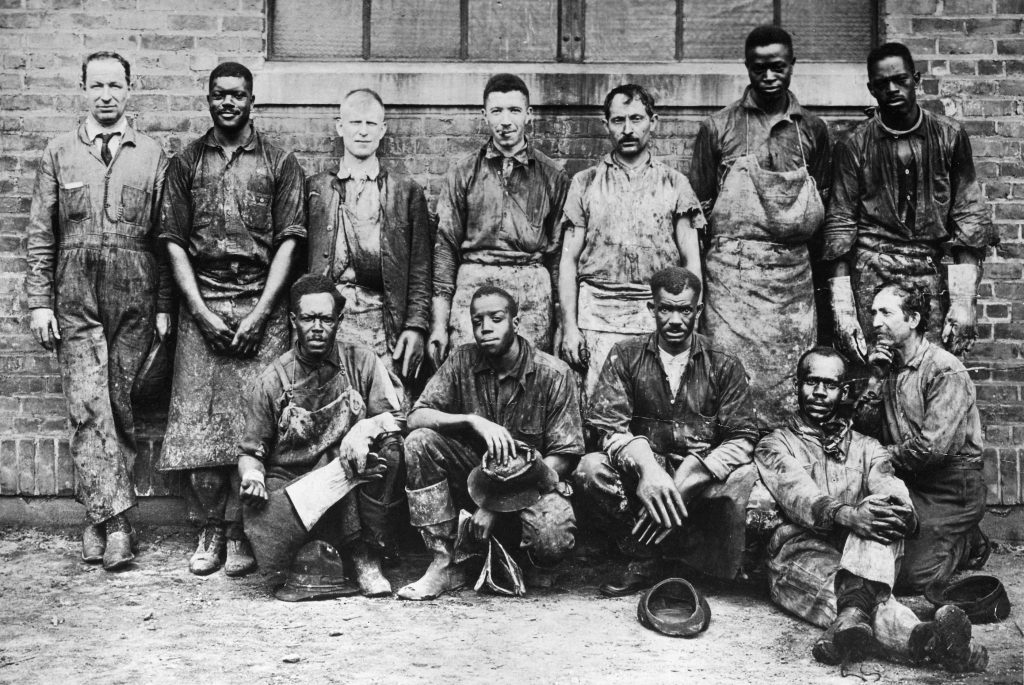
William Carlos Williams: poems for and about workers. These New Jersey chemical workers of the 1920s were a multi-racial community and typical of the proletariat in the city of the poet’s birth and residence.

‘It’s as if no other poet except Williams had really seen America or heard its language’, wrote Robert Lowell in 1962, near the end of the elder bard’s life: ‘His flowers rustle by the superhighways and pick up all our voices.’ Some decades earlier, Mike Gold, the editor of New Masses magazine, predicted that ‘[w]hen somebody writes the future history [of] proletarian literature in America, William Carlos Williams will be somewhere large in the table of contents.’ For him, William Carlos Williams’s poetry was for and of the working class.

Today, contra both Lowell and Gold, Williams is mainly known, if at all, as the author of a much-loved – and often parodied – post-it poem about someone else’s fruit: ‘I have eaten / the plums / that were in / the ice-box // and which / you were probably / saving / for breakfast…’. His ‘proletarian literature’ and manifold investigations of the American scene remain, for the most part, out of view. This is a shame, because Williams was one of the most socially engaged and formally innovative poets of his generation. A radical democrat in his political leanings, he served as a practicing paediatrician for over four decades: a doctor-on-call whose natural sympathies lay with the working poor of the industrial towns of his native New Jersey. Throughout his life, he saw poetry as a means of recording both the streets-up vitality and the crushing poverty he encountered in these urban centres – places like Rutherford and Paterson – combining an oppositional political outlook with an acute sensitivity to the human drama at the heart of day-to-day experiences.

William Carlos William's poems: This is Just to Say
William Carlos William’s poem: This is Just to Say

This last quality is partly evident even in his famous plum poem above, but its political effect is arguably fuller in a piece like Proletarian Portrait, in which a ‘bare-headed woman’ stands on the sidewalk with her shoe in hand, the whole world seeming to pause and tremble in the balance as she ‘pulls out the paper insole / to find the nail // That has been hurting her’. As here, Williams’s most meticulous evocations of ordinary (‘proletarian’) people and scenarios frequently read like exercises in political allegory: parabolic imaginings of things as they really are, or as they might be in the future. This is certainly true of his poem, The Yachts. Ostensibly depicting an afternoon of summer sport and leisure, it finishes as a critique of class society, as the bodies of the masses form ‘a sea of faces’ left ‘[b]roken, // beaten, desolate’, drowned out by the ‘skillful yachts’ as they ‘pass over’.

William Carlos Williams’s poetry was grounded in the vernacular

For Williams, American modernity was marked and maintained through the violence of elite privilege and social exclusion. ‘The wealthy / I defied’, he recalled in one late piece: the wealthy and those ‘who take their cues from them’. Like the social photographers of the 1930s, many of whom he knew and admired, his concern was to restore the experience of supposedly invisible communities – of labourers, immigrants, drifters – to the cultural record. The result was a body of poetic work at once crystalline in its political perceptions and dynamic in its formal movement, both elegant and plainspoken: a poetry grounded in the vernacular rhythms of American life, for ‘what good is it to me’, he asked, ‘if you can’t understand it?’

William Carlos William's poems were revolutionary
William Carlos William’s poems aimed to restore the experience of supposedly invisible communities

The same could not be said about the poets among whom Williams is most regularly classed today: high modernists whose literary politics ranged from the lavish insulation of Wallace Stevens, an insurance executive, to the vituperative antisemitism of Ezra Pound, whom William first met as an undergraduate student at the University of Pennsylvania.

While Pound increasingly sought to hitch his wagon of economic reform to the scorching lodestar of Mussolini’s racist authoritarianism in the 1930s Williams dedicated time and energy to anti-fascist causes. ‘I myself was chairman [of] a committee for medical aid to Spanish democracy’, he wrote in 1941, with a combination of sorrow and fury, as ‘the Storch Squadron went out with their planes on Easter while the women and children were in the streets [and] blasted them to butchers’ meat in the holy Basque city of Guernica “to see how effective the planes and bombs would be.”’

As Williams’s wife, Florence, recalled in 1964, he and Pound, although lifelong friends, ‘were on such opposite sides. Ezra was definitely pro-Fascist, much as he may deny it, and Bill was just the opposite.’ Likewise, stylistically, Williams  stood apart from his peers, favouring idiomatic literary incisions, with a ‘feeling of reality’, to the allusive, often Euro-centric innovations of Pound and Eliot. The ‘revolution’ will be accomplished, he wrote, when ‘noble has been / changed to no bull’.

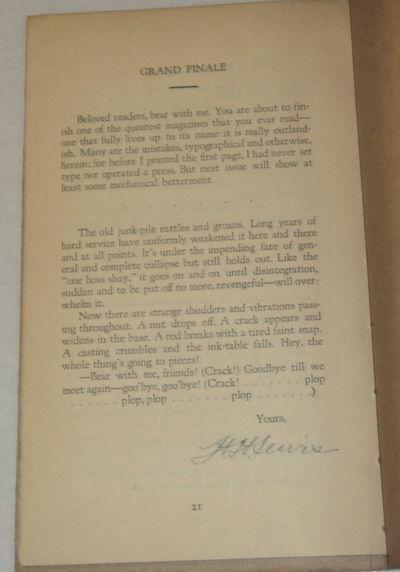
HHLewis Outlander Final Page
Final page of communist poet and sharecropper H.H. Lewis’s magazine Outlander, volume 1.

Although he published regularly in Marxist journals – a pattern of literary affiliation that earned him the reproval of a McCarthyite literary establishment in the late 1940s – Williams was generally distrustful of what he perceived as the didactic and jargonistic tendencies of America’s formal Left, and never joined, for example, the Communist Party when invited to do so. This didn’t prevent him from reaching his own conclusions, however. In 1936, he could be found arguing, with unapologetic assurance, that a ‘labor revolution by a society seeking to be in fact classless is both great and traditionally American in its appeal’:

            To violently effect, by a brave stroke, the ejection of an inhuman and anti-social domination by those who have an effective control over the means of our common livelihood for their private gain – [this] would appeal to the American character if once put into motion.

If Williams maintained a somewhat chirpy belief in the democratic possibilities of the USA as a political experiment, this credo gained grit and clarity with his accompanying insistence on re-casting ‘America’ as a kind of living monument to rebellion. It’s in this context that he could write so admiringly, in 1937, of H.H. Lewis, the sharecropper-poet and avowed Communist ‘fighting to free himself from a class enslavement which torments his body’. ‘He speaks with fervor,’ Williams observed, ‘a revolutionary singleness and intensity of purpose, a clearly expressed content… he resembles the American [rebel] of our revolutionary tradition.’

A mirror for our own times: the poetry of William Carlos Williams

For Williams, there was nothing more dutifully patriotic than to question, ceaselessly, the presumptions and practices of the status quo: political, literary, and medical. ‘I am boiling mad’, he declared to one correspondent in the late 1940s, at ‘this morning’s mail from the American Medical Association’, which ‘in the name of “democracy” orders me to pay $25 into their treasury to fight “socialized medicine”’. This ‘represents what we are up against in our times,’ he concluded, with a righteous fire drawn from a deep understanding of the human value of public healthcare, as well as the nefarious motives of a professional lobby intent on derailing such an infrastructure. In this respect, Williams’s era (and predicament) holds a foreshadowing mirror to our own.

Blaze Magazine Covers 1933: Blaze Magazine published William Carlos William's poems
Blaze Magazine Covers 1933: Blaze Magazine published several of William Carlos William’s poems

In a similarly combative mode, in a 1933 editorial to the short-lived magazine, BLAST, which he co-founded ‘in the service of the proletariat’, Williams was keen to correct what he saw as a blind spot in the thinking of some of his contemporaries, taking subtle aim at the racism that remained operative in both radical and literary circles. ‘No Communist should care for the color of the skins of his comrades’, he asserted, perhaps in reference to that phenomenon later described by David Roediger, whereby ‘the great liberal mobilizations of the New Deal and industrial unionism in the 1930s […] became a key site for the making of race’, as the ‘the color line’ was consolidated in workplaces, public housing schemes, and even within the union movement. For Williams, by contrast, the political agitator and the literary ‘artist’ alike should, as he put it, have ‘skin the color of the rainbow – with black added’.

In truth, this gutsy egalitarianism on Williams’s part was more intuitive than programmatic, and not always adequate in practice to his original intentions. He had a tendency to speak from the nerves, writing reactively to what he experienced and perceived in the society around him. The result is a passionate, if sometimes contradictory, record of his times, in which ‘color’ is a charged category and, as Toni Morrison has observed, ‘embedded assumptions of racial (not racist) language’ filter a ‘literary enterprise that hopes and sometimes claims to be “humanistic”.’

Paterson Book Cover Poetry By William Carlos Williams
Cover of William Carlos William’s poem Paterson

In other respects, however, Williams still seems a remarkably thorough and prescient social critic. Paterson, his boundary-breaking long poem published from the mid-1940s onwards, offers not only a  portrait of the titular New Jersey town, but an exposé of the social and environmental degradation faced by its working residents, whose place and circumstances come to stand in for a larger American reality. As Williams’s literary protegé, Allen Ginsberg, memorably noted when growing up there in the 1940s: ‘Paterson itself [seemed to be] degenerating into a twentieth-century mafia-police-bureaucracy-race-war-nightmare-tv-squawk suburb.’ Williams, moreover, ‘had articulated’ this catastrophic situation ‘to its very rock-strata foundations’.

The poem is technically innovative and thematically far-ranging, exploring questions of historical violence, civic and subjective memory, alienation, intimacy, as well as poetic and ecological regeneration. In contrast to Jim Jarmusch’s 2016 film of the same name, the Passaic river as it appears in Paterson is not so much a font of inspiration, bringing the poet’s reverie to life, but a churning symbol of the environmental toxicity, corporate abuse, and social decay that plagues the surrounding region, its waters ‘steaming purple / from the factory vents, spewed out hot’. As Williams once argued, the much-celebrated Alexander Hamilton – who established the USA’s first cotton and textile mills in Paterson in 1792 – ‘led the country [to] financial stability but at the cost of much that had been enivisioned during the early years of the revolution’. The ‘dead bank’ of the Passaic river, ‘shining mud’, is where Williams’s protagonist stands, attempting both to mourn and to fathom this modern America, as he breathes the fumes. Today, even by the environmentally destructive standards of twenty-first-century capitalist civilisation, the Passaic remains notoriously, and perhaps irremediably, polluted. It is impossible to read Paterson, Williams’s unflinching epic of diagnosis and discovery, without feeling an uneasy shiver of recognition.

If literature, for Williams, was a means of gaining access to social realities, right down to the root, it was also an ‘instrument’ for imagining the future: a shared life free of alienation and exploitation. Williams’s ‘delicious’ hunger for ice-box plums and vivid portraits of proletarian endurance both speak to this vision, which Paterson also shares: of an art and a society based on the living needs of human communities. The ‘outstanding character of poetry’, he wrote, resoundingly, is that it ‘cannot exist other than as the revolutionary attribute of a free people’. The message was the medicine: we need it still.

FURTHER READING

William Carlos Williams:

                        A Recognisable Image: WCW on Art and Artists,

                        Collected Poems: Vols I & II,

                        Paterson,

                        Selected Essays,

                        Something to Say: WCW on Younger Poets.

Filed Under: Reviews

Capitalism and Gaming

08/12/2020 by Eoghan Neville 2 Comments

Capitalism and Gaming Esports Marxism Monetization of Gaming
Capitalism and Gaming: the drive to monetize is underming playability

How Monetisation Destroys Good Games

Eoghan Ó Nia interviewed by Conor Kostick

Conor: We’re going to talk about capitalism and gaming. And I suppose we’re framing the discussion by saying that we live in a strange world where whenever there’s anything that human beings do that’s fun, somebody thinks, ‘oh, I could make some money out of this’. And sometimes they can make enormous amounts of money off of it. Very often by doing so they end up destroying the fun. This has happened in so many areas of human culture and I think it’s happening in gaming in a really quite stark way right now. For example, with micro-transactions inside of games. Can you start by talking about these?

Eoghan: There’s a hundred different terms that are used from game to game, but essentially micro-transactions work via in-game currency that you have to pay real money to get. Then you can use that in-game currency to go for additional items, such as a loot box. And through these purchases you have the potential of getting good items that can help you in the game. This gives you an immense advantage over people who don’t pay to use the system. So often the games get called a pay-to-play, because if you want to make any progress in the game, level up, you have to take part in making micro-transactions. If you don’t use them, then your progress is actually slowed down. It’s designed that way, obviously. They manipulate the system to push you towards having to make purchases.

And the most worrying aspect of this is in games like FIFA, which obviously are played by a lot of children. So you’ve got children getting money off their parents to buy this in-game currency for them. With loot boxes there’s a chance that you might get a good item or not. It’s risk-reward. It’s basically a form of gambling, and kids are doing this, which is what is the real concern.

I mean, there’s a whole debate around gambling and the morality of it and all this sort of stuff, but I think anyone can agree that children taking part in any form of gambling is just wrong.

Conor: As a case study, can we look at FIFA in a bit more depth then. What can a player buy in FIFA?

Eoghan: For FIFA, the loot boxes are called packs. There’s a mode in the game called ultimate team where you have to build up a squad of players: your ideal football team. That’s the basic premise of it. You’re building up your dream football team. You buy packs, and the packs have players in them that may want to use or not. Again, it’s risk-reward. You spend FIFA points that you use real money to buy. And it’s a risk-reward activity because the more money you spend, the better the pack, the better the chance of getting a good item.

FIFA packs are an example of capitalism and gaming
FIFA packs costing up to €99.99 are a form of monetization that arisis from capitalism and gaming

Conor: And does this mean if you’re playing it online with your friends, or with strangers, it makes a big difference if you’ve spent any real money?

Eoghan: Yes. Because you’ll have better players. It’s as simple as that. You’ll have better players, and then if you don’t get the players you want, you can sell them to make more coins, which is the other in-game currency, which is used to buy players individually. But you’ll basically have more of an advantage over someone who doesn’t use that system, because if you play the game without taking part in the micro-transactions, you earn solely on barely any money to be able to buy anything. You have to play hundreds of games to even get one pack. It’s ridiculous.

Monetization is everywhere in gaming

Conor: We’ve used FIFA here as the case study, but this type of monetization is everywhere now, isn’t it?

Eoghan: Yeah, pretty much. I mean, you can take the example of FIFA, change around a tiny bit and you can pretty much make the same point about any other game that has this system. The names for the items you are purchasing change – in FIFA they’re called packs, or in a game like Fortnite it would be loot boxes – but it’s the exact same thing. One study in 2019 found that over nine years the percentage of loot boxes in the bestselling games on Steam rose from 4% to 71%.

Conor: Most combat games give you better weapons if you’ve paid real money. So if you’re duelling other people, it’s a big advantage if you’re ploughing your cash into them.

Eoghan: Exactly.

Conor: And is this spoiling the pleasure of the game?

Eoghan: Yes, because it basically means that you have to use your real money to give you an advantage. For people who just don’t bother with that, who are just trying to play the game for fun and want to switch off for a few hours, there’s no fun to be had because you’ve got these players who have this massive advantage over them. A lot of games are designed so you need to be on it every day and spending money to actually get anything out of it.

Conor: Back in 2004, this wasn’t around so much, but you could see it coming. Because that year I wrote Epic. The premise of Epic is that everybody on the planet in the book is playing an online game, and it’s corrupt. There’s a small elite who’ve rigged the system. Epic won an award that took me to China. And what I learned on my trip to China was even then – sixteen years ago – there were factories where people were farming all day inside the games: accumulating in-game coins, and then selling the packs of bundles of coins to players in the West. It’s massively accelerated now, but even then people were paying up to $2,000 for a top-of-the-range character who’d been levelled up by these platinum farmers and level grinders. And so they would be doing that nonstop, playing the game, if you can call it play when it’s working for long hours.

Eoghan: And I’m sure they weren’t paid too much.

Conor: I’m sure the pay was terrible. In fact, I remember reading a really good short story of a trade union organizer who goes inside a game as an elven warrior to talk to the people doing it. And they join the union and prepare an in-game strike.

You can imagine the harm that plat farming did to the games, creating shortages for casual players and forcing committed players to spend more money. And the same trends have really grown since. Something that is new, however, is the growth of mobile gaming. Can you say something about that?

Capitalism and Mobile Gaming

Eoghan: With advances in the technology of mobile gaming – the fact that your phone can process more – you’re able to actually have games on your phone. But you can’t have the kind of complex games that you’d be able to have on an Xbox or a top-of-the-range PC. So companies have made very bare bones, simple but addicting games for phones. Social media can be addictive and mobile games are designed around the same features. I think some of the first mobile games were actually Facebook games. They began by being offered for Facebook users and then became more general.

Conor: Can you give us an example?

Eoghan: Candy Crush Saga is a good example. It began on Facebook in 2012 and soon spread everywhere. It showed games companies the power of giving players only a limited amount of turns, with the option of buying more energy to keep going. Some of these ‘freemium’ games are massive, earning over a billion a year. Another example is Simpsons Tapped Out, where you build your own Springfield. Essentially you have to pay in-game currency to speed up the time of the building because the buildings take a real day to complete. Not an in-game day, a real day, twenty-four hours to build one building. So that’s where you are encouraged to buy in-game currency with real money so as to speed up the building time.

Conor: The need for speed-ups is a big feature of these games. These games are addictive, with millions of people playing them. But it must be frustrating to have constant interruptions unless you pay.

Eoghan: Mobile games are even worse than the regular games with regard to these features, because these games are simply about the money. That’s all they are. There’s almost nothing to do when playing them, besides just sit around and wait and pay real money. They are so basic. At least with the games on Xbox and PC they try to hide the fact that it’s capitalism at work.

Add-ons as another monetization flaw in gaming

Conor: Some of the console games are works of art, quite amazing in how they look and their storylines. But they’re distorted works of art that are flawed because of the monetization aspect. Wouldn’t it be brilliant to have people making games just for the joy of it, just for the pleasure of building immersive stories that we can play?

Despite Capitalism gaming can be art
Every year games set new standards for the beauty of their graphics, such as in the 2016 game Skyrim

Eoghan: You look at the older games, and you can see that. There are no micro-transactions; there’s no major content that’s brought out as a separate bundle. In the older games, they gave you everything with the game. And there obviously are still some who make games because they love making games. But I think what happened with the rise of the internet and more people playing online, was that business just saw an opportunity as more and more people played video games: this is something we can exploit.

Conor: Well, you mentioned about unlocking extra content. So that’s another big monetizing feature of modern games that didn’t used to be around. So the add-on basically. Can you give us more examples maybe of unfair add-on?

Eoghan: For some games you’ll get extra missions to play through. There’s the very popular Assassin’s Creed for example. So that’s a game where you play as a member of the order of Assassins up against the Templars. Assassin’s Creed Valhalla is set in England during the Viking age. In the DLC (downloadable content), they’re going to add Dublin. It’s good that players will be able to go around Viking Dublin, but why wasn’t that part of the release considering Dublin was a very important trading centre? You could talk for hours about why Dublin or Dubhlinn,  was a key centre of the Viking trading network, not just for us as Irish people, but in general, as a major city of the Viking era. It was very important. Why is it only there as an add-on? Because there’s Irish people around the world, Irish people living in England, in America, people with the Irish connection or just with an interest in Ireland: they’ll buy that for the DLC. Ubisoft know that. And so they make it add-on rather than core content because they know they can make money off that.

Pro-Gaming, sponsorship and capitalism in ESports

Conor: Another topic that seems to be relevant to what’s happening in the strange world of gaming is the growth of pro-gaming. What is it, in the last twenty years maybe?

Eoghan: Esports really took off around 2000 with millions of people following Starcraft tournaments. Again it is associated with social media, the growth of the internet, and all the people playing online, obviously.

Conor: What games are popular for ESports and what kind of audiences can they attract?

Eoghan: A good example is Call of Duty. That’s very popular and recently a pro-league was launched for it. The teams of players all have annual salaries and there’s a million dollar pool for the winners to share.

eSports are a massive growth industry, with professional teams of salaried staff

Then there’s the FIFA eWorld Cup. So you have all these different FIFA players come together, over two million in 2016. They have qualifying rounds and then the tournaments. The final games are played out in convention halls. Pre COVID there would be thousands of people present to watch the games. And then of course, they stream it, so everyone is watching online around the world.

Conor: I gained some insights from my nephew, who has the same name as me, who is an occasional Rocket League commentator. As with conventional sports, eSports have paid commentators telling viewers what’s going on in the game. It’s a bit like the YouTubers who just play their games and comment and get millions of followers.

Eoghan: Although with the YouTubers it’s a bit different because the YouTubers, they’re gamers who just happened to record it and obviously commentate on it.

Conor: Some of the popular YouTubers are quite critical of capitalism in gaming.

Eoghan: Some of them have come out. Say, like Critical Nobody, who has around 100,000 followers:

Critical Nobody made a powerful critique of the monetizing policies of Ubisoft

He recently posted a strong argument against Ubisoft and how they monetize games, ruining them as a result.

And then, on the other side, you’ve got the YouTubers like Ali-A who started off quite modestly before growing to 17.5million followers and taking sponsorship money. A lot of them started getting sponsorship deals because basically YouTube dried up advertising revenue via demonetization. Now YouTubers have to get sponsored by someone to make any money, which leads to their broadcasts become dishonest or cynical. You can almost hear the lines from scripts they’ve been given by their sponsors.

Marxism, Adorno and Capitalism in Gaming

Conor: Let me run a Marxist theory by you in this regard, because since we’ve been talking, it’s reminded me a bit of what Adorno wrote about music, because I think some of his ideas cross over into gaming. Adorno said that capitalism is destroying music in two ways. One is by destroying the audience for really cutting-edge, brilliant, profound music. Capitalism makes us too tired to engage with really challenging music because we are overworked and outside of work, our time is used getting ourselves and our families refreshed for the next day’s work. We only have time for something easy to grasp, something catchy. When it comes to music, capitalism creates a mass market of zombies. Similarly, I think in the world of gaming that means neglecting really edgy games where there’s quite difficult moral decisions and strange outcomes. I remember playing a Phillip K. Dick Blade Runner one, which had different endings where you could be the Replicants.

Adorno’s other point about capitalism and music was how it had become very big business. Companies, having invested a lot in a product (in his case musical product), cannot afford for it to fail. So they foist it on the public, even if it’s complete rubbish. And they have a wide array of tools, such as marketing budgets, friendly relationships with critics, purchased air-time, to push that music, no matter if it’s great or not. So you get this tsunami of rubbish basically. And it’s very hard when nearly all the critics (and especially those with the biggest platforms) are saying, ‘oh, this is great’ to orientate yourself and find the good stuff. I think we can say the same about gaming, and it fits with what you were just saying there about sponsorship. If they’ve invested a lot in a product, they are not going to listen to critics, they are going to double down with promotion, sponsorship, and paid reviews, obliging gamers to invest time in something that isn’t any good.

Eoghan: IGN are a company who have built themselves up solely around reviewing video games: they are really multinational, really successful. And what you were saying about reviews is evident there. Of course, they don’t take money directly for a good review but I’d guess that if you did a study of who took out adverts on that site and who got good reviews for their games, you’d find a strong match.

Revolution and the Gaming Industry

Conor: I have a critique of Adorno, which might be worth exploring for what it means for games. For me, Adorno’s theory of music is a bit too bleak because what it doesn’t appreciate enough is the constant bubbling up, especially from within our communities, of new forms of music. Invention, over-stepping boundaries, profundity. And these little bubbles can be amazing. They rarely last, because once big enough to attract the attention of marketers they are accelerated into a monstrous brand that then collapses again. So even punk, which was a fantastic working class, revolutionary musical movement, even that ends up with Johnny Rotten selling butter or something.

It’s not that these movements can ever break capitalism and achieve socialism, but they’re constantly happening. So let’s think about that in terms of gaming. Can we say the same about gaming? Are there small games companies perhaps? Or collaborative forms of gaming?

Eoghan: Absolutely. Obviously you’ve got people involved in small, independent games companies, down to individual game-making on certain platforms. The Stanley Parable is an interesting example. It was essentially the work of one person, Davey Wreden, using a popular gaming engine. The concept is basic: you are an employee in an office and working through your day and you get called to a meeting, but everyone in the office is gone. And as you play the game more and more, you’ve got all these different outcomes you can go to and different endings. The more you explore it, the crazier it gets and there are more outcomes. You’ve got this narrator as well and one of the outcomes arises if you do the opposite of what he suggests. Eventually the narrator just gets really mad and the character goes, ‘right, I’m leaving’. And he leaves. He actually gets up from his desk and he walks out of the game. And then there’s another outcome where he restarts the game because he gets really angry with you. ‘No, you’re not doing the game properly. Restart’. And then he restarts the game so many times he breaks it.’ And so he was like, great. We have to play a different game’. So he puts in something like Minecraft instead. It was the best thing ever.

Crucial to the success of indie games is crowdfunding. Crowdfunding is basically large numbers of people making small donations to the production of a game. It’s a community effort rather than an investment by a large business or financial backer. And the people who want to make a game in this way have to put the idea before gamers and convince them that this is going to be worth giving money towards. It’s just ordinary people giving them a fiver or a tenner who have to be convinced.

With these forms of games you have community involvement, you have a sort of a community ownership, because they actually gave money to that person to make that game. In this model there’s more incentive to reward backers by making the game good and less need to answer to the banks and introduce in-game monetization features. So although capitalism often ruins games, there are always good new ones coming though.

Filed Under: Reviews

Independent Left statement on the launch of Le Chéile

04/12/2020 by admin 2 Comments

They Shall Not Pass Battle of Cable Street Independent Left and Le Chéile
Counter-prostesting is essential in the battle against fascism: such as at the 1936 Battle of Cable Street

The growth of fascism in 2020 was a disturbing development in Irish politics and one that needed a coherent response from the left. Fascists were able to capitalise on discontent at the COVID restrictions and insert themselves into anti-mask protests. At the same time, socialists, appreciating that anti-mask is anti-worker and insisting that the government did not cave in to pressures from businesses to sacrifice the vulnerable, were hampered in both protesting and mobilising against the fascists. We complied with measures to restrict the growth in COVID cases. The fascists did not.

A few skirmishes took place in which the fascists injured participants of small counter-protests and were becoming increasingly confident. A growth in fascism does not just represent a distant threat, it always leads to an immediate increase in attacks on the people they target in order to divide working class communities.

Anti-Fascist Action decided it was necessary to check the fascist rallies and successfully mobilised against the National Party on 10 October 2020. While many commentators wrung their hands and condemned the counter-protest, we stood on the side of AFA in regard to seeing the humiliation of the National Party (who would be better called the Nazi Party) and their retreat under the protection of the Gardaí as an important check on the fascists. There is plenty of evidence it damaged their morale and capacity to mobilise.

So when leading People Before Profit members initiated a conversation about creating a new anti-fascist alliance, we were keen to participate. Initially, there was a lot of positive energy about the new organisation, which would come to be called Le Chéile, not least because when asked would this organisation be genuinely owned by all the participants, we were assured by the People Before Profit TDs that it would.

It seemed to us that this movement had the potential to bring even more people onto the streets when another moment came in which it was necessary to turn out to stop a fascist event: that it could be the kind of vigorous ‘fighting’ united front of all those who would be victims of fascist growth that Trotsky envisaged was necessary to stop the rise of Hitler.

Anti Nazi League Ireland 1991
Back in the day: Richard Boyd Barrett willing to confront fascists under a clear Anti-Nazi League message

Of course there were differences expressed at the meetings, including over the question of whether there should be counter mobilisations against fascists. Independent Left members and others present recall the conclusion of this discussion being that while the new organisation would not publicly call for counter-mobilisations, it would not rule them out.

While we saw some limitations in Le Chéile, we were willing to play our part in participating in the alliance until today, 3 December 2020. Disappointingly, we found that the launch statement included the following crucial line: “it is not the aim of Le Chéile to organise counter-protests to far-right rallies.”

Indeed? Well, it certainly was our aim all along and that of some of the others present at the meetings. It came as a surprise to see this position (one which raises the question of who made that the policy of the alliance and when?). 

A launch that was anxious to communicate this non-confrontational message, whether approved of by everyone concerned or not, undermines our confidence in Le Chéile as being the right way to go about stopping the growth of fascism. We think it best to spend our energy at a grassroots level, resisting the infiltration of fascists in our communities.

Good luck to the new alliance, genuinely. There is a role to be played in having musicians and actors and politicians speak out against fascism, to have them perform anti-racists gigs, hold carnivals, readings, etc. This is important activity. But it isn’t enough.

Two wings of an anti-fascist movement checked the National Front in the UK in the 1970s: one embodied the spirit that ‘they shall not pass’, which was most evident at the Battle of Lewisham; the other was a cultural marginalisation of fascist values. The recent documentary White Riot shows the valuable work done at that time by Rock Against Racism. We hope Le Chéile will be able to deliver on that cultural side of things.

Independent Left Le Chéile: Battle of Lewisham
The Battle of Lewisham 1977: another powerful response to the growth of fascism

We appeal to members of Le Chéile: please consider the historical experience of anti-fascist movements and be less equivocal about the need to support counter-protests. Hopefully, you’ll join them in the future. If not, then please don’t sit on the fence when figures like Mick Clifford weigh in against those of us who take to the streets to scatter the fascists while we can.

And to People Before Profit members who agree with us, there is still time to change the approach of your party. We would very much welcome unity with you, not to pose together in front of the cameras, but arm-in-arm on the streets.

You can contact Independent Left in confidence by emailing conor@independentleft.ie 

Filed Under: Independent Left Policies

One of the best books about the Haitian Revolution

29/11/2020 by Ciarán O'Rourke 1 Comment

There are many excellent and inspiring books about the Haitian Revolution, one of the richest and most insightful of which is The Common Wind: Afro-American Currents in the Age of the Haitian Revolution by Julius S. Scott.

Book About Haitian Revolution: Common Wind Julius Scott
Julius Scott’s Common Wind is one of the richest books about the Haitian Revolution

The Common Wind: Afro-American Currents in the Age of the Haitian Revolution by Julius S. Scott

In early 1790, Vincent Ogé, a charismatic black revolutionary from Paris, sailed to the French Carribean territory of Saint-Domingue with one aim: to stoke a rebellion that would “overturn the Colony and obtain complete equality between the people of Color and the whites.”

In the months that followed, he and his co-conspirators rapidly became acquainted with the force of circumstance, facing capture by neighbouring authorities shortly after a tactical retreat from a military skirmish. In a show of judicial strength – orchestrated to send a message to other potential insurgents intent on making the “diabolical ideas of freedom and equality” a reality in the region – he was later broken on the wheel in public, and decapitated. Their liberatory venture had failed.

The slaves who made the Haitian Revolution

Apparently undeterred by such a gruesome spectacle, however, and inspired in part by the visions of the vodou priestess, Cécile Fatiman, within six months a self-led army of insurgent slaves did indeed change the course of history. In their tactics and relentless advance, the rebels seemed to recognise as CLR James puts it in one of the most important of books about the Haitian Revolution, The Black Jacobins, “the rich” would only “be defeated when running for their lives”: in its early months alone, their uprising levelled “180 sugar plantations and more than 900 other [white-owned] estates” on the island, then the largest producer of sugar and coffee in the world.

Cover of CLR James The Black Jacobins
Cover of CLR James’ The Black Jacobins, one of the most important of books about the Haitian Revolution.

By freeing themselves, the militants sent shock-waves through the hearts (and bank vaults) of slave traffickers, commercial magnates, imperial administrators, and white supremacists across the globe. The so-called wretched of the earth were seizing their freedom; the Haitian revolution had begun.

Although the aristoctratic Ogé was ultimately less successful than the slaves themselves, the spirit of his hoped-for coup no doubt inspired many who participated in the later revolt. Likewise, the sadistic cruelty of his execution remains instructive. Among other things, it serves as a reminder that terror was not invented by guillotine-wielding Thermidoreans in revolutionary France, prodigal though they were, nor by the self-emancipators of Saint-Domingue.

Revolution and Liberty on Both Sides of the Atlantic

Calculated butchery, for the purpose of maintaining collective submission, was deployed with coercive zeal by feudal and colonial regimes spanning Europe, the Americas, and the oceans between. The mutilations inflicted on rebels and enslaved workers in the Carribean, the unbridled ruthlessness used to disband the United Irish men and women in the same era, the punitive abuse suffered by sailors trapped (through debt or poverty) in maritime service throughout the eighteenth and nineteenth centuries, expand and clarify the vista of programmatic violence that conservative commentators have rightly identified with the 1790s, albeit within too narrow a scope.

Edmund Burke – whose statue today overlooks College Green in Dublin – inaugurated this long tradition of elitist moralism, when he condemned the “gross, stupid, ferocious—and at the same time poor and sordid—barbarians” of France’s new-formed rebel mass: for him, a “swinish multitude” lacking in both “nobility and religion”. Worst of all, Burke declaimed, was that the “Revolution” would render the “murder of a king, or a queen” as “only common homicide”, no longer the “sacrilege” of times past. The established order of things had been turned upside down.

Questions of liberty and equality, of means and ends, were the subject of urgent, heated debate in this period. According to Burke’s “servile reverence for antiquity”, wrote Mary Wollstonecraft in rebuttal, “the slave trade ought never to be abolished”, adding with incisive exasperation: “Security of property! Behold, in a few words, the definition of English liberty.”

The Slave Revolt in Haiti: A Revolt Against Commerce and Racism

He pities the plumage, but forgets the dying bird.

Thomas Paine similarly concluded, observing in the reproving theatrics of his Anglo-Irish antagonist “[n]ot one glance of compassion, not one commiserating reflection, [for] those who lingered out the most wretched of lives, a life without hope, in the most miserable of prisons.” The Bastille of Paris had been overthrown, and at the hands of a people whose misery was presumed as natural (and ritually worsened) by both monarchy and state.

Painting of Toussaint Louverture
Painting of Toussaint L’Ouverture, the inspiring leader of the Haitian Revolution

It is a painful irony – and a parable of revolutionary apostasy – that Toussaint L’Ouverture, one of Saint-Domingue’s most famous and effective adaptors of that same radical tradition, should end his days deprived of food and water, a prisoner of the nation that bore “Liberté, Égalité, Fraternité” as its unofficial motto. In their abolition of slavery, their self-conversion from exploited instruments of capital into agents of social revolution and racial equality, the rebels of Saint-Domingue had set a precedent of successful emancipation from the hierarchies of power that ruled their changing world.

Figures like L’Ouverture were as much of a threat to the economic affairs of post-revolutionary France and America, as to the commercial and imperial ambitions of Europe’s imperial monarchies. Scott, in his book on the Haitian Revolution, highlights the views of one Pedro Bailly in this regard.

A Louisiana militiaman of colour, part of a global community of radicals inspired by the political developments in the Atlantic isle, Bailly understood the world-historical significance of the Haitian example: “We have the title of ‘Citizen’ in Saint-Domingue”, he said, “All of us being human, there should be no differences: color should not differentiate us.”

Glints of Life and Resistance

Thomas Paine himself was regularly burned to death, in effigy, by pro-slavery mobs across the Carribean in these years: reviled by a class whose commercial success depended on those divisions of property and privilege that his writings exposed with such aplomb. “It is time to dismiss all those songs and toasts which are calculated to enslave,” he proclaimed in his defence of the principle of revolutionary self-activity: “On all such subjects men have but to think, and they will neither act wrong nor be misled.”

As we have seen, in an effort to contain the spread of such incendiary opinions, governing forces on both sides of the Atlantic asserted their authority through murder, torture, dispossession, and  engineered necessity, on a scale both pressingly intimate and increasingly far-reaching.

Taken together, untold millions suffered in the name of king, imperium, race, and caste; later, millions more were sacrificed to the poverty and killing labour that accompanied the much-lauded industrial miracles of the nineteenth century. Such degradations, however, do not convey the whole story, which on closer examination is stippled with glints of life and resistance.

A Ground-Breaking Book on the Haitian Revolution

To peer through these kaleidescopic keyholes, as Scott does, is to discover a new history and a new approach. As empires expanded and evolved, as enterprises ravenous for profit and commercial opportunity chased their elusive margins around the world, previously disparate communities responded, often defensively, with re-forged conceptions as to human worth and earthly value, organising themselves into fresh formations of revolutionary consciousness and communication that threatened, at every turn, to up-end the vast ambitions of their supposed masters.

As Scott’s ground-breaking book on the Haitian Revolution shows, the circulation of (radical) ideas was dependent, in the main, on the agency and mobility of often downtrodden people, fashioning their own routes of resistance and freedom. In November, 1791, one English plantation owner, tremulously awaiting news of order lost or restored in Saint Domingue, discovered with horror that “his slaves learned of recent developments on the coast before he did”, through word-of-mouth contact with fellow labourers and fugitives.

Some months later, a similarly watchful naval commander, cautiously navigating the coast of Saint Domingue, encountered a rowboat “armed with fifty or sixty men of all colors” led by an “Irishman of prodigious size”: a “deserter” from the captain’s own vessel, who had “apparently made common cause with the black rebels on land” and now was dedicating himself to raiding “British and American shipping.”

The Struggle for Liberty Inspires History

The masters themselves were governed by fear. Supposedly invisible and disposable populations were embracing the most radical elements of contemporary history as their own. In Jamaica, the white minority noted with trepidation “the Ideas of Liberty” that “have sunk so deep in the Minds of all the Negroes”, anticipating “that wherever the greatest Precautions are not taken, they will rise.”

By the summer of 1792, likewise, “an air of insolence” was said to be circulating among the black population of Kingston, as ruling officials speculated as to their ability to control a potential outbreak of “the same Phrenzy which rages a few Leagues distant” in Saint Domingue.

Farther afield, a decade after Haiti had been declared an independent republic, in 1811 Charles Deslondes, himself a Haitian, marched with “between 200 and 500 rebel slaves” on New Orleans, “setting fire to plantations on the way”, in what was the largest self-organised slave insurrection in North America.

“There’s not a breathing of the common wind / That will forget” the Haitian revolutionaries, William Wordsworth had assured the spirit of Toussaint L’Ouverture in his poem dedicated to the captured general: the “exultations” and “agonies” of their struggle for liberty now bore a catalysing relation to human history at large. In this, as Scott argues in his book on the Haitian Revolution, time and again, he has been proven right.

We Remain Today A Part of the Haitian Revolution

Today, as a result of punishing trade (and aid) agreements, as well as an increasingly entrenched internal culture of upper-class corruption, Haiti has one of the highest rates of child mortality in the world, while a quarter of Haitians live in abject poverty. International conglomerates have consistently sought to capitalise on this economic and social vulnerability, including Digicel, the communications company owned by Irish business tycoon, Denis O’Brien, accused in 2019 of being a “co-conspirator” in a “ruse” to divert funds intended for Haitian education to its own benefit.

Were we to look beyond the fortunes of O’Brien and his ilk, we would see that Ireland, itself simmering in the long aftermath of revolutionary defeat, is in many ways a homeless nation, wracked by inequality and corporate shadow-rule: a tax haven serving the needs of the wealthiest and most exploitative interests on earth.

To counter and transcend this spectacle of crass, murderous venality, we might begin by recognising that Scott’s – and other books about the Haitian Revolution – show us the real traditions of Atlantic radicalism and aspiration that shaped our respective regions once, and may do again. The Haitian emancipators were internationalist in their consciousness, local and concerted in their collective actions; they shaped their insurrection to the demands and rights of their communities, and not to the blinkered vision of the status quo that ruled them; they knew the power of their words and mass; they were unafraid to rebel. We owe Scott our gratitude for bringing their story back to life, with its whispering grassroots voices and tremoring waves of change. From histories like this a common future can be made: from each according to their ability, to each according to their need.

Red Round Globe Hot Burning Cover
Peter Linebaugh’s Red Round Globe Hot Burning covers similar themes to Common Wind

If you enjoyed this review, for other books about the Haitian Revolution and that era you might also like to read Johnny Flynn’s review of Red Round Globe Hot Burning and his interview with Peter Linebaugh, the author.

Filed Under: Reviews

  • « Go to Previous Page
  • Page 1
  • Interim pages omitted …
  • Page 7
  • Page 8
  • Page 9
  • Page 10
  • Page 11
  • Interim pages omitted …
  • Page 23
  • Go to Next Page »

Copyright © 2026 · Aspire Pro on Genesis Framework · WordPress · Log in