• Skip to primary navigation
  • Skip to main content
independent left logo

Independent Left

Environmentalism, socialism, freedom and equality. #liveablecity

  • About
  • Featured Articles
    • How Farming Must Change to Save the Planet
    • The Housing Crisis: Causes and Solutions
    • Socialism in Ireland
  • Contact Us
  • Podcast
  • Animal Rights
  • Archive
    • Irish Socialist History
    • Dublin City Council Housing
    • Ukraine
    • Protests Ireland
    • Reviews
    • Irish Political Parties
    • All Posts
    • Independent Left Policies
  • Why join?

Features by Councillor John Lyons Independent Left

Northside Community Forum Against Racism

16/02/2023 by John Lyons Leave a Comment

#irelandforall
#irelandforall solidarity march against racism and the far-right 18 February 2023 Dublin

Statement by Councillor John Lyons in support of the Northside Community Forum

Over recent weeks there have been protests in the area targeting people seeking refuge in Ireland. It has been sad to see and the consequences can be traumatic for those directly targeted and can further disadvantage all our efforts to fight for a better Ireland for all as we can only secure housing for all, a better health service, more community, sports & social funding if we are united, not divided.

This country is extremely wealthy but we have a problem: the political class led by Fine Gael & Fianna Fail care only for the better off & wealthy.

They don’t care about our families, our communities.

All our energies, time and commitment should be focused on fighting for a better Ireland, not hurling abuse at people who have chosen Dublin as their new home.

Below is a Joint Statement from members of the Northside Community Forum which I fully support:

The Northside Community Forum is a network of Local Community Groups that work in Dublin North-East. We collectively develop actions, campaigns and work on issues affecting the community and community-based organisations.

Following the protests that we have seen over the last weeks in Artane and Coolock, members of this forum listed below, want to express our solidarity with the communities in Dublin North – East as we condemn the hatred expressed towards people seeking refuge and seeking asylum. Men, women and children, be they residents or newcomers should not fear for their safety on our streets, or in the places where they stay, their home from home.

We understand that only a small minority of people from our area are taking part, and the abuse is also being stirred up by agitators from outside.

We also understand that many of the issues that people are concerned about rightly relate to the many problems that impact people in our community such as poverty, inequality, homelessness and poor housing, the cost-of-living increases, the impact of drugs and the enduring grief brought about by the Stardust tragedy.

There are many things that need to be fixed in our society and it can seem like change is not possible at times. However, we do not believe that these problems should be used by some groups to stir up fear and hate.

At the turn of the last century, over half of the people who had been born in Ireland were living abroad. We as a country are very aware of the pain, loss, and opportunity that emigration can bring and as a community we can build on this wisdom as we welcome people from the Ukraine, people seeking asylum and seeking refuge.

The Northside Community Forum members as listed below are determined to listen to the community and to respond to these protests to ensure the people feel welcome and safe.

Archways

Artane Family Resource Centre

Association of Ukrainians in Ireland

Aster

Bonnybrook Early Education Centre

Bunratty Community Childcare

Clongriffin Community Association

Cluid Housing

Coolock Development Council

Coolock Law and Mediation Service

Crosscare

Darndale Belcamp Village Centre

Darndale Integrated Childcare Services

Discovery CTC

Doras Bui

Dublin Northeast Drug and Alcohol Taskforce

Grange Woodbine

Kilbarrack Coast Community Programme

Kilbarrack Community Development Programme

Kilbarrack Foxfield Preschool and Afterschool

Killester WW1 Memorial Campaign

Kilmore West Youth Project

KLEAR

Learn and Play Preschool and Afterschool CLG

LeChéile Donnycarney Community & Youth Centre

Migraine Association

Moatview Early Education Service

Near FM

North Dublin MABS

Northside Counselling

Northside Homecare Services

Northside Partnership

Out N About – Detached Youth Service

Priorswood Pastoral Parish Centre

Sphere 17

St Francis Parish committee

St John Vianney FC

Target

The Dales

The Sustainable Life School

Young Social Innovators

Northside For All
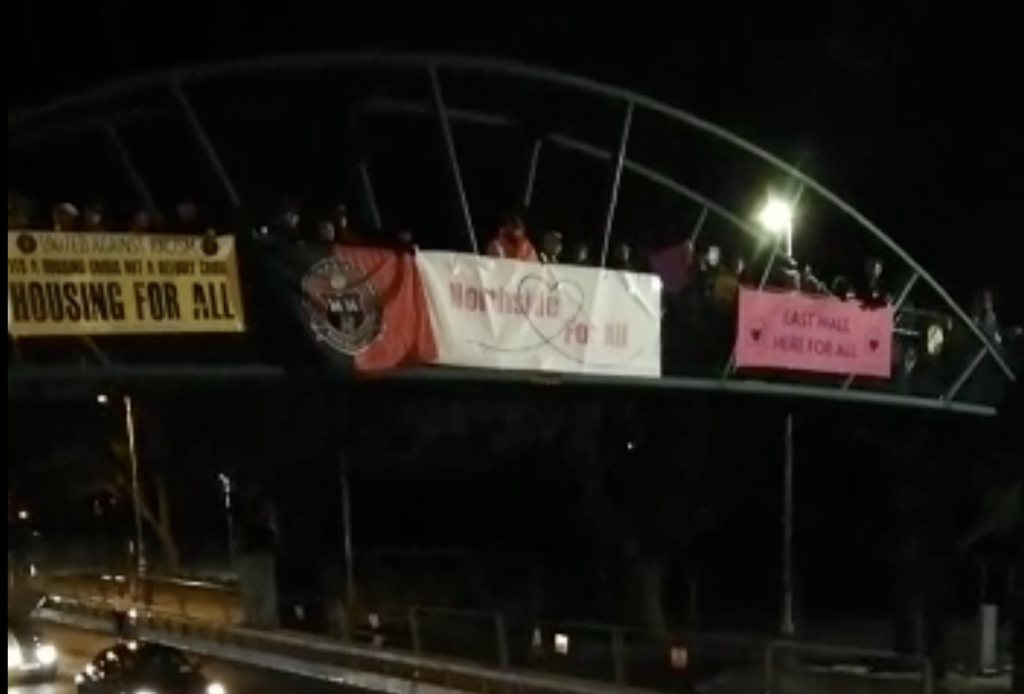
On 18 January in response to far right attacks on centres holding refugees community groups of the northside showed their solidarity with those seeking refuge in Ireland.
Northside Community Groups
Housing for All, Northside for All. 18 January 2023.

Filed Under: All Posts

Why is Ireland so Expensive?

08/07/2022 by John Lyons 1 Comment

Ireland is officially the most expensive country in the EU

Cost of Living Crisis: Time to Bail out the People

Why is Ireland so Expensive Why is Dublin so expensive?
Why is Ireland the most expensive country in Europe to live in?

The reason why Ireland – and Dublin in particular – is so expensive is because corporations are protecting their profit margins by further hiking up their prices which they can do as competition here is weak and consumer protections are poor.

At the start of July 2022, EU Eurostat published a report on 2021 price levels for consumer goods and services which found prices in Ireland are 40% above the EU average.

Our housing costs (rents, mortgages, gas, electricity) are the most expensive in the entire EU, 89% above the EU average, with Dublin the most expensive.

Our health costs are the most expensive in the entire EU, 72% above the EU average.

Our food and non-alcoholic beverage costs are the third highest in the EU, as are our communication costs.

Corporate Profits and Shareholder Dividends are Booming as We are Struggling in the most expensive country in the EU

When it comes to trying to make ends meet week to week, month to month, it is becoming increasingly difficult. Everything is going up except our wages and social transfers.

Living in an already very expensive country which is now experiencing record inflation at a 38-year high of 7.8% is further squeezing the life out of families on middle and lower incomes whilst profits in the corporate sector boom.

The combined annual profits of the five biggest energy utilities doubled to €560 million in a year, while profits at the five largest Irish food companies increased by €174 million.

The government, whose wealthy politicians are highly networked with the boards of these companies, says they will do nothing to help struggling families and tackle corporate profiteering.

The taoiseach receives €217,000 a year              The tanaiste receives €200,000 a year
Every Minister receives €183,923 a year      Every TD receives €101,193 a year
Meanwhile 630,000 people in Ireland are living below the poverty line.
The median average wage in 2021 was €35,500.[1]

These politicians live in a different world to us. We have to force them to care.

We need:

  • a windfall tax of 10% on the excess profits of Irish energy companies
  • Scrap the carbon tax, which hits lower income families the hardest
  • Introduce a new annual tax that targets the wealth of the Ireland’s millionaires & billionaires
  • Pay increases of at least 10% as well similar increases in social welfare payments
  • Maximum unit price cap on electricity, gas and home heating oil
  • State-led building programme of social & affordable homes on state lands, nationwide retrofitting programme, rent freeze and a ban on evictions.

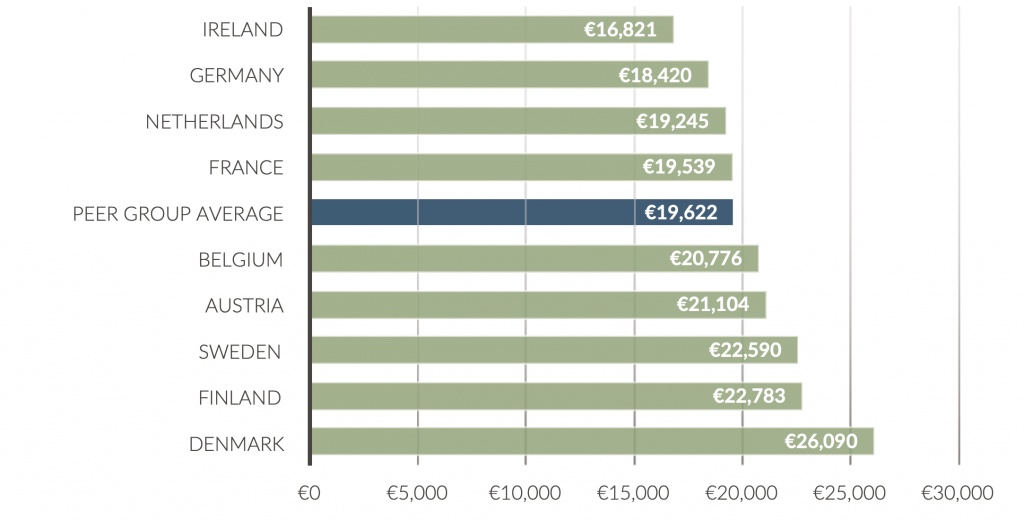
The government narrative about why Ireland is so expensive is that high prices are caused by global shortages for which they have no responsibility. There might be some truth in that for particular cases but it is absolutely not true for the disproportionate expense of housing and childcare, which arise from government policy. As the Irish Congress of Trade Unions have noted, Ireland is about €14bn a year behind peer European nations in per capita expenditure on public services.

Why is Ireland expensive? Because Public Spending in Ireland is €14bn below peer EU countries
The real reason Ireland is expensive: the private market dominates services

Imagine what a difference it would make to the expense of living in Ireland if childcare were free. Well, that would be possible with €2bn of government expenditure. Or imagine if a huge public housebuilding initiative went ahead to provide tens of thousands of genuinely affordable homes and high quality, low-rent projects. This happens in other countries and the fact it doesn’t happen here is because the voice of Irish workers means a lot less to Fianna Fail and Fine Gael than that of global businessese lobbying for low taxes and property investors.

Why is Ireland so expensive? Because of the lack of public expenditure and the lack of price regulation in the private sector.

[1] This figure is deliberately obscured by the way statistics on wages in Ireland are collected, in which incorporating small volumes of very high earners distorts the picture. Using Felim O’Rouke’s technique (assuming that mean average wages are 26% above median average wages) and taking the 2021 CSO figures for mean average weekly earnings, Independent Left calculate the median annual wage to be approximately €35,500.

Filed Under: Independent Left Policies

DCC’s Oscar Traynor Road Development Plan

06/10/2020 by John Lyons 1 Comment

And why public land should be used for public housing

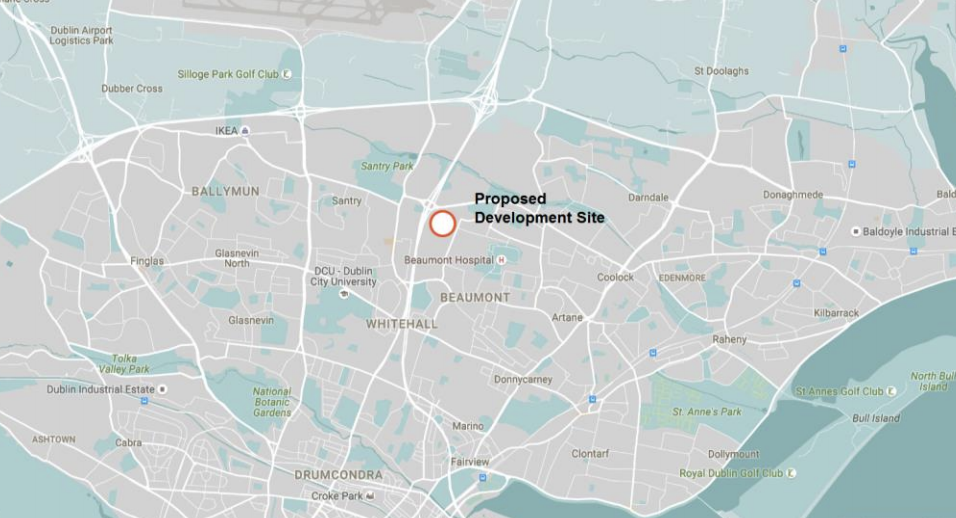
Oscar Traynor Road Proposed Development Site Location
The proposed development site of Dublin City Council’s land at Oscar Traynor Road.

Oscar Traynor Development: A Broken Promise

At the end of June 2024, Councillor John Lyons discovered the outrageous house prices Dublin City Council officials and the Fine Gael-Fianna Fail-Green government think are affordable for the proposed development at Oscar Traynor Road.

We are talking about homes being built on a 42 acre site on the Oscar Traynor Road that was once owned by Dublin City Council until councillors from Fine Gael, Fianna Fail, the Green Party and Labour Party voted in favour of giving away the public land to a private developer in 2021. And for what?

1 BED €204,000 – €238,000 in October 2021 is now €264,358 – €308,750 in June 2024;

2 BED €227,000 – €284,000 in October 2021 is now €355,769 – €427,500 in June 2024;

3 BED €250,000 – €306,000 in October 2021 is now €399,731 – €475,000 in June 2024.

Councillor John Lyons said he was “shocked” when he heard the figures.

John submitted a series of questions asking DCC how it ended up in a situation where supposedly “affordable housing” on what was once public land will be completely out of reach of the vast majority of people on middle incomes. He tabled a motion for the meeting of Dublin City Council in City Hall on Monday 1 July 2024 that calls on the city manager to pause the commencment of the Phase 1 launch on July 16th and convene a special meeting of the city council to explore and establish how the price range for the affordable purchase homes have changed so dramatically.

Oscar Traynor Housing Development 2024

The Council Meeting of 2020 on Oscar Traynor

On 16 November 2020, at a meeting of Dublin City Council, by a vote of 48 to 14 (1 abstention) councillors voted not to gift the 42 acres of prime council-owned land of the Oscar Traynor Road Development in Coolock to the property developer Glenveagh. Instead, we have the opportunity to develop the site to deliver some of the affordable housing so many Dubliners desire and require.

Thanks to the Oscar Traynor Road Housing Campaign, Uplift and dozens of independent activists, the proposed development was halted. In the original plan, of 853 proposed homes, 50% (428) would have been sold privately by the developer on the open market at unaffordable prices, only 30% (253) would have been allocated to social housing and 20% (173) were categorised as affordable purchase: yet with asking prices of 320,000 for a three-bed home this was hardly affordable. And we did not know how much the city council would pay the developer for each of the social housing homes. 

My thoughts on the future of the Oscar Traynor Road site, immediately after the successful vote on 16 November.

Oscar Traynor Road Housing Campaign

A Facebook page was set up by an alliance of activists who wanted to challenge the giveaway plans for the Oscar Traynor Road development and which will now advocate for a plan that leads to hundreds of affordable homes being built.

Video of the Oscar Traynor Road Housing Campaign

They said in advance of the vote on 16 November:

To allow this to happen would be unconscionable: precious, finite resources like public land should be used for the common good and not to further enrich already wealthy private interests. We can and must do better.

We can create a better plan for the Oscar Traynor site but we will have to fight for it. We are calling on everyone who wants to see social and truly affordable housing built in the city to get involved.

Please share the video, tweet #SaveOscarTraynor and call your local councillors to vote no!

Thanks to the campaign and especially the work by Uplift, #saveoscartraynor trended as the number 1 political issue in Ireland on the day of the vote.

#SaveOscarTraynor trended as number 1 on Twitter for Irish political news 16 November

The History of DCC’s Oscar Traynor Road Development Plan

Oscar Traynor Road Feasibility Study published by DCC in 2016
The 2016 Feasibility Study for the Oscar Traynor Road, Coolock, development published by Dublin City Council is available here.

In January 2017, a majority of political parties in Dublin city council – Sinn Fein, Fianna Fail, the Labour Party, the Greens, Fine Gael and Social Democrats – supported a public-private model of housing delivery for the land around Oscar Traynor Road, despite attempts by myself and other left-wing councillors to offer alternative models of delivering social and affordable housing to the tens of thousands of people in Dublin who so desperately need it.

We did so because supporting a model of housing development that allows private developers to profit by gifting them prime public land on which they build and sell half the homes built is not only a poor use of public resources but, more importantly, does not deliver the number of social and affordable homes we need in the city.

After local opposition in Inchicore to the proposal to allow half of the St Michael’s Estate site to be sold privately by a developer, a new plan was drafted which envisaged the site remaining in council-ownership and developed 100% publicly, between social housing and a new cost-rental model. That’s now what we should aim for with the Oscar Traynor site.

Last November, after much controversy, a majority of city councillors voted for the disposal of the land at O’Devaney Gardens to Barta Capital, the preferred bidder for that site. Controversy arose when it emerged that Barta would be selling its 50% of units, all apartments, on the open market with an asking price of €450,000 each, whilst the social housing units were going to cost the council 350,000 each and the ‘affordable’ housing units were to range between €270,000 – €420,000 each.

To have allowed such a situation to arise again would have been unconscionable: precious, finite resources like public land should be used for the common good and not to further enrich already wealthy private interests. We can and must do better.

Affordable housing is needed for the Oscar Traynor Road site

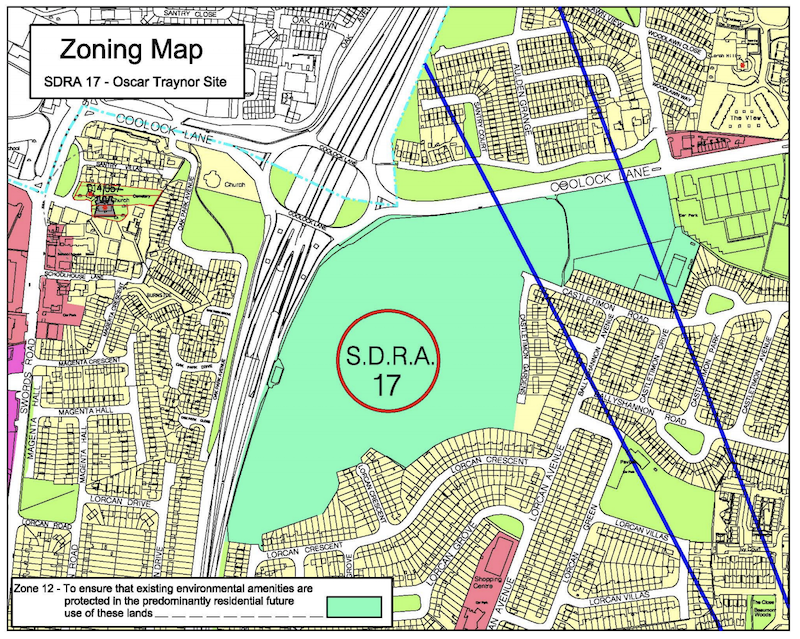
Zoning map Oscar Traynor Road near Coolock Lane
Zoning map for the Oscar Traynor Road area near Coolock Lane

We know that if the profit-motive is removed, affordable housing is possible: O Cualann Co-operative housing was able to deliver affordable housing on council-owned land in Poppintree for €178,000 (3-bed semi-detached).

We know that there are many not-for-profit entities willing to work with the city council to build the social and affordable housing we need.

It is on the public record that O Cualann engaged in the tender process for the Oscar Traynor Road site but was excluded from the process due to a requirement in the Competitive Dialogue model that demanded candidates have an annual turnover of €40 million for two of the last three financial years.

City council officials chose a procurement model that excluded small operators and not-for-profits, a model that would have resulted in: a) half the units constructed being sold at unaffordable prices out of the reach of many on middle incomes; b) expensive social housing in insufficient number; and c) an affordable purchase scheme that is in no way affordable.

No clear-thinking person could have viewed the original proposal as a good one. We can now create a better plan for the Oscar Traynor site but will have to organise the community to win it. To that end the Oscar Traynor Road campaign will keep going with the aim of achieving a better plan and uniting all forces who want to see social and truly affordable housing built in the city.

Podcast About the Oscar Traynor Deal

Reboot Republic’s podcast on the Oscar Traynor Road plan, with interviews with Councillor John Lyons (Independent Left); architect and analyst, Mel Reynolds; and Emily Duffy, former deputy director of Uplift,.

Oscar Traynor Road Podcast on Reboot Republic
The Reboot Republic podcast can be found at: https://tortoiseshack.ie/reboot-republic-podcast/

The Politics of the Oscar Traynor Road Development Plan

The housing crisis that has developed in Ireland over the last decade is a direct result of a series of decisions taken by Fine Gael, the Labour Party, the Greens and Fianna Fail to place the provision of housing in the hands of profit-seeking property developers, vulture funds and others. This dependency on market forces has failed miserably to deliver the social and affordable housing Dubliners need but has made a lot of wealthy folk a whole lot richer. 

The last five years have seen an exponential increase in rents and house prices. Tens of thousands of individuals, couples and families have experienced difficulties in accessing affordable housing, with many forced to live in overcrowded accommodation, others forced into homelessness, some deciding return to the family home as the private rental market left them with little to live on after the landlord’s rent was paid, whilst many have left the city to make their lives in a less expensive place.

Despite a decade of disastrous decisions, it would appear that despite all the evidence to the contrary, ministers and officials at national and local government firmly wedded to their pro-market housing policy positions believe that the only way to solve the housing crisis is to depend on developers. The thinking behind the defeated Oscar Traynor Road, Coolock, development plan was massively skewed by the outlook and self-interest of a small but powerful lobby group, the developers.

We can and must to better than this.

For details on the campaign or more information about the Oscar Traynor Road development you are welcome to contact me – Councillor John Lyons, Independent Left.

To read about the previous sell off of O’Devaney Gardens, click this link.

Report on development of Dublin City Council land at Oscar Traynor Road in Coolock

Report on Development of Dublin City Council land at Oscar Traynor road
The full report by Dublin City Council of their development plan for Oscar Traynor Road published in September 2020 is available here.

To view a copy of the full report of Dublin City Council of the development plan for Oscar Traynor Road click this link.

Public Meeting on the Oscar Traynor Road Development Plan

Dublin’s Housing & Planning Crises: Causes & Solutions.

Councillor John Lyons, TBA

The housing and planning systems in Ireland have been completely captured by market forces, with public policies that prioritize profits over people devastating the lives and well being of ordinary families, couples and individuals, as well as communities in general.

It is clear that Fine Gael and Fianna Fail have no interest in changing their policies as the people they truly represent – landowners, landlords, property developers and international speculators – are making fortunes out of the our housing crisis

So what can be done?

John Lyons, Independent Left councillor on Dublin’s northside, will explore the causes of the crisis in housing and planning, present the current state of play and will outline how we can collectively challenge the powers that be who prioritises property rights and and profits over the well being and health of people.

This public meeting on housing has been postphoned pending DCC’s deferred vote on the Oscar Traynor site, now scheduled for 22 November 2021.

Oscar Traynor Road Development on the Virgin Media 5.30pm News

Filed Under: Dublin City Council Housing

Ireland after COVID19: Unite the Union’s ‘Hope or Austerity’ road map

06/05/2020 by John Lyons Leave a Comment

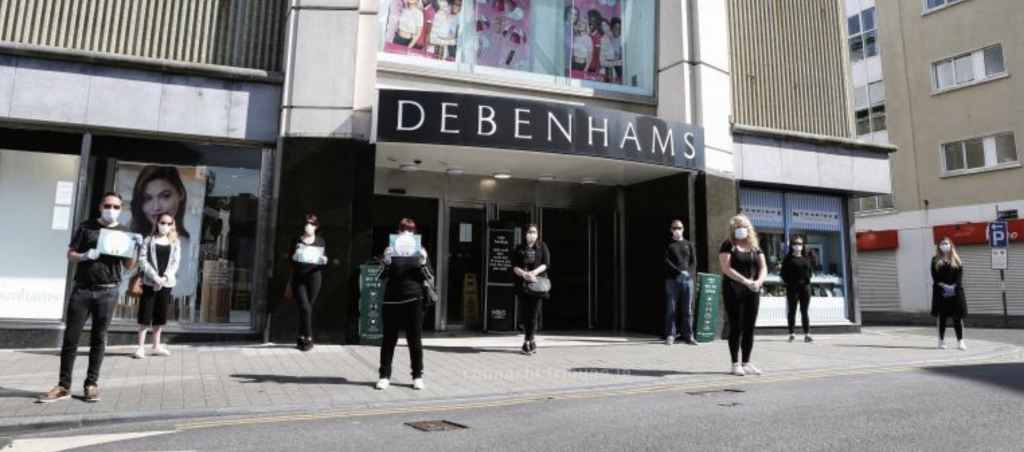
Nine workers, dressed in black, at least two metres apart, wearing masks are facing the camera outside of a Debenhams shop, beneath the store's sign, which is white writing on a black background.
Debenhams’s workers (members of Mandate) protest at shop closures and layoffs 21 April 2020

To date 3.6 million people worldwide have been infected by Covid-19, with over a quarter of a million (258,000) dying from the respiratory illness that attacks the lungs and airways. From December 2019 the virus travelled from its original source in southern China to all of Asia, Europe and the rest of the world in the space of two months, resulting in the World Health Organisation (WHO) declaring a global pandemic at the end of January. The pandemic has forced governments the world over to close their economies and lockdown their societies.

With more than four fifths of workers globally living in countries affected by full or partial lockdowns, a global public health crisis is leading to a global economic recession, with the International Labour Organisation stating that 6.7% of working hours globally have been wiped out in the second quarter of this year alone – equivalent to 195 million jobs worldwide. The global economy is in recession and may yet head into an economic depression.

Here in Ireland, north and south, there have been 22,248 confirmed Covid-19 cases and 1,375 deaths (6 May 2020). In the south we have spent the past five weeks effectively living in lockdown, instructed by state authorities to stay indoors, to go no further than a radius of 2km (now 5km as of 5 May) for our daily exercise and only engage in essential consumption – our weekly grocery shop.

The Irish economy has been deliberately shut down by the government: 598,000 people have lost their jobs, with another 427,000 people having their wages paid via a state subsidy; tax revenues are projected to shrink by 14 billion this year, and in their spring forecast the European Commission predicts that the Irish economy will shrink by 8% this year. It took more than two years during the last national crisis – the financial crisis of 2008 – for such numbers to develop, this time round it has happened in a little over two months.

The world has been rocked by the coronavirus, peoples’ lives have been turned upside down; shock, grief, fear and anxiety caused by pandemic and its economic consequences have left millions people reeling, with many feeling vulnerable and isolated. Ideal circumstances for the ruling class, the multinational corporations and their local political allies to take advantage and pursue a shock doctrine response to this global pandemic: to force the cost of the crisis onto the backs of the working class worldwide, to push more privatisation and deregulation, to further increase their wealth, power and influence.

We refuse to repeat the sacrifices of 2008

So whilst we have to remain physically distant we must remain socially close and politically critical. Some would want us to suspend not only our parliamentary democracy (with caretaker Fine Gael ministers last month bemoaning the convening of Dáil Éireann), but our critical faculties also. The old trick from the last crisis, the call to ‘don the green jersey’ in ‘the national interest’ as ‘we’re all in this together’ as a way to stifle criticism and suppress political debate has been used again during this crisis but this time it is not working.

People have lived with the consequences of the political decisions taken during the financial crisis of 2008 for more than a decade now, indeed the decade of austerity and the massive transfer of wealth from the working class to the rich resulted in the state being ill-prepared for the outbreak of such a pandemic and will likely mean that our societal and economic lockdown will last longer than many other countries.

The ease with which the cost of the financial crisis of 2008, resultant bank bailout and decade of austerity was foisted upon the people was in large part due to the lack of real opposition from the trade union movement. Insofar as there was opposition, small and sporadic though it was, it arose through the efforts of the small radical left parties. This was not effective in stopping the austerity. It was not until an alliance of trade unions, community groups and left parties formed to fight the water charges that a movement of critical size and power emerged to oppose one item on the austerity agenda.

This cannot be allowed to happen again. The trade union movement has to become the dominant force that shapes the response to the Covid-19 crisis to ensure that workers, families and communities throughout Ireland are not forced to pay for yet another crisis not our their making .

Unite the Union’s response to Ireland’s post COVID-19 economy

To that end, the Unite trade union recently commissioned the left-wing economist, writer and activist Conor McCabe to produce an analysis of what has happened to date and to sketch a socially just, economic fair and environmentally transformative pathway forward out of the economic and societal crisis we are currently living through, a document intended by the author to be ‘a tool to feed into the conversations we are having and the strategies and tactics we will pursue’ so that the Left does not ‘allow the right-wing and neoliberal voices in Ireland to dominate and shape the pathway out of the current crisis’.

You can read the Hope or Austerity document here.

Independent Left commends Unite for taking the initiative in commissioning the document Hope or Austerity as too often the Left is reactive rather than proactive. Indeed as the author notes ‘we cannot build the future we need unless we plan and fight for it’. In times of crisis we need clear thinking, critical analysis and robust debate, which this document provides.

Of course the crisis is evolving and as the author himself stated during a Unite May Day lecture it is a working document, written to feed into an on-going process of critical discussion and debate. There are parts that need expansion, like childcare and home care, and others that need to challenged, like the normalisation of the regressive and dysfunctional Local Property Tax.

Independent Left recommends a close reading of the document, welcomes the opening of discussion and aims to be a part of the comradely yet critical debates ahead as together we debate the best tactics and strategies to purse as we struggle for a better world.

Debenhams Workers in Ireland on Strike

A battle between Debenhams management and workers is a key one for all workers, at it is likely to shape the wider issues of who will pay for the impact of the COVID19 crisis on the economy.

On 9 April 2020, Debenhams Retail Ireland told 1,500 workers their jobs were gone as all 11 of its stores were closed. The company offered no redundancy.

The workforce is represented by Mandate, who have pointed out that the shops still have stock worth an estimated €25m and this should be sold to provide redundancy payments to the workers.

Mandate is demanding that more than a million items of stock currently in Debenham’s 11 closed Irish stores should be sold and the proceeds, estimated at €25m, distributed to former workers as part of a redundancy deal.

Even though it is extremely difficult to organise at a time of social distancing and closed stores, the workers voted to strike and deserve the support of all Irish workers.

Below is an interview with Councillor John Lyons and Debenhams’ strikers at the Henry Street Store, recorded 23 June 2020. The Debenhams workers are asking people to boycott the online sales of the company until the dispute is resolved.

Filed Under: All Posts, Independent Left Policies

The Quiet Collapse of the Parnell Square Cultural Quarter

04/10/2019 by John Lyons 3 Comments

By Councillor John Lyons, Independent Left

Painted illustration of the north side of Parnell Square, Hugh Lane at the centre with imagined colourful stalls along a pedestrianised street.
The plan for beautiful new cultural quarter for Parnell Square is faltering due to the failure of the private-wealth approach

A beautiful new library, part of an ambitious new cultural quarter encompassing places for learning, literature, music, innovation and enterprise, inter-culturalism and design, to be located at Parnell Square Dublin 1, was in store for Dublin and Dubliners. The Central Library in the Ilac Shopping Centre has its charm but this new library was to be something else, a civic space fitting for a twenty-first century capital city, especially one designated UNESCO City of Literature.

The Parnell Square Cultural Quarter, a 11,000 m2 development comprising a new city library and a range of social and cultural facilities –  a music centre, a design space, an innovation hub, a business library, a 200 seat conference space, an education centre, a café and an exhibition area – was to be Dublin City Council’s major flagship development, regenerating the north inner city as well as providing a new focus and destination at the northern end of O’Connell Street.

The  proposed  development was to include  work  to  the  existing  Georgian  houses  at  23  to  28 Parnell  Square  North  as  well  as  a  dramatic  new  building  to  the  rear  of  these  houses.  It included  20 and 21 Parnell Square  North and would have seen the creation of a new public plaza along Parnell Square North. It was intended that Dublin City Gallery The Hugh Lane would form part of the overall  Parnell Square Cultural Quarter offering and its role and impact would be expanded by the development of the new facilities. Magnificent!

I have supported this wonderful civic vision for Parnell Square over the last five years but with one recurring reservation: the funding model deployed to transform the vision into a reality was predicated upon 55% of the entire cost of the project coming through philanthropic channels. Yes, the rich Irish elite were going to be approached to cough up some of the money they save through our rather elite-friendly taxation system.

Alas, it was not to be. Unlike the Scottish-American millionaire philanthropist Andrew Carnegie who provided £170,000 between 1897 and 1913 to fund an entire network of libraries in Ireland (some 80 in total, 63 of which are still standing today), the millionaires and billionaires in twenty-first century Ireland appear disinterested in the kind of philanthropic activity Carnegie was involved in over one hundred years ago.

Parnell Square Cultural Quarter too Dependent on Private Capital

“Destined to fail,” some said; “bizarre”, said others; “doomed”, declared many. “Why the hell can’t we just fund it ourselves?” asked many more.

The cost of the project was estimated (in August 2019) to be in the region of €131 million. According to Dublin City Council’s executive Owen Keegan, a “unique feature of this project  is that Kennedy Wilson Europe Limited agreed,  on a pro bono basis, to assist the delivery of the project by providing seed capital to get the project through design, costing and final planning, leading the effort  to  raise the required  level  of private donations to  fully  fund  the  project and providing expertise to assist in the management of the project.”

This strange funding structure would have seen 55% of that funding raised via philanthropic donation(s) secured through the efforts of one of the largest private property landlords in the city. The rich folk of the city, and perhaps the country, were going to don the blue jersey and stump up the millions, with Dublin City Council agreeing to finance the other 45%.

Agreeing to allow US property speculator Kennedy Wilson take responsibility for fundraising over 50% of the cost of the new Dublin City Library at Parnell Square appeared like a particularly unusual way for Dublin City Council to go about raising the capital funds required for one of the capital city’s cultural flagship developments.

During my five years to date as an elected representative on Dublin City Council, however, I have become used to proposals which involve a heavy dose of the private sector: from housing construction, waste collection, water and sanitation to grass-cutting, housing maintenance, the involvement of private contractors is ubiquitous. The city council’s capacity to deliver these services has shrivelled through years of austerity and privatisation.

When asked by myself and other elected representatives why we couldn’t fund the project fully ourselves, whilst pointing to the obvious dangers of relying on private donations to raise over half the cost of the development, we were assured by city council officials that this was the best way to go about it.

So the Parnell Square Foundation, comprised of City Council officials and Kennedy Wilson representatives was established in 2013 to oversee the project. And according to city council report from July 2019, “considerable  progress has been made  over the past seven years… In particular,  all  the required buildings  have  been  brought  into  City  Council  ownership,  substantial  support  for  the  City Council’s vision  for Parnell Square  North  has been generated,  a world class design  has  been procured and full planning permission for the proposed development has been obtained from An Bord Pleanála.”

But here comes the “however”: Dublin City Council manager Keegan goes on to state in the same report that, “I have now been  advised, following work undertaken by a consultant engaged  by  Kennedy Wilson on behalf of the Foundation, that the required private fundraising could take over 3 years and that there is no guarantee it will be successful.” (My italics). The consultant’s interim report identified a number of potential obstacles to a successful fundraising campaign for the project including the following:

– the scale of funding required for the project relative to the sums raised previously for cultural projects in Ireland from national and international donors,

–  the fact that the Foundation has no previous donor base to act as project champions,

–  the intense competition for  philanthropic funding from high profile national cultural projects based in Dublin, which have already secured significant State funding and

– the fact that libraries have a lower affinity score with private donors than the arts generally. 

The rich ain’t interested, national government is nowhere to be seen or heard, and so the city council is left to pick up the pieces. Predictable but nonetheless devastating for the city of Dublin.

What Happens Now for the Parnell Square Cultural Quarter?

So where to now? Keegan proposes to proceed with the new library but to delay the redevelopment of the five Georgian buildings which were to house the new Cultural Quarter Education Centre, the Music Centre, the Design Space, the InterCultural Hub and the public realm works, thus effectively abandoning the wonderful civic vision for Parnell Square in favour of a piecemeal development.

Just. Not. Good. Enough.

So I have tabled the following motion to Dublin City Council in the hope that the entire Parnell Square Cultural Quarter vision can be saved and developed as one project, as initially conceived:

The elected members of this city council call on national government to include in this year’s Dublin City Council Capital Programme the necessary central exchequer funding to ensure that the Parnell Square Cultural Quarter, Dublin City Council’s major flagship civic development, proceeds in its entirety as envisioned in the planning permission granted by An Bord Pleanala in May of this year, namely the entire 11,000m2 development comprising a new city library, a range of cultural, education, musical and exhibition spaces and the enhancement of the public realm.

For More Information on the Parnell Square Cultural Quarter, see here.

Filed Under: All Posts

  • Page 1
  • Page 2
  • Page 3
  • Go to Next Page »

Copyright © 2024 · Aspire Pro on Genesis Framework · WordPress · Log in