• Skip to primary navigation
  • Skip to main content
independent left logo

Independent Left

Environmentalism, socialism, freedom and equality. #liveablecity

  • About
  • Featured Articles
    • How Farming Must Change to Save the Planet
    • The Housing Crisis: Causes and Solutions
    • Socialism in Ireland
  • Contact Us
  • Podcast
  • Animal Rights
  • Archive
    • Irish Socialist History
    • Dublin City Council Housing
    • Ukraine
    • Protests Ireland
    • Reviews
    • Irish Political Parties
    • All Posts
    • Independent Left Policies
  • Why join?

Ireland after COVID19: Unite the Union’s ‘Hope or Austerity’ road map

06/05/2020 by John Lyons Leave a Comment

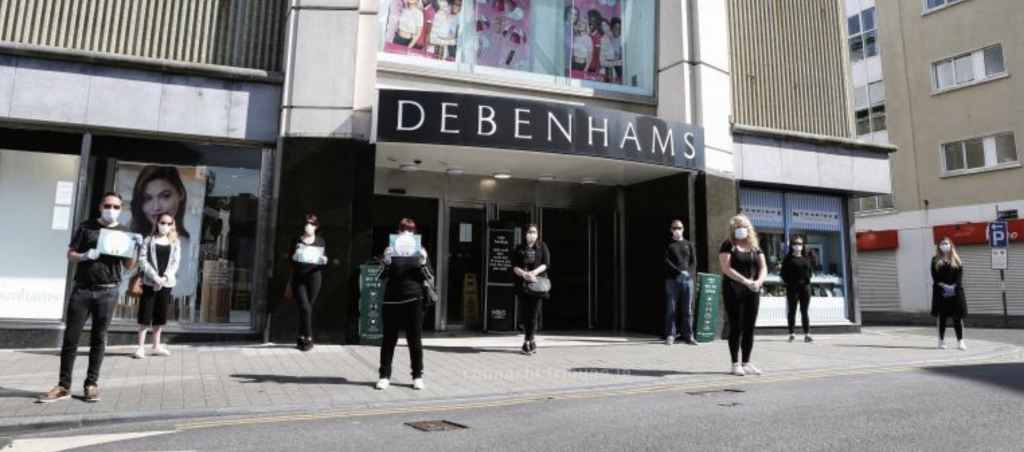
Nine workers, dressed in black, at least two metres apart, wearing masks are facing the camera outside of a Debenhams shop, beneath the store's sign, which is white writing on a black background.
Debenhams’s workers (members of Mandate) protest at shop closures and layoffs 21 April 2020

To date 3.6 million people worldwide have been infected by Covid-19, with over a quarter of a million (258,000) dying from the respiratory illness that attacks the lungs and airways. From December 2019 the virus travelled from its original source in southern China to all of Asia, Europe and the rest of the world in the space of two months, resulting in the World Health Organisation (WHO) declaring a global pandemic at the end of January. The pandemic has forced governments the world over to close their economies and lockdown their societies.

With more than four fifths of workers globally living in countries affected by full or partial lockdowns, a global public health crisis is leading to a global economic recession, with the International Labour Organisation stating that 6.7% of working hours globally have been wiped out in the second quarter of this year alone – equivalent to 195 million jobs worldwide. The global economy is in recession and may yet head into an economic depression.

Here in Ireland, north and south, there have been 22,248 confirmed Covid-19 cases and 1,375 deaths (6 May 2020). In the south we have spent the past five weeks effectively living in lockdown, instructed by state authorities to stay indoors, to go no further than a radius of 2km (now 5km as of 5 May) for our daily exercise and only engage in essential consumption – our weekly grocery shop.

The Irish economy has been deliberately shut down by the government: 598,000 people have lost their jobs, with another 427,000 people having their wages paid via a state subsidy; tax revenues are projected to shrink by 14 billion this year, and in their spring forecast the European Commission predicts that the Irish economy will shrink by 8% this year. It took more than two years during the last national crisis – the financial crisis of 2008 – for such numbers to develop, this time round it has happened in a little over two months.

The world has been rocked by the coronavirus, peoples’ lives have been turned upside down; shock, grief, fear and anxiety caused by pandemic and its economic consequences have left millions people reeling, with many feeling vulnerable and isolated. Ideal circumstances for the ruling class, the multinational corporations and their local political allies to take advantage and pursue a shock doctrine response to this global pandemic: to force the cost of the crisis onto the backs of the working class worldwide, to push more privatisation and deregulation, to further increase their wealth, power and influence.

We refuse to repeat the sacrifices of 2008

So whilst we have to remain physically distant we must remain socially close and politically critical. Some would want us to suspend not only our parliamentary democracy (with caretaker Fine Gael ministers last month bemoaning the convening of Dáil Éireann), but our critical faculties also. The old trick from the last crisis, the call to ‘don the green jersey’ in ‘the national interest’ as ‘we’re all in this together’ as a way to stifle criticism and suppress political debate has been used again during this crisis but this time it is not working.

People have lived with the consequences of the political decisions taken during the financial crisis of 2008 for more than a decade now, indeed the decade of austerity and the massive transfer of wealth from the working class to the rich resulted in the state being ill-prepared for the outbreak of such a pandemic and will likely mean that our societal and economic lockdown will last longer than many other countries.

The ease with which the cost of the financial crisis of 2008, resultant bank bailout and decade of austerity was foisted upon the people was in large part due to the lack of real opposition from the trade union movement. Insofar as there was opposition, small and sporadic though it was, it arose through the efforts of the small radical left parties. This was not effective in stopping the austerity. It was not until an alliance of trade unions, community groups and left parties formed to fight the water charges that a movement of critical size and power emerged to oppose one item on the austerity agenda.

This cannot be allowed to happen again. The trade union movement has to become the dominant force that shapes the response to the Covid-19 crisis to ensure that workers, families and communities throughout Ireland are not forced to pay for yet another crisis not our their making .

Unite the Union’s response to Ireland’s post COVID-19 economy

To that end, the Unite trade union recently commissioned the left-wing economist, writer and activist Conor McCabe to produce an analysis of what has happened to date and to sketch a socially just, economic fair and environmentally transformative pathway forward out of the economic and societal crisis we are currently living through, a document intended by the author to be ‘a tool to feed into the conversations we are having and the strategies and tactics we will pursue’ so that the Left does not ‘allow the right-wing and neoliberal voices in Ireland to dominate and shape the pathway out of the current crisis’.

You can read the Hope or Austerity document here.
Independent Left commends Unite for taking the initiative in commissioning the document Hope or Austerity as too often the Left is reactive rather than proactive. Indeed as the author notes ‘we cannot build the future we need unless we plan and fight for it’. In times of crisis we need clear thinking, critical analysis and robust debate, which this document provides.

Of course the crisis is evolving and as the author himself stated during a Unite May Day lecture it is a working document, written to feed into an on-going process of critical discussion and debate. There are parts that need expansion, like childcare and home care, and others that need to challenged, like the normalisation of the regressive and dysfunctional Local Property Tax.

Independent Left recommends a close reading of the document, welcomes the opening of discussion and aims to be a part of the comradely yet critical debates ahead as together we debate the best tactics and strategies to purse as we struggle for a better world.

Debenhams Workers in Ireland on Strike

A battle between Debenhams management and workers is a key one for all workers, at it is likely to shape the wider issues of who will pay for the impact of the COVID19 crisis on the economy.

On 9 April 2020, Debenhams Retail Ireland told 1,500 workers their jobs were gone as all 11 of its stores were closed. The company offered no redundancy.

The workforce is represented by Mandate, who have pointed out that the shops still have stock worth an estimated €25m and this should be sold to provide redundancy payments to the workers.

Mandate is demanding that more than a million items of stock currently in Debenham’s 11 closed Irish stores should be sold and the proceeds, estimated at €25m, distributed to former workers as part of a redundancy deal.

Even though it is extremely difficult to organise at a time of social distancing and closed stores, the workers voted to strike and deserve the support of all Irish workers.

Below is an interview with Councillor John Lyons and Debenhams’ strikers at the Henry Street Store, recorded 23 June 2020. The Debenhams workers are asking people to boycott the online sales of the company until the dispute is resolved.

Filed Under: All Posts, Independent Left Policies

Reading Lenin in the light of the collapse of the SWP and the ISO

22/04/2020 by Conor Kostick 3 Comments

A comparison of Tony Cliff’s Lenin: Building the Party with Paul Le Blanc’s Lenin and the Revolutionary Party

A clear, deep blue sky against which is a sunlit statue of Lenin, pointing to the viewer's left, palm open. His own left hand hold's the lapel of his coat for balance and his expression is determined. A 1954 Communist vision of Lenin.
The ISO self-destructed, the UK SWP shrank to a rump and the Irish SWP dissolved: what does that mean for the interpretation of Lenin that they shared, one derived from Tony Cliff’s book Lenin: Building the Party?

In 2013, not long after the British SWP went into dramatic convulsions over the way their party failed to support a young member in her allegation that a very much older and more senior member had raped her, I had reason to be in Chicago. While there I met up with the International Socialist Organisation (at the time a relatively successful example of a revolutionary party), gave a talk on Ireland’s revolutionary years and attended a dayschool of theirs on Lenin and the revolutionary party. The bookstall had copies of studies of Lenin by Lars Lih, Paul Le Blanc and Tony Cliff.

Anyone wanting to encourage the development of a revolutionary party has, of course, to form an opinion of Lenin. Before the ISO fell out with their British equivalents (i.e. the SWP), their approach to Lenin would have been profoundly if not exclusively shaped by the British SWP and in particular by the leading figure in that party, Tony Cliff. It interested me that the ISO had a wider outlook on the subject than was usual in the SWP and the enthusiasm of the bookstall organiser meant that I came away with a copy of Paul Le Blanc’s Lenin and the Revolutionary Party.

The cover of Paul Le Blanc's Lenin and the Revolutionary Party. A collage of a picture of Lenin speaking outdoors with a march of women workers. Black and white with a red bar dropping down from the top right corner with the author's name.
The cover of Paul Le Blanc’s Lenin and the Revolutionary Party

This book was first published in 1990 and I had never read it because having inhabited a rather closed-minded organization, I felt there was little that someone closely aligned to the politics of Ernest Mandel would have to say on the subject that would be useful. After all, as I was told and believed at the time, I had been guided in my understanding of Lenin by someone with vastly superior politics to those of Mandel: Tony Cliff. More than this, as an SWP organiser in the UK and then in Ireland I had always used Cliff’s Lenin: Building the Party as the essential text for explaining the theory behind SWP party-building methods to those members who I anticipated would go on to play leading roles in their branches and nationally.

A photo of the jacket of the 1986 edition of Tony Cliff's Lenin: Building the Party (Bookmarks). The title is in thick black letters across the middle of a white cover, beneath a picture of a barricade taken during the 1917 revolution. The word Lenin is in mauve, in. the bottom right corner.
1986 edition of Tony Cliff’s Lenin: Building the Party (Bookmarks)

The ISO – in the words of one of their organisers – said at the time that they drew on a canon of the best of other traditions and individuals to inform their attitude to Lenin and the lessons for today in regard to the revolutionary party. This sounded admirably open-minded. But I couldn’t help wondering if this willingness to promote other studies of Lenin than that of Cliff was, in fact, a watering down of the revolutionary Lenin in favour of a more Occupy-friendly version.

Given the 2019 collapse of the ISO, it is also reasonable to ask whether a move away from their traditional, if one-sided, reading of Lenin contributed to the crisis?

Then too, there was the 2018 submergence of the Irish SWP (I was a member at the time they voted to become a network within People Before Profit, yet I had no opportunity to vote on the decision; no documents were sent to me for consideration; no invitation was made for me to offer my views. I accidentally discovered from an online post that the party I thought I was a member of had gone). When you combine this with the self-destruction of the ISO and the rape-apologist behaviour of the UK SWP, the word ‘crisis’ is barely strong enough to encapsulate what has happened to parties of this type, who were once all thriving and united in a common organisation: the International Socialist Tendency.

It seemed evident to me that the failure of these parties meant that every aspect of SWP theory had to be looked at again with new eyes. Moreover – somewhat reluctantly, since it was time consuming – I felt that I had to make more of an effort to re-examine my attitude to Lenin. Without doing so, I was missing out in regard to developing my own understanding of the issues of party of class in an age when new means of communication mean some of the the old certainties, such as the essential role of the physical newspaper (a major topic in Cliff’s book), were fast becoming obsolete. So I reread Cliff and studied Le Blanc.

Side by side: Tony Cliff vs Paul Le Blanc on Lenin

The first thing to say about these books is that the story they tell is an inspiring one. Lenin became a Social Democrat (i.e. Marxist) in 1893, at the age of 23. Twenty-four years later, at 47, he led the successful Russian Revolution. Trotsky met revolutionaries in 1896 at the age of 17; he was 38 when he oversaw the October insurrection. Reading again the story of Lenin reminded me that when I became a revolutionary, during the great miner’s strike of 1984-5 in the UK, I thought that by now I would be living in a post-revolutionary era. After all, it took only twenty-four years for Lenin to go from next-to-nothing to the 1917 revolution.

It is worth noting that the experience of Western revolutionaries 1985 – 2020 has been a low-key one in comparison to the storms experienced by Lenin and Trotsky’s generation or that of the next. This, of course, is about to change and one reason why I’m delighted to have come through the experience of having COVID19 is because socialist politics are clearly going to be relevant in the 2020s.

At the deepest level, the crisis of the International Socialist Tendency is explained by this relative historical quiescence. Although the specific problems that arose in the UK and the USA deserve close analysis (with particular attention being paid to the question of who controlled their assets, worth a great deal), there’s a reasonable chance that the flaws in these parties and especially the emergence of a predatory male elite would not have become fatal had their members been engaged with the ebbs and flows of profound social upheavals such as those dealt with by Lenin. They would have been more deeply rooted in working class communities who would not tolerate the kinds of behaviour that ultimately brought them down.

Lenin’s efforts to build a revolutionary party from 1893 onwards are fascinating and deserving of scrutiny because they culminate in his having decisive influence over the October revolution of 1917. The twists and turns and dialectical inversions and leaps of the development of the Bolshevik party, even in the quiet years, are compelling to read about, because each argument at every stage really mattered. Each conference, debate, new pamphlet, new recruit, split, had consequences that rippled out over time to affect millions. Both books grasp this process well and while Le Blanc’s is the more scholarly in an academic sense, Cliff’s holds up surprisingly well in terms of the effort he made to contextualise each moment of the drama.

Neither author was able to access untranslated Russian source material directly. Cliff was perhaps the more eager to seize upon a tiny detail in a memoir to illuminate a particular moment. Le Blanc prefers to sum up contextual situations by reference to a secondary source, usually a work, to be fair, that is based on a detailed study of the Russian sources. Opening Lenin and the Revolutionary Party at random and finding an example, this type of statement is typical (p. 234): ‘As Hasegawa writes, “by the fall of 1916 the [Menshevik] workers’ group was obviously losing ground to the Bolsheviks and to regain its lost influence among the workers, the workers’ group turned leftward in December 1916.”’ This methodology is often unsatisfactory, as often the point being made by the secondary work comes across as an assertion without foundation. I wanted to see the primary evidence for the point being made.

Another difference between the books is that Le Blanc makes more of an effort to contrast his reading of Lenin with those of right wing or social democratic authors. This works to a certain extent, in ‘rescuing’ Lenin from the stereotype of the ruthless Machiavelli, but it surrounds the story with a commentary that is much less interesting than Cliff’s if your focus is the question: what does this all mean for revolutionaries today? In other words, there is no question but that Le Blanc’s is a much more helpful book for a student battling against ideologically driven attacks on Lenin. But for building the party, Cliff’s approach, potentially, has the advantage. At various points, Cliff puts the breaks on the narrative to digress with generalisations about party building and it is these generalisations that served for years to inform the practice of those on the SWP branch, district and national committees both in the UK and Ireland.

Cover of the 1994 pamphlet, The SWP versus Lenin by Ian Land. Mostly black, a white stencil of Lenin's face is in the lower two-thirds, with the details of the book at the top. Red, white and black colours only
Ian Land’s 1994 critique of Cliff’s view of Lenin remains the most insightful

I say ‘potentially’ because of course, the conclusions about the revolutionary party that Cliff drew do not, in fact, have the emancipatory power I once thought they did. Here, I think the best critique of Building the Party comes from Ian Land in 1994.

The cover of Lars Lih's Lenin Rediscovered. A Kandinsky background, mostly yellow, with the book details in a brown box in the centre upper half.
Lars Lih, Lenin Rediscovered

Lars Lih does an impressive job of overthrowing various paradigms concerning misrepresentations and misunderstandings of Lenin (not only those of Cliff), using 600 pages of densely sourced argument in his book Lenin Rediscovered. And that is very valuable. But to understand what particular lens was distorting Cliff’s view of Lenin you only need a few lines. In Cliff’s experience of leading the SWP, you had to battle hard for a new orientation for the party and the people you were battling against were those who had most immersed themselves in the old orientation. Your weapons? Exaggeration and youth. Cliff was expert in galvanising the openness of new members to new tactics to turn them against older members who might resist the new course.

So we learn this about the young Lenin from Cliff:

This readiness to bend the stick too far in one direction and then to go into reverse and bend it too far in the opposite direction was a characteristic that he retained throughout his life. It was already clearly apparent at this early stage of his development as a revolutionary leader.

Later, in discussing the rules of the party, Cliff wrote:

An overformal party structure inevitably clashes with two basic features of the revolutionary movement: (1) the unevenness in consciousness, militancy, and dedication of different parts of the revolutionary organisation; and (2) the fact that members who play a positive, vanguard role at a certain stage of the struggle fall behind at another.

If you are trying to explain to a party member why, having campaigned on a certain issue in a particular fashion, the party is now doing something radically different, these formulations are a great help. They address an important truth, which is that the currents of revolutionary politics are fast changing and the party has to be able to make swift turns and not be trapped, for example, by the moralism of a declining campaign, into substituting for a real movement. Nor must a revolutionary party be afraid of pouring every resource behind a critical strike, say. But Cliff’s formulations address this truth in a one-sided fashion.

Is it accurate to characterise Lenin as believing he was being excessive but that the outcome would justify his exaggerations? In other words, was Lenin willing to deliberately present a distorted picture of the world to win his perspective? In short, the answer is ‘no’. Le Blanc and Lars Lih and my own reading of Lenin’s works convince me that fundamentally at every stage Lenin believed that the truth was on his side, at least until events proved otherwise. Holding doggedly to a particular focus and task for the party is not the same as telling the party something which deep down, you do not actually believe, but which you consider expedient.

Here’s how one staunch defender of Cliff puts it in more recent times:

Cliff had learned from experience that shifting an organization of several thousand members (as oppose winning an academic or historical debate) from one strategic orientation and one way of working to another to meet the challenge of changed circumstances, required an almighty great tug on the relevant levers and, sometimes, a certain exaggeration. For Cliff achieving the desired end was more important than terminological exactitude or consistency and he rather thought, as do I, that Lenin felt the same way. http://johnmolyneux.blogspot.ie/2006/11/lihs-lenin-review-of-lars-t-lih-lenin.html

There is an evasion here. The argument is not whether Lenin was fussy about terminology but whether Lenin ever felt it necessary to deliberately exaggerate ‘to achieve the desired end.’ John Molyneux believes so. I do not. Lenin was fully aware the dialectics of revolutionary socialism do not allow for the separation of means and ends. The means you adopt will shape the end you arrive at. The moment you cease to tell the truth, no matter how unpalatable or how it works against the point you want to make, is the moment you abandon the prospect of realising a socialist society. I say this for entirely practical as well as moral reasons.

Secondly, look again at the question of party structure. It is an observable fact that all revolutionary parties are uneven, Cliff’s (1), but (2) is not as clear cut as it seems because it contains a value judgement. Who decides whether a member is falling behind? While another member is being ‘positive’? The true test has to be in regard to how effective the respective members are in changing the world. And judging that effectiveness is a complicated matter, where collective decision-making, honest accounting and democratic forms are essential. But in Cliff’s hands, this piece about rules can be read as follows: rules are all very well, but when some idiot is dragging the party down, it is necessary to find those who are getting results and use them to smash the conservatives, even if that means violating formalities.

Anyone expelled – or rapidly thrust from leading bodies within the SWP – by Cliff in the UK or Kieran Allen in Ireland will be familiar with what this depiction of Lenin meant in practice. But I think this depiction of Lenin also helps explain something of the attitude of those who have been in these parties for a long time and unfailingly endorse the initiatives of the leadership. Such long-term members have internalised the same ideas as profound revolutionary truths, which leads them to reason along the following lines: ‘I don’t want to be like the committee-men of 1905 who resisted the party’s turn to the class, therefore I will overcome my reservations and embrace the latest line. After all, this is the best way to test a perspective.’

Over time, the membership of the party learn to accept (and justify to themselves and others) that they have no meaningful input into the creation of new initiatives or the party’s position on crucial issues. This is in marked contrast to the vigorous and lively internal life of the pre-1917 Bolshevik party.

As a guide to the nature of a successful revolutionary party, Cliff’s interpretation of Lenin’s approach to rules only works if the party leader is always right. But who judges the judge? Who corrects the leadership when they are wrong? History? History has made its judgement upon Cliff’s party and its associates.

If Cliff’s Building the Party is flawed in this way, i.e. flawed at the points where it addresses the methodology of ‘stick bending’, is Le Blanc’s Lenin and the Revolutionary Party the better tool for guiding revolutionaries in the theory and practice of building the revolutionary party? I don’t believe so. In fact, despite the criticism I’ve just made, I’d rather give someone Cliff’s book, mainly because of its activist focus. Le Blanc’s is a very good history written by someone with a clear understanding of the political stakes in the various debates but it has half an eye on academia. This means the standard of scholarship is high, but at the cost of the book being less of a manual for revolutionaries. It also has some political weaknesses, perhaps the most important being the failure to articulate the full scope of Lenin’s anti-imperialism. The author has a soft spot for the Sandinistas, bringing them up to the level of the Bolsheviks, and also for Cuba. This means Lenin’s emphasis on not giving anti-imperialist movements ‘communist colouring’ is entirely lost.

Where does this leave me in regard to reading Lenin? I’m faced with a situation where an uncritical approach to Cliff’s works no longer serves, but where there is no obvious single alternative. Best, then, to read a variety of books from different perspectives and, of course, the works of Lenin himself.

Filed Under: All Posts

There are two worlds

11/04/2020 by Conor Kostick 2 Comments

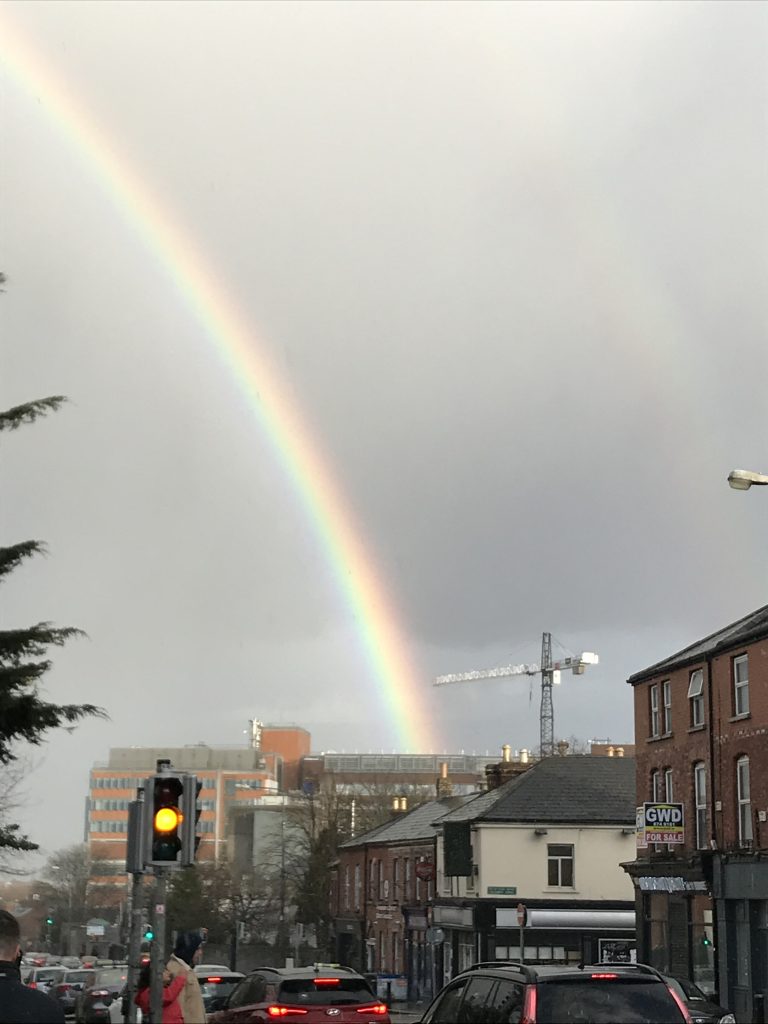
A grey sky with a rainbow, which touches the roof of the Mater hospital, Dublin.
A rainbow over the Mater hospital ICU

There are two worlds.

In one, people try to occupy themselves at home, maybe spend time in the garden where the birds are so lively just now, or watch TV or – although I found my concentration levels weren’t up to it – do something creative.

The other is darker and consists of those with COVID19.

Having crossed the invisible barrier into the latter, I had an intense realisation of these two worlds as I walked my partner to the emergency tent at the Mater hospital. It was sunny, probably, and there were so many normal people around: a group of builders, smoking and chatting, united by their day-glo jackets; two hospital staff, ID badges swaying, smiling; a large man just standing there on the corner of the road and – evidently unconcerned by our masks and her being in a dressing gown – not inclined to move. We skirted him.

I squeezed her hand one last time and watched from the entrance as the two staff members took her details then brought her further in. It occurred to me that this might be my last ever sight of her, but I told myself not to be alarmed, that she was much safer in their ‘yellow’ ward than at home. That she was lucky, in fact, because perhaps soon they would be turning away people who need monitoring for lack of staff.

And then I went back to the car and the waiting kids, along a street with the other world all around me.

One in which the sun was probably shining.

Dawn, Easter Saturday and she’s home. I’m lying on a mattress outside her door, like Cú Chulainn at the threshold of his king, my namesake. Outside, a pigeon is asking over and over, ‘look, can we, tee de?’ When it stops, the far sweeter chirp of a robin takes its place, but so rapid is the robin’s voice that even Democritus would have struggled to understand him.

Ever since we hung out a bird feeder, we have had a pair of robins in our back yard. I’m sure they are nesting in the thick, thorny bush that I was supposed to trim. I’m glad I never got around to that task, because our neighbour has a very attentive cat, who likes to walk on the top of the wall. He cannot get past the overgrown bush, no matter how carefully he tries to place his paw.

Heart irregularity, high blood pressure. In need of several days of bed rest. But her lungs are fine. Well, pneumonia to be sure, but mild. So long as she can rest in quiet solitude, she should get through this. Quiet solitude. That’s why I sleep at the door, for while the elven-year-old and the eight-year-old understand and respect the rules, we have a three-year-old who does not understand boundaries.

She’s awake already and after considering my unexpected presence says, ‘I don’t want you there.’ When I fail to disappear, she begins crying. Like the dawn birds, there is a cycle to the cry. ‘I want my mummy’, over and over. Not too much of a shriek, more an unhappy insistence. Every five chants I offer an explanation that I know won’t be accepted, but perhaps my gentle tone of voice does some good because she settles.

It helps that the eight-year-old, having woken, announces that there are eighteen hours and seventeen minutes until Easter. He started that timer three days ago.

Delighted with the prospect of chocolate and understanding that it is imminent my three-year-old is immediately cheerful. And it makes me realise there is a power in her refusal to see boundaries. I just have to follow her and I will find the way back.

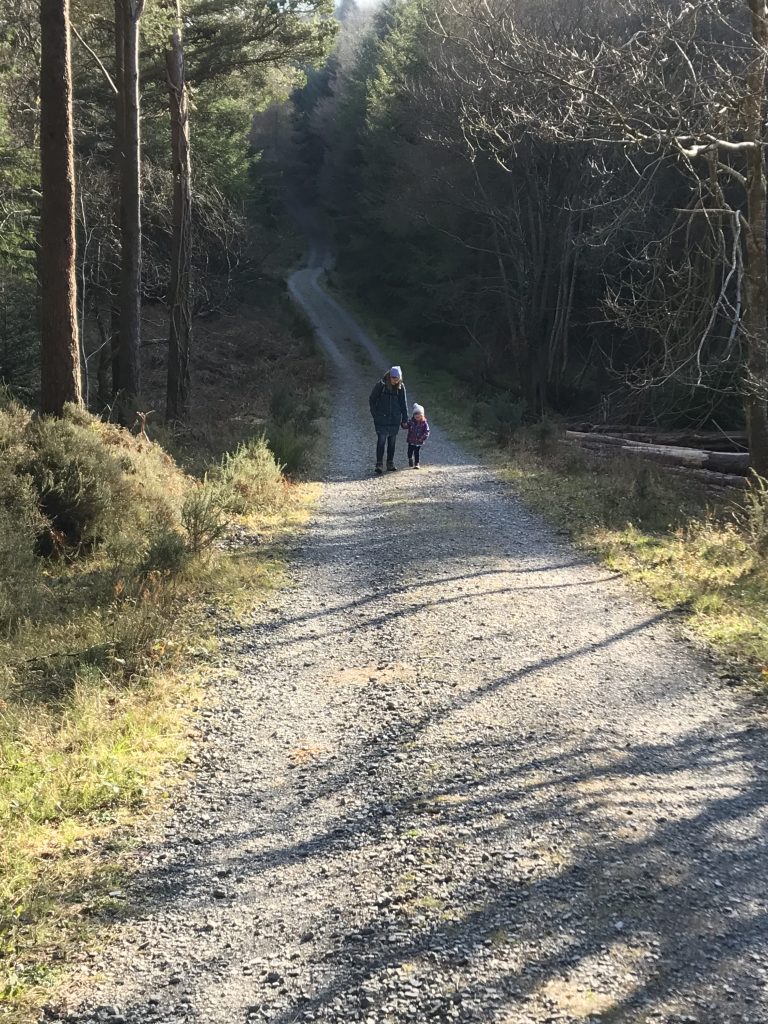
A path between trees, in the foreground it is light, in the distance it is dark. A little child is holding the hand of an adult at the boundary.

Filed Under: All Posts

Review: The Retreat by Conor Kostick

09/04/2020 by John Flynn 1 Comment

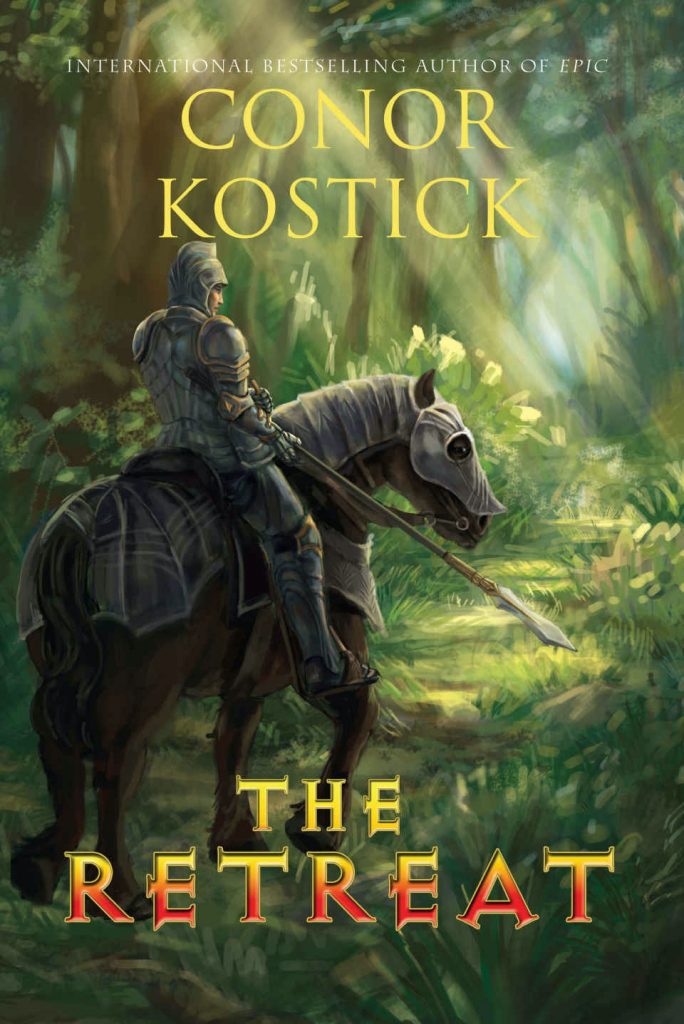
The cover of Conor Kostick's novel, The Retreat. A knight on horseback rides through a mysterious dark green forest. He seems despondent, to judge from the lowered lance.
Conor Kostick’s new book The Retreat is a ‘thrilling tale set in the Middle Ages during the crusades’

Conor Kostick’s new novel, The Retreat, is a thrilling tale set in the Middle Ages during the crusades. It is narrated by Guibert of Rocadamour, a naïve aristocratic youth, who joins a crusade expedition having soaked up the propaganda of the chansons and the chronicles. He is swiftly disabused of his illusions when the expedition is derailed at the outset, with the would-be crusaders sacking the castle of Devinium and stealing its wealth. From there, the novel follows a course of violent actions and reprisals all determined by the cupidity of the characters. So exciting is this tale that it is easy to overlook the political dimensions to the novel and the intriguing ambiguity at its centre. 

This is not a history. I write because I feel a dark geas upon me: almost as though I have been condemned to search my own memories and relive these experiences.

Throughout The Retreat, there are references to Hades, the underworld. The narrator, Guibert of Rocadamour, references the line that Achilles’ shade gave to cunning Odysseus: ‘you told him to choose one day of life as a slave in dusty fields over an eternity of death as the ruler of Hades’. Later, he imagines himself as Orpheus, another voyager to Hades. Geas is a Gaelic word that the dictionary defines as ‘(in Irish folklore) an obligation or prohibition magically imposed on a person.’ This central ambiguity about whether the narrator is dead provides a fascinating lens to interpret the novel. 

Historical accuracy is subtly present in the novel 

Kostick is also an historian of the crusades who has written works like The Social Structure of The First Crusade, which built on his doctoral thesis, ‘The Language of Ordo in The Early Histories of The First Crusade’. So, there is considerable historical erudition subtly introduced in the story. In Chapter 5, Guibert writes:

The news of an expedition travelling to the Holy Land had attracted peasants and burghers of all ages. Entire families of poor people had joined the enterprise: grandparents, parents, and infants. Some of these farmers and city dwellers bore arms, worthless rusty scythes or spears with flimsy points. Most didn’t. Then too, we had monks and nuns of all ages marching with us. 

The narrator is a noble who is forced to confront his class bias. This is fundamental to the story. Why? In part it is because the heterogenous make-up of the expedition’s members eventually upend his world view. Guibert often must rely on the good advice of Gerard, a commoner, for example, ‘I did not resent the fact that Gerard, a footsoldier, gave the orders for our army. Unnatural as it was by the standards I was used to at home, we were a long way from Rocadamour’. The is a double meaning in the word ‘unnatural’, implying both a break from the strict hierarchy but also ‘not existing in nature’. The excellent Song of Count Stephen which appears in chapter 16 captures the notion of a world turned upside down in one of its verses:

A monstrous roar comes from the trees. 

Another army has appeared where none should be. 

It is the cook, the nurse, the old and the sick. 

The smith, the washerwoman, the former serf. 

In their hands are tools not weapons of war. 

The world has turned upside down. 

To the monks, the nuns, adolescents and wives. 

Count Stephen and his knights owe their lives. 

There are some great conversations in the novel that quite subtly fill in the background realities of life in the middle ages. In one instance, there is a tantalizing glimpse of religious heterodoxy when Robert, a knight tells Jacques, a mercenary, about his experiences in the Holy Land. ‘Did you know the Bible doesn’t have all that should be in it?’ Guibert’s tart appraisal is, ‘his voice had in it the enthusiasm of men and women who carried obsessions in their hearts’. ‘Enthusiasm’ conjures up images of religious heresy which was rife in the middles ages.

Later in the novel, Gerard offers an amusing summary of the situation in Ireland, 

There are a hundred kings in Ireland, each with a dozen princes, each with a dozen lords and each of them has at least a dozen followers. But every one of these men reckons a descent from the high-kings and that he would make a great and famous king himself one day. So fortunes rise and fall there faster than anywhere else in the world. 

An historical novel about the crusades that shows how myths begin

We witness in the novel the myth-making process of the middle ages: the creation of chansons and chronicles which celebrate the valorous deeds of lords and knights. Through a single reference to a chronicle entitled The Deeds of Count Stephen the novel hints of the existence of a history of these events and the reader gets to witness the performance of a section of a chanson, The Song of Count Stephen, which exaggerates the bloody battle that we witnessed in the Beserkir chapter. Guibert is apotheosised as follows: ‘I am thunder and lightning. I am / Storm and wrath. I plunge my blade through iron / And bone. Unquenchable heat burns through me, / Like a forest fire.’ Guibert is slightly dismayed at the liberties that the poet takes with the truth. But the poet is unperturbed, ‘the song requires it. If you want history, speak of your deeds to a scribe. If you want fame, then have me leave the verse as it stands’ 

Turning the world upside down is probably one of the most enduring leftist slogans of all time, so it’s not accidental when it appears in the work of a left-wing writer. But here, its impact is compounded by the ambiguity at the heart of the novel. That is, the continual reference to ‘Hades’, the underworld, in lines like: 

And I had not rid myself of the sensation that the shadows of the forest were those of Hades and we were all dead, that perhaps we had all died in the field with the rest of Shalk’s army, it was just that we did not know it.

Or, 

 ‘…then the sky beyond the windows changed to a silvery grey and I knew we were now in Hades.’

Interestingly, this description occurs during the narrator’s nightmare episode in the chapter entitled:  ‘A Dream That Affrightens’. I count ten references to Hades in the novel. Is the narrator in fact dead, hence his susceptibility to the levelling of class distinctions? 

Class and gender are brilliantly interwoven in the relationship between Guibert and Cataline. Our narrator, the young knight, is full of the cliches of courtly romance while the peasant girl Cataline has already lived through a life of hardship and the savage death of her parents. Her post-coital words are profound: ‘Hush. It’s done. It’s all done. We live.’ Her later brusque rebuttal of his oppressive proprietary romanticism is brilliant and deeply problematic. 

I lay with you because you deserved it, for what you did for us. And also because I think we will all be dead soon. Why not enjoy a little sweetness while we can? But I’m not some farmer’s daughter with designs upon a local knight.

Guibert’s relationship with the woman Cataline is a lens through which to view the class differences in medieval society. Noble women did not go on crusades, whereas Cataline and Melinde (a powerful wife of a mercenary leader) are active participants. Guibert is full of romantic clichés, no doubt gleaned from chansons, whereas Cataline is alert the hard reality of life. Her experiences provoke Guibert’s observation that ‘a lady who had never experienced the certainty of her own death, never witnessed a battle, nor carried a knife to slit the throats of wounded enemies, such a lady could never understand and comfort me like this’. 

The Retreat is a tragedy driven by greed

Cupidity is the undoing of the expedition. Greed for loot provokes atrocities that propel the group towards disaster.  The ‘Mutur’ leader, Rainulf, murders the rapacious Bishop Wernher later in the novel and steals his treasure.

One of the most interesting aspects of the novel is the very just criticisms that characters direct towards their class enemies. For instance, when Rainulf disdains the contempt of Count Stephen (and Guibert, too), ‘do I need to witness the contempt of a man whose refined ways are paid for by the toil of a thousand serfs?’ While they are tracking down the forest dwellers that kidnapped Cataline, Guibert offhandedly makes a stunningly revealing statement of his cruel class position: 

‘Sometimes a serf runs. But they hardly ever get far. One time though, Count Theobald sent one of ours all the way back from Troyes. Runaways would never manage to set up a home or village of their own.’  

This is a savage world where the innocent are slaughtered by paid mercenaries, ‘when a man is paid to wield a sword, he loses the right to follow his own wishes’. There is a dark irony in an expedition ostensibly travelling to Jerusalem to ‘lift our sins’ (as Melinde says at one point), which perpetrates atrocities along the way.  

The Retreat is a great novel which merits a second reading to really get to savour the morally complex and brilliantly rendered ambiguity of this failed expedition. I read it the first time as a gripping and violent adventure tale. But then, looking through it again, I began to appreciate the novel’s many subtleties. It is fascinating how the novel successfully condenses so much of the world of the Middle Ages in the text.

The Retreat is currently available as an ebook or as an audiobook.

An online book launch for Conor Kostick’s novel took place on 2 May at 9pm (Dublin) via zoom.

The online launch of The Reatreat by Conor Kostick

Filed Under: All Posts, Reviews

The Connaught Rangers’ Mutiny of 1920

11/03/2020 by Conor Kostick 14 Comments

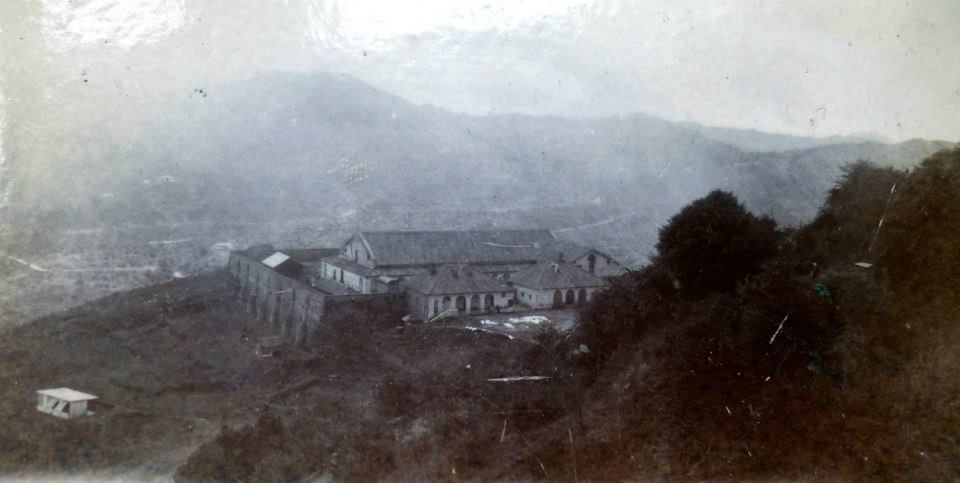
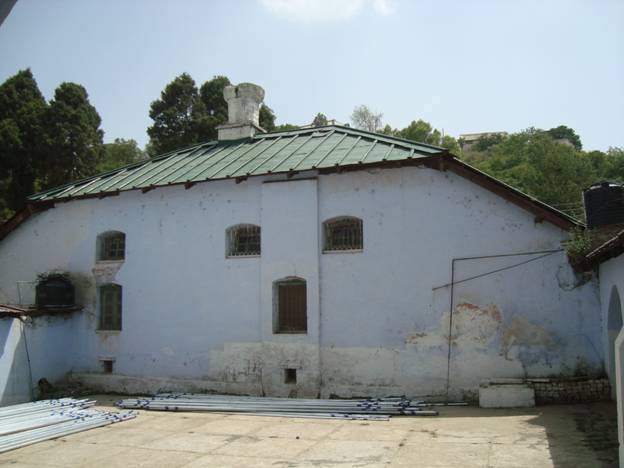
Dagshai prison, northern India, where 88 Connaught Rangers were imprisoned after mutinying in 1920. In a valley between two hills is a long building with grey triangular roof and whitewashed walls and arches. A mist fills the skies and the whole is rather bleak.
Dagshai prison, northern India, where 88 Connaught Rangers were imprisoned after mutinying in 1920

One of the most extraordinary acts of defiance against the British Empire took place in India on 28 June 1920 when four Irish soldiers, members of the British army, thousands of miles from home, decided to protest against the suppression of the independence movement in Ireland. The soldiers belonged to the Connaught Rangers and were stationed at the north of the country in the Wellington Barracks, Jullundur (modern day Jalandhar). At eight a.m. that morning, Joseph Hawes, Patrick Gogarty, Christopher Sweeney and Stephen Lally, all members of C Company, approached an officer they felt they could trust, Lance Corporal John Flannery, and told him that they wished to ground arms and cease fighting for the British Army due to the oppression of their friends in Ireland.

Jim Hawes, one of the initial instigators of the Connaught Rangers mutiny is shown in a full length black and white portrait. He wears the uniform of the Munster Fusiliers, his peaked hat resting on a table against which he leans, hands in pockets, a nonchalant expression on his face.
Joe Hawes, one of the leaders of the mutiny, in the uniform of the Munster Fusiliers

Joe Hawes had been on leave in Clare in October 1919 and had seen a hurling match proclaimed by troops with bayonets drawn. He had spoken about this with his colleagues (plus another man, William Daly) the night before and had made the point that they were doing in India what the Black and Tans were doing in Ireland. Their garrison was only ninety kilometres from Amritsar, where a massacre of Indian civilians had been carried out by British Indian soldiers less than a year earlier.

The four men wanted Flannery to have their addresses in Ireland in case their protest would led to their immediate execution. If they were going to die, they wanted to the true reason to be made known to their families. Then reporting to the guardroom, the protesters voluntarily asked to be arrested for being ‘in sympathy with Ireland.’

Joe Hawes and the start of the mutiny of the Connaught Rangers in Jullundur 1920

This initial action, however, rapidly changed from being one where a few individuals would prefer imprisonment and the risk of execution to continuing in their role as British soldiers to a full-blown mutiny of hundreds of men. Soon after the protest had begun, excited groups of soldiers gathered here and there in barracks talking about the stand being made by their four comrades. At that time, half of C Company, fifty men, were away in the Solon barracks (guarding an important route from Delhi to Simla). This left forty-six soldiers of the company who formed up for parade at nine a.m., with Hawes, Gogarty, Sweeney and Lally conspicuously absent. Another soldier stepped out of line, Jimmy Moran, and announced that he wanted to join his comrades in the guard room. With that action, the discipline of the remainder of the company shattered and twenty-nine more members of C Company, plus the (armed) duty guard himself joined the protest.

A black and white picture of a large parade ground with a very big building at the top of the picture. It is Jullundur barracks and has two floors, arched decorations around the windows and a triangular roof.
Jullundur Barracks, scene of the mutiny of the Connaught Rangers in 1920

Now thirty-five strong, the mutineers entertained themselves by singing rebel songs and shouting ‘Up the Republic!’. When the two-hundred strong B Company, who had been away at the nearby rifle range, returned and heard the commotion, the soldiers – still bearing their weapons – made their way to the guardroom and a lively discussion took place with the prisoners. Colonel Deacon, officer commanding, thought he could successfully challenge the mutineers in front of his men and so ordered B Company to sit on the steps of a bungalow nearby.

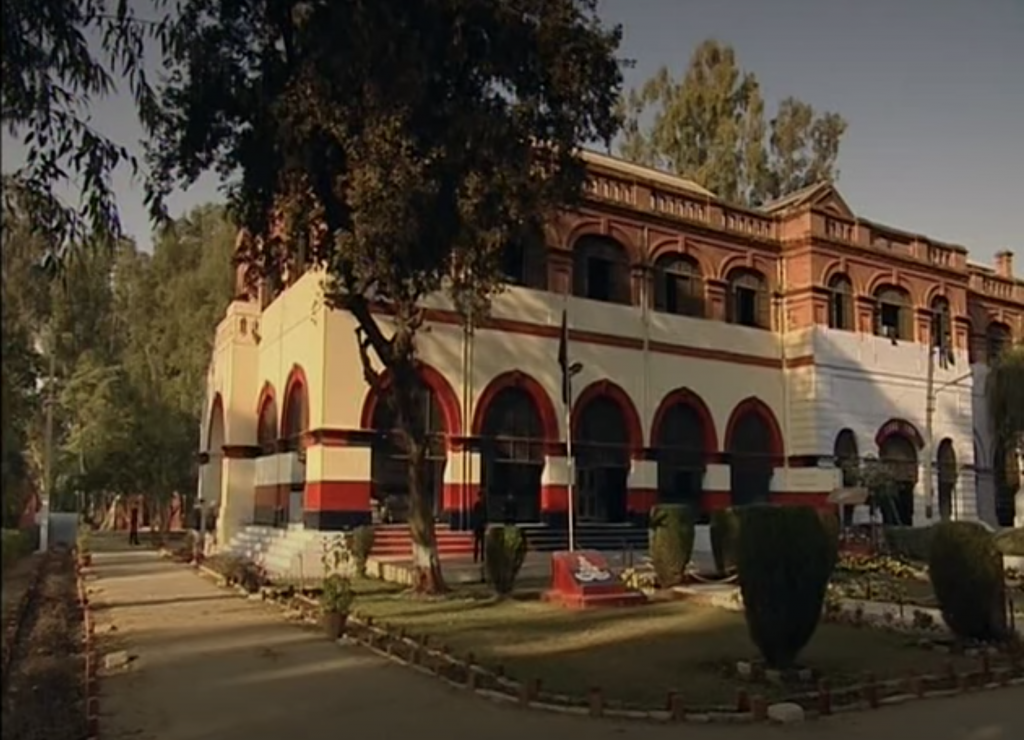
Colour photo of Jullundur barracks, where the mutiny of the Irish national sympathisers in the Connaught Rangers is still remembered. In modern times the arched building has an upper floor or orange brick and a large whitewashed ground floor, with tall arches and red and black horizontal lines painted towards the bottom.
The guardroom today, where the mutiny of the Irishmen in the British army is still remembered in India.

Deacon then had the protestors line up in front of the sitting men and proceeded to harangue the rebels, attempting to shame them with the great history of the Connaught Rangers; working himself up to tears with the regiment’s proud record; all their various honours. The colonel then offered to forget the whole matter if the protestors returned to their bungalows. Hawes, a private and therefore on the lowest rung of the military hierarchy, nevertheless stepped forward, uncowed and defiant, and confronted the senior British officer: ‘All the honours in the Connaught flag are for England and there are none for Ireland but there is going to be one today and it will be the greatest of them all.’ A resulting attempt to isolate Hawes was thrown back by the mutineers marching off in good order back to the prison with their hero safely among them. Humiliatingly for Deacon, when he now attempted to order B Company to move on, they refused to leave. Instead, they swarmed over to Hawes and his friends, leaving Deacon distraught. The other senior officers, along with NCOs hurried away as the rank and file soldiers realised they had the upper hand and could take over the whole barracks.

Rebel British soldiers form a committee and take over the Jullundur barracks

Urging Hawes to lead them, the crowd of Connaught Rangers released all the protesters from the guardroom and rallied as many other soldiers as they could. A rebel muster took place with around 300 participants. They elected seven soldiers to be their committee: Joe Hawes and Patrick Gogarty – two of the original protesters – along with John Flannery as messenger to the officers and Jimmy Moran, J.A. McGowan, Paddy Sweeny and James Davies as the other members. The Union flag was removed from a bungalow occupied by the rebels and replaced with a hastily sewn Tricolour.

Now in firm control, the mutineers doubled the guard; distributed the task of making regular patrols; placed a permanent guard to monitor the senior officers (to ensure they didn’t attempt any rash action that might lead to violence); put a guard on alcohol; and commissioned a hundred green, white and orange rosettes from the local bazaar. According to an army telegram of the time, the attitude of the men was respectful but ‘obdurate in their refusal to perform any military duty.’ That day, too, they sent messengers off some two hundred kilometres to A Company, who were stationed at Jutogh and the other half of C Company, who were in barracks at Solon.

A book cover illustration. In red writing: Mutiny for the Cause. Four British soldiers have taken down the union flag, which is on the ground, while one of them hauls up the Irish tricolour. Another, to the right of the flag pole, leaps in the air, hat held high. In the background is a barracks and several other soldiers with raised hands.
Mutiny for the Cause: cover of Sam Pollock’s
book on the mutiny of the Connaught Rangers in 1920

Frank Geraghty of Castleblayney, Co. Monaghan, was one of the mutineers who travelled to Solon and his background gives the lie to the official account of the mutiny by a regimental historian anxious to dismiss it as the action of ‘green recruits’. As Geraghty said in an interview, ‘I had served in France from January 1915 to the end of the war and had been wounded twice. And despite all my service, by mutinying, I knew what I was doing. But the news coming from Ireland disturbed my mind to such an extent that I was quite prepared to suffer anything, irrespective of what it might be.’

Of the sixty-one men subsequently tried for mutiny, most were veterans of the Great War, and, indeed, thirty of these had been in the British Army for more than five years: five bitter years in which several of them had fought at the Battle of Loos in 1915 and in a grim, cholera-stricken campaign around Baghdad from 1916 – 1918, before moving towards Egypt and engaging in a fierce encounter with German and Turkish troops near Jaffa in 1918, not to mention their notable achievement in capturing a Turkish artillery column.

These veteran soldiers were not afraid of fighting, nor had they mutinied as a result of inexperience and dismay at what being a soldier actually meant. They were profoundly aware of the vast power of the British war machine and up until 1920 had played their part in it. Now, however, times had changed. Joe Hawes later explained, ‘When I joined the British Army in 1914, they told us we were going out to fight for the liberation of small nations. But when the war was over, and I went home to Ireland, I found that, so far as one small nation was concerned – my own – these were just words.’

In the face of these politically resolute soldiers, it was difficult for the authorities to regain control. Major N. Farrell of ‘B’ Company, Connaught Rangers, tried to get his men to obey their officers once more and warned them that the mutiny would play into the hands of Indian nationalists and that they would all be slaughtered. To this, Hawes answered spiritedly, ‘if I am to be shot, I would rather be shot by an Indian than an Englishman.’ Local Indian feeling was, in fact, sympathetic to news of the mutiny of Irish soldiers in the British army. In Delhi, the popular newspaper Fateh reported the mutiny of the Irish soldiers as an implementation of Gandhi’s strategy of civil disobedience, demonstrating ‘how patriotic people can preserve their honour, defy the orders of the Government, and defeat its unjust aims.’

Some of those involved in the mutiny felt, too, that there was a real hope of an alliance with those involved in India’s struggle for independence. Stephen Lally, one of the leaders of the Jullundur mutiny and later a member of the IRA, recalled: ‘I thought we might as well kill two birds with the one stone, and if we could get the Indian National Movement with us it would mean a great victory not alone for Ireland but India as well . . . we could have officered the Native ranks and in a very short time India would have gained her freedom.’

A physical map of northern India in light green and yellow. A white border runs from top to bottom towards the left, beyond which is Pakistan. A purple arrow points to Jullundur and another to Solon. The letter barracks is directly north of Delhi at the start of the Tibetan mountain range.
Just 90km south east of Amritsar, where British soldiers had killed hundreds of civilians in 1919 was the barracks of Jullundur, the site of the mutiny of the Connaught Rangers that began on 28 June 1920

The mutiny spreads to Jim Daly and the Connaught Rangers in Solon

For the first two days, it did seem that momentum was with the rebels. Frank Geraghty recalled his mission to spread the mutiny to the rest of C Company in Solon.

On the 30 June 20, I with private Patrick Kelly, were detailed to go to Solon in the Simlar hills to communicate the fact that the troops in Jullundur had mutinied and to give the reason for the mutiny and to give instructions also that the mutiny, if they did mutiny, would be on the lines of passive resistance with no violence. I appealed to James Joseph Daly whom I approached as the most competent man and whom I knew personally wished to carry out an effort to start a mutiny. Daly, I knew, was inclined to the republican movement in Ireland.

A sepia-tinged photograph of 12th Platoon, C Company 1st Battalion Connaught Rangers. Four men sit on the ground in the front row (the second from right having a dog in his lap), eight are seated in the middle row and six men stand at the back. Highlighted in a green box is the young man, front row right hand side. This is Jim Daly, leader of the mutiny at Solon in 1920.
Jim Daly, C Company, 1st Battalion Connaught Rangers and his comrades, several of whom also joined the mutiny at Solon in 1920

Borne in Ballymoe, County Galway and raised in Tyrrellspass, Mulingar, County Westmeath, Jim Daly, was an ‘active sympathiser with Sinn Féin’ and responded with determination to the news from Jullundur. According to the version of events Daly later told to Hawes while they were in prison together, the men from Jullundur had been arrested on arrival at Solon but Daly could hear enough of their messages shouted through the bars to realise the situation. Although only 20 at the time of the mutiny and one of the youngest soldiers, that night he rallied about forty men and marched to the bungalow of the Commanding Officer to announce that they were taking over a bungalow in protest at repression in Ireland. In response, the C.O. told the men they were insane and switching between threats and inducements attempted to return the men to their duty as he saw it. The strongest argument at his disposal was that the action would be futile as they were thousands of miles from Ireland. After a long, hard silence Daly gave a curt response: nothing the C.O. said would avail. The mutineers left for their bungalow, which they named ‘Liberty Hall’, and as with their comrades at Jullundur, took down all the Union flags, hoisted the tricolour, made and wore Irish rosettes on their British Army uniforms and sang rebel songs.

A black and white picture of a young soldier in a uniform that has shorts. He seems to be smirking at the camera. This is a full length portrait of Jim Daly, the republican to whom the rebels at Jullundur looked to spread their mutiny to Solon.
The Jullundur mutineers looked to the known republican Jim Daly to extend their mutiny to Solon and the rest of C Company of the 1st Battalion, Connaught Rangers.

Next day, early on 1 July 1920, Major W.N.S. Alexander and his officers arrived at Liberty Hall and managed to get the mutineers to form up to listen to his address. The Major thought that his arguments were having an influence when:

A man named Daly stood in front of the parade; he informed me that similar action would be taken simultaneously by every Irish Regiment in the Army, and that the news would be published in every paper in the United Kingdom: whatever influence I had said may have had on the less determined of the mutineers was promptly wiped out by this man.

Colonel Woodbridge tried next but again, ‘Daly intervened and succeeded in wiping out the good impression made.’

On the night of 1 July 1920, scouts set by the mutineers at Solon, detected the imminent arrival of British troops. On this news Daly and his followers made a mistake, deciding to offer armed resistance to the recapture of the barracks. Lacking genuine contacts in the Indian nationalist movement, the best hope of the soldiers was not to escape and definitely not to fight against vastly superior forces but, as Hawes had urged, to keep the protest peaceful (despite serious risk of execution).

Led by Daly, about twenty rebels went to the company magazine building to attempt to get hold of their rifles. Earlier in the protest, Fr Baker, the camp priest, had urged the men not to carry arms. Lieut. C.J. Walsh, told the subsequent Court of Enquiry: ‘I was officer I/C of an armed guard mounted on the magazine. At about 2200 hours, four mutineers approached the magazine and tried to rush the Sentry. I covered the leader with me revolver. I cautioned these men and warned then that if they approached any nearer I would shoot them. They went immediately in the direction of their bungalow. About five minutes later an attack was made on the magazine by a number of mutineers armed with naked bayonets. By this time the sentries on the magazine were reinforced by the remainder of the Guard, and all Officers living in the line. The mutineers pressed on toward the magazine, they were challenged at least three or four times, they took no notice of the challenge, and, as a further warning I fired two shots from my revolver into the air. This had no effect, so I fired into the attackers who then withdrew. Shortly afterwards three men were removed on stretchers to the station Hospital, two of whom I heard were dead, and one wounded.’

The dead mutineers were Pte Peter Sears, The Neale, Co. Mayo and Patrick Smyth from Drogheda, who was spectating, rather than participating in the rush. Eugene Egan lived, despite having been shot through the right chest. Following a final desperate challenge by Daly to a bayonet duel with anyone on the other side, the mutiny at Solon was effectively over. With the arrival of loyal troops, the participants were placed under arrest.

British officers try to regain control of the mutinous Connaught Rangers

Meanwhile at Jullundur, Colonel Jackson had arrived to take charge of the crisis for the British army. He was in regular contact with the Commander-in-Chief for all India, General Charles Munroe. Under a white flag, Jackson entered talks with the leaders of the Connaught Rangers mutiny and insisted that they could not win: that the British army was intent on retaking the barracks, even if it required very soldier in India. This was almost certainly the policy decided upon by the authorities as they had already mobilised two battalions, the South Wales Borderers and the Seaforth Highlanders, both of which arrived with artillery and machine guns on 1 July 1920.

Militarily, the position of the rebels was now hopeless, but they continued to protest through passive means and in particular, were resolved not to give up the leaders of the mutiny for fear they would be executed: a very realistic appraisal of the thinking of the senior officers. Although some eighty soldiers abandoned the mutiny at this point, the others, over four hundred strong, marched out to prison camp together and refused to allow their leaders to be isolated. This defiance nearly cost dozens of lives, as the camp was designed to ensure hardship. It had almost no protection from the Indian summer sun and the water supply deliberately inadequate. ‘Inhumane’ was how a Captain Kearney put it and only the intervention of the Connaught Rangers’ medical officer prevented lives from being lost from sickness.

A more immediate prospect of death for the mutineers came from the threat of violence. In the process of being moved to another camp on 2 July 1920, Major Johnny Payne made another attempt to separate the leaders from the body of mutineers. He called out twenty names, which included the seven men on the committee. No one moved, so Payne ordered thirty soldiers to pull out one of the people he had identified (Tommy Moran) from the crowd. These soldiers failed and were disarmed in the physical tussle, leading Payne to order fixed bayonets and soon after, the final order before ‘open fire’, that of ‘five rounds, stand and load.’

Fr Livens, the seventy-year-old army chaplain rushed across to Payne and pleaded with the major, managing to delay the crisis by interposing himself between the soldiers with raised rifles and the prisoners. This was a crucial moment, where just in time a rider came hurriedly over, blowing a whistle to gain attention. This was Colonel Jackson who rebuked Payne in public and took over the command of the loyal soldiers.

Major Payne still had a hand in the subsequent mistreatment of the mutineers, forcing some of them to lie on the bare stone ground for hours with little or no food or clothing. James C O’Shea of Derry contracted a gastric illness that remained with him for the rest of his life. In trying to assert his rights, Payne told O’Shea he was entitled to ‘steel and lead and nothing else.’

Over the following days the British officers managed to whittle down the number of mutineers by offering free pardons to those who returned to duty and assuring the rest that they would face death by firing squad. By mid-July there were 48 former Jullundur Connaught Rangers in prison at Dagshai, where they were joined by Jim Daly and 40 men from the Solon mutiny. Conditions in Dagshai were harsh and they were deprived of all but the most basic sustenance. Private John Miranda died there and his case draws attention to the fact that a number of the mutineers were English rather than Irish. John Miranda was from Bootle in Liverpool. An English Sergeant Woods, who had earned a Distinguished Conduct Medal for his behaviour in France, explained his reasons for joining the mutiny to the Court Martial, ‘These boys fought for England with me, and I was ready to fight for Ireland with them.’

At one point, thanks to the sympathy of the Indian staff at the jail, a group of six rebels, including Hawes and Daly, were able to get outside. In order to address the scarcity of provisions, especially cigarettes, Hawes and Daly decided to raid the canteen at Solon. A successful overnight mission saw them return to the comrades in the prison with their ill-gotten cigarettes. Hawes later explained why they did not simply try to abscond:

It might be wondered why we did not make a break for freedom that night or any other night, but you must remember that we were in an alien country, thousands of miles from home, even unable to speak the language. Everyone would be our enemy both the king’s men and the native Indians to whom none of us could explain our position over the language barrier. Soldiers were not popular in India at that time.

The Court Martial of the Connaught Rangers who joined the mutiny of 1920

The court martial of the rebels, beginning with those considered to be the main leaders of the mutiny, began on 30 August 1920. Eventually 59 Connaught Rangers were given fifteen-year prison sentences, while thirteen men were sentenced to death. Fortunately for most of them, the political situation had swung in their favour. By the end of 1920 a radicalised Irish population were driving back British authority in the country and the generals considered it inexpedient to kill all thirteen out of concern for the possible public response. One man, however, they were determined to carry out the sentence upon: Jim Daly. The problem with commuting Daly’s sentence, as far as a review by Major-General Sir George de Symons Barrow was concerned, was the effect leniency might have on equivalent mutinies of British Indian soldiers. Barrow needed to retain the threat of execution as a palpable one.

Group D of the men facing court martial on 4 September 1920, at the top of the list is Pte. J. J. Daly with his sentence: ‘to be shot’. Picture from National Archives, UK, taken by Paul Stevenson

On 2 November 1920, Jim Daly, then 21, was executed at Dagshai jail where a curfew was in place to avert a rumoured Indian attempt to free him from jail. Years later one of the rebels, Michael Kearney of County Clare could still recall the horrible details of the execution.

I was awakened around dawn by the shattering bang of the death volley from the firing party of twelve. The governor of the prison, a humane man, lets us out of our cells later in the day and we had the melancholy experience of seeing the wall of execution.

The poor body had been almost truncated and some of the men gathered tiny portions of human flesh which adhered to the wall. These sad scraps were laced in a little matchbox and given to Father Baker to be buried with our heroic comrade.

With the Treaty negotiations at the end of 1922 came discussion of an amnesty on both sides and the Connaught Rangers who were in prison as a result of the mutiny were specifically included in it, leading to their release on 9 January 1923. Thereafter, however, it was a struggle for many of the men to obtain employment or state support. A campaign for a pension to be allowed the men led to a government report in 1925 that showed fourteen of the ex-mutineers were without work. Following the government refusal of the pension, mutineer John Lyons wrote that ‘those who fought for Ireland fought in vain’. Again, in 1933, a pension was discussed and investigation into the men’s circumstances found that four of the mutineers had died in Poor Law Unions, with six men being out of work. James Devers, who had been among those trying to attack the magazine at Solon was described as being in ‘desperate need.’ Only after the passage of the Connaught Rangers (Pensions) Act of 29 April 1936, were the men were able to claim military pensions from the Irish state based on the time they spent in prison.

Commemorating the Connaught Rangers’ mutiny of 28 June 1920

It should be obvious that the act of defiance by these Irish soldiers was an heroic one that deserves to be remembered and celebrated. To some extent, throughout the twentieth century there were moments that gave the public a chance to express their appreciation of the bravery of the mutineers in risking execution rather than continue to serve in an army that was repressing the national movement. On their return to Ireland there were celebratory meetings and a great deal of enthusiasm for the stand they had made. A poem in the Roscommon Herald, January 1923, gives a flavour of the public mood:

Minced with bullets, their comrade’s

Living flesh

Is spat into their ace,

As if to crush their Irish hearts

Or kill the spirit of their race.

Hopelessly the ruse met blank dismay,

Their determination stronger grew.

Their vows were made and sealed that day

To die for Roísín Dubh.

Had not kind Providence stepped in

And saved them from their doom,

Their hearts would now be lying still

Within the convicts tomb.

On 18 March 1928, a play by M.P. O’Cearnaigh, Flag of India,was performed at the Royal Theatre, Dublin to support the ‘Connaught Rangers Distress Fund’. Veterans of the mutiny paraded along O’Connell St c.1936.

A black and white photograph of a parade outside the GPO, O'Connell Street Dublin, probably taken in 1936. Underneath a banner that reads Connaught Rangers mutiny are seven men in long coats and pulled down hats. In front of them are a row of four women also in long coats and hats. The men were participants in the Connaught Rangers mutiny of 1920.
Veteran participants of the Connaught Rangers mutiny parade outside the GPO.

In the 1950s a campaign grew up to bring back the remains of Jim Daly, the Offaly-Westmeath Old IRA Memorial Committee voting in June 1954 to petition the government to make arrangements for Daly’s body and that of other mutineers to return to Ireland. Soon afterwards a number of local government bodies passed similar motions. The government, however, was not willing to raise an issue that might harm Anglo-Irish relations. In the run up to the 1966 commemorations of the Easter Rising the issue came back to public attention, this time with a precedent having been set in the reburial of Sir Roger Casement in 1965.

Thanks especially to the work of the National Graves Association, not only Daly but Sears, Smythe and Miranda were included in a growing public campaign for the return of the Connaught Ranger mutineers. Ultimately, the campaign was successful (except in regard to John Miranda, who had no family in Ireland) and ceremonies were held in 1970 at Tyrellspass for Daly and Glasnevin Cemetery for Sears and Smythe. Joe Hawes, then aged 77, gave a speech at both events.

Dagshai prison, the yard and wall where Jim Daly was executed. It is a large white building with two small dark windows high, like eyes and a rectangular window off the ground, like an open mouth. A dusty yellow yard in front of the building is where the firing squad formed up.
The wall at Dagshai prison against which Jim Daly was shot; the rifle fire nearly cutting him in two.

As we approached the centenary of the mutiny, an event was planned, which involved the erection of a monument to three of the mutineers who were from Sligo (James Gorman, Martin Boy Conlon and Jack Scanlon) and a series of short talks. Here, however, it should be noted that the effort to find ‘balance’ which caused the Fine Gael government to try to honour the RIC marred the event. For there are many British historians (such as Charles Townshend) – and plenty of Irish ones too – that have very little sympathy for Ireland’s revolutionary past and who construct arguments that belittle the role of figures like Joe Hawes and Jim Daly.

Downplaying the extent of radical Irish nationalism in the mutiny

One of the invited historians was Mario Draper, Lecturer at the University of Kent. Draper’s thesis is that the mutiny was less about Ireland than about discontent with local conditions. He dismisses the explicit testimony of the men that they were braving execution for the sake of Ireland’s national struggle as a ‘narrative of convenience’. In later life, he argues, these men were exaggerating the political side of their protest so as to get adulation and pensions. Instead, it was about local difficulties and poor communication between senior officers and the rank and file. Draper does not provide eye-witness reports to confirm an approach that would no doubt portray Spartacus as a gladiator who was merely disaffected over poor quality food, rather than the existence of slavery.

I, on the other hand, do value the testimony of the men themselves and I do give serious value to the importance of ideals in motivating human behaviour, to the point that people throughout history have been willing to risk their lives to challenge injustice and oppression. So when ‘Tom’ Tierney told Sam Pollock, ‘I didn’t think it was fair that our country should suffer what we fought to stop the Germans doing’, I believe that gives the answer to the apparent contradiction between someone fighting for the British army and yet protesting against the policy of that army in Ireland.

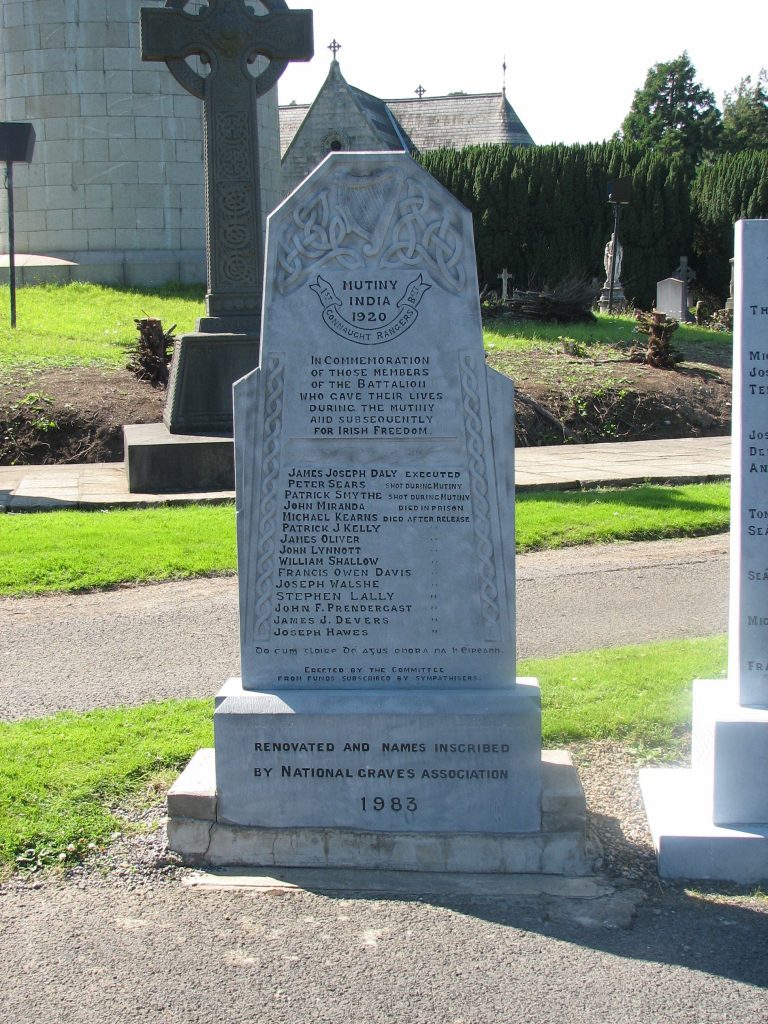
A headstone in Glasnevin Cemetery, Dublin. It has faint writing on it and lists fifteen men who were participants of the mutiny of the Connaught Rangers in 1920.
Glasnevin Cemetary monument in honour of the mutineers of the Connaught Rangers

There was many an Irish soldier who joined the British forces during the Great War in the belief they were stopping Germany from exploiting small nations and were earning a reward for Ireland. When, by 1920, it was clear that Britain was straining to the utmost to prevent independence for Ireland and was deploying the Black and Tans in a cruel effort to intimidate the population the same soldiers could experience a deep crisis and a determination to get out of the British army and help the volunteers. This was a journey that is well known for figures like Cork IRA leader Tom Barry and it is entirely plausible that the same considerations shaped the mutiny in the Connaught Rangers in 1920.

Brass badge with a crown on top of a circle. Around the circle are the words Connaught Rangers and in the centre a harp.
Badge of the Connaught Rangers

It is a profound insult to Joe Hawes and his comrades to doubt this was the real reason for the mutiny and to say that in later life they played up their desire to support Ireland’s struggle against the British empire because it suited their self-interest to do so.

Moreover, the contemporary evidence of the British themselves confirms that it was the mistreatment of Irish civilians that was troubling the hearts and minds of the soldiers. Lieutenant-Colonel H.F.N. Jourdain, wrote to the London papers, saying that the men had been ‘led astray by the accounts they had received about the Black and Tans.’ If the real issue behind the mutiny was local discontent why did the mutineers sing rebel songs? Wear green, white and gold rosettes? Fly the tricolour? During the court martial, the men from England who joined the mutiny were asked why they had protested on behalf of Ireland. None of them replied that they had other grievances. Rather, they expressed loyalty for their Irish comrades and sympathy for Ireland.

In 1970, a commemoration took place in Glasnevin cemetery for those who participated in the mutiny of the Connaught Rangers. Pictured is an elderly Joe Hawes, wearing glasses, looking down at a piece of paper from which he is delivering his oration. An army officer in uniform is on the left of the image and is glancing down at Joe's notes.
Joe Hawes reading at a 1970 graveside commemoration of the stand made by the mutineers of 1920.

It is unlikely that the Connaught Rangers who mutinied in 1920 got the 100 year commemoration they deserve from the current event. Fortunately, relatives who have organised in a Facebook group have managed to communicate a more inspiring message than, ‘it was only really about the men being given too much work’.

The mutiny of the Connaught Rangers was an incredibly brave and principled act on behalf of Ireland’s struggle for independence, one that was almost sure to lead to the participants facing the firing squad or many years in prison. That the men were willing to make this stand, rather than continue to serve an army behaving brutally in Ireland, should have been properly honoured in 2020.

Haiku from Gabriel Rosenstock on the Connaught Rangers

With permission from Gabriel Rosenstock, we share this bilingual haiku which was written in response to Lady Butler’s representation of recruitment for the Connaught Rangers in the west of Ireland.

Lady Butler's painting ‘Listed for the Connaught Rangers, recruiting in Ireland 1878’, painted by Elizabeth Thompson, known as Lady Butler. A sombre road leading towards the viewer has two men in peasant clothes walking best a sergeant in the red uniform of the Connaught Rangers a boy, also in the red jacket uniform is just ahead of the new recruits carrying a heavy bad. Two more soldiers are further back on the road. The pale blue sky, mountains and clouds behind the figures are spectacular and there is an air of the men leaving beauty for something dark.
1878 painting by Lady Butler of two new recruits for the Connaught Rangers, a copy of which hangs at Renmore Barracks, the original home of Connaught Rangers.
Éire scriosta  ...
fir thréana ag teastáil
i gcríoch na Gainséise

Ireland in ruins ...
strong men required
where the mighty Ganges flows

Recording of the online public meeting on the mutiny of the Connaught Rangers 28 June 2020

If you enjoyed this feature, you might like to read Conor Kostick’s account of the Kilmichael Ambush, in which the IRA scored their biggest victory over the Auxiliaries, the key British fighting force in Ireland in 1920.

Filed Under: All Posts, Irish Socialist History

  • « Go to Previous Page
  • Page 1
  • Interim pages omitted …
  • Page 3
  • Page 4
  • Page 5
  • Page 6
  • Page 7
  • Interim pages omitted …
  • Page 14
  • Go to Next Page »

Copyright © 2024 · Aspire Pro on Genesis Framework · WordPress · Log in