• Skip to primary navigation
  • Skip to main content
independent left logo

Independent Left

Environmentalism, socialism, freedom and equality. #liveablecity

  • About
  • Featured Articles
    • How Farming Must Change to Save the Planet
    • The Housing Crisis: Causes and Solutions
    • Socialism in Ireland
  • Contact Us
  • Podcast
  • Animal Rights
  • Archive
    • Irish Socialist History
    • Dublin City Council Housing
    • Ukraine
    • Protests Ireland
    • Reviews
    • Irish Political Parties
    • All Posts
    • Independent Left Policies
  • Why join?

Independent Left Policy on Animal Rights

24/08/2022 by admin 7 Comments

Independent Left policy on Animal rights
Inspired by the National Animal Rights Association, Independent Left has adopted the following policies on animal rights.

This animal rights policy is very much inspired by the goals of the National Animal Rights Association.

  • We believe that animals intrinsically have rights by virtue of being sentient but that they are just not recognised socially or legally yet.

    We fight for changes both in social consciousness and the law.
  • We encourage members to move to a vegan diet and not to use animal-derived products. Apart from the murder and extreme suffering involved, nothing that comes from an animal is ours to take. To do so would be a rights violation in itself and undermine campaigning for animal rights.
  • Animals are not ours to wear. As well as it being totally unnecessary, humans have no right whatsoever to wear fur, leather, wool or silk. All of these ‘materials’ were once part of a living creature, who did not volunteer themselves to become another product.
  • Animals are not ours to use for entertainment or profit. Animal circuses, greyhound racing, horse racing, zoos and aquariums are all animal-using and abusing industries that take advantage of animals’ vulnerability – merely to satisfy a perverse need to see, and make money out of, another species being degraded and exploited.
  • No form of animal testing is acceptable, whether it be for cosmetic or medical research purposes. Testing on animals does nothing to further medical progress for humans – and even if it did, it wouldn’t make it morally right or acceptable to use animals in this way.
  • We also recognise rights for invertebrates (e.g. crustaceans and insects). They too are living beings who deserve a life free of exploitation and suffering.

For an analysis of how farming has to change to save the planet, see the link. If you agree with this policy and with our belief that socialism and respect for the rights of non-human people go hand in hand then please consider joining Independent Left.

Filed Under: All Posts, Animal Rights, Independent Left Policies

Solidarity With Polish Women

22/06/2022 by admin 1 Comment

Solidarity with Polish Women Razem Campaign for Abortion Rights

The Polish left-wing party Razem alongside feminist groups have drafted a bill to end the abortion ban in Poland and provide legal and unconditional access to abortion until the 12th week. Having secured over 200,000 signatures, the Polish parliament are obliged to discuss the bill, which will be voted on 23 June.

Razem released the following statement and asked that it be shared widely:

Defending the reproductive rights of Ukrainian women in Ukraine, Poland, across and beyond the European Union: a global feminist struggle

Since February 24th, Ukrainian women are facing increasing levels of gender based violence as a consequence of the Russian invasion: (1) Russian troops are massively using rape against women and children as a war weapon. (2) Domestic violence against women and children has significantly increased. (3) Women displaced inside Ukraine and abroad, looking for safe shelter face an acute risk of gender-based and sexual violence. Rape and consequent forced pregnancies are present in all these forms of gender-based violence.

Although abortion is legally provided on request up to the 12th week in Ukraine, the war context has limited access to healthcare, including reproductive health services. The problem is particularly serious in the occupied territories, because of the displacement of healthcare practitioners, lack of medicines, targeted attacks on health facilities, and so on. Access to safe reproductive health, including family planning, contraception, abortion and maternal and newborn health is highly compromised.

Many Ukrainian women and children fleeing the war seek refuge in neighbouring Poland where abortion is criminalised and access to contraception is ranked the worst in Europe. Since January 2021, Poland’s new law on abortion bans all pregnancy terminations except in cases of rape, incest, or if the mother’s life is at risk. Theoretically, it is possible for a Ukrainian rape survivor to access abortion in Poland. However, the Polish law requires that rape be proved by a criminal investigation, in order to obtain a public prosecutor’s order to terminate a pregnancy. This is often impossible, and is an extremely time-consuming process which makes it hardly possible to terminate the pregnancy within the time limits.

In practice, Ukrainian displaced women and all women under Polish jurisdiction are being forced to choose between carrying an unwanted pregnancy to term in precarious circumstances or facing significant risks associated with clandestine abortions. Health staff, activists and friends helping women to terminate their pregnancies risk prosecution and prison. By the time Ukrainian displaced women finally manage to reach a country where abortion is legal, they are very likely to have exceeded the legal time limits, which is 12 weeks in most European countries.

Moreover, in some host countries, such as Slovakia, Ukrainian displaced women’s access to abortion is being questioned. In Hungary, all women must attend at least five medical consultations before accessing abortion procedures. And in Moldova, Ukrainian women cannot easily access the underfunded public health system and are mostly too poor to access private reproductive rights clinics.

Defending our reproductive rights, in Ukraine, in Poland and everywhere is a global feminist struggle in these times of conservative and neoliberal backlash taking place across the world.he right to abortion is being continuously attacked at different levels and from different fronts in several countries, while women in some other countries are still fighting to win that right. Attacks on women’s reproductive rights are part of a larger strategy of systematic destruction and control of women’s and workers’ rights by conservative and neoliberal forces. We call on all those who defend women’s rights around the world to fight with us for

Ukrainian women’s right to safe abortion on demand in Ukraine, Poland and across and beyond the European Union. We demand:

* The immediate legalization of abortion in Poland.

* The right to safe abortion on demand everywhere.

* The development and reinforcement of public services permitting access to healthcare including reproductive health for all women in Ukraine, in all European countries and across the world.

People Before Profit have called for a protest in Dublin 4-8 Eden Quay at 1pm Thursday 23 June.

Solidarity with Polish Women Protest 23 June 2022

Filed Under: All Posts

Evasions on the Left over Ukraine

26/04/2022 by Conor Kostick 22 Comments

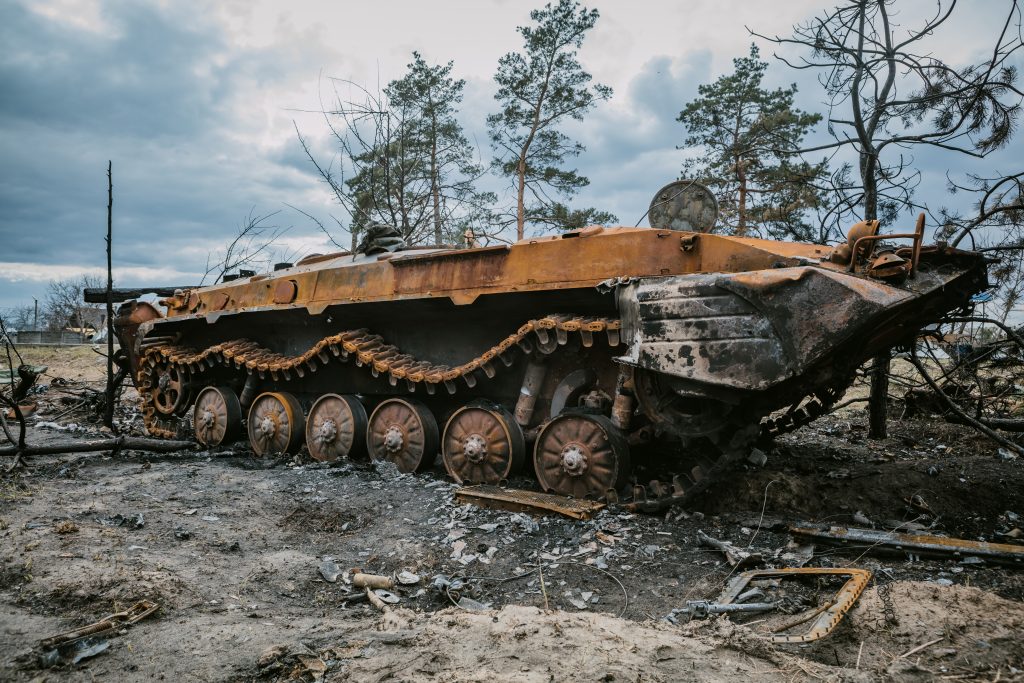
KYIV REGION, UKRAINE 05.04.2022 Russian BMP-2 burned by Ukrainian army
Burned out Russian BMP-2, 5 April 2022: Ukraine needs modern weapons to defeat the Russian invasion

Wars are not light topics that can be dispensed of with simple formulas. I, for one, cannot imagine how the success of Russia would further the cause of democracy and socialism around the world. If you do, then say so, openly, so it can be debated in public. But don’t falsify tradition and history and hide behind pathetic slogans. To paraphrase Marx, we Marxists disdain to conceal our views and aims.

John Ganz, Ben Burgis’s Bad History: Jacobin’s anti-Jacobins

There is a type of left argument around the war in Ukraine which has arisen in the West. It is one that condemns Putin’s invasion, but refuses to offer practical support to the people of Ukraine in resisting that invasion. It is the position one can read in Jacobin, or in statements by Chomsky, Corbyn, and the Stop the War Coalition in the UK. In Ireland we have the same type of response to the Russian invasion of Ukraine from People Before Profit and the Socialist Party of Ireland.

I will use the label Evasionist Left for this approach. It’s not clear how representative this trend is internationally, as many on the left do pro-actively support the resistance in Ukraine, e.g. parties such Razem in Poland; those associated with the Fourth International like Left Bloc and the Danish Red Green Alliance; and the main left party in Japan, the Japanese Communist Party.

Of course, there are pro-Russian figures around too, who claim to be on the left: although why anyone would want to be associated with Putin makes no sense. Russia is not in any way a socialist society. In fact, as Russian socialist Ilya Budraitskis puts it, Putin can be understood to be developing a new form of fascism. Explicitly pro-Putin figures are relatively rare on the left, and while they are busy sharing Russian propaganda, are not hugely influential. The left arguments I want to address here are those of the groups and their supporters who express opposition to Putin, but who refuse to take any steps towards bringing about a military defeat for the Russian invasion and in particular, are strongly opposed to the people of Ukraine obtaining arms from the West.

The groups supporting the Evasionist Left position seem to be basing their approach on two ideas: 1) Support for the resistance in Ukraine is support for NATO and 2) The war in Ukraine is an ‘inter-imperialist war’. My goal is to argue that these ideas are wrong and that if you take them seriously, you will find yourself on Putin’s side in the war. Often, when I try to discuss these points with their supporters, I hear only silence when I ask them to really think through the consequences of their formulations. But the war itself allows for no evasion.

Typical of the Evasionist Left position are features that speak out against the war in Ukraine and all wars, such as the Irish People Before Profit statement: No To War. Oppose Putin’s Invasion. Stop NATO Expansion. As with many articles by Jacobin and Stop the War (UK), the line taken by this statement is that Putin’s invasion should be condemned but the US are to be condemned equally.

The article concludes: “The real hope lies in an anti-war movement that crosses the border of East and West and opposes both Putin and NATO. We salute the actions of the Irish Anti-War Movement in calling people out to protest. We urge the international movement that came together to oppose the Gulf War in the past to rise again against the twin aggressors of Putin and NATO.”

World peace arising from a mass movement from below East and West would be lovely, but what is evaded here is the question of whether the left should support Ukrainian military resistance to the invasion. “Opposing the war” is a comfortable position to adopt if you are on the other side of Europe to the columns of Russian soldiers. But what does this conclusion mean for the people of Ukraine? Perhaps it means they should not fight back? Or perhaps there is room for supporting armed resistance to the Russian invasion, if it is decoupled from NATO? The point here is that in many cases, no one knows what it means. This is not a position that informs the people of Ukraine or those who want to express solidarity with them of what to do.

While we strive for international uprisings against war, should we want the people of Ukraine to defeat the Russian invaders in the meantime? Should we support or sabotage NATO armaments moving to Ukraine? Should we send money and perform solidarity actions that will allow Ukrainian anarchists and socialists to further their military resistance to the invasion? Or should we discourage them from fighting back, because they are unwitting tools of NATO?

These practical questions are a good way to judge the two key formulations that the Evasionist Left are using. And yet Marx’s claim that socialists don’t hide their views doesn’t seem to apply on the topic of Ukraine, where it’s difficult indeed to ascertain how these questions would be answered. Just to be clear, my own answers and those of Independent Left (and many other socialists and anarchists in Ireland) are yes, a victory for Ukraine against Russia would be the best outcome for the left and the world generally and yes, we should support the people of Ukraine getting arms from wherever they can, including from NATO. As Taras Bilous, editor of the left-wing Ukrainian magazine Commons, puts it, “the Western left, which criticizes military aid to Ukraine are outrageous. Do they want us to fight with bows and arrows when we have shot all our bullets? Do they want the Russians to kill as many Ukrainians as possible? That there were more Bucha’s?”

Based on the limited number of publications and occasional social media post, including exchanges with me, many Evasionist Left supporters do not in fact welcome the Ukrainian resistance, do not support people like Taras Bilous in their efforts to defend their cities. And to justify this they have advanced the two arguments above. These slogans are crucial to the orientation of the Evasionist position, and I believe they are quite wrong.

1. Support for the resistance in Ukraine is support for NATO.

A rather bad-faith version of this argument was visible after a UCU-supported demonstration on 9 April 2022 in the UK, in which a call for victory to the Ukrainian people was described as being “for NATO intervention in Ukraine”.

Such comments echoed the misleading headline by the UK’s Socialist Worker reporting on the demonstration, where they interpreted the call for arming the Ukrainian people to be a call for NATO escalation. To say that the people of Ukraine need arms is not at all the same as saying NATO should send troops to fight in the war.

A Russian convoy is approaching your town. The people around you join the Ukraine territorial defence to fight, several of them form their own socialist and anarchist units which you have the option of joining. But those internationally making the same arguments as above say, “No. Don’t escalate. It will lead to more war horror. And potentially nuclear war. Instead, let’s appeal to the Russian anti-war movement to save us.”

The position of these ‘left’ activists brings peace, but it’s the peace of a Putin victory, which not only means your town witnesses hellish scenes of rape and murder, that you could perhaps have prevented, but it also undermines peace for the future. Because understandably, when scenes of slaughtered civilians reach neighbouring countries there is a massive clamour for NATO assistance. Moreover, Putin will have concluded that after Syria and Ukraine, he can push on again, because fear of the horror of war, especially nuclear war, means the western left would prefer his victory to the victory of the resistance. And the Russian anti-war movement, that might have flourished as the Russian army was stalled and thrown back, is crushed by the wave of nationalism around the victorious Putin.

Fortunately, we are not yet in this scenario, above all because of the determination of the people of Ukraine not to surrender to the Russian invaders. Within the resistance to the invasion, the left are able to play an independent role. Here’s how Vitaliy Dudin, head of the Ukrainian democratic socialist organisation, Sotsyalnyi Rukh (Social Movement), described the situation from Cherkasy, Ukraine, on 6 April 6 2022:

“Some Social Movement activists, as well as many trade union members, have joined the TD as volunteers. It is worth mentioning that dozens of anarchists and socialists have formed their own unit within the TD, called the Resistance Committee.

“Secondly, a lot of leftists are helping as volunteers to supply the army or satisfy people’s humanitarian needs. One of the most effective initiatives in this regard is Operation Solidarity, which has managed to provide supplies to the militant left. We are also working to meet the needs of trade union members serving in the army.

“We have also worked with the nurses’ NGO Be Like Nina and helped them obtain medicines for hospitals that are taking care of wounded soldiers.

“Third, we see that a lot of people are protesting the invaders in occupied cities. We aren’t involved in such activity, but we support it. Of course, it is very dangerous because peaceful protests can be shot down by armed Russian soldiers. Such resistance proves that people are against the ‘liberation’ that seeks to turn their cities into grey-zones.

“Fourth, we as Social Movement continue to act as a political organisation. We seek to counter Russian propaganda and call on our people to fight for a free and fair Ukraine.”

By contrast, if the politics of the war in the Ukraine are resolved by the Evasionist Left approach, then we will see a Putin victory. You can’t negotiate any settlement with Putin, even a bad one for Ukraine that nevertheless de-escalates the threat of nuclear war, unless you stop his army and force him to realise he can’t implement his plan to eradicate Ukraine as an independent nation.

There is a better-faith version of the argument against NATO weapons going to Ukraine, which is to say, “I do want Ukrainians to defend themselves, but I don’t trust the US. Whenever they arm a side in a war, they have their own imperialist goals.” This observation about the US is, of course, correct, but do you really think people in Ukraine, especially the left, are under any illusions about the US interests at play? There’s a patronising assumption here that those demanding arms to prevent Russian soldiers from murdering their friends and families are dupes of US intelligence.

Similarly, I’ve heard socialists in Ireland say, “we have to weigh up different dynamics here, on the one hand, Russian imperialism, for sure; but on the other, US interests.”

If Ukraine is to defeat Russia the people there obviously need modern weapons. Anarchists have described how they are currently having to use machine guns from 1944.

A 1944 Maxim gun. Ukrainian anarchists and socialists fighting independently within Ukraine’s territorial defence are desperate for better weapons.

If you are someone who wants Russia to be defeated, but doesn’t want NATO armaments to arrive in Ukraine, you really need to think this through. Are you asking communities to defeat the Russian soldiers using only home-made Molotov cocktails and Second World War weapons? This seems to be the position of the Socialist Party of Ireland, who at least do support workers in Ukraine arming themselves. At the same time, however, their supporters are told: “In the Western capitalist countries opposition to NATO militarism and expansionism must always be a central feature of our propaganda, even where this is not currently the mood among the mass of workers. We stand against all military intervention on the part of U.S. and Western imperialism — this includes opposition to the provision of weaponry by NATO powers to the Ukrainian military. This in and of itself increases the threat of the conflict escalating more widely.”

Similarly, in a feature on 25 April 2022, Ukraine: The United States are now fighting a proxy war with Russia Kieran Allen (Socialist Workers Network, Ireland) argues that the Ukrainian people, “have every right to resist”, yet is opposed to them using NATO weapons.

It’s not at all unreasonable to keep an eye on what the US is up to. No doubt there are US hawks who are thinking now would be a perfect time to take Russia on and smash Putin’s army while he’s weak. We should oppose US intervention of troops, ships, and aircraft, mainly because of the risk of nuclear war but also because of their own imperialist record. But that’s not happening right now: yes, NATO countries are supplying weapons to Ukraine but at the time of writing they have not entered the war with Russia with their own armed forces. Sitting on the fence now in fear of what the US might do in future, again means not supporting those currently fighting the Russian soldiers. The same question faces the good faith left person as the bad: when the Russian convoy is approaching your town, do you fight back militarily? You can’t say, “well, there’s a balance of imperial interests to consider and I’m going to be neutral until I get non-NATO weapons.” That neutrality will be finished by a Russian bullet to the head to you and anyone else you have persuaded of your position.

Moreover, those trying to dress up this recognition of the interplay of rival imperialisms as if it’s something new are missing the obvious point that throughout the twentieth and twenty-first centuries, US and Russian imperialism always backed any movement that was fighting their rival. So when Solidarnosc rose up against the Communist Polish government in 1980-1, the CIA rushed to fund and influence the union. That didn’t stop it being a genuine mass movement which socialists of the type now adopting the Evasionist position recognised and supported.

Finally, on the legitimacy of the people of Ukraine taking advantage of inter-imperialist rivalry to obtain arms from NATO, there are very clear left precedents. For those of the Evasionist Left viewpoint who are champions of Lenin, it is worth noting Lenin’s response when France and Britain offered to give military aid to Russia to fight Germany, when he wrote: “Please add my vote in favour of taking potatoes and weapons from the Anglo-French imperialist robbers.”

He later explained:

The North Americans in their war of liberation against England at the end of the eighteenth century got help from Spain and France, who were her competitors and just as much colonial robbers as England. It is said that there were ‘Left Bolsheviks’ to be found who contemplated writing a ‘learned work’ on the ‘dirty deal’ of these Americans.

2. The war in Ukraine is an ‘inter-imperialist war’.

A second justification for not supporting the people of Ukraine fighting back against Russia is based on the idea of ‘revolutionary defeatism’. The tone here for Rebel in Ireland was set by an article by Kieran Allen, entitled, James Connolly and War.

The parallels with World War One in 1914 are striking. Then and now it was the weaker imperial power than began a new era of global conflict. In 1914, it was Austria who made the first moves. Today it is Russia, a country with a  commodity driven economy and a GDP that is one tenth that of the USA.

Just as James Connolly concentrated on challenging the propaganda of the Irish National Party and Britain, argues Allen, so socialists today should be revolutionary defeatists and recognise the main enemy is at home. Which means Irish socialists should concentrate on furthering the class war in Ireland.

Allen doesn’t spell out what revolutionary defeatism actually means in the context of the war in Ukraine: and the reason is surely that to publicly embrace the implications of his approach would be to declare that a Putin victory is the better outcome for those in the West. Again, let’s go back to the situation where a Russian column is approaching your town. A revolutionary defeatist position means that you should never give support to ‘our side’ in the war, even if that results in the other side obtaining military victories. That was the position of Karl Leibknecht in Germany and the Bolsheviks in Russia. They really did mean that they preferred to see their own countries defeated than support their own national elites in their war aims. And they were right. But transpose this policy to the soil of Ukraine and revolutionary defeatism can only mean a refusal to join the resistance and a refusal to support Zelensky, even if that means Russian victories.

The Evasionist Left position of condemning the Russian invasion, declaring support for the right of the people of Ukraine to fight back, yet taking a ‘defeatist’ approach toward Ukraine means giving no practical support for the resistance to the invasion. It is quite consistent with not wanting arms to get to Ukraine. Our main enemy (they say) is at home. It is our job to stop NATO. That might feel very principled from afar but it abandons the left in Ukraine and the population more generally to military defeat, with all that means for the massacres of civilians and the strengthening of Putin.

This is the contradictory but inevitable outcome of a flawed analysis. And the analysis is flawed for the simple reason that the Russian invasion of Ukraine is nothing like the outbreak of the First World War. Within a week of Austria’s declaration of war against Serbia in 1914, all the European imperial powers were in a full-blooded war against one another. From the Russian invasion until now, we have not witnessed the equivalent to French and British armies crashing up against the German army.

The more obvious parallel to make with James Connolly’s world is that of British rule in Ireland. For centuries Britain tried to rule Ireland directly, eradicating the Irish language and crushing Irish culture. This is a clear parallel with Russia’s history in regard to Ukraine. Just as Connolly was right to take German weapons to support an armed rising against the British empire, so the Ukrainian people are right to take weapons from wherever they can to rise against the Russian empire.

In a related feature based on the same defeatist idea, John Molyneux argues the left should not support sanctions against Russia. Sanctions, he says, are a feature of NATO’s war against Russian. They are, “an integral part of a political offensive waged by one of the imperialist blocs in this conflict – the bloc which, as internationalist socialists and opponents of all imperialism East and West, we have a particular duty to oppose because they are the bloc to which our ruling class is affiliated.”

Again, the analysis is that this war is not one of Russian imperialism attempting to crush a smaller neighbouring nation but an inter-imperialist war in which the main enemy is at home. In which case, one should not call for sanctions against Russia, because Russia is not the main enemy for the Western left: NATO is. Yet let’s go back to our approaching Russian convoy once more. Are there sanctions which will help stop that convoy reaching its target town in Ukraine? Yes, plenty of them. A good example is the closure of the tank factory at Uralvogonzavod:

Western sanctions can halt the Russian army

And another, potentially even more decisive closure arose on the basis of a fire at the Dmitrievsky Chemical Plant, Russia’s only internal source for vital chemicals.

The fire at the Dmitrievsky Chemical Plant threatens to leave Russia without additives needed for advanced rocket and jet fuels; treatments and solvents for servicing metal parts; core input chemicals for explosive and solvents, traces and washes needed to manufacture electronics and circuits. So long as sanctions prevent these from being delivered at scale, Russian military efforts will be seriously hampered.

Not all sanctions are appropriate, some are less concerned with assisting Ukraine than developing Western business advantages. But when the people of Ukraine call for Western sanctions focused on stopping the Russian war machine, they are right to do so, and the left should listen to them and support them. Ironically, the Evasionist Left position in fact supports sanctions against Ukraine, applauding actions such as those of workers at Pisa Airport, Italy, who refused to load weapons and explosives destined for Ukrainian forces. By hindering the military resistance in Ukraine and refusing all sanctions against Russia, the practical effect of the Evasionist Left is to align their political energies with a victory for Putin.

Both Anti-Imperialist and Inter-Imperialist?

In an article of 19 September 2022, Paul Murphy, an Irish TD and member of RISE, offered an analysis that attempted to bridge the position between those supporting Ukraine’s right to resist the invasion and those in the west who see NATO, not Putin, as the main enemy here. His conclusion was:

It means socialists must attempt to disentangle, to the degree possible, the legitimate resistance to Russian imperialist invasion, and the inter-imperialist conflict which we oppose.

It means supporting the right of Ukrainian people to resist. We don’t blame people in Ukraine for getting weaponry from wherever they can source it, but we do encourage them to operate on the basis of complete independence from NATO. If such genuinely independent forces existed, socialists could even fundraise to send them weapons. However, those of us living in the western camp, the dominant imperialist bloc in the world, cannot support NATO forces pouring weapons into Ukraine in the pursuit of an inter-imperialist conflict, risking an escalatory spiral that could lead to armageddon. We should support the Russian anti-war movement and demand the immediate withdrawal of Russian forces from Ukraine.

If a pure, revolutionary workers movement existed in Ukraine that was genuinely independent of NATO then RISE would not only support them, but would even fundraise for their weapons. It’s good to have such revolutionary credentials. Unfortunately for the actually existing socialists in Ukraine, such as Taras Bilous and those linked below, they aren’t sufficiently anti-NATO or in some other unstated way fail to pass the RISE test. Still, at least they aren’t to blame for their decision to fire guns and other weaponry supplied by the West and that will no doubt be comfort to their troubled consciences.

This ‘test-the-left’ position is evasionist in regard to the question of whether a victory for Ukraine under the neo-liberal Zelensky is preferable to a victory for Russia (or a peace with Russia having made territorial gains). The answer that Murphy skirts around seems to be ‘no’, because of the inter-imperialist aspect of the conflict. To achieve a Ukrainian victory risks armageddon.

The mistake here is to see the activity of the US and its goals in regard to Ukraine as being on a par to the those of Putin. There is a vast difference between the two. This is not a symmetrical inter-imperialist war where victory for either side would make no difference to the lives of Ukrainians and the fate of the world more generally. This is an imperialist invasion by Russia, where the defeat of Russia is by far the best outcome for everyone who dreams of a “just and humane world” as Boris Kagarlitsky puts it.

Victory for Russia or a settlement that gives it control of Ukrainian territory leads to ruthless military rule over the conquered people; it plays into the hands of the far right world wide; it increases the possibility of other land grabs by militarily strong powers; and, in particular, it keeps Putin in power. Defeat for Russia retains the space in Ukraine for trade unionists, social rights activists, and civil society generally to organise. It also has the potential to unleash revolution in Russia. Kagarlitsky believes, plausibly, that the defeat of Russia will bring about the end of Putin and deep changes in Russia.

Yes, defeat for Russia means temporary gains for the US but a free Ukraine would not be a satellite of the US, its people would not be under military rule and it might not even become a member of NATO. Moreover, as Kagarlitsky warns, there are those in the West who are deeply uneasy about the prospect of revolution in Russia. They would prefer Putinism without this particular Putin to a popular revolt.

The RISE position of seeing the war as both inter-imperialist and anti-imperialist separates that organisation from the Ukrainian left and any anti-imperialist revolts that develop as a result of Ukrainian military victory.

Can we draw any lessons for the international left?

The contradiction in the Evasionist Left position – ‘we condemn Russia but we don’t support arming the resistance in Ukraine’ – is an unstable one. Some members put more weight on the condemnation of Russia than others. Some even state online that they would welcome a victory for Ukraine. On the whole, though, the leadership of these parties place their emphasis on why we should not support Ukraine. Hopefully, the members who want to see Ukraine survive and throw out the Russian invaders will push back their leadership on the two formulations above (that support for Ukraine is support for NATO, and that it is an inter-imperialist war), that directly oppose support for the resistance.

There’s a lesson here for the left in how the wrong positions have been arrived at, which is that we are witnessing the consequence of a top-down approach to socialist politics rather than a bottom up. The reason I have repeatedly asked the reader to imagine the approach of a Russian column of tanks and to think through your response is that this is exactly how billions of people have thought about these issues. The majority of the world’s working class empathise with the people of Ukraine, who before Putin’s invasion were bringing their kids to school, going to work, planning their weekly shop, collecting the kids, going to the playground, chatting with friends. They were exactly like us and then the hell of war descended on them from Russia.

The left can influence this public feeling of solidarity for Ukraine by making points about Western hypocrisy on refusing to cancel Ukraine’s debt; on refugees, on Palestine, and yes, on the imperialist role of NATO. But the best way to do that is to amplify the voices of Ukrainian socialists and anarchists who are putting their lives in the front lines against Putin’s army. This ‘bottom up’ approach listens to the people of Ukraine and if you are on the left, to the voices of anarchists and socialists, such as: diary of an anarchist in Ukraine; also https://commons.com.ua/en/left-west-must-rethink/; or https://freedomnews.org.uk/…/interview-operation…/; or http://www.europe-solidaire.org/spip.php?article62209 or http://www.europe-solidaire.org/spip.php?article61988. 

The Evasionist Left model is a top down one, where the leadership derive their positions based on past experience and their reading of canonical Marxists texts, then the party apparatus delivers the position to the members. This means blunders are inevitable.

The Evasionist Left are in the process of making a serious mistake now and one where the equivocation of condemning Putin while not supporting the military resistance of the Ukrainian people cannot be sustained. There can be no hiding from the question of what to do when the Russian soldiers are coming. And if you are a member of one of these parties or organisations who thinks the Ukrainian people are right to fight back, then you have your own battle to avoid your party coming out of this war with a lasting reputation for having adopted a position whose practical consequence was to disarm those facing the Russian invasion.

Filed Under: All Posts, Ukraine

Art and Politics: One Big Union

24/09/2021 by John Flynn 1 Comment

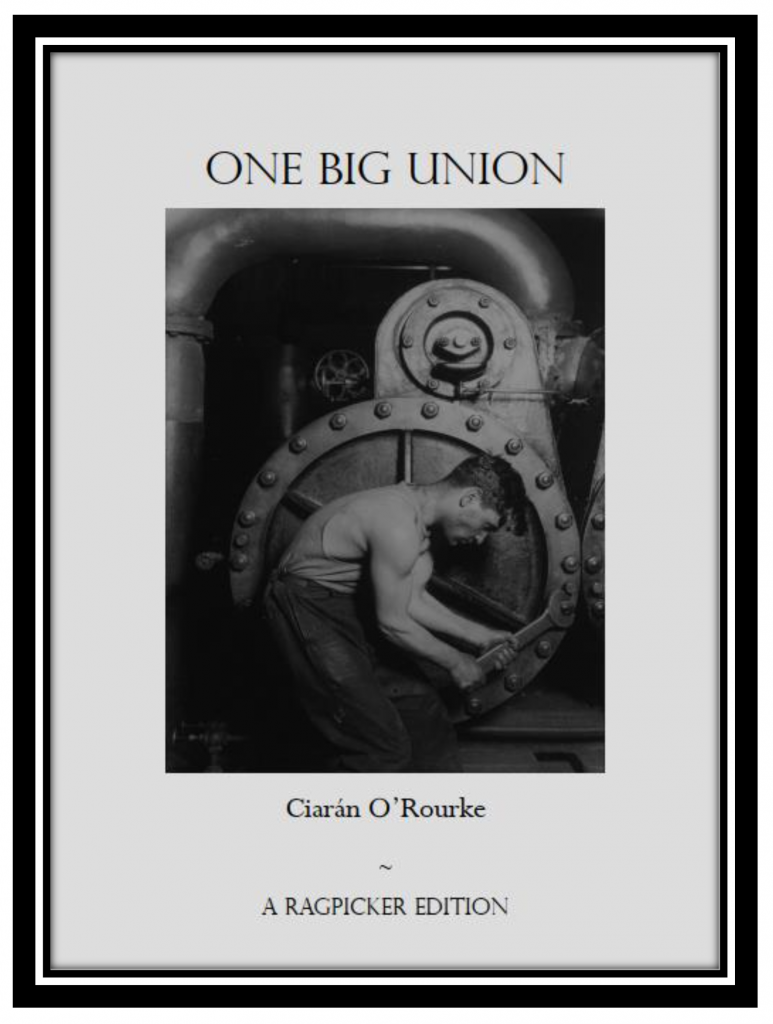
One Big Union Ciarán O'Rourke
One Big Union, essays on art and politics by Ciarán O’Rourke

An interview between Johnny Flynn and Ciarán O Rourke, author of a new collection of essays on art and politics

JOHNNY FLYNN: Will we start with that quote from your essay on Martín Chambi?  You say that what most attracted you to artists in particular, and their techniques, is that they “draw on their chosen traditions skilfully” but “also with a view to making a statement on reality.” Throughout your book, even in your theses on poetry, you’re eager to say: “look, don’t give me any of this, he’s in love with language… that’s a rarefied métier you’re creating, with none of the grubby material reality of money-making, or whatever”. So you’re against that?

CIARÁN O’ROURKE: I could also have quoted someone you introduced me to, Eduardo Galeano, who said that “in an incarcerated society, free literature” –or free art, free cinema– “can only exist as denunciation and hope.” The idea that denunciation and hope should be connected together, but also that they would be legitimate artistic goals or aspirations, is very much out of favour today.

Many years ago, as you know, I was working as a student shelver in the vaults of TCD library, off-site, in a warehouse without windows but full of forgotten books, where you were ensconced, surrounded by the most radical authors of all time! I would arrive [every day] after an hour’s cycle, very sweaty and dishevelled, into the cavern of forgotten books, where you would recommend all of these beautifully incendiary authors to me… and so I think you bear a great of the responsibility for the kind of anarchic communism that I’ve embraced and decided to enjoy in the years since. So thank you, belatedly, for that!

JOHNNY FLYNN: It was a funny thing. I think our first conversation was about Shelley: we both liked The Pursuit, the [Richard] Holmes book. We’ll get onto Shelley, but to go back to Galeano for a second: he talks about “centres and subjugated outposts”.

CIARÁN O’ROURKE: That’s the phrase exactly. He gives you an entire paradigm for understanding the world, but he does it with total lightness and ease. He says that “we live in a world of powerful centres and subjugated outposts”, which, when you extract it, might sound a little bit vague or abstract, but actually it helps you to make sense of town and country, of the first world and so-called global south, and of indigenous cultures within the global south as well. It’s got layers upon layers to it.

JOHNNY FLYNN: And there’s the ‘stages of history’, too: if you’re in the metropolitan centre, that’s where the important part of life takes place, where the fine art and culture is, where all the wealth will be taken to feed this metropolitan world. And then on the periphery, which may be a peasant society, they can be dispossessed, expropriated, or fed into a factory: basically, pushed aside. In your essay on Roxanne Dunbar Ortiz, you mention ‘The Trail of Tears’: you’re supposed to euphemise it, but it was basically genocide and dispossession.

CIARÁN O’ROURKE: We’re in the belly of the beast here, and quite comfortably, too, relatively speaking! But you’re right. Roxanne Dunbar Ortiz, whose work you were referencing there, she makes the point that the defining question for the American political class, over the entire history of the US of A, has been (in her words) “how to reconcile democracy and genocide, and characterize it as freedom for the people.” And she says (again, brilliantly and provocatively) that this has been true of everyone from Andrew Jackson to Barack Obama, and beyond. It may sound like there’s some polemical extravagance to that, but when you immerse yourself in her analysis and narrative – of the formation not just of America, but of this modern world we live in – you realise that it’s not just a chaotic and violent vista where terrible things happen, but that there’s actually a political calculation and a kind of political culture behind it, driving these conquistadors, these expropriators, into the world, and at the expense of indigenous people, indigenous cultures, and all the rest.

JOHNNY FLYNN: That formulation of “genocide and democracy” is disturbing, but it reminds you of ‘the ethno-state’: how people refer back to Andrew Jackson and the creation of the ‘white republic’ (Portland, Oregon was going to be for whites only). That legacy lives on: you still find iterations of white nationalism and white supremacy in those areas: they draw on this tradition. Just as you might draw on an indigenous tradition, or a tradition of resistance, white supremacists draw on the ideas of Andrew Jackson, and other presidents like Woodrow Wilson, the ‘liberal’ who said about the film Birth of a Nation, about the Ku Klux Klan, “that’s how it happened.” And that was Woodrow Wilson! Of the League of Nations!

CIARÁN O’ROURKE: It was actually when I was reading and then trying to pay tribute to Roxanne Dunbar Ortiz, and also Ursula Le Guin, two figures you might think are poles apart, I felt that I wasn’t just tramping through history or wandering through science fiction, but that the kinds of questions that they were raising, struggles and forms of violence that they were bringing to light, were very much present in the world we’re living in now.

You mentioned there about the ‘ethno-state’, and the history of white supremacy in America (coming from Europe, of course). Ursula Le Guin, in one of her late essays, non-fiction essays, asks, “What does it feel like to be an oak?” And then she expands and expounds on that: it’s a beautiful piece of work. But I came away from it conscious, not only of the fact that Ireland’s native woodlands and oak groves had been razed as a way of controlling and defeating indigenous cultures, but that similar processes are being on the Amazon, and the peoples of the Amazon, that the olive trees in Palestine are being uprooted as a way of clearing the Palestinian people, to make space for Israeli settlements. There are similar processes still being carried out, still destroying communities and cultures that in the future we may depend on, but will be a distant memory.

JOHNNY FLYNN: And then somebody says, imagine yourself as an oak tree! In classical education, someone might say, think of yourself as Julius Caesar crossing the Rubicon,or think of yourself as Napoleon, or put yourself into the imperial mindset. Either you’re theorising for people to be subjugated, because they’re ‘non-essential’ to the broad march of Western civilization, or that everything can be consumed in the capitalist process. In your essay on Jason W. Moore, you talk about what he’s saying: that capitalism is a way of organizing nature, so the earth is almost like a machine for producing (as well as the workers) surplus value that will then go into these monuments that the bourgeoisie create in honour of themselves.

But to think of yourself as an oak, it’s a very political thing, but almost elliptically so: the long durée approach of putting humans back into nature, as opposed to thinking of ourselves as entitled to re-shape nature in our own image.

Art and Politics and the Future

CIARÁN O’ROURKE: Ursula Le Guin: I just can’t say enough about her. The easy clarity of that question, what does it feel like to be an oak? and yet the gorgeous complexity that it demands of us to even attempt to answer it is wonderful.

You mentioned Jason W. Moore there. He describes himself as a “world-ecologist”, which sounds like the ideal occupation! Although I’d imagine it’s quite precarious these days. But again: I love the fact that he takes Marx’s observation that capitalist civilization and capitalist agricultural progress is only possible “sapping the original sources of all wealth, the soil and the labourer”… both Le Guin, in her own way and in her own genre, and Moore, in his deep analysis of our present moment, they’re taking interrelationship and complexity and feeling, the capacity for human feeling and critical thought, as the starting point for a new way of living collectively, which is inspiring, and also audacious. It’s kind of a bugbear of mine: I’m always complaining about how sloganized and often pompous and power-hungry Left-wing formations and their discourses can be. Whereas with Le Guin and Moore, it’s the opposite: there’s a rejection of sloganeering or regurgitation as a virtue in itself, and, again, a recognition of the complexity of present circumstances as the starting point for whatever future we might be able to build.

JOHNNY FLYNN: But also, imagining yourself as an oak, it’s cautious but from her point of view, I don’t think she’d ever come out and say she was an anarchist, even though she did have a utopian imagination, but I think she was always very cognizant of the fact that a utopian project could be derailed, to create something that in some ways would be an exacerbated version of what you’re trying to overthrow.

CIARÁN O’ROURKE: Her novel The Dispossessed explores that, and again with total clarity, but also real depth: exactly that conundrum or dialectic that you’ve mentioned, about needing, say, an alternative to capitalist civilization, and yet at the same time needing to hold whatever power dynamics exist within that alternative to account – how to make it human and keep it human. By turning to oak trees!

JOHNNY FLYNN: It’s an inspiring, metaphorical way of thinking… and a natural way of thinking! We’re looking at a planet destroyed. I think the Moore essay brings that out: it’s what happens when you just treat the earth as something to be plundered (and I suppose capitalism is a history of plunder). Even with your Shakespeare essay, in the background is both the class struggle within England, the rise of what becomes a bourgeoisie, and official piracy. Le Guin mentions the ever-present search for El Dorado, likewise.

CIARÁN O’ROURKE: That reminds me: the book has an obituary for Derek Mahon, who described himself, or his poetic impulse, as being in opposition to what he called “the bedlam of acquisitive force / that rules us, and would rule the universe.” This seems very resonant in the age of Jeff Bezos shooting himself off to space, but I think the idea that “acquisitive force… would rule the universe” is Mahon’s recognition that capitalism needs conquistadors, people who will keep expanding the frontiers, and the formations of exploitation and expropriation, in order to exist. Again, there’s a strange pleasure in the fact that we have to turn to poets and fantasists, science fiction writers, to get that kind of clarity.

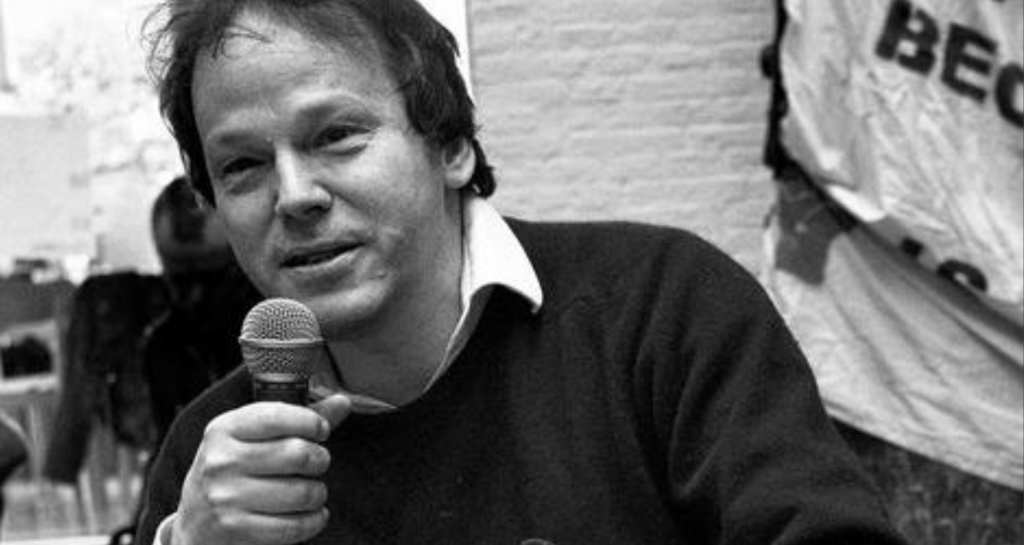
David Graeber, as well, is one of the people I try to pay tribute to. I know you have a lot of admiration for Graeber.

JOHNNY FLYNN: It was a huge loss…

CIARÁN O’ROURKE: The shock of his death was something else…

JOHNNY FLYNN: I used to go onto his Twitter page every day! It was a refreshing thing, because he always had an irreverent attitude… kind of like, despair is easy, don’t despair! Here’s why.

CIARÁN O’ROURKE: Even when he was lecturing and speechifying, he seemed thoughtful, and funny, and humane. He was that rare creature on the Left, where he was actually a human radical… which isn’t really allowed. We’re all supposed to just repeat the party line. 

JOHNNY FLYNN: He didn’t seem cynical. I think because he wasn’t pursuing a narrow project. He believed in the horizontality of everyone engaging, which, like a person claiming to be an oak, might seem like my God this is going to take forever… where’s your plan! Whereas he was saying that you can continually enrich your project if it’s engaged in participation like that.

CIARÁN O’ROURKE: That sense of deep world-history, the fact that he would write a five thousand-year history of debt, or that Le Guin would try to reconfigure our sense of time and time-spans in terms of the life of an oak, I mean, that’s rare. Even on the Left, I think: because everything’s about winning the local council seat, or getting on the six o’clock news, or whatever it may be. Whereas Graeber comes in and says that “the ultimate hidden truth of the world is that it is something we make, and could just as easily make differently.” And then he’s got the anthropological background to point to some of the ways in which that’s been possible in the deep past. And not just in the deep past: I think it was that consciousness, which for him was also a kind of conscience, that drove him into the Occupy Wall Street movement, and to support the Kurds in Rojava, and the list could probably go on of movements and campaigns that he offered explicit support to, including the Corbynistas.

JOHNNY FLYNN: Which is surprising for an anarchist, to be so sympathetic. I think he thought that around the Corbyn project, there was a lot of very positive, progressive thinking, maybe less traditionally top-down, some actual listening to the constituencies that were being included… none of this ever got implemented, but it did create a huge (for the Labour party, quite incredible) breakthrough.

CIARÁN O’ROURKE: I imagine Graeber had a realistic sense of the political landscape in Britain as well. I mean whatever about the United State of America as a somewhat monstrous political entity, the so-called United Kingdom, or Great Britain, is something even more toxic and bloated, and deep-seated.

JOHNNY FLYNN: Sure. They’re like failed entities now. I think it was Peter Linebaugh who said that they were both born out of the theft of the commons, in different ways, and if we’re to have any future they need to be disbanded.

CIARÁN O’ROURKE: So Graeber probably interpreted the Corbyn moment for what it was, which was a kind of upsurge of possibility, a levelling moment, or potentially a levelling moment. Either way, I think it’s to his credit that he didn’t hold to a rigid, ossified, abstract anarchist credo in place of throwing himself into the fray of political action.

Poetry as Way of Thinking

JOHNNY FLYNN: You were saying that you can turn to poetry as a way of thinking about the world. On the train over, I was reading William Carlos Williams. I think he’s addressing a lover, and he says, look, you don’t get your news from poetry, but some people die in misery because they’ve been starved of what’s in the poetry. He seems to imply two things: daily life can drain you, and something in poetry can replenish your willingness to live. We were thinking about Shelley, who wrote a poem that commemorates a horrific event like Peterloo, and yet its last lines are resonating in the Corbyn campaign, as they did in the 1909 garment workers’ strike. Poetry can keep alive the memory of struggles (defeats and struggles), like with Thomas Kinsella’s poem that references Shelley.

CIARÁN O’ROURKE: The Masque of Anarchy, yeah absolutely… I often find myself haunted by the final section of Shelley’s Prometheus Unbound, where he describes the task ahead, for these hell-raising rebels of mythology and history, as “to hope till Hope creates / From its own wreck the thing it contemplates”. On a parochial level, that could be a pretty apt metaphor for the state of the Left, post-Corbyn or even in Ireland, the endlessly fractured and rancorous Left. But more broadly, I think it gets to grips with the reality of catastrophe, of wreckage and devastation, as historical forces, that it’s against this and within this vista that the struggle has to happen.

You mentioned Williams, and you put it beautifully: this idea that poetry can replenish our human sources in ways that perhaps aren’t noticed or given proper credit. When Sacco and Vanzetti were executed, the fact that Williams was aware of this and incensed by it is probably telling enough of what kind of poet he was. But he wrote a long poem, at the end of which he said: “No one / can understand what makes the present age / what it is. They are mystified by certain / insistences.” I love the idea that Williams’s often exuberant attempt to bring us back to the gut-rooted, mouthy, sassy realities of our lives is also an effort on his part to dismantle the myths and mystifications that surround us in our society, that prevent us from living our lives.

JOHNNY FLYNN: And which are replicated in high poetry sometimes. High modernism can sometimes seem like a Latin and Greek world of learned quotations, the Pound/Eliot type of thing.

CIARÁN O’ROURKE: Absolutely. Williams was motivated by an unapologetic hatred of Eliot in particular, for political reasons. He thought this was reactionary, conservative and elitist, the impact that Eliot had on modernist poetry, whereas for Williams, the moment of modernism (in the 1910s and 1920s) was one of democratic possibilities, of bringing the tradition and the canon to the streets, and vice versa. Whether he succeeded in that is an open question, but I think the impulse was true.

JOHNNY FLYNN: And that’s what he saw in Joyce. He responded really strongly to Joyce, even the more forbidding work like Finnegans Wake, he was an enthusiast for it.

CIARÁN O’ROURKE: Absolutely. He and Sam Beckett, then unknown, were contributors to the first ever roundtable pamphlet or panel on what was then Joyce’s Work in Progress, which became Finnegans Wake. The fact that you can have this New Jersey doctor, working fifteen hours a week as a paediatrician and doctor-on-call, enthused by this exiled Irish writer, this modernist across the waters, there’s a wonderful humanity to it.

JOHNNY FLYNN: And it makes it sound very exciting. Sometimes even the great critics writing about modernism can be quite off-putting: it can be about intellectual posturing, and a display of learning. It seems divorced from any kind of day-to-day reality. But from what I’ve read of Williams, he seems to be coming at it from the opposite way: he hears the buzz of the street in James Joyce, and thinks it’s great! It’s like a huge repository of jokes and puns and daily references.

CIARÁN O’ROURKE: And in that sense he probably helps us to recuperate a Joyce that is maybe less enshrined in the archive, the shackles of academia! Actually, Mike Gold, who I know you’re interested in, the one-time editor of New Masses, he said that “when someone writes the future history of proletarian literature in America, William Carlos Williams will be somewhere large in the table of contents.” I think that hasn’t come to pass: insofar as Williams’s proletarian sympathies are recognised as part of his aesthetic, part of his politics, it’s on the fringes, it’s not really included in the mainstream image of him.

JOHNNY FLYNN: The Lowell quote comparing Williams’s poetry to a “homemade ship, part Spanish galleon, part paddle-wheels, kitchen pots, and elastic bands and worked by hand” is a great image, and a fun idea… bringing everything together.

CIARÁN O’ROURKE: Yeah, that the poem might be as anarchic and colourful and joyous as life itself. Not necessarily joyous: maybe I’m sentimentalising it slightly. But I think that’s a quality you also find in Langston Hughes’s work: they remind me of one another sometimes.

Langston Hughes is always presented and praised as the poet who said, “I, too, sing America”, but it’s important to remember that Langston didn’t just expand the inclusivity of American poetry and American democracy: he also articulated in his poems a lifelong critique of white supremacy, and came to view, in his poems, blackness (black power, black culture, black community) as a portal into history-at-large. He said, “The Belgians cut off my hands in the Congo. / They lynch me still in Mississippi.” It’s almost unsettling to read Langston Hughes today: seventy years after he was recording and condemning police brutality in the North, at the same time that he was bearing witness to the lynching of black bodies in the South. In the age of #BlackLivesMatter Langston Hughes is not just a prophetic voice, he’s a necessary witness to the world that we’re still living in.

At the same time he didn’t resort to two-dimensional sloganeering, I think. His poems are full of the sass, and the wit, and the jazz of his people, who are black and brown, bohemian and proletarian, and living their lives.

JOHNNY FLYNN: He tried to understand what the Blues is, and how it came about. And he describes it in a way that it becomes a depository of a tradition, but also a kind of intellectual thinking about the work process. It fits very well with your book, because you’re saying, I want to talk about poetry as carpentry, the way Hughes talks about the work song, the way the Blues are related to the work song: you can hear these rhythms from the work, the sometimes-coerced work, coming through. There’s his humour, but behind it the horrible reality that you were talking about, of #BlackLivesMatter and white supremacy. His poem, “Ku Klux Klan”, describes the poet dragged to this isolated place and being told I want you to recognise the greatness of the white race, and the man has an irreverent response: I’ll say anything if I can get out of here. That, to me, was pure Charlottesville.

CIARÁN O’ROURKE: And the emotional current in that poem, of mockery of the white supremacists combined with pained sympathy for this person who could be his own, with at the same time this kind of perfectly expressed retort to the culture he’s living in (and writing against)… this idea that a change is gonna come, it’s a difficult faith to hold.

JOHNNY FLYNN: Isn’t it incredible that some poem you can look at and think, that looks like a very simple poem, still carries such a political and cultural and emotional heft… it’s only however many lines long, but there’s so much history in it.

 CIARÁN O’ROURKE: It’s sometimes enjoyable to remember that both T. S. Eliot and Langston were Missouri-born modernists. So if you compare their sources and their instincts, the content of their poems: you have the kind of Euro-centric, classically allusive poetry of Eliot… when you compare it to the streets-up, jazzy, deep-delving, human verse of Langston Hughes, you realise there’s actually more than one kind of modernism out there, and we can make it our own if we try.

JOHNNY FLYNN: I think at the end of your essay on Langston you suggest that his poetry is close to the streets, it’s still fresh: you could see how new ways of speaking and writing could be created, as well as understanding him as a very politically relevant character. A bit like Williams, he’s listening to the voices of the street.

CIARÁN O’ROURKE: And in an odd way I think that’s actually relevant to Shakespeare as well. I’m generalising a bit, but if you were to summarise Shakespeare’s plots, the narratives of his plays tend to end with the restoration of some kind of social order that is feudal or patriarchal or hierarchical in some way: a status quo that is mellifluous in its verbal expressions and effects, but at the same time totally brutal and punitive in the power dynamics that sustain it…. And yet when you immerse yourself in the cut and thrust, and tumble and dance, of the vast array of characters that he created you suddenly start encountering these secondary, or subaltern, outsider figures, each one of whom articulates a totally compelling and eloquent view of the world. They’re living in the state, and close to nature, and with one another, and so they have to be observant, and witty, and sceptical, and eloquent in their own way. It’s telling that someone like the inn-keeper in Henry IV Part 2, or Shylock, is as eloquent and compelling in the moment of their own self-articulation – which is a kind of moral self-articulation, as well as just chat – as a Hamlet, or one of the kings or princes or lords who also march across the stage. So I think there’s an implicit democracy and also a kind of demotic exuberance, at times, in Shakespeare’s work that can be quite thrilling: similar to what we find in Hughes and the others you mentioned there.

JOHNNY FLYNN: Do you think, then, that if you were a reader of Shakespeare, a scholar, there’s history-from-above and history-from-below, so you can get a very formal criticism of Shakespeare, talking about the language and metre, but you’ll never really meet the streets in it. You never get a sense of what Shakespeare’s work looks when examined from below, like you get in these histories that came from Communist historians in the fifties. In your Shakespeare essay, you do talk about the social tumult and resolution, the power plays at the top of society, and how language can be beautiful and violent at the same time. Often, the characters who are evil, or whatever, are totally disabused of any kind of belief in the grand project: they’ll say, I’m going to use a religious verse to cover over my bloody deeds…

CIARÁN O’ROURKE: There’s a total scepticism of mellifluous, flowered language, of well-wrought sentences, that pervades Shakespeare’s work, I think. There’s a lovely irony to that, but it’s worth remembering that the scepticism is there.

JOHNNY FLYNN: Is it in Richard II that John of Gaunt has his famous speech, “this sceptr’d isle, this England”? It goes on forever! In your essay, you talk about a tumult in one of the history plays, the commoners getting mobilized, and some character tries to turn it towards patriotism instead.

CIARÁN O’ROURKE: Old Clifford. Similarly, Cardinal Wolsey as he appears in Shakespeare is haunted and terrified by what he calls “the ragged multitude”. That’s a fear that you encounter again and again, stalking the minds of Shakespeare’s men of power – wonderfully!

JOHNNY FLYNN: Oftentimes they’re the ones dispossessing the commoners, who go on to haunt their dreams… a bit like the many-headed hydra: for all these ruling-class people, if you cut off one peasant insurrection, another one will rise not too long after.

CIARÁN O’ROURKE: Absolutely: that embedded terror at the heart of this supposedly impenetrable and indomitable system of power is something that Shakespeare taps into all the time, and it often drives the bubbling, seething conflicts that are going on in the background of his plays.

JOHNNY FLYNN: All of this is in there. I’m thinking of how in the tv show, Deadwood, everyone gets great speeches, the good characters, the crazy characters who could be murderers, and yet you’ll get this brilliant soliloquy… Deadwood is basically a mining town, so there’s nothing good about it: it’s just destroying the earth, and so the language is full of swearing. The only things you can do in Deadwood are drink, go to a bawdy house, probably get into a fight, and if someone else is always running away with the money.

CIARÁN O’ROURKE: I’d love if you started a podcast about Deadwood, specifically. I think you’d be the ideal MC for drawing out the pure, horrible beauty of the Deadwood vision.

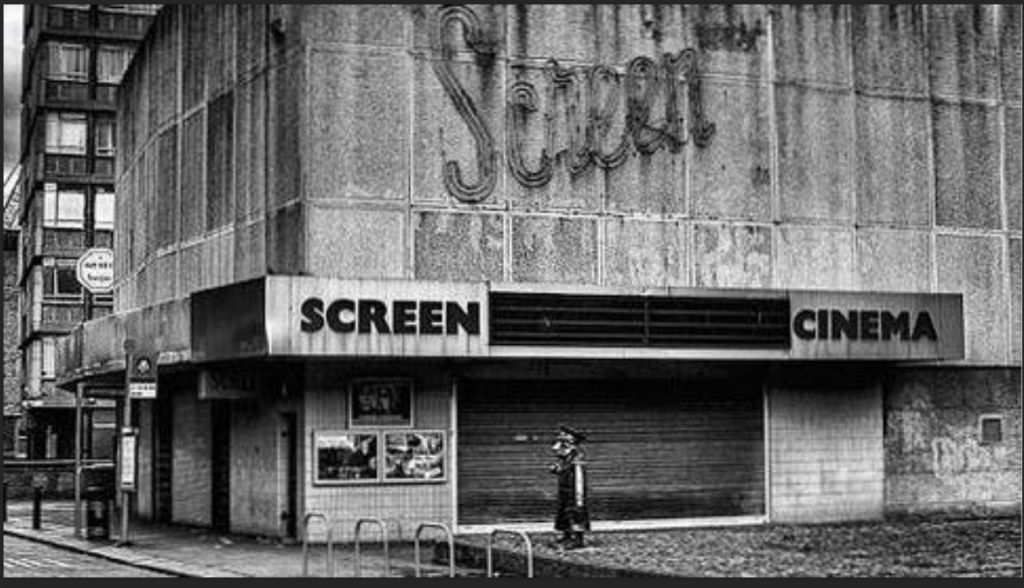
JOHNNY FLYNN: That would be great. And actually, speaking about tv, you have one essay in there, which is political in the way you talk about Dublin, the whole landscape of the city being changed, where any cultural institution gets closed down and then some hotel or office block goes up instead. It’s your Screen Cinemaessay.

CIARÁN O’ROURKE: Well I was asked to write an essay on ‘space’… you know. It was in the Architectural Review or wherever. So I thought I’d write about the Screen Cinema. And this was around the time – I can’t remember the exact week or month, but it was around the same time – when you and I were both members of a Marxist reading group. You may remember this: we had our last reading session for Das Kapital (book 1) in a pub in the Liberties in Dublin, just around the corner from where Robert Emmet and the many Dublin weavers who had taken part in the 1798 and 1802 rebellions had been crushed (Emmet had been executed, obviously). This is the area of Dublin where Shelley had visited in honour of Robert Emmet in 1812. So you’re walking these red-brick, crumbling streets back home from the pub, after talking about Marxism for the afternoon, and you realise that old Dublin is still alive here, physically and spiritually, and yet at the same time that the city has been wrecked and pulverised. You’ve got the faces of poverty and addiction and defeat around you in these bustling streets… the demolition of the Screen Cinema is very much a part of that Dublin, which is, not just disappearing, it’s being quelled and uprooted and replaced by something glossier, emptier, and more neoliberal.

With regard to the essay about the Screen Cinema and movies, I think it’s also a bit polemical, trying to recognise this Dublin, this homeless capital that we’re living in now. And of course just around the corner from the Screen, Apollo House, which has now also been demolished, obviously that was occupied in glorious, insurrectionary protest against the sadistic housing policies of the government at the time… all of these ghosts still inhabit the city, although that’s not necessarily comforting.

JOHNNY FLYNN: The autobiographical aspect of the essay comes from your film-love: you’re looking at Thompson’s History of Cinema and Ebert’s Great Movies.

CIARÁN O’ROURKE: And I’ve graduated since then to Pauline Kael, and people that you’ve recommended, like J. Hoberman and A. S. Hamrah. I think I had the good fortune to be born into a family of movie buffs or film enthusiasts.

JOHNNY FLYNN: Your grandfather was big into Westerns.

CIARÁN O’ROURKE: I think one of the first movies I watched, and which is still one of my favourite films, was Stagecoach, which I know James Baldwin excoriates as a vision of, as you were saying, a vision of the ‘white republic’ that was to be. But I absolutely love that film: everything from the complexity of the characters to the thrill of the chase scenes… I think chase scenes are very difficult to film, or to find appealing or novel, especially today. John Ford’s slightly confused democracy. 

JOHNNY FLYNN: Is it ‘democracy and genocide’ again?

CIARÁN O’ROURKE: I’m not sure. Do you think? I feel there’s enough complexity in Ford’s best pictures… maybe in the same way that we approach Shakespeare, we can use his films as a way of critiquing that system…

JOHNNY FLYNN: There’s kind of a rough-and-tumble life in Stagecoach, a working or proletarian life.

CIARÁN O’ROURKE: Even the sex-worker is given her due, and is actually a real character in it. But also, the cinematic sweep of it I absolutely love. Stagecoach was filmed in six weeks, so it’s an epic film (it won an Oscar or two, I think), but at the same time you’re not at this hyper-curated and stylised mode of epic film. I don’t want to knock David Lean, or more recent directors, because often their cinematic visions are quite aesthetically pleasing, but I think you’ve got a roughness to Ford’s movie-making style, which is part of the thrill of it.

JOHNNY FLYNN: He’s kind of like an art-film-maker as well, though, isn’t he? He’s got a real art-film sensibility: I remember the first I watched The Grapes of Wrath, I thought, wow!

CIARÁN O’ROURKE: In Citizen Kane, Orson Welles rightly is given a lot of credit for the fact that he had the camera drilled into the floor, looking upwards… whereas Ford before that stuck the camera-man in a hole in the desert! And then ran the stagecoach over him! Not unlike the train coming towards the screen, in that early film. There’s a classical audacity to the film-making… I owe all that, my acquaintance with Stagecoach, to my grandad, my grandparents.

You’re the supreme movie-buff, as far as I’m concerned. I’m not just saying that. Honestly, I’ve never encountered anyone with the kind of encyclopaedic enthusiasm for movies that you have. I’m following in your footsteps.

JOHNNY FLYNN: When you think of some of the stuff we were talking about at the beginning (An Indigenous Peoples’ History), there’s a whole mythologising of the West in those movies.

CIARÁN O’ROURKE: The strange thing was that when I was a teenager I read Dee Brown’s Bury My Heart at Wounded Knee, and I think because I had been, in a small way, immersed in the whole mythology of the West on-screen, which is normally more complex than it’s given credit for… I mean, Dee Brown’s book just blew me away: it wasn’t that it dispelled all the prejudices I had been accumulating, it’s that it confirmed a sense of struggle, or human history, that the cinema had helped me to realise before.

I think I’ve mentioned this to you before (it’s probably a terrible film), but when I watched They Died with Their Boots On, where Errol Flynn plays General Custer… I could have the films mixed up but I think there’s a moment in that movie, the only scene I can remember, when they’re worried that they’re going to get ambushed by “Indians” and a wagon-driver says something like, “well, they were here first”. So maybe I was being brainwashed but somehow there are these small moments that stuck with me from the Western genre which were enough to light the fire later on.

JOHNNY FLYNN: Maybe some Left-wing, Popular Front-type screenwriter smuggled in an acknowledgement line in there…

CIARÁN O’ROURKE: You don’t want to whitewash anything, but if you go in with your head screwed on… I think it’s possible to enjoy cinema and still think critically about the world in which cinema exists, you know?

JOHNNY FLYNN: Of course. Definitely. Art like that is complicated, like you were saying about Shakespeare. Same with Deadwood: over the course of an episode, you accidentally end up feeling warmly towards a villain, just through the mise-en-scene! Some guy might leave the site of a bloody murder and then walk through a happy scene… the show will end and you’ll be accidentally smiling at this villainous character.

CIARÁN O’ROURKE: And you know, that may be true to life. We live in a brutal world, with complicated people. It’s quite difficult to maintain a kind of purism of political categories when you’re actually living in this rough-and-tumble world.

JOHNNY FLYNN: So do you think you’ll look back on this book autobiographically? In the Chambi one, you say, “just before the third lockdown, I went to the library and found myself a store of books”.

CIARÁN O’ROURKE: Well that’s the truth. In some ways the book is a homage to Carrick-on-Shannon library, or the Irish library system: all these books and movies and other resources that you can get for free… you have this national network of service centres that provide you what you need, it’s almost utopian to describe. But yeah, I didn’t edit out those autobiographical references.

JOHNNY FLYNN: I think they add to it. It seems like it’s a political book of essays, but political in different ways: political in the moment of the pandemic, political in your life…. At one point you’re in the sea in Seapoint: you’re talking about the ebbs and flows and tides, about Michael Hartnett, but then you get angry! You look over and you see the incinerator… I like that!

CIARÁN O’ROURKE: Ha, it’s a true story!

JOHNNY FLYNN: I think that’s the one that begins with Napoleon crossing the Alps, supposedly on a horse but actually he was on a white ass.

CIARÁN O’ROURKE: Not inappropriately! I said earlier that David Graeber actually seemed to be a human as well as a radical, and I think there’s probably a lesson in that. As well, because I’m obsessed with poetry, I think it’s far too easy to try to present yourself or other people as icons. I’m not a great writer, I’m not saying that. The point is that it’s easy to strike a pose when you’re writing, even when you’re paying tribute to other figures, which is just unhelpful. Why not acknowledge where you’re at and what you were doing, the banal details of my life when I was writing these essays.

JOHNNY FLYNN: Well, it fits. It’s as if the theme of the essay fits in around it. You even, in that particular essay, have not exactly a despondent reflection of politics, not even that you’re disabused of utopian possibilities, but just a realisation that you’re in a period of withdrawal. I mean if you wrote the book, you must be still engaged politically.

CIARÁN O’ROURKE: As you know, I was a member of a socialist organization. I was actually an active member for about a year and a half, so not particularly long. I act in the essay as if I’ve had this epic experience of engagement over the years, whereas it was about a year and a half. And the rest is cultural dressing: that’s my politics.

But after my period of disillusionment and despondency, you, actually, helped me to discover rambunctious joys in the Wobblies, and other areas of political struggle outside of party-oriented campaigns. So thanks!

JOHNNY FLYNN: That’s probably reflected in your approach in the book, where the Left-wingers you pick are the Wobblies, or Rosa Luxemburg. But the Rosa Luxemburg passage you quote is when she’s writing a letter, in prison, when she’s seen water-buffalo in the yard and how they’re being tormented by the overseer, and she empathetically enters into where they came from, their daily life before they were wrenched away, and here they are.

CIARÁN O’ROURKE: She writes this absolutely luminous and heart-broken letter from prison, as you’ve described there. We always hear about Nietzsche responding to the Turin horse, and this is a big moment in European philosophy. Whereas I find Rosa Luxemburg’s humanity and eloquence totally stirring. It’s a little bit glib, but I say in the essay that there’s more poetry in this one letter by Rosa Luxemburg than most writers manage in their entire life. But in some ways it’s beyond poetry. Derek Mahon has a line somewhere, saying that we shouldn’t make a fetish of the printed page. And that letter by Rosa Luxemburg and her writings in general are just stray residues of this luminously human life that she was living, that she embodied. You can catch glimpses of it in that letter, when she feels a total empathy for the wounded and exploited water-buffalo from Romania.

I’ve gone off on a tangent now…. But I think whatever combination of poetic Marxism or Marxified poetics is possible, that’s the way to go.

Social Relations in Visual Art

JOHNNY FLYNN: That’s probably why she would resonate with someone like John Berger. It is a materialist thinking, but it’s almost elliptical. You wonder where he’s going, how he’s getting there. He’s thinking about a country doctor, or farming or painting or sketching, he goes about it by circuitous ways and then draws a whole picture, which is fascinating. But it is materialistic: he’s thinking about the physical work and the craft, the social relations that are always there.

CIARÁN O’ROURKE: I think his writing is also lit by the recognition that moments of warmth and connection and nurturing are possible, even in this world, which he doesn’t shy away from calling out for what it is: exploitative, ruthless, militarised, a disaster-zone. Berger didn’t dissolve his own humanity in a kind of academic despair, which I think you sometimes find in certain Marxist traditions. I’m not knocking Marx, but you sometimes find these well-storied intellectuals giving up on everyone else. Whereas Berger seemed to draw some kind of sustenance or solace from life.   

Maybe that sounds cheesy! But even the fact that he could ask himself, similar to Le Guin, why look at animals? or explore some of the ways in which he was already living and working with animals (killing them for food while at the same time living somewhat humanely with them)… there’s an admirable embrace of complexities that we all live with anyway in Berger’s writings. It’s probably what made him such a compelling art critic (although he probably wouldn’t have described himself with that moniker).

JOHNNY FLYNN: There’s a lovely section in Bento’s Sketchbook, where he’s in a community pool in Paris. He’s going there, swimming away, and he brings you through it: he sees a woman swimming, I think one of her legs was damaged (she was a victim of the Khmer Rouge), and anyway eventually he put a Japanese pencil into her bag (she used to draw), and that’s grand. And the next day she approached him in the pool and said, bird or animal? And she did a special painting of a bird for him. It’s very beautiful and only he could adequately include that passage.

CIARÁN O’ROURKE: I’m not sure if it’s in the same essay, or book, I might be mixing up with a section in his late book, Confabulations, but he describes swimming in the swimming-pool and thinking, it’s almost impossible to imagine the limitless cruelty that we inflict on one another, when doing your twentieth lap in the pool, surrounded by people who are bobbing against you as they go. And the reason, I think, that has meaning and pathos coming from Berger is the fact that he spent so much care and time actually investigating, trying to recognise in close-up, those very cruelties, those infrastructures of cruelty, that are constructed around us. There’s a kind of heroism to that(I don’t want to inflate it too much): living in the world we have, and yet at the same time reaching for those small pockets of connection.

JOHNNY FLYNN: I think there’s a Berger book called The Size of a Pocket, which is partly a pocket of resistance.

CIARÁN O’ROURKE: Of course. Exactly. And on which all the world depends, whether we realise it or not.

JOHNNY FLYNN: At the end of it he’s corresponding with Subcomandante Marcos. There’re a few pictures of them. He did a sketch of Subcomandante Marcos, which is pretty good.

CIARÁN O’ROURKE: It occurred to me that the legacy of Rosa Luxemburg, or in Ireland of James Connolly, even the 1798-ers, it doesn’t live on in whatever commemorative group or self-aggrandizing political formation that claims those legacies. Their radical fire is still sparking in the anti-neoliberalism marches in Chile, or in the autonomous, self-organized Kurdish zones in Rojava, or in Palestine, where artists are still composing their poems and doing their paintings and swimming in the sea… I think in Berger you get that world-historical sense of continuity between the past and today, rather than that itemised, and again, somewhat fetishized, pompous sense of political continuity that you sometimes find (I don’t want to sound too rancorous here) in the formal Left-wing, party-oriented branch of the resistance, which is always presenting party success as an end in itself, or a revolution in itself. But when you’re reading Berger, or Le Guin, or whoever, you get a wider and deeper picture of struggle and of human possibility.

JOHNNY FLYNN: Franklin Rosemont? You include him in the ‘further reading’ at the end of the title essay, his Joe Hill book. 

CIARÁN O’ROURKE: Well, once again, I first heard of Rosemont through you. All the good bits in this book, Johnny, are actually inflections from your own enthusiastic self-fashioning as a radical.

JOHNNY FLYNN: What I like about that Joe Hill book is that it’s so untidy, it just goes everywhere. He actually spends very little time on Joe Hill. He’s filling out anecdotes and stories, it’s very free-wheeling. He’s always commemorating the rank-and-file, and he has a kind of surrealist mentality anyway, so I’m sure he just followed whichever way he wanted.

CIARÁN O’ROURKE: So it’s a collage-portrait of Joe Hill and his times.

JOHNNY FLYNN: He didn’t have any love for the Popular-Front Communist Party, which would have been the time when Langston Hughes and William Carlos Williams…

CIARÁN O’ROURKE: And Woody Guthrie!

JOHNNY FLYNN: And Woody Guthrie. I think Rosemont says that Woody Guthrie couldn’t avoid having some of the narrow qualities of that Communist Party iteration, even though he does respect Woody Guthrie. But he does say, look at T-Bone Slim and Joe Hill. They seem so irreverent, even though the class politics is there. It’s a bit like Langston Hughes with the Ku Klux Klan poem… responding to the brutalities of life with an irreverent spirit.

CIARÁN O’ROURKE: Which can seem indomitable, when the stultified slogans of yesteryear have long been forgotten.

JOHNNY FLYNN: That was the Wobblies. I think it’s said that no trade union could have been less patriotic than the Wobblies. Even the Communist Party were arguing to get behind the war effort in the Second World War, or some trade unions in the First World War were lining up, dutifully… while the Wobblies were saying, you can do what you want, but we’re not for it.

CIARÁN O’ROURKE: Apparently Williams was ostracised in his middle-class community in Rutherford, New Jersey, for his open opposition to the first world war. He said that the same people who were calling me a German-lover, twenty-thirty years later they were calling me a Commie during the witch-hunts.

JOHNNY FLYNN: Names change, but the arguments are the same. Sure, poor Rosa Luxemburg was tarnished as well.

There’s a part in the book when you talk about The Tollund Man, comparing Williams and Heaney. I thought that was very interesting.

Poetry, Politics and Art

CIARÁN O’ROURKE: A couple of weeks ago the London Review of Books did a retrospective article on Seamus Heaney’s work, and again the bog bodies, those poems of the late 60s and early 70s, were almost the centre-piece, they were the hinge that this LRB article was turning on in trying to assess Heaney’s legacy. So: he wrote this poem, “The Tollund Man”, based on photographs by P.V. Glob, the archaeologist, which were published in the late 60s in book form. But Williams, fifteen years earlier, came across the same pictures and the same story, in truncated form, in an article in The National Geographic Magazine, and wrote a completely different, chirpier, more exuberant response to The Tollund Man. He’s even echoing Hamlet in it, Hamlet the Dane, jumping in graves; and talking about the seeds in the stomach of the recovered bog-body… so Williams’s medical sympathies and bright-eyed approach to the world shine through: it’s a totally different image of atrocity. And there’s also hints, in Williams’s poem, that this lynched body has a kind of after-image in our own time, in the 50s when he’s writing.

JOHNNY FLYNN: The two of them counter-posed was good, because in the North of Ireland you had sectarian killings, in “the old man-killing parishes” of Jutland (that Heaney line), and then what Williams says is that yer man swallowed the grains, but he didn’t chew them.

CIARÁN O’ROURKE: And Heaney… one of his poems is called “Strange Fruit”, which is a deliberate echo of the Abel Meeropol song that Billie Holiday and then Nina Simone made famous, about the brutalization and lynching of black men, mostly, in America. So I think Heaney, in fairness, was alert to other, potential resonances that these murdered bodies, millenia-old bodies, that had been found in the bogs might have. 

JOHNNY FLYNN: That was interesting, your review of Foster’s book on Heaney. You were critical, you needed to be, but you did parenthesise your criticism well… I didn’t expect to feel so upbeat about a Roy Foster book!

CIARÁN O’ROURKE: Thanks, that’s generous. I think maybe I’m warmer to Seamus Heaney and his work than other Left-wingers might be…

JOHNNY FLYNN: It really came across in that essay.

CIARÁN O’ROURKE: I think his work is profoundly human, which gets diluted by the brandification of Heaney, which he participated in himself, of course. I have a good deal of time for Heaney as a poet.

JOHNNY FLYNN: I love the lines you quotes from “Requiem for the Croppies”. Terrific stuff.

CIARÁN O’ROURKE: He’s a great poet, at the end of the day. Again, you can catch these glimpses of radical sympathy throughout. For Heaney, it was more of a moral sympathy, I think, rather than a fully-fledged political identification. But I think it’s there, in the work.

JOHNNY FLYNN: I saw him one time at a Chomsky lecture. He was, I think, openly anti-war.

CIARÁN O’ROURKE: Oh, absolutely! And similarly, Kader Asmal of the Irish Anti-Apartheid Movement specifically thanked Heaney for his contributions to the cause. He wasn’t the only one, of course, but again: there’s that moral impulse that shines through Heaney’s work, which means that he can never become just a brand.    

JOHNNY FLYNN: Despite being appropriated by what you could call the ‘culture industry’, in the way that Joyce, and even poor Beckett is appropriated…

CIARÁN O’ROURKE: Beckett, with his face beamed up on Front Square of Trinity College. Could you imagine a less appropriate tribute to the man?

JOHNNY FLYNN: I know. But you do address it in the book, excoriating writers, or even the likes of Poetry Ireland, who have forged an alliance with Facebook…

CIARÁN O’ROURKE: That was a couple of years ago. Poetry Ireland, to celebrate Ireland’s National Poetry Day, partnered with Facebook. It was at the time when the Apple tax case, and Ireland’s status as a tax haven, was really to the forefront of news coverage. I think I say in the essay that Poetry Ireland was siding with the enemy, which may have been a bit over-blown or self-righteous, I’m not sure.

The general infiltration of the world of culture by the corporate/commercial sector, it’s quite disturbing. Everything from the BP Art Prize to the Booker Prize for Fiction, and of course the Nobel… you wonder whether these masters of war and degradation, these institutions, are encouraging the arts or just using culture as a way of whitewashing and covering up the crimes that have made them rich.

 JOHNNY FLYNN: You speak approvingly of Harold Pinter’s Nobel (no bull!) outburst…

CIARÁN O’ROURKE: Absolutely. He says that a writer has to “smash the mirror”, which actually reminds me that Williams, in the late 30s, wrote a poem that suggests the revolution will be accomplished when noble has been change to no bull… 

JOHNNY FLYNN: That’s where I got it from. You quote the poem in the book.

CIARÁN O’ROURKE: It was because of that, I think, that re-reading Derek Mahon’s work was almost a revelation to me.

JOHNNY FLYNN: I did not think of him as so overtly political, or in (as you say) the avant-garde of anti-capitalist poetry.

CIARÁN O’ROURKE: The Irish Times obituary for Mahon described a “truculent” poet and yet an “ironic” master of his craft. But if he registered any kind of truculence or irony, it was towards his fellow literati, with their complacency and insulation. This is someone who, in his essays and his poems, is quoting Chomsky, Naomi Klein, and Gramsci, he’s translating Pasolini, the Italian film-maker and radical poet, he’s writing a homage to Shane MacGowan in one of his last books of poetry. This is someone who is alive to the demotic, he believes in the democratic: both of those impulses are at the core of his work. And yet it’s written off. That whole dimension of Mahon’s work is either dismissed or ignored by the literary-critical establishment, I would say…
I probably need to engage more fully with Mahon, to be honest. Even re-reading the essay… there’s a lot to his work!
JOHNNY FLYNN: You’re saying that The Irish Times and criticism in general leaves out ‘the political’ from Mahon’s work, but from reading your review that seems like a considerable aspect of his work.

CIARÁN O’ROURKE: Then again, if you approach poetry in terms of its metrics, the formal sophistication of the work, Mahon is a master: because he does have a stylish command of the forms that he’s using. He’s a linguistic virtuoso, if you want. But that whole approach to literature ignores the fact that you can express support for fascism, or rape culture, in a mellifluous way, in a formally sophisticated manner. Those are extreme examples, but the point is that you have to examine the content of the work, and especially in the case of a poet who’s saying, don’t make a fetish of the printed page.

Maybe it goes back to Williams’s line about literary critics being deliberately “mystified by certain / insistences.” So it’s up to the rest of us to try to cut through, to lift the painted veil.

JOHNNY FLYNN: Cleanth Brooks and others always wanted to take away the content and examine the form, which seems like a really limited way of reading. Think of one of those old, seventeenth-century Irish poems: even read in translation there’s a tremendous verve to it, but it’s got very political content. I mean, how could you just discuss a poem like that in terms of style and metre, and completely ignore that the whole movement of the poem comes from the content… the anger being expressed?

CIARÁN O’ROURKE: That’s a great example. I think John Berger comments on the art of the translator, and suggests that translators have to return to the pre-verbal emotion or experience that the original poem was attempting to express, in order to get to the heart of the work. I think that’s probably true: that the verbal and formal paraphernalia of a poem are just the vessel that holds the real thing.

JOHNNY FLYNN: Or Langston Hughes saying that Blues verses carry the memory of the field, or the work-gang, in the rhythm. You almost have to do a material and political analysis of a Blues song. It carries so much political and cultural and historical weight, you couldn’t just analyse it as a piece of music.

CIARÁN O’ROURKE: I totally agree. A couple of years ago, Trinity College Dublin hosted a conference on the work and legacy of Ezra Pound, notoriously one of the openly fascist modernist poets, and he was punished and incarcerated for that. But there was an article in The Nation magazine in the States, criticising this conference for the fact that there was not one mention of Ezra Pound’s fascist sympathies. Which I think ties in to your emphasis just there on the totally vacuous emphasis on poetic form. Of course, from a formal point of view, Pound is a reasonably interesting poet. But it occurred to me that the same people who expound on the virtues of poetic form will also blithely quote Pound’s aphorism, make it new. And yet if you excise the political undercurrents to some of Pound’s thought, then suddenly you miss the fact that Trump made it new. There are other kinds of modernists who are tapping into Pound’s legacy, or the traditions that he was engaging with, and they’re making it new.

I’m probably not expressing that very well, but it’s not just that there’s complacency, there’s also a danger and an ugliness to eliminating ‘the political’ from our sense of poetry and what it’s about.

Art and Politics in Poetry

JOHNNY FLYNN: Frederic Jameson, of all people, addressed that brilliantly in The Modernist as Fascist, his book on Wyndham Lewis, which I actually read in Santry book depository. He does examine the content and the form, but then decodes the writing of Wyndham Lewis. One of the novels in particular, he says, you gotta read it, it’s brilliant, but know that all these things are in it. This is the same guy who went to Italy and wrote a book ‘explaining Hitler’ to the English middle classes. He was incredibly reactionary, although he became an anti-Nazi during the Second World War, because he had to support his country. But he never changed his core beliefs: violently misogynistic, nationalistic, totally xenophobic, intensely racist. His imagination was really very violent… dazzling on the page sometimes, but very disturbing.

Jameson does a brilliant decoding of Lewis as a fascist, but he references Pound as well. Hugh Kenner, one of the great scholars of modernism, wrote 900 pages without once mentioning that Pound was a fascist! I mean, Pound went back to Italy in 1950 doing his fascist salute. Now, in Italy, there’s an explicitly fascist organization called Casa Pound.

CIARÁN O’ROURKE: But the point is not to burn the books of Pound as a result. I know you’re not suggesting that. In our engagement with Pound’s work, which we can value if we want to, we have to challenge ourselves to reckon with what this guy was about.

JOHNNY FLYNN: Do what Jameson does. Do an in-depth reading, but know everything that’s in it. 

CIARÁN O’ROURKE: Exactly: don’t pretend! I think that’s a worthwhile adage: don’t pretend!  

JOHNNY FLYNN: Or Jameson’s always historicise. Let’s get onto the people you didn’t include in the book. I expected to see Adrienne Rich in there.

CIARÁN O’ROURKE: Oh, I know. She appears almost in parenthesis once or twice. In some ways my approach to poetry in particular is so overtly influenced by Rich, by her essays on art and social justice, that I find it difficult to pay any kind of original tribute to her. But it’s something I have to do. Maybe I could write about her poems, that would be the way to go: close-read the work in light of her general theorisation of poetry and politics.

In some ways the book is full of gaps. I mentioned Galeano, John Berger, Adrienne Rich… I’d also love to write a book of essays purely about movies. I might try that over the next year or so.

JOHNNY FLYNN: In the J. Hoberman style? Where it’s like a social chronicle, but through the movies. He’ll compare Warren Beatty in Reds to Warren Beatty in Bonnie and Clyde as a way of talking about American history. It’s fun!

CIARÁN O’ROURKE: I love the idea of creating a miscellany or kaleidoscope of essays that gives a distorted, partial view of the moment, which at the same time gets to the truth.

Mary Wollstonecraft is someone I’d love to write about. Her travelogue, Letters from Scandinavia, is an astonishing piece of work. That series of letters she wrote while she was travelling solo, with her child, through Scandinavia, seems like the distillation of critical thought, of romantic aspiration and rebellion… you can see how she influenced the likes of Shelley a generation later and, of course, her daughter. I’d love to pay tribute to her properly. She really came alive to me as a person, in those letters, and in a way that happened when I was reading her political treatises, which are brilliant and incisive in their own way. But it was nice to discover the human behind the oil painting, if you like.

JOHNNY FLYNN: The title of your book is obviously more than just a reference to the Wobbly slogan, “One Big Union”, but the reference is there.

CIARÁN O’ROURKE: It’s a throwback. Of course, the IWW still exists as an organization. But it’s a throwback to the heyday of the Wobblies, when they dared to imagine, but also to demonstrate that “the wage system” could be torn apart by humour, and song, and community, through uncompromising solidarity with their fellow men and women.

JOHNNY FLYNN: Fellow workers.

CIARÁN O’ROURKE: Fellow workers, yeah, but a lot of them were drifters.

JOHNNY FLYNN: Sure. I love that they addressed each other as “fellow workers”. But they were welcoming to drifters and hoboes.

CIARÁN O’ROURKE: The supposed outsiders and disregarded were suddenly a new coalition, a new community. They were making waves. This probably an unusual thing to say, but the true testament to their radicalism, the explosive possibilities that were inherent in their vision, is the brutality with which they were met by the state (through executions), by mining and docking companies and their Pinkertons, their hired hands. The Wobblies were lynched, they were executed, they were deported, they were beaten.

I think if can still manage to resurrect the Wobbly spirit in some way, we’d be doing well. But as I mentioned earlier, it still exists in the work of the Zapatistas, in Gaza: it does live on, but we have to keep trying to find it.

JOHNNY FLYNN: We do know of one Pinkerton who repented.

CIARÁN O’ROURKE: Dashiell Hammet?

JOHNNY FLYNN: Did he have some connection with the Frank Little murder?

CIARÁN O’ROURKE: I’m open to correction on this, but I think Dashiell Hammet was one of the private eyes, one of the heavies, who was sent to take care of this trouble-maker, this rabble-rouser. And as you say, he repented, or at least he recognised the reality of what they were doing later. And we can acknowledge that.

JOHNNY FLYNN: Red Harvest is his great novel on that topic.

Politics, Art and Photography

Turning to your images, the ones on your website where each essay appeared. Let’s start with Chambi’s photo: Andean Giant. So here’s your Peruvian photographer.

El Gigante de Paruro, Martín Chambi

CIARÁN O’ROURKE: This is a photograph by Martín Chambi, the first indigenous Peruvian photographer… That’s the Andean Giant, who was seven feet tall. Chambi, I think, managed to meet his people ­– indigenous people, labourers, peasants, what you could call the wretched of the Earth, although I think that phrase has some academic baggage attached to it at this stage – he paid tribute to the people he knew with his art.

Martin Chambi picture
Martin Chambi Rope Bridge

JOHNNY FLYNN: Another Chambi photo: rope bridge. Am I correct in saying you see Chambi in this photograph? Is this the right one?

CIARÁN O’ROURKE: Yes, well found on your part. This is a hand-woven rope-bridge. And you can see Chambi standing slightly taller than the people who are carrying the loads. He’s got his hat on. He obviously had one of his assistants to take the photo.

I love the sweep of the sky, the fact that it seems just a very casual photograph, and at the same time this back-breaking labour is going on… in this non-place. If you were to look at the map of industrial modernity at that moment, in the 20s, none of these people, this landscape, would appear on that map. Whereas Chambi is actually living it.

Martin Jerónimo Chambi Jiménez: Migue Quiespe.
Martin Jerónimo Chambi Jiménez Picture

JOHNNY FLYNN: A Chambi photo: Miguel Quiespe. This is the land-organiser, the guy who walked the hills organising for land rights?

CIARÁN O’ROURKE: Miguel Quiespe is holding two cocoa leaves, which have been outlawed, in the way weed is outlawed today. He’s deliberately about to chew on them. He’s wearing his indigenous garb. I think he was later a member of the Communist Party, but a couple of years later again was found quite brutally assassinated in Lima.

I think in this photograph you get his determination, his hunger (in every sense). You can understand something of the threat he posed to the schematic, modernising forces of the moment. I think Chambi managed to capture something of his power.

Rossinver Leitrim hills.
Rossinver, Leitrim hills.

JOHNNY FLYNN: Rossinver/Leitrim hills.

CIARÁN O’ROURKE: Thank you for including this photo. This is of the Rossinver braes in Leitrim, near where my grandparents were from. I’ve a short piece in the book…

JOHNNY FLYNN: “On the Verb ‘to be’”, which has a hilarious moment in it. You write: …John McGahern, whose stories and often mordant essays my Grandad used to quote with admiring precision. “It takes some skill”, I recall him saying, definitively, “to finish a sentence with the verb ‘to be’”: a feat the Leitrim author had managed to do, with his adage that ‘all understanding is joy, even in the face of dread, and cannot be taken from us until everything is.’” That’s a great line.

CIARÁN O’ROURKE: Another thing that my grandad used to say is that the longer you live, the sooner you’re going to die, which had its own wisdom to it. And all of that is represented in this photo.

Actually, I know you’re a traditional Irish music fan, so there’s a track called Rossinver Braes, which I think was written by the Leitrim fiddle-player, Ben Lennon. There’s a version of it on Spotify somewhere.

John McGahern
John McGahern

JOHNNY FLYNN: John McGahern. The man himself.

CIARÁN O’ROURKE: John McGahern, looking quizzical and somewhat unimpressed by whatever Irish Times photographer has been sent to document the native life, the life of the natives. I think, as you said, the mordant wit and exploratory impulse that you find in McGahern’s work is probably something to learn from.

Langston Hughes
Langston Hughes

JOHNNY FLYNN: Langston Hughes.

CIARÁN O’ROURKE: This is young Langston, looking very handsome, I think. And also, you can see the fire in his eyes.

 JOHNNY FLYNN: There’s a good painting in the background as well.

CIARÁN O’ROURKE: Indeed. I agree.

William Carlos Williams

JOHNNY FLYNN: William Carlos Williams photo one.

CIARÁN O’ROURKE: That’s Dr Williams, doing his thing. I’m not sure exactly what date was taken, but when he was in his sixties, after working for a doctor for forty years, and after he started getting a series of terrible strokes (he lost the movement in half his body at one point, I think), anyway when he was in his sixties he was interviewed about his poetry and was even asked about his politics. Obviously, I don’t have a recording of it, but I imagine he sounded something like this: “I’m a radical! I write modern poetry, baby…”. The idea that ultimate proof of being a radical is that you write modern poetry, as he understood it, is very affirming. I’ve a real fondness for his chirpy humanity, and his hard work. He’s working hard here.

William Carlos Williams 3
William Carlos Williams
William Carlos Williams 2
William Carlos Williams: hard wisdom

JOHNNY FLYNN: Williams photos two and three.

CIARÁN O’ROURKE: There’s a kind of hard wisdom in his eyes there.

Ben Shahn The Phoenix, c. 1952, gouache and ink on board

JOHNNY FLYNN: Ben Shahn painting.

CIARÁN O’ROURKE: This is Ben Shahn. He was one of Diego Rivera’s assistants on the Rockefeller mural that was later obliterated for being too radical (it depicted Trotsky and Lenin, among others). Anyway, Shahn worked in the tradition of Rivera. He was a first-generation Russian immigrant and a friend of Williams! A social photographer and a kind of radical, strange painter; when Jackson Pollock arrived on the scene I think he supplanted Ben Shahn as America’s so-called leading painter.

David Graeber
David Graeber

JOHNNY FLYNN: David Graeber.

CIARÁN O’ROURKE: David Graeber, with his soft eyes and thoughtful face, encouraging the revolution wherever he went.

Screen Cinema
Screen Cinema

JOHNNY FLYNN: The Screen Cinema.

CIARÁN O’ROURKE: The Screen Cinema that is no more, with its nice, stocky, brass usher outside.

JOHNNY FLYNN: I like that passage in the essay.

CIARÁN O’ROURKE: You can see the run-down, down-to-earth Dublin there. I think that picture is of when the Screen was derelict, awaiting demolition, but I have very fond and delightful memories of going to the movies there, as you do yourself, I’m sure.

St Patrick's Day images
St Patrick’s Day images

JOHNNY FLYNN: Paddy’s Day in America pictures.

CIARÁN O’ROURKE: I think this somewhat polemical collage is supposed to illustrate a certain relationship between Irish politics and the imperium that is the United States of America. When I used it on my website, in the essay “Smashing the Mirror”, quoting Pinter’s idea that we need to break in our politics and our literature from the empire and its prerogatives, I think I was trying to suggest that Ireland’s literary and artistic scene is very much complicit in whitewashing and normalising the reign of the war-mongers, the Masters of War.

William Windsor and David Attenborough

 JOHNNY FLYNN: Photo of the two Malthusiasts!

CIARÁN O’ROURKE: Jason W. Moore in his book, Capitalism in the Web of Life, at one point articulates a thorough critique of David Attenborough and his BBC-approved approach to climate crisis. He also digs up some of Attenborough’s previous opinions on famine, specifically in Africa, as being a welcome natural check to so-called ‘over-population’.

Moore makes the point that when we say we’re living in the “Anthropocene” and that global warming is somehow symptomatic of that epoch or era, we’ve made a category error. Because it’s the expropriators-in-chief, it’s the drive towards capitalist accumulation, and to increase profits, that have produced some of the most ecologically and humanly damaging industries, which have led to the situation we’re in now. The two individuals on the screen tend to obscure that point, for the most part: they prefer to emphasise people voting every couple of years, and using recyclable bags, and all the rest.

Derek Mahon
Derek Mahon

JOHNNY FLYNN: Derek Mahon photo.

CIARÁN O’ROURKE: This is Derek Mahon, admittedly looking somewhat truculent, and maybe ironic. And also formidable. I think there’s a formidable vision behind that gaze that he’s directing at the camera, and we would do well to learn from.

Naomi Klein
Naomi Klein

JOHNNY FLYNN: Naomi Klein photo.

CIARÁN O’ROURKE: The kindness in Naomi Klein’s face and voice I always find warming, and assuring. And that’s before we get to the powerful and deep-delving critiques of neoliberal civilization that she has managed to articulate.

JOHNNY FLYNN: Derek Mahon calls here “the great Naomi Klein”, in the poem you quote in your essay.

CIARÁN O’ROURKE: You’re right, I should have picked up on the relationship there. So Derek Mahon quotes Naomi Klein, her book The Shock Doctrine, as a way of accusing, in his poem, “the Chicago Boys” in Chile, who facilitated and then allied with the Pinochet regime.

The burning of Cork by the Black and Tans

JOHNNY FLYNN: The burning of Cork.

CIARÁN O’ROURKE: That’s Cork after being burned to the ground by the Black and Tans. It could be Balbriggan. It could be Gaza. Unfortunately, there’s been far too many sites of colonial and imperial plunder and destruction since then, the 20s.

Roy Foster's On Heaney skirts the Seamus Heaney's Political Poems
Roy Foster’s On Heaney

JOHNNY FLYNN: Roy Foster On Seamus Heaney.

CIARÁN O’ROURKE: This is Robert Fitzroy Foster’s tribute to Seamus Heaney, who looks somewhat trepidatious on the cover.

Butcher's Dozen Thomas Kinsella
Butcher’s Dozen Thomas Kinsella

JOHNNY FLYNN: Butcher’s Dozen.

CIARÁN O’ROURKE: Butcher’s Dozen, Thomas Kinsella’s accusation of empire, in the metre and form of Percy Shelley’s Masque of Anarchy. I was saying to you the other day that it’s ironic, in a way, that one of the most radical poems of the Irish poetic canon in the twentieth century was written by a civil servant, someone employed deep in the apparatus of the state. He managed to fight the power nonetheless.

Roxanne Dunbar-Ortiz

JOHNNY FLYNN: Roxanne Dunbar Ortiz.

CIARÁN O’ROURKE: Roxanne Dunbar Ortiz, smiling, I presume, for the critique of American power she’s articulated in an unanswerable fashion in An Indigenous Peoples’ History of the United States. She’s helped us to demystify our understanding of how we got to where we are now.

Napoleon on horseback

JOHNNY FLYNN: Napoleon.

CIARÁN O’ROURKE: Napoleon, looking consequential, and conquering.

James Connolly Yours Fighting and Hoping
James Connolly: Yours Fighting and Hoping

JOHNNY FLYNN: James Connolly.

CIARÁN O’ROURKE: James Connolly, one of the co-founders of the IWW, head of the Irish Citizen Army, militant trade unionist, a very eloquent writer… who despite all of the above is sometimes accused of not having “a revolutionary party” behind him, oddly. Anyway, here he’s described himself as fighting and hoping. I think we can all aspire to that particular condition.

Ursula Le Guin
Ursula Le Guin

JOHNNY FLYNN: Ursula Le Guin

CIARÁN O’ROURKE: The elder, the sage, Ursula Le Guin, one and only.

Rosa Luxemburg
Rosa Luxemburg

JOHNNY FLYNN: Rosa.

CIARÁN O’ROURKE: Red Rosa, who has a glint in her eyes, as I imagine she always did…

Harold Pinter
Harold Pinter

JOHNNY FLYNN: Pinter.

CIARÁN O’ROURKE: Harold Pinter, looking like he’s about to take off.

John Berger
John Berger

JOHNNY FLYNN: Berger. That was the time of the Black Panthers, a picture from then.

CIARÁN O’ROURKE: When Berger won the Booker Prize he donated half the prize money to the Black Panther Party in the UK, which was thought to be very provocative and ungrateful on his part. But he was drawing attention to the fact that the Booker Foundation previously profited from the slave trade.

William Shakespeare mural.

JOHNNY FLYNN: Shakespeare. Is this psychedelic or rainbow Shakespeare?

CIARÁN O’ROURKE: He’s a visionary anyway. And I like his pirate ear-piece in this image.

JOHNNY FLYNN: I do as well! I think this is my favourite picture of Shakespeare.

Ran
Ran

JOHNNY FLYNN: Ran.

CIARÁN O’ROURKE: This is Kurosawa’s adaptation of King Lear. Specifically, the moment when the Lear figure puts himself on the side of, or (if you like) in the shoes of, the poor, naked wretches in the storm of history, the carnage of history, who are bare-backed and abandoned by the mighty and powerful. So it’s his moment of either redemption or revelation, one or the other.

JOHNNY FLYNN: I think your Hamlet/Polonius explanation needs to be discussed further.

CIARÁN O’ROURKE: Well, it occurred to me that Hamlet and Prince Hal aren’t very different. Their supposed moral crisis is actually about the necessity they sense, that they have to acquiesce to the will of the court and integrate to their assigned positions in the state. Prince Hal does, he assumes his power, whereas Hamlet can’t, because, I think, he’s terrified that he’ll be the next Polonius, who like him is verbose and subtle, a former actor, and powerful, but utterly impotent in many ways.

JOHNNY FLYNN: Polonius is like someone who collaborates with a totalitarian regime. Didn’t Miroslav Holub write a poem about the Poloniuses?

CIARÁN O’ROURKE: I think Hamlet’s conundrum, or predicament, is “to be or not to be” a collaborator, to collaborate in the new regime. And Polonius is the ultimate exemplar of that style of politics. And the fact that he is beloved of Ophelia, whom he also keeps watch over, he surveils, is quite resonant.

Gwendolyn Brooks
Gwendolyn Brooks

JOHNNY FLYNN: Gwendolyn Brooks.

CIARÁN O’ROURKE: Gwendolyn Brooks, who pays tribute to Langston Hughes, and is a fabulous poet in her own right. She has a [poem] called “We Real Cool”, which extend the Hughes mode into the late 60s. She’s one of the greats, certainly in the second half of the twentieth century in American poetry.

Poet John Clare by William Hilton
Poet John Clare

JOHNNY FLYNN: John Clare. I had to put in John Clare.

CIARÁN O’ROURKE: I associate John Clare’s poetry with conversations with you, in and around the time of that Marxist reading group. So the ghost of John Clare is still lost and love-lorn in the Liberties of Dublin, in my mind.

JOHNNY FLYNN: I guess we could conclude there. How should we sign off?

CIARÁN O’ROURKE: Maybe I’ll just reiterate David Graeber’s point. (I wrote it down before we started, just so I wouldn’t get it wrong!) “The ultimate, hidden truth of the world is that it is something we make, and could just as easily make differently.”

Filed Under: All Posts

Irish writers show solidarity with jailed Indian poet Varavara Rao

19/07/2020 by Ciarán O'Rourke 5 Comments

A smiling poet, Marxist and Telangana activist Varavara Rao looks out from behind shutters. Rao has been arrested multiple times by the Indian state but his most recent imprisonment has led to his contracting COVID19.
Poet, Marxist and Telangana activist Varavara Rao pictured behind bars in 2006. Rao has been arrested multiple times by the Indian state but his most recent imprisonment has led to his contracting COVID19.

The Indian poet Varavara Rao was arrested and jailed in the aftermath of a violent protest at Bhima Koregan on 1 January 2018. Alongside ten other defendants, Varavara Rao denies all the charges raised against him. The elderly poet contracted COVID-19 while in prison and has been over two years in jail under appalling conditions without trial.

‘In India,’ Arundhati Roy wrote in 2002, ‘if you are a butcher or a genocidist who happens to be a politician, you have every reason to be optimistic.’ Roy was referring to Narendra Modi, then the head of the state of Gujarat, and now (proving Roy’s characteristic clarity of political perception prophetic) the national prime minister. Modi was implicated in the notorious 2002 Gujarat riots, in which at least 1,000 Muslims were killed.

Modi’s leadership of India since 2014 has realised on a new scale violent doctrines of Hindu nationalism and caste supremacy, alongside the corporate- and elite-oriented evisceration of the public sphere that Roy could discern in outline in the form of Modi the administrator and pogromist years ago. Modi is head of the Bharatiya Janata Party (BJP), the parliamentary wing of an extreme Hindu nationalist mass movement, the Rashtriya Swayamsevak Sangh (RSS), considered by historian Benjamin Zachariah to be ‘the longest running fascist organization in the world.’

Today in India, nine people own as much as the combined wealth of the bottom five hundred million; small farmers unable to survive in competition with agri-giants like Monsanto are killing themselves in their tens of thousands every year; eight million indigenous peoples currently face forced displacement from their lands and forests by order of the Supreme Court; Muslims are demonised by the State and targeted in street-level, paramilitary violence by Hindu nationalists; while Kashmir remains under increasingly trigger-happy military occupation. Capitalism in India (as elsewhere) is nourished and sustained by a combination of state-sanctioned terror, environmental and nationalist violence, and a versatile discourse (developed by the BJP) of toxic and divisive patriotism. And that was before the catastrophe of Covid-19 arrived, presenting the opportunity, as Naomi Klein has observed, for a ‘pandemic shock doctrine‘ to be implemented.

Modi’s reign has also witnessed the dogged persecution of artists and intellectuals considered to be enemies of the BJP programme. Eighty-one-year-old Marxist and Telugu-language poet, Varavara Rao, described by supporters as now suffering from ‘deteriorating’ health and acutely vulnerable to the Coronavirus, has been imprisoned without bail since 2018: ostensibly on the charge of conspiring to assassinate Modi himself, the embodiment (as ‘strongman’) of the Hindu nationalist state in all its free-market extremism and sectarian thuggery, its vitriol and paranoia. As is true of Kurdish and Palestinian artists incarcerated for the supposedly seditious content of their works by self-described democracies – Turkey and Israel, respectively – Rao is emblematic of an art that by its very existence speaks truth to power, and, like a human mirror, exposes the ugliness and brutality by which that power maintains itself in reality. He is a poet who refuses to cater to the self-glorifying, chauvinist fantasies of national destiny that the leaders of the Indian state concoct.

Varavara Rao pictured against a brown and amber wall. He is grey-haired, grey-moustached and is smiling, looking at someone to the right of the camera. Taken before his imprisonment in 2018, he is in good health.
Varavara Rao before imprisonment in 2018 under very harsh conditions has threatened his life.

Yelling against

The blood stained hands

Should be at the top of your voice

Rao declares in one of his most resonant poems, which goes on to suggest that the artist who can:

Come out with plain speak

That touches the heart

… will have paid some service to the human project. For Rao, crucially, this project is intrinsically revolutionary and emancipatory, as his own founding of Virasam – the Revolutionary Writers Association and his lifelong championing of the rights (as well as the languages and traditions) of indigenous and other minority populations evidences. Rao, in his poetry as in his politics, represents exactly that diversity and cultural openness, that outward-looking creativity and commitment to connection and understanding, that is the antithesis of the BJP (and other similar authoritarian, free-market and proto-fascist forces across the globe). Indeed, his poems and example may be seen as testament to, as alternative expressions of, the spirit of collective good and mutual aid that has been adopted in action by volunteers in the state of Kerala, who in cooperation with Communist and Leftist organisations have self-organised for the welfare and safety of their communities throughout the period of the pandemic. Rao’s work has always anticipated and affirmed the radical, human potential that the collective action of these volunteers has now made manifest.

In happier days (2006), Varavara Rao was at liberty to write and rally against injustice.

Likewise, in their own way the international campaigns in solidarity with Rao demonstrate the possibility that such values exist, and that such modes of collective organisation as those above may be replicated, in other communities and situations around the globe. Including here, in Ireland, where the current centre-right coalition government has already indicated its disdain for the security and rights of low-wage, essential workers, hinting at the further defunding of the public (including culture, Irish-language, and heritage) sphere. The leader of the Irish Green Party sleeps, while the increasingly visible racism, fascism, and homophobia of the grassroots far-right threatens to normalise the idea of bigoted whiteness as the mark of ‘Irish’ identity. Against such developments, communities on the ground, artists among them, should be unafraid of learning from Rao’s work and “Yelling […] at the top of your voice” for inclusivity, mutuality, and radical democracy as the basis of our life in common.

The biography of Varavara Rao

For a full account of the life, poetry and activism of Varavara Rao, please read The Making of Varvara Rao by his nephew, N. Venugopal.

Gabriel Rosenstock speaks out on behalf of Varavara Rao

Such themes also animate Gabriel Rosenstock’s dual-language poem of support for Rao.

Gabriel Rosenstock has collaborated with artist Masood Hussain to create poem-videos in solidarity with Varavara Rao.
Flowers for Varavara Rao, Bláthanna do Varavara Rao by Gabriel Rosenstock
The Isle of Light (for Varavara Rao) Inis an tSolais (do Varavara Rao) by Gabriel Rosenstock

LITIR CHUN NA hINDIA

(An file Teileagúise Varavara Rao i bpríosún)

A India!

An mbíonn meangadh ar bhéal an bhandé Saraswati

Nuair a chuireann tú do chuid filí i bpríosún

Speabhraídí orthu, buailte ag an gCóivid,

Ina suí i lochán fuail?

A India!

An sásta atá Saraswati?

       A Varavara Rao, seolaim chugat na briathra seo

       Is mé ag súil go lonróidís

        Ina ndeannach scaipthe

        A mbéarfaidh ga gréine orthu –

A India! An ligeann tú do sholas na camhaoire

Teacht isteach ina chillín gan cuardach a dhéanamh air

Nó solas na gealaí

Nó na réaltaí i gcéin?

A India!

Éagann meangadh beannaitheach Saraswati Ar a béal

LETTER TO INDIA

(On the imprisonment of Telugu-language poet Varavara Rao)

India!

Does the goddess Saraswati smile

When you imprison your poets

When, Covid-stricken, they hallucinate

Sitting in a puddle of urine?

India!

Is Saraswati pleased?

       Varavara Rao, I send you these words

       That they might glow

       Like scattered motes of dust

       Caught in fleeting sunshine –

Oh, India! Do you allow

The light of dawn to enter his cell without being searched

Or the light of the moon

Or distant stars?

India!

Saraswati’s beatific smile Is fading on her lips.

Gabriel Rosenstock is a poet, haikuist, tankaist and activist who works primarily in the Irish language. Curator of the Irish writers’ contribution to the Kerala Literature Festival 2018, where Ireland was the guest of honour, Gabriel has strong links to India’s community of writers, poets and activists.

He has put out this call to individuals, groups and schools:

It would be a consolation, indeed, if people took a few minutes today to write to him – whatever your walk of life. Send him a letter, a poem, a gift, a book – anything. If you know of any group –  a school, for instance – that would send him a ‘Get Well’ card, such a gesture would be very helpful as he is being held in conditions which have worsened his many ailments.

The address to write to is: P Varavara Rao, Under-Trial prisoner, MB-238, Cell No. 2, Circle No. HP-I, Taloja Centra Prison, Kharghar, Navi Mumbai, Maharashtra, India – 410210.

Conor Kostick alongside Arundhati Roy at the Kerala Literature Festival 2018

One of the other Irish writers who participated at the Kerala Literature Festival in 2018 is Independent Left’s Conor Kostick. Conor is the Disputes Officer of the Irish Writers Union and raised the case of Varavara Rao at the executive as a clear example of state persecution against a poet, one that deserves a response from the whole community of Irish writers, both to condemn the treatment of Varavara Rao and to express solidarity with the embattled writer.

The Irish Writers Union joined with the Board of Scottish PEN, Wales PEN Cymru, PEN America, PEN Canada and others in signing an appeal for the urgent release of Varavara Rao.

Pen International and Varavara Rao

Pen International’s writers in prison committee has been active on Varavara Rao’s case. 

They plan to publish Gabriel Rosenstock’s poem Letter to India, which has also been translated into Greek.

ΕΠΙΣΤΟΛΗ ΣΤΗΝ ΙΝΔΙΑ

(Για τη φυλάκιση του ποιητή της γλώσσας

Τέλουγκου, Βάραβάρα Ράο)

Ινδία!

Χαμογελά η θεά Σαράσβατι

Όταν φυλακίζεις τους ποιητές σου

Όταν, γεμάτοι Covid, έχουν παραισθήσεις

Καθισμένοι σε μια λίμνη από ούρα;

Ινδία!

Είναι η Σαράσβατι ευχαριστημένη;

Βάραβάρα Ράο, σου στέλνω αυτές τις λέξεις

που μπορεί να λάμψουν

σαν σκόρπιοι κόκκοι άμμου

στο φευγαλέo φως του ήλιου –

Ω, Ινδία! Aφήνεις

Το φως της αυγής να μπει στο κελί του χωρίς να

ελεγχθεί

Ή το φως της σελήνης

Ή τα μακρινά άστρα;

Ινδία!

Το μακάριο χαμόγελο της Σαράσβατι

Σβήνει στα χείλη της.

(Greek version: Sarah Thilykou)

Sarah Thilykou is a poet, editor and translator from Thessaloniki, Greece.

Filed Under: All Posts, Protests Ireland

  • « Go to Previous Page
  • Page 1
  • Page 2
  • Page 3
  • Page 4
  • Page 5
  • Interim pages omitted …
  • Page 14
  • Go to Next Page »

Copyright © 2024 · Aspire Pro on Genesis Framework · WordPress · Log in