• Skip to primary navigation
  • Skip to main content
independent left logo

Independent Left

Environmentalism, socialism, freedom and equality. #liveablecity

  • About
  • Featured Articles
    • How Farming Must Change to Save the Planet
    • The Housing Crisis: Causes and Solutions
    • Socialism in Ireland
  • Contact Us
  • Podcast
  • Animal Rights
  • Archive
    • Irish Socialist History
    • Dublin City Council Housing
    • Ukraine
    • Protests Ireland
    • Reviews
    • Irish Political Parties
    • All Posts
    • Independent Left Policies
  • Why join?

Features by Conor Kostick Independent Left

Pro-Life Fianna Fáil Mayor of Dublin elected with the support of the Greens and Social Democrats

25/02/2020 by Conor Kostick 1 Comment

At a special meeting of Dublin City Council, a pro-Life Fianna Fáil Mayor, Tom Brabazon, was elected on 24 February 2020 with the support of the Green Party and the Social Democrats. Picture of the front of City Hall, Dublin, with a blue Dublin City flag flying above the building. It is a grey day with a white sky above the pale stone building.
At a special meeting of Dublin City Council, a pro-Life Fianna Fáil Mayor, Tom Brabazon, was elected on 24 February 2020 with the support of the Green Party and the Social Democrats

On 24 February 2020, Raheny Fianna Fáil councillor Tom Brabazon was elected Lord Mayor of Dublin at a special meeting of Dublin City Council. His victory came in a vote of 34 to 26 (three absences) against independent candidate Anthony Flynn. In 2015, Tom Brabazon let slip an extremely conservative view of women, when he wrote an article for the Northside People against gender quotas in politics and said, ‘we should want real women with real life experience of the education system, the workplace, childbirth, childcare…’ He went further on the Sean O’Rourke show on RTÉ (9 March 2015), saying that women who had actually given birth were best placed to discuss abortion.

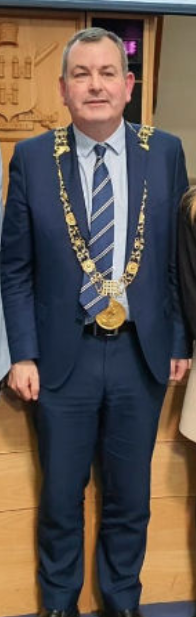
Tom Brabazon in a blue suit, wearing the Mayoral chains of office for Dublin City and while wearing a smile, looking a little uneasy, with clenched right fist and hunched shoulders.
Tom Brabazon, Lord Mayor of Dublin from 24 February 2020, thanks to the votes of the parties in the ‘Dublin Agreement’

Immediately, this drew a huge reaction from women who considered themselves perfectly real without having to give birth or raise children.

Slapped on the wrist by Micheál Martin, Brabazon issued an apology and retreated to the extent that he said he did not intend to be hurtful. The new Lord Mayor did not, however, revise his core conservative beliefs in regard to women and this became apparent during the Repeal campaign. On 5 October 2015 and again on 6 March 2017, Brabazon voted against a DCC motion that called on the government to hold a referendum to repeal the 8th amendment of the Constitution. During the campaign he put his name to a Pro-Life statement in support of the ‘No’ position.

Independent Left’s Niamh McDonald said, ‘As the chair of Dublin Bay North Repeal group I am disgusted that such a man was voted in as Lord Mayor. His past history and comments have shown him not to be in favour of women’s empowerment or women’s equality. Dublin constituencies voted overwhelmingly for women and pregnant people to have reproductive choices and if our new lord Mayor had his way this would never have become a reality.

‘What I feel is a real betrayal of the Repeal movement comes from those parties such as the Social Democrats, Greens and Labour who were active in the Repeal campaign in Dublin Bay North and beyond, who have now agreed to Tom Brabazon’s nomination and who have voted him in. These parties won votes from the Repeal campaign in order to get elected and have now used those votes go against this movement.

‘Repealing the 8th was only half of the battle to ensure everybody has reproductive justice. Our current legislation is too conservative and narrow, it excludes many in society who are already marginalised. At a minimum, we need exclusion zones and to end the three day waiting period.

‘We have a review of the current legislation in less than two years and we need representatives who are willing to stand up to those who want to remove the gains we have made and also who will fight for more.’

Brabazon’s conservative family values fit with his connections to the previous generation of Fianna Fáil politicians. A strong supporter of former Taoiseach Charles Haughey, Brabazon tried to challenge the popular perception of Haughey as corrupt by proposing that Dublin’s port tunnel be named in Haughey’s honour: ‘You would like to think that somebody whose public life was dominated by goodness would have a memorial,’ said Brabazon in 2006, apparently without smirking.

Why did the Greens and Social Democrats vote Fianna Fáil?

After the local government elections of 2019, Fianna Fáil did a deal with Labour, the Green Party and the Social Democrats to get control of Dublin City Council. “The Dublin Agreement 2019 – 2024” is the excuse that the Greens and the SocDems (Labour don’t seem to feel the need to excuse voting for Brabazon) are now giving for their support for Tom Brabazon as Lord Mayor of Dublin. The agreement itself is ten pages of dry, well-intentioned phrases. But the practical action arising from the document does not serve the real needs of the people of Dublin, nor our desire for urgent action on housing. This agreement allowed the sell-off of public land like O’Devaney Gardens and the wasting of millions on a white-water rafting facility.

Many people who voted for Green and Social Democrat candidates in general election 2020 just cannot understand why these parties would support Fianna Fáil in general and an anti-woman figure in particular. The vote on 24 February 2020 in Dublin’s council chamber seemed to completely contradict the spirit of ‘vote left, transfer left’ that swept through working class communities in the general election. It would have been easy, in the light of the general election results, for the Greens, Labour and the SocDems to leave the Dublin Agreement, saying that it was clear there was now a mandate for change. No doubt far more of their supporters would have agreed with such a stand than will agree with their vote for Tom Brabazon.

The explanation for the apparent contradiction in the behaviour of these parties is to be found in their history and their politics. Elsewhere in Europe, Greens can be found who are definitely on the left and side with working class communities but in Ireland that has never been the case. The Irish Green Party is a particularly conservative one, highly networked to Irish business (Ciaran Cuffe is a millionaire who notoriously held shares in General Electric, Chevron Texaco, Merck, Citigroup, Abbott Laboratories and Johnson & Johnson before this information became public). With honourable exceptions, they have often been hesitant on the struggle for abortion rights, preferring silence to leading the way towards change, and while their decision to run David Healy, a candidate with pro-life views, in Dublin Bay North was terrible, it was their attempt to escape the issue when it was raised that is the real indicator of their weakness in this regard. Although the general election campaign raised hopes that the Green Party had changed since its shocking, anti-working class performance in coalition with Finna Fáil 2007 – 2011, essentially, it has not. Its commitment to helping run Irish and international capitalism as a context for its policies means that even on issues to do with climate action, it will do little more than provide cosmetic, trivial changes.

As for the Social Democrats, they were born from a split from the Labour Party and have the same politics as Labour except with a pleasant purple colour-scheme and a lack of support from trade unions. They too start from a premise that they must be ‘responsible’ in respect to the economy and that any changes on behalf of working class communities can only be introduced insofar as such changes are acceptable to the wealthy and the owners of businesses and property. This attempt to mediate between us and the rich wasn’t particularly successful for Labour even in times of prosperity, where there was a certain amount of space for improved spending on housing and health. Sitting on the fence can be tricky and it is particularly difficult to be on a fence that is wobbling. In the 2020s, politics is highly polarised, such as is evident in the vast difference in beliefs between Bernie Saunders and Donald Trump in the USA. And what the vote for Dublin Mayor demonstrates is that when forced to come off the fence, the Social Democrats (just as with Labour) will jump down on the side of the elite.

What does the Dublin Mayoral Vote show for the future of Irish politics?

At the time the vote for Mayor of Dublin was made, the national picture was unclear, with Fianna Fáil and Fine Gael looking to form a government that excluded Sinn Féin, one that would need a willing partner or two from among the smaller parties. While the Social Democrats ruled out joining that particular combination, they conspicuously did not rule out joining with either Fianna Fáil or Fine Gael in a different alignment. The Green Party are equally willing to participate in government alongside one of the right wing parties. Whatever combination of parties eventually emerges to create the Irish government (or, if there is another general election), we can draw a number of conclusions from the vote for Tom Brabazon.

Firstly, the exciting and positive vote for change in general election 2020 is only the beginning of a process of a widescale move to the left in Ireland (and especially in working class communities). As people who want decisive and urgent action on climate, housing and health see that the Social Democrats and Greens (and Labour) won’t take that action, it’s likely that parties to the left of these will grow.

Secondly, even if we had a left government that was trying to tackle these challenges in a manner that – for once – favoured working class communities, the Greens and the Social Democrats would not make for reliable partners. Probably, a government reliant on them would face the same issues that Syriza in Greece faced in 2015. When international pressure from businesses and powerful politicians came to hammer down on Greece, the left government caved in and backtracked on all its radical ideas. If the Greens and the Social Democrats can’t even bring themselves to stand up to Fianna Fáil in Dublin City Council and ditch the Dublin Agreement and a pro-Life Mayoral candidate in favour of a housing activist (Anthony Flynn), we aren’t going to see Che Guevara-style t-shirts being worn of SocDem and Green Party leaders. They are bound to give in to the demands of landlords and business.

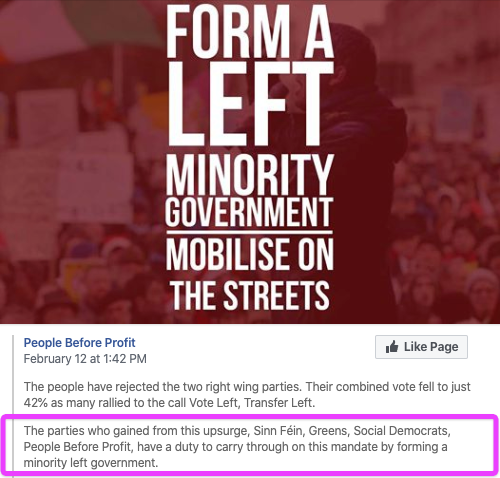
A screenshot from 12 February 2020 from People Before Profit's Facebook feed, with the headline: Form a Left Minority Government - Mobilise on the Streets.
On 12 February 2020, People Before Profit posted on Facebook that it was their duty to join with Sinn Féin, Greens and Social Democrats in forming a left minority government

Thirdly, on a smaller point but one that might prove important in the long term, the results of the election led to a difference in approach on the socialist left. While People Before Profit considered it a duty to enter a left government alongside the Greens and Social Democrats, the Socialist Party and Paul Murphy (RISE) were, quite rightly, more cautious. Supporting such a government from the outside is much better than being part of it. As soon as even a small strike or protest breaks out against the government, if you were outside of government you’d have your hands free to support the protest. If you were inside, you’d have to bring the government down, which might not be the worst outcome (the worst outcome would be if you sacrificed the cause of the protestors to your presence in government) but it would make it look like you were dishonest in your negotiations around the program for government.

Finally, and the most important conclusion for us in Independent Left, is that the campaigns for change that are bubbling away in Ireland, such as over childcare, pay equality and housing, must continue. It doesn’t matter that there isn’t a government. Even a ‘left’ minister might fail us, while the caretaker ministers and the senior civil servants can be forced by successful strikes and protests to implement the changes we need. Waiting for a Sinn Féin-lead government could take months and ultimately could lead nowhere. In the meantime, we can use the boost provided by the election and especially the demoralisation among Fine Gael and their supporters to galavanise existing campaigns and launch new ones.

Filed Under: All Posts, Irish Political Parties

What can we learn from election 2020 and the Dublin Bay North results?

11/02/2020 by Conor Kostick 5 Comments

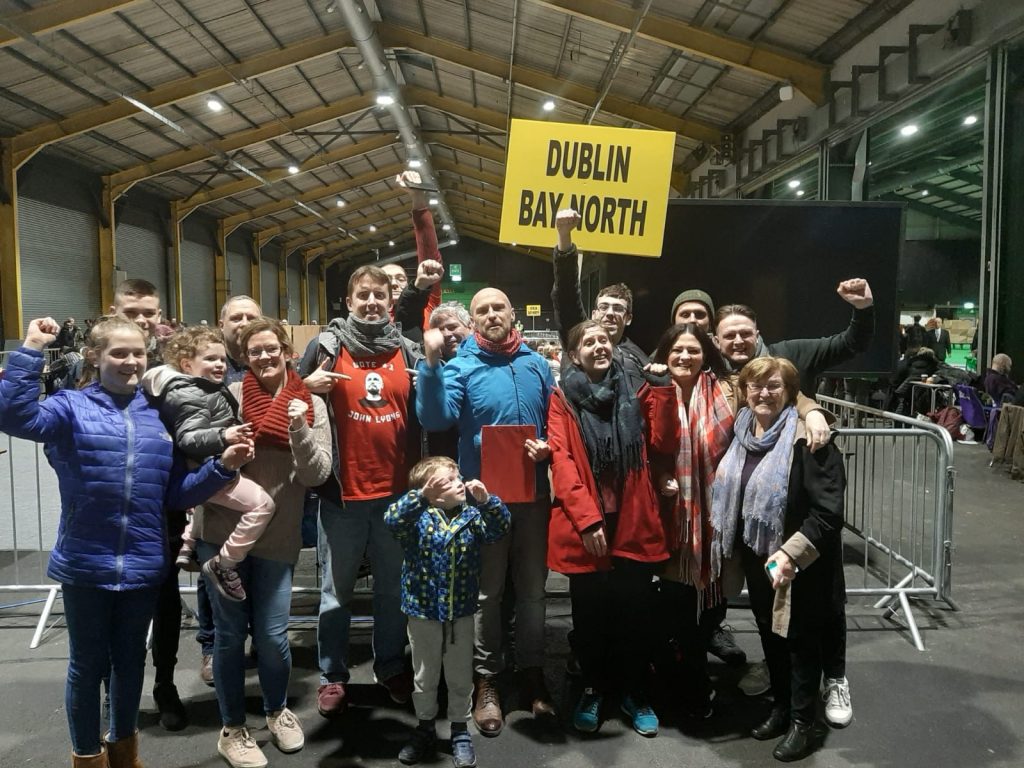
Inside the RDS stand a group of Independent Left supporters, smiling, fists raised, many of them wearing red 'Vote No.1 John Lyons' T-shirts. In the centre, in a blue coat, is John Lyons. On his left is Niamh McDonald. Behind them is a yellow placard from the RDS count centre saying: Dublin Bay North.
Independent Left had a vibrant and energetic campaign in Election 2020, Dublin Bay North

Fine Gael called this election and rubbed their hands with excitement. Full employment, Leo Varadkar looking great in dealings with Boris Johnson over Brexit, property incomes soaring. What could possibly go wrong?

Pretty much everything that can go wrong when you live in a champagne bubble and have no insight into the struggle of those on medium and low incomes. You speak with complacency and in ignorance, you are contemptuous of the electorate and you think, ‘a future to look forward to’ is a clever slogan.

Ireland has 78,000 millionaires in 2020 and they certainly have a future to look forward to. For the rest of us, unless something changes, we can only see more pain over the fact our incomes are eaten up by mortgages and rents; more difficulty accessing health services our families need, with longer waiting times; and more deprivation and anti-social activity in our neglected communities.

There was a roar of anger released in this election and it was channelled behind Sinn Féin. Sinn Féin are a working class party in the sense that their activists are generally drawn from the working class and they know the challenges working people face. So their policies and their articulation of that roar led them to becoming the lightning rod for our fury at Fine Gael and also at Fianna Fáil. We hadn’t forgotten who landed us with massive tax burdens by bailing out their banker friends and who backed Fine Gael with ‘confidence and supply’.

Understanding the rise of the Sinn Féin vote

Our class found a way to lash out at Fine Gael and Fianna Fáil and it was through Sinn Féin, whose spokespeople did a great job of expressing how we felt and offering well-informed refutations of right wing lies (remember how Leo Varadakar said during a TV debate that the rent freeze in Berlin hadn’t worked? It has been agreed but hasn’t come in yet). Even though the large newspapers and television stations did all they could to hammer down the Sinn Féin vote in the last days of the campaign, the electorate in working class areas wasn’t budging.

Some of the tallies as the boxes opened were incredible. Eighty, ninety percent Sinn Féin and just handfuls of votes for the right wing parties.

The transformation of the Irish political landscape in election 2020 is exciting for those of us on the left and humiliating for Fine Gael and Fianna Fáil.

In Dublin Bay North, as elsewhere, at first it seemed as though the socialist voice of the working class was going to also be swept away by the growth of the Sinn Féin vote. The Green vote too, might have been a challenge for socialists (although it was more of a challenge for Labour and other middle-ground and middle class parties). But as the counts went on, the transfers from Sinn Féin were strongly to the left, much more so than had been anticipated, although there were some losses to the presence of radical socialists in the Dáil and as activists with the advantages that being a TD brings to helping organise campaigns. We were sorry to see Ruth Coppinger and Séamus Healy lose their seats but delighted that after a difficult looking start, on the whole, the socialist left held their ground. In fact, we should have gained a seat in Dublin Bay North and at the expense of Seán Haughey of Fianna Fáil, who before the election had been a twenty-to-one favourite.

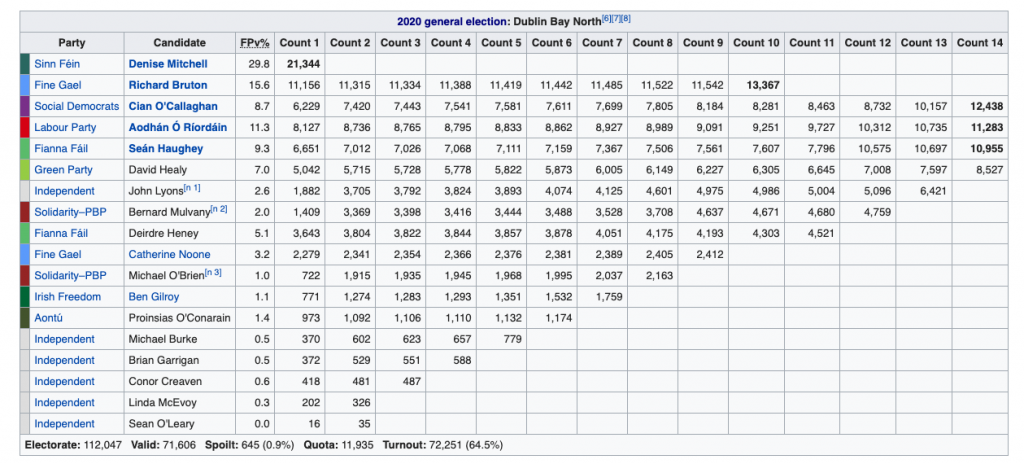
A list of candidates from Dublin Bay North and the details of all fourteen counts of Election 2020. The top candidates, in order of their first preference vote, were Denise Mitchell, Sinn Féin (21,344); Richard Bruton, Fine Gael (11,156); Cian O'Callaghan, Social Democrats (6,229); Aodhán Ó Riodáin, Labour (8,127); Seán Haughey, Fianna Fáil (6,651); David Healy, Green Party (5,042); John Lyons, Independent Left (1,882).
Fianna Fáil failed to get a quota in Dublin Bay North and Haughey staggered over the line only by being deemed elected on the elimination of the Green Party

It must have come as an unpleasant shock for Fianna Fáil that far from winning a second seat, Seán Haughey was down at 6,651 first preferences and ultimately, even after 13 rounds of transfers, couldn’t get a quota. Our own first preference vote was a disappointment, at only 1,882 for our candidate Councillor John Lyons. This seemed to be at odds with the very strong energy for change we’d been encountering on the doorsteps but the transfers of poll-topping Denise Mitchell for Sinn Féin clarified what had happened. There was indeed a massive vote against the establishment and for the left but it had first found a channel in Sinn Féin.

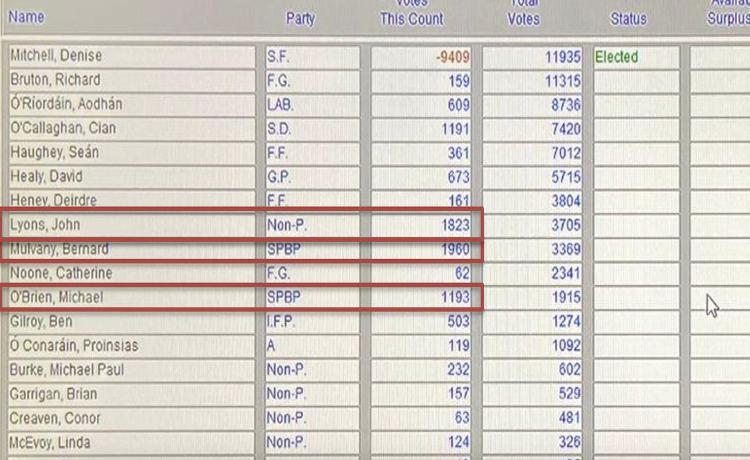
A photo taken of the large screen at the RDS on the day of the count, 10 February 2020, for Dublin Bay North and the transfer of Sinn Féin Denis Mitchell's surplus. Highlighted in red boxes are three candidates John Lyons, Independent Left, who gained 1,823 votes, Bernard Mulvany, SPBP, who gained 1,960 votes and Michael O'Brien, SPBP who gained 1,193 votes. Between them the socialist left could have won a seat on these figures had they not split the vote.

The split left vote saved Haughey’s seat

Elsewhere, the huge Sinn Féin transfers were bringing in candidates of the left and that should have been the case in Dublin Bay North too. Except that that the nearly 5,000 transfers for socialists got split three ways. Instead of one candidate reaching around 9,000 votes and pushing Haughey into sixth place by the end of the election, the Fianna Fáil candidate got lucky. Inevitably, transfers get diluted: even between members of the same party, 50 – 60% is typical. So around half of the votes expressing a desire by working class communities to vote Sinn Féin then vote left were thrown away and in the end, John Lyons, the best placed of the socialists, went out on the thirteenth count with 6,421.

In advance of the next general election, there needs to be a good-faith conversation among the potential left candidates about local government and Dáil seats, in the hope of avoiding this situation arising again.

Positive outcomes for Independent Left from GE2020

Despite the fact that John Lyons did not win Independent Left’s first ever Dáil seat, there are a lot of positives from the election for our small party. With no national presence, financial support, media presence or infrastructure we ran a fantastic campaign which in other circumstances would have brought about a shock for the right and a terrific victory. It helped that our election material was absolutely in tune with our audience. Our theme was ‘a tale of two cities’ and we both listened to and helped articulate the feeling that while the very rich and the landlords were getting richer, the rest of us were being left behind.

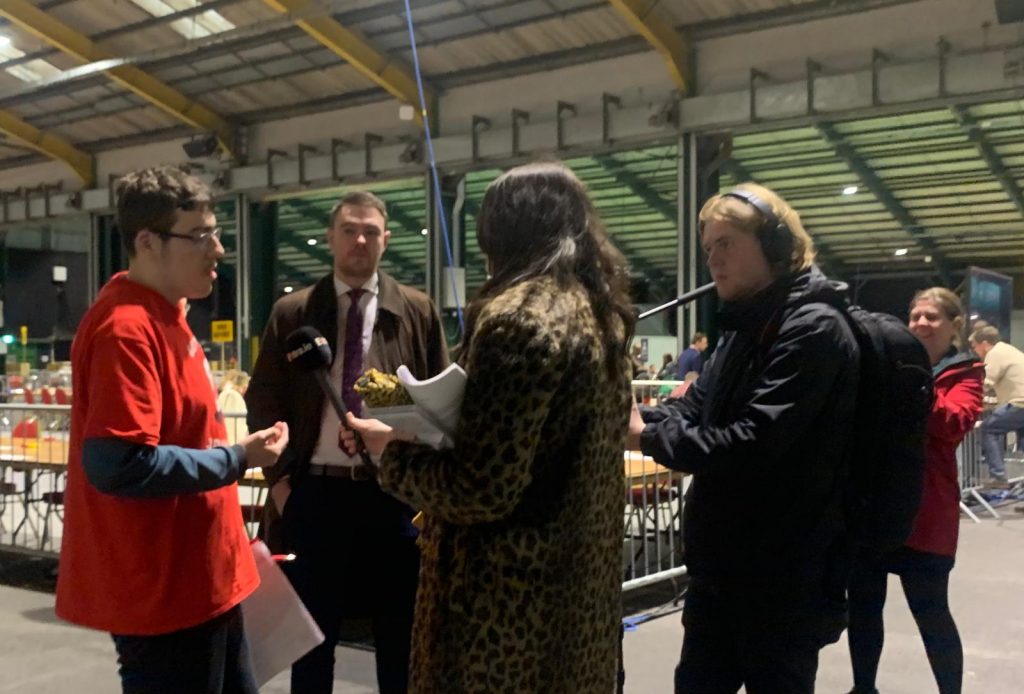
Eóghan Richard Ó'nia  in a red, 'Vote No 1 John Lyons' t-shirt is on the left, one hand raised, explaining to a journalist while another journalist watches and a third films with a camera, that the two party political system in Ireland is over.
Eóghan Richard Ó’nia of Independent Left, explaining to the media why the two-party system is gone for good

We got energy too, from the Childcare Strike and the Teachers’ Strike, which we connected to in Dublin Bay North with a lively contingent on the childcare march and support for the picket lines at the schools around the constituency.

Another big positive for us was meeting new people who have joined Independent Left and have added to our mix of socialists, environmentalists, trade unionists, parents, students, young and old. We are still a project that is evolving but it was really interesting to see how the joint effort of the election brought out a variety of skills and expertise among us and also bonded us in the common effort. Modern socialist parties can be a lot more freeform, dynamic, lively and conversational than the traditional model of a small, centralised handful of people with years of expertise directing everyone else. Facebook groups, WhatsApp groups, etc. allow for everyone to have an opinion and – in our case – a lot of laughs too. If you have been supporting Independent Left in this campaign, you’d be welcome to join us.

What will happen next in Irish politics after GE2020?


Nationally, a discussion is taking place about government formation and it seems that Sinn Féin are positioning themselves to enter government with Fianna Fáil and a smaller party or two. Probably, there is a huge debate within Sinn Féin about this and we hope that the anti-Fianna Fáil voices win. Why? Because Fianna Fáil might well offer a border poll. they might even allow Sinn Féin to introduce a rent freeze, which of course would be very welcome. But the price for these would be too high, because the wealth of the very rich and especially corporations would be untouchable, because it would be business as usual in every other regard. Worse, it would disillusion those people who made the effort to vote for change. While Independent Left have been offering hope, diversity and solidarity within working class communities and trying to direct the alienation people feel against the real causes of this, the system we live under, there was a far right presence in this election who offered despair, division and a violent, racist and homophobic turning inwards of our communities. They will try to capitalise on the sense of betrayal if Sinn Féin backed a Fianna Fáil government.

But isn’t the alternative a Fianna Fáil and Fine Gael government? Wouldn’t that be worse? Actually no, it wouldn’t. Because the ability of any government to impose policies that harm working class communities is set by the willingness of people to stand up and organise and resist the government. We defeated the water charges and with a popular Sinn Féin party in opposition, we can not only throw back anything the government brings at us, workers can push now for pay equality, pay increases, while working class communities can challenge for more resources. This is a much better scenario and one that has a very strong prospect of leading to a left of centre government next time around, than one where for the sake of a few policy gains the excitement currently alive in working class communities subsides into apathy and disillusionment.

Regardless of how the political consequences of election 2020 develop nationally, Independent Left have emerged from the election as a stronger force in Dublin Bay North and we look forward to playing our part in the campaigns to come.

Message from John Lyons to his supporters after the count for Dublin Bay North on Sunday 11 February 2020.

Filed Under: All Posts, Irish Political Parties

‘After Repeal’: analysis and discussion of the ‘Repeal the 8th’ campaign

31/01/2020 by Conor Kostick 2 Comments

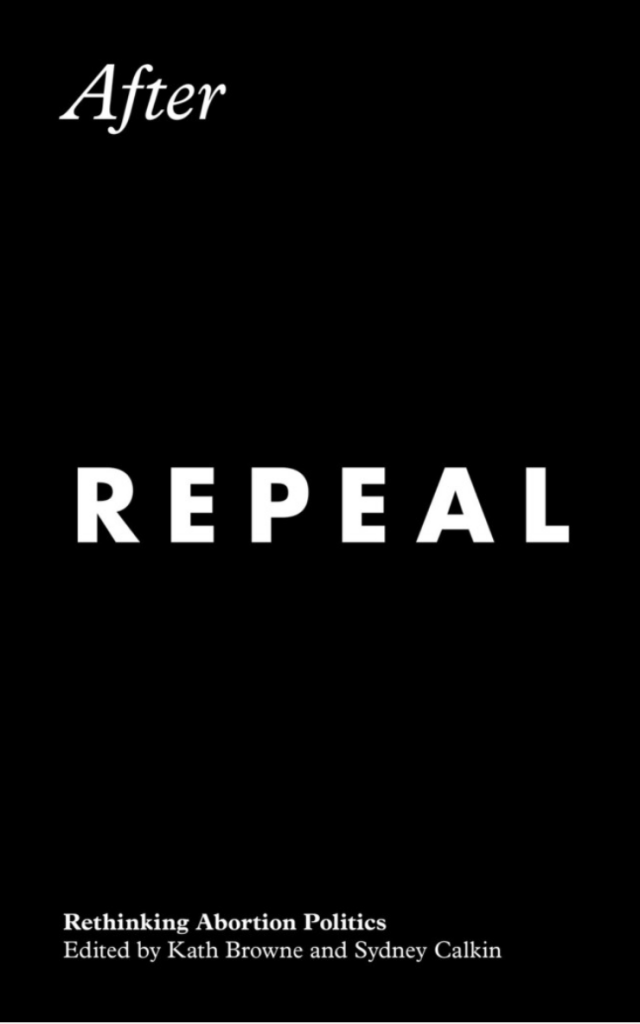
After Repeal: rethinking abortion politics. Edited by Kath Browne and Syndey Calkin.
On 31 January 2020 an important new book discussing a wide range of topics around the repeal of the Eighth Amendment was launched in Dublin: After Repeal edited by Kath Browne and Sydney Calkin

The Repeal of the 8th amendment on 25 May 2018 was a seminal moment in Irish history and an amazing moment, one that starkly illuminated the fact that we are no longer a country dominated by the Catholic Church. The dazzling victory felt even stronger than that of the same-sex marriage referendum. It was a hard-fought result, one that couldn’t have been achieved without mass participation in the repeal movement. Everywhere, but especially in urban and working class areas, the issue of abortion was discussed and women shared their experiences.

This was one of the crucial differences compared to previous efforts to liberalise Ireland’s severe abortion laws. The atmosphere of shame and silence that prevented the reality of the need for safe and legal abortions from being expressed was shattered by women having the confidence to speak out in a fashion that was unprecedented for Ireland. With sincerity and conviction, canvassers swayed those who held reservations into voting for repeal. As one of the canvassers in Dublin Bay North put it:

Personal stories and individual experiences that weren’t readily available on television or even on the web were key to the success of the campaign.

Editors Kath Browne and Sydney Calkin invited a range of contributors to write for an anthology that analyses the campaign and also the implications of the result for Irish society and, indeed, the international struggle for reproductive justice.

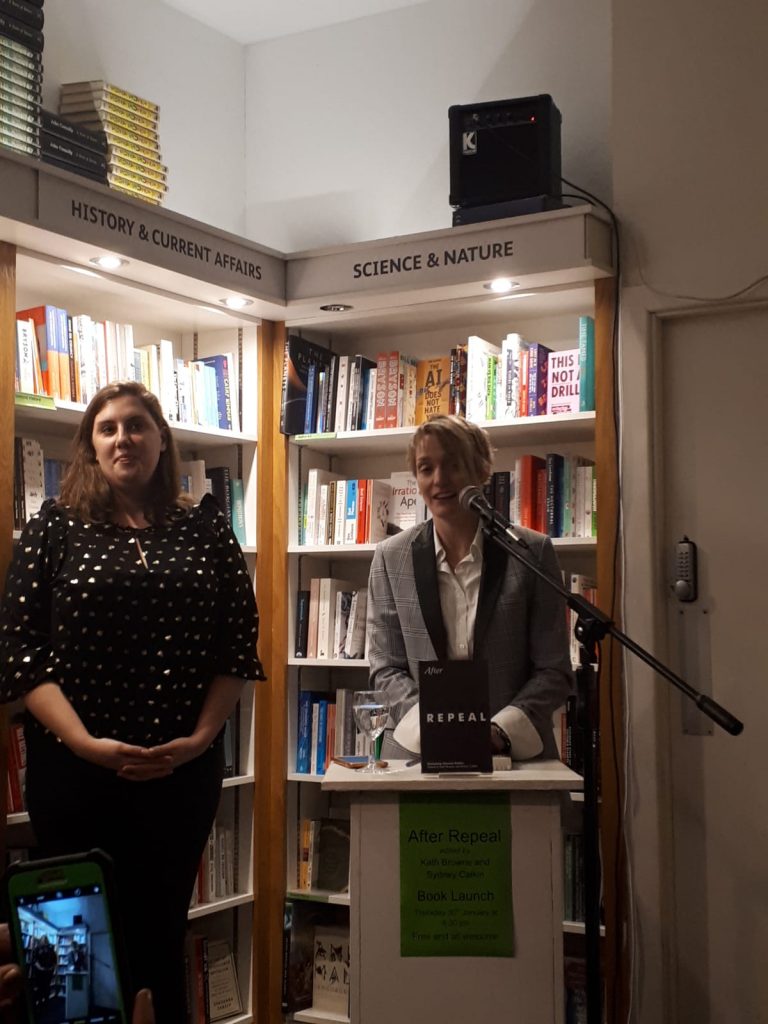
Sydney Calkin (L) and Kath Browne (R) at the launch on 31 January 2020 of their edited book, After Repeal. Kath Browne is at the podium, microphone in front of her. Behind them both are shelves of books.
Sydney Calkin (L) and Kath Browne (R) at the launch on 31 January 2020 of their edited book, After Repeal.

Different perspectives on the politics of Repeal are offered by Theresa Reidy, Linda Connolly, Fiona de Londras, Máiréad Enright, Sydney Calkin, Elżbieta Drążkiewicz-Grodzicka and Máire Ní Mhórdha. For analysis of the campaign itself, the book draws on Mary McGill’s reflections of events in rural Ireland and the Repeal story within the Irish language community is covered by a chapter from Lisa Nic an Bhreithimh. Lorna O’Hara discusses the power of the iconic ‘Repeal the 8th’ mural, while Eric Olund’s research is in regard to the press. The aftermath of Repeal and its potential consequences both here and internationally are discussed by Richard Scriven, Kath Browne, Catherine Jean Nash, Noëlle Cotter, Lisa Smyth and Dorota Szelewa.

Dublin Bay North during the Repeal the 8th campaign

There is something of an academic flavour to the book, but the editors are to be commended on their inclusivity and in particular the publication of ‘Campaigning for choice: canvassing as feminist pedagogy in Dublin Bay North’, a chapter by Niamh McDonald, Kate Antosik-Parsons, Karen E. Till, Jack Callan and Gerry Kearns. The framing of the chapter suggests that its value is in providing a case study of successful feminist pedagogy, but really, there is wealth of more general lessons that can be learned from the experience of Dublin Bay North Repeal group, ones that are important for wider campaigns and, indeed, our own socialist project. It helps that Independent Left’s own Niamh McDonald is a contributor to the chapter. Niamh was Chair of the Dublin Bay North Repeal the 8th Campaign and with her voice, along with others, we hear from working class women who shaped the outcome of the referendum.

Niamh McDonald, Independent Left and Chair of Dublin Bay North Repeal the 8th Group at the launch of After Repeal. She is standing at a podium, microphone in front of her. In the background are shelves full of books. She is holding up 'After Repeal' in one hand, the bottom of the book resting on the podium.
Niamh McDonald, Independent Left and Chair of Dublin Bay North Repeal the 8th Group at the launch of After Repeal

One of the challenges facing the group was in how to maximise the energy of the many people new to political activism with the experience of those who had years of experience in trying to bring about reproductive rights for women. They solved this with a number of strategies: there was a ‘buddy’ system, to team up those new and less confident about knocking on the doors of strangers with those who were familiar with such activity; they avoided a potentially patronising and top-down stultifying effect by placing an emphasis on the empowering of the new voices; the internal social media conversations were egalitarian and encouraging (i.e. were not heavily controlled by moderators); decision-making was transparent and democratic; activists with a political background were welcomed but no one party was given a pre-eminent role, finally, respect was reciprocal. Newer activists might say,

My buddy had been knocking on doors for months, and gave me great advice, and boosted my confidence. It also made me feel safe.’

While the more experienced activist could recognise that the enthusiasm of the new activist was encouraging and helped lift her, ‘on bad days.’

All in all, the campaign provides a model, not just for feminist pedagogy but a methodology for creating an inclusive grass-roots campaign. The success of this approach, the fact that Dublin Bay North Repeal retained members and grew to the point that 80 – 100 canvassers were assembling and knocking on doors every day, was decisive in bringing about one of the largest votes for Repeal in Ireland. Overly hierarchical organisations inevitably stifle people who want to express themselves but are not used to doing so. To win the argument around Repeal it was absolutely critical, however, that women of our community, of the working class, got to speak and got to be heard. As one canvasser summarised the situation: ‘our arguments were based on compassion and real life experience’. Real life experience was heard by canvassers, was brought into the campaign and shared, and working class women as canvassers themselves reflected the reality of the necessity of abortion rights.

Dublin Bay North Repeal activists were self-aware enough of the importance of their achievement that they consciously strove to preserve the lessons of the campaign by issuing a survey to members in the aftermath of the vote and with 125 responses, obtained essential feedback from which the lessons of the campaign could be drawn. Very much to the credit of the editors, these lessons have been included in After Repeal.

Some twenty-percent of the Dublin Bay North campaign members were male and among them and one of the founders of the group was Councillor John Lyons. The launch of the book during the election campaign is very timely, firstly because, as John Lyons put it in answer to a question on Twitter to all candidates from the @DBNRepeal account, there is still a lot to achieve:

An exchange of Tweets showing John Lyons giving his full support to the ongoing struggle for reproductive rights for women in Ireland in response to a question to all candidates in Dublin Bay North by DBN Repealers
John Lyons giving his full support to the ongoing struggle for reproductive rights for women in Ireland in response to a question to all candidates in Dublin Bay North by DBN Repealers

It took a huge effort to get the referendum and win it, but we aren’t done. We have a legislative review this year, people still travelling, maternity hospital ownership, we need exclusion zones, a countrywide service with no barriers to access. I want to see all goals achieved.

Secondly, it has emerged that the Green candidate, David Healy, is pro-life, voted against Repeal, and endorsed pro-life social media posts. It took some effort for this information to become public and it would be tragic if Dublin Bay North returned a majority of anti-choice TDs after such an inspiring campaign. Yes, climate change is a very urgent issue, but as Not Here Not Anywhere have shown, the left in the Dáil have just as good a record as the Greens on environmental issues and its therefore possible to express support for radical action on climate and the continuation of the struggle for reproductive rights in the general election.

A bar chart labelled Climate Score shows Fine Gael (2%), Labour (32%), Aontú (50%), Fianna Fáil (60), Sinn Féin (69) and the Green Party, Social Democrats, Solidarity-People Before Profit and Independents 4 Change all on 100%. Compiled by www.notherenotanywhere.com these percentages are of votes for action on climate change.
Analysis of Dáil voting records on climate issues by Not Here Not Anywhere shows the parties left of Labour have just as good a record as the Green Party

Kate Antosik-Parsons, contributor to the Dublin Bay North chapter in After Repeal expresses why she is voting for Councillor John Lyons in the general election of 2020.

Filed Under: All Posts, Reviews

Powerful teachers’ strike on 4 February 2020

30/01/2020 by Conor Kostick 1 Comment

A blackboard with thick white letters saying: STRIKE!
Teachers will be on strike 5 February 2020.
On 5 February 2020, 19,000 TUI members will strike and close over 400 second-level schools

On 4 February 2020, hundreds of second-level schools closed as a result of a strike by 19,000 teachers, members of the Teachers’ Union of Ireland (TUI). These teachers voted by a massive 92% to 8% to engage in a campaign of industrial action. The issue driving teachers to strike is a simple one: people doing exactly the same job should get the same pay. Yet this principle is violated throughout the public sector as a result of savage cuts imposed by the Fine Gael / Labour government that formed on 25 February 2011.

A two-tier pay system was put in place that punishes those who took up jobs from 1 January 2011 onwards, as a 10% reduction in basic pay was imposed on new teachers and all new entrants were obliged to start on the bottom point of the pay scale regardless of previous teaching experience. Additional cuts to certain allowances meant new teachers lost up to 15% of their pay. The pay gap in starting salaries between post-2011 teachers and those employed before 2011 is over €4,000 a year even when not taking into account the fact that before 2011 teachers started on the third point of their scale.

Councillor John Lyons talking to TUI pickets outside of Coláiste Dhúlaigh during the strike of 4 February 2020. John Lyons is on the left of the picture. Five teachers in thick coats and wearing wooly hats are holding placards: End Pay Discrimination Now, TUI Official Strike, Equal Pay for Equal work.
Councillor John Lyons talking to TUI pickets outside of Coláiste Dhúlaigh during the strike of 4 February 2020

Unity among teacher unions is the way to win pay-parity

There are three teaching unions in Ireland, the TUI, the ASTI (Association of Secondary Teachers in Ireland) and the INTO (Irish National Teachers’ Organisation), while the latter focus on primary education, they too have been trying to achieve pay parity, by taking a court case to the European Court of Justice, claiming discrimination on the grounds of age. This case was lost so now the hope of INTO members will be that their colleagues in second-level schools win their strike and therefore pave the way for all teachers to win back equal pay. The INTO should also now ballot for strike action on the issue.

For the ASTI, the situation is similar, in that these teachers too consider the issue of ending the two-tier pay system an urgent one, the union describing it as a ‘shocking stain’. Unfortunately for teachers as a whole, the ASTI and the TUI have, up to now, not stood together in tackling the issue.  The ASTI went into battle on the issue in 2016 and were knocked back, having to retreat with only small gains and having incurred punitive costs. The government imposed penalties on ASTI members for having ‘repudiated’ the public service agreement and these penalties amount to some €15million in lost increments and other benefits.

Naturally, ASTI members have a great deal of bitterness about this situation but Independent Left urge them to direct that bitterness at the government not their colleagues. Now is the perfect time to push forward on this issue. This is not so much because of the election – although there is no harm at all getting candidates to commit to restoring pay parity – but more because right throughout the public sector there is a growing mood for action on this issue. The nurses who struck in February 2019 made some gains and, perhaps more importantly, the government was sufficiently worried that they didn’t try to repeat the punishment of imposing penalties. They know public sector workers are much closer to a major revolt across the board than they were in 2016. Since the ASTI took the lead on the issue, three years of rising rents, medical costs, child care costs and a general increase in stressful living has changed the mood of other workers.

ASTI members should be proud of being the first into this battle and welcome the fact that reinforcements are now joining the cause. Ideally, all three teacher unions should co-ordinate strike action on this issue for the same day. At a minimum, teachers have to respect one another’s picket lines.

The ASTI, TUI and INTO leadership cannot officially call for members not to cross picket lines as it is illegal to do so (highlighting the importance of the demand by Councillor John Lyons, who is standing in Dublin Bay North for General Election 2020, that the 1990 Industrial Relations Act be abolished). Independent Left have no such constraint and as we take inspiration from the lives of James Connolly and Jim Larkin, we appreciate how essential is solidarity and respect for picket lines to winning strikes. Moreover, the ASTI have said:

the union will support any member who does not pass a picket should disciplinary action be threatened or taken against them.

They have also asked members not to undertake any duties performed by TUI members and this alone should be sufficient on health and safety grounds to cause many schools to close, even where the numbers of TUI strikers are small.

Independent Left support the TUI strike on 4 February 2020

Probably, over 400 schools will be closed by the strike of 4 February 2020, including the 260 Education and Training Boards’ schools. This strike is a powerful way to bring the campaign for pay parity forward and regardless of who forms the next government, the new cabinet will inherit real pressure to make concessions.

Councillor John Lyons joining the pickets at Coláiste Dhúlaigh during the strike of 4 February 2020. John Lyons is on the left, a male teacher is talking to him on the right, holding a green placard with white writing: end pay discrimination now. Behind him a female teacher is mid stride with a red placard and white writing: TUI OFFICIAL STRIKE.
Councillor John Lyons joining the pickets at Coláiste Dhúlaigh during the strike of 4 February 2020

From the point of view of parents, having to come up with a contingency arrangement for our children is a challenge. But it is very much in our interests to support the teachers. For one, the low pay in the sector is leaving schools short-staffed. Over ninety percent of secondary schools report difficulty filling posts. More generally, education is in desperate need of an injection of funding. And, of course, the demand of the teachers is an entirely fair one.

This is why Independent Left members went to the picket lines on 4 February to show our support for the striking teachers and we encourage parents and the public to do the same.

Strikes, especially general strikes, are the most effect form of protest we have.

TUI members at Donahies Community School talking to Councillor John Lyons on the day of their strike for equality in pay, 4 February 2020. Three women teachers and one man in thick jackets are stood in a circle around Councillor John Lyons who is gesturing. Behind them is a wall with a railing on which is a banner for day and evening classes at Donahies Community School.
TUI members at Donahies Community School talking to Councillor John Lyons on the day of their strike for equality in pay, 4 February 2020.
A railing with a banner: Enrolling Now! Day and Evening Classes. Adult Education at Donahies Community School. Below the banner are three TUI placards placed by teachers striking on 4 February 2020.
Independent Left support the teachers in their campaign to overcome the discrimination in pay towards those recruited after 2011.
John Lyons, Independent Left candidate for Dublin Bay North is pictured on the right of a frame that is mostly text. Workers' Rights. Abolish the 1990 Industrial Relations Act and replace it with a Fair Employment Act that guarantees: the rights of union access to all workers; the right to union recognition; full collective bargaining rights. A four day work week to reduce stress and improve quality of life. Solidarity with the French workers campaigning to retain their retirement age at 62. No increase to the pension age in Ireland, with the goal of bringing it down to 62 also.
Councillor John Lyons supports the repeal of the 1990 Industrial Relations Act, which hampers workers attempting to organise strikes.
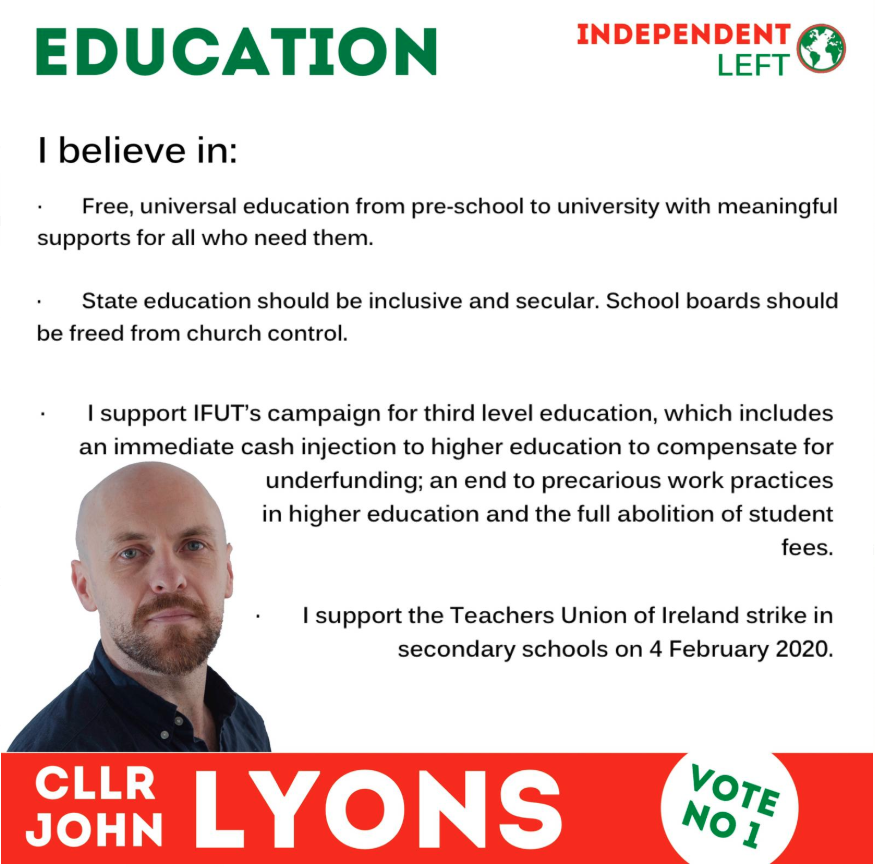
John Lyons, Independent Left candidate for Dublin Bay North is pictured on the right of a frame that is mostly text that has several demands concerning education and concludes: I support the Teachers Union of Ireland strike in secondary schools on 4 February 2020.
Councillor John Lyons, Independent Left candidate for Dublin Bay North in GE 2020 supports the TUI strike of 4 February 2020.

Our education system discriminates against working class communities

Supporting teachers in the struggle to win parity of pay and, indirectly, to improve recruitment and retention rates is just one facet of a radical overhaul of the education system that is needed. As John Lyons highlighted in his election 2020 campaign as candidate in Dublin Bay North, we still have far too many schools under church control. My son goes to one where the principal circulates material against same-sex relationships, material which sees diversity as a plot by the UN to reduce population growth! John Lyons also is drawing attention to the need for meaningful supports to be put in place to allow all children equality of access. Although the government boasts of increase employment for SNAs, the fact that SNA hours have been reduced and the number of children requiring support has increased means the overall service is a long way behind that of 2013, when the Fine Gael – Labour government slashed SNA hours. The recent changes to the resource allocation model of NCSE is a particular disaster for visually impaired children.

Just looking at the school buildings in different parts of the city and your intuition will tell you something is wrong in Irish education. If you stroll past Wesley fee-paying school, for example, you’ll see two resurfaced hockey pitches, two cricket pitches, another for soccer. No less than four for rugby and if you got a glimpse inside you’d see two basketball courts a major hall and a gym. In 2018, Wesley obtained €150,000 from Shane Ross from the Sports Capital Programme to for those resurfaced hockey pitch. And for our kids on Dublin’s north side? Typically they play soccer on tarmac or, as in my son’s school, in a car park.

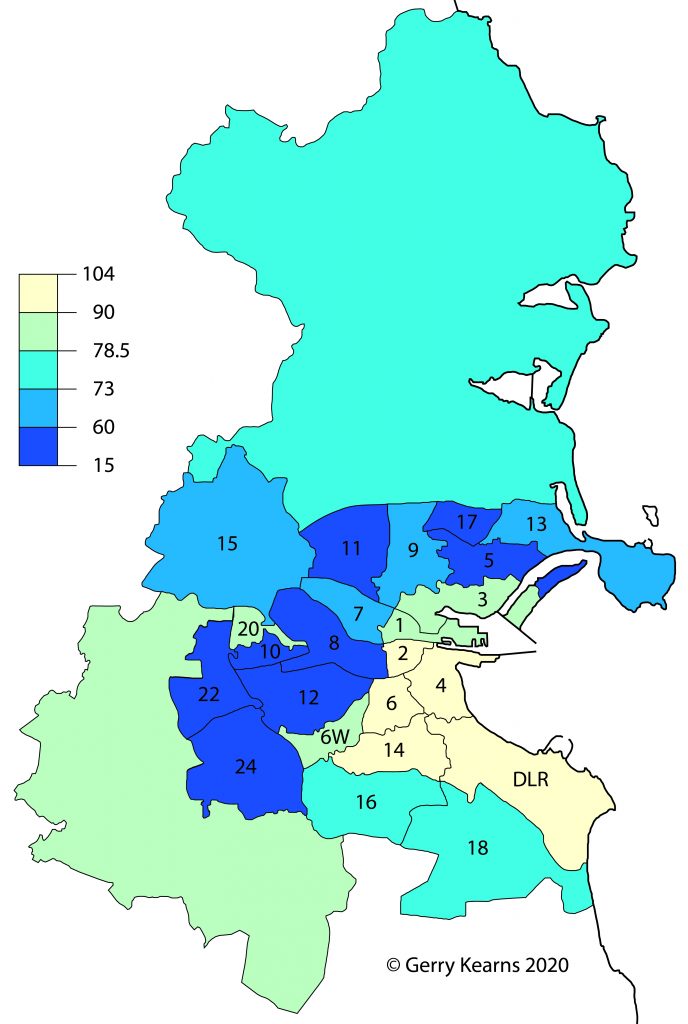
Research by Gerry Kearns, Professor of Human Geography, Maynooth University allows us to visualise the bias in education in Dublin. As he puts it:

There is a wedge of privilege extending southwards from the city centre. If we map the proportion of people going from school to college, the districts with the schools most likely to send students to college form a coherent band on the southside (Dublin postal districts 2, 4, 6, 6W and 14, and the local authority of Dún Laoghaire-Rathdown).

A map of Dublin and adjacent counties, with the postal boundaries drawn. D24, 22, 12, 10, 8, 11, 17 and 5 are dark blue, signalling the lowest rates of progress from second to third level education. D15, 7, 9 and 13 are light blue, indicating still very poor rates. D1, 3 and 6W are light green, above average and D2, 6, 4, 14 and DLR are yellow, showing very high progression rates. Copyright Gerry Kearns.
From school to university based on Irish Times feeder data (showing approximately the proportion of the student body going on to third level) Please respect the image copyright. It will be published in due course in chapter by Gerry Kearns, on Dublin as a city arranged by class.

This discrimination can be overcome, but not without a challenge to decades of neglect for our schools from Fine Gael and Fianna Fail and their coalition partners.

Filed Under: All Posts, Protests Ireland

Election 2020: the view from Dublin Bay North

24/01/2020 by Conor Kostick 2 Comments

Councillor John Lyons running for election in Dublin Bay North, pictured in the evening on a ladder, smiling as he lifts a post with a large poster of his head and shoulders, on which is written Vote No.1, Cllr John Lyons, Independent Left.
Councillor John Lyons is running for Independent Left in Dublin Bay North and has a real chance of a seat.

Nine days into the campaign, how does the picture look for Independent Left?

When senior Fine Gael members took the decision to dissolve the Dáil on 14 January and began campaigning for a general election campaign they were feeling complacent. The other parties were looking towards a May date and were caught without election materials to hand, while Leo Varadkar had his posters up before the election had officially begun. The timing seemed right, not least because Fine Gael anticipated benefiting from the fact that Varadkar appeared impressive beside Boris Johnson in the negotiations around Brexit and the Northern Assembly was up and running again, with the Irish government having played a part in this.

Moreover, in the champagne bubble that surrounds Fine Gael, the world looks extremely positive: the number of millionaires in Ireland has increased by a third since 2013, to 78,000 and these millionaires are paying income tax at the same rate as people earning the average wage. Many of Ireland’s wealthy are landlords (a third of Fine Gael and Fianna Fail TDs are landlords) and are enjoying a growth in their incomes from tenants who are desperately squeezed. In North County Dublin, average rents rose by 5.6% in 2019 to €1,728, having risen by 11% in 2018.

With unemployment below 5% and economic growth levels relatively healthy compared to the rest of Europe (around 5% in 2019 and a predicted 4% for 2020), Fine Gael strategists rubbed their hands and set out for what they assumed would be a very good election for them.

In fact, it is going to be a very bad one.

The problem with elections, from a Fine Gael and Fianna Fail point of view, is that you have to go outside the champagne bubble and listen to voices that don’t normally concern you. And while the 78,000 millionaires are powerful voices and highly networked to these parties in the day-to-day running of Irish society, they are vastly outnumbered when an election takes place.

Fine Gael suffering a backlash in Dublin Bay North

By now, Fine Gael have discovered that there exists a huge body of people who far from enjoying increased prosperity are suffering enormously. For the majority of people in Ireland in 2020, life is extremely stressful. Yes, we have jobs. But the money we earn disappears into rents and mortgages, into childcare, into bills, including medical ones when the services we need urgently aren’t there. Everywhere, there is pressure on our living standards and obvious neglect of public services, especially health, education and transport. And alongside these very immediate causes of stress is the wider issue of a planet that is getting distinctly warmer and jeopardising our futures and that of our children.

Not one person has mentioned Brexit or the Northern Assembly in our canvassing. We hear awful stories of long waits for health services, which bear out the figures that, for example, that Dublin North has 2,400 children on the waiting list for speech and language therapy (in contrast to the waiting list of 10 for Dun Laoghaire, and 0 for Dublin South East).

The anger at Fine Gael is palpable and while Richard Bruton’s seat is safe (Dublin Bay North has its affluent areas and in a constituency that voted heavily for Same Sex Marriage and Repeal, the government might get some credit for those referenda), he won’t be able to bring home Catherine Noone.

Fianna Fail share the blame for deprivation and neglect in parts of the constituency

A lot of the same anger is directed at Fianna Fail too, understandably given the ‘confidence and supply’ agreement that meant Fianna Fail propped up Fine Gael. It’s very common to hear a mistrust of politicians all together from those we canvass. And for communities in Dublin Bay North that have experienced far more than a decade of neglect such anger is entirely justified. In the circles that Fine Gael and Fianna Fail move, there is no consequence for creating pockets of real poverty, desperately poor services, feeble civic amenities, or schools deprived of facilities. For the rest of us, an approach which has favoured the wealthy has resulted in very severe consequences. There has been a rise in drug use and in the appeal of criminal gangs for young, disenfranchised people. Many people have said they are afraid to go out of their homes and there are parents in parts of Dublin Bay North that simply cannot let their children run out and play, instead they take buses to get to safer areas. And since Fianna Fail are as complicit in the creation of these circumstances as Fine Gael, they are not likely to be able to bring in Deirdre Heney, though Sean Haughey is certain to keep his seat.

Is there a seat for Independent Left in Dublin Bay North?

With both Finian McGrath and Tommy Broughan retiring, the consensus among the political correspondents of RTE and the Irish Times is that this will boost Labour and the Social Democrats relative to everyone else. Yet from our canvassing and from what we can learn from the 2016 election, it seems like Councillor John Lyons of Independent Left is currently best placed to appeal to those who voted Tommy Broughan and has a lot to offer those who voted Finian McGrath. The two independents were very different of course. Tommy Broughan was a Labour Party TD opposed to coalition with Fine Gael and who – quite rightly – on 1 December 2011 stood firm on the issue of not extending the ruinous bank guarantee scheme. As a result, he was expelled from Labour and subsequently worked with left independents like Joan Collins, Catherine Connolly, Clare Daly, Maureen O’Sullivan, Thomas Pringle, and Mick Wallace, with whom he formed the Independents4Change technical group in the Dáil.

On a whole range of policies around housing and health and especially on the principle of not going into government with Fine Gael or Fianna Fail, Tommy Broughan is far more closely aligned with John Lyons than Aodhán Ó Ríordáin (Labour) and Cian O’Callaghan (Social Democrats). A consistent theme of Tommy Broughan’s political career was the need to challenge the two main parties of the right and this has to be reflected in the values of his voters. 

By contrast, Finian McGrath obviously did believe it worthwhile to join with Fine Gael in government. It’s not at all clear, however, that his voters would agree that this was a success. Not only has Finian McGrath to share responsibility for the housing crisis and the failure to reduce hospital waiting lists, but even in his own remit, as Minister for State for Disability Issues, his record cannot be considered a success. The one section in Irish society for whom employment did not rise under the Fine Gael-led government is that of people with disability, two-thirds of whom do not have jobs. In primary and secondary education, while the number of SNA employed has risen, their hours have been reduced, and along with the fact that the number of children in need of support have increased, the situation for children with special needs is worse than at any time since the savage Fine Gael-Labour cuts to their service of 2013.

From the transfer patterns of the 2016 election, it is likely that many of Finian McGrath’s voters would be disappointed in his decision to join a Fine Gael-led government and his record when in cabinet. Only dribbles of transfers came his way when Stephanie Regan and Naoise Ó Muiri of Fine Gael were eliminated and there was no obvious gain either for Finian McGrath from the elimination of Deirdre Heney of Fianna Fail. His former voters certainly seem likely to favour the non-government parties but it’s not clear at this point that they will focus on Labour and the Social Democrats, more likely is that they will spready fairly evenly, also coming in part to John Lyons, Denise Mitchell (Sinn Féin) and David Healy (Green Party). Which brings us to the Greens.

Have the Green Party made a terrible mistake in Dublin Bay North?

Given the surge in support for the Green Party in Dublin, it’s understandable that Paddy Power would make David Healy a 2/9 favourite to win a seat in Dublin Bay North. David Healy is the Green Party’s spokesperson on climate and that is definitely an important issue for people we have been talking to. Our own view is that the Green Party will not deliver a radical enough solution to significantly alter Ireland’s contribution to global warming. Partly, this is because they are ready to go into coalition with Fine Gael or Fianna Fail, despite some internal opposition but also because their big idea is a heavy carbon tax, which is not going to be a socially just way of tackling climate change. Even so, the Green Party are set to do well as an expression of people’s concern about the state of the planet.

Yet the candidate they have selected for Dublin Bay North is out of line with the official Green Party policy and with voters here in one very important way: he was against the Repeal of the Eighth amendment, voted ‘no’ and expressed support for the ‘no’ position at the time. Dublin Bay North had the second highest turnout in the country for that referendum and with 74.69% yes, was one of the strongest regions for repeal. By contrast with David Healy, John Lyons assisted in the formation of Dublin Bay North’s Repeal the 8th campaign, and, as one person put it on Twitter, was tireless in working for that campaign.

A screenshot of a Tweet (in dark mode) which reads: I know that people are keen to support candidates with a good track record on Repeal. On my first canvass with @DBNRepeal, I was trained in by @CllrJohnLyons. His work on the #repealthe8th campaign was extensive & tireless. Lucky for us he's running in #DublinBayNorth #GE20
One of many tweets highlighting the pro-choice record of Councillor John Lyons of Independent Left, a candidate in the General Election 2020 in Dublin Bay North

Kate Antosik-Parsons of the Dublin Bay North Repeal the 8th Campaign explains why she will be giving her number one vote to Councillor John Lyons.

The Green Party had other potential candidates for the constituency of Dublin Bay North and ought to have been set to take a seat at this point in the campaign. Now, however, there will be hundreds of voters who are unsure about returning an anti-choice candidate, no matter how supportive they are of other Green policies.

What is the likely result in general election 2020 in Dublin Bay North?

The constituency has five seats. With Sinn Féin running a strong campaign nationally and having just the one candidate in Dublin Bay North this time, Denise Mitchell will consolidate her seat. Richard Bruton (Fine Gael) will do well and be elected after the elimination of Catherine Noone. Sean Haughey will probably improve on Richard Bruton’s 2016 performance and take the top spot, not only because of the indication of the national polls, but last time around Avril Power took some of the Fianna Fail vote.

There will then be two seats left and our estimate is that three candidates will be close: John Lyons, David Healy and Aodhán Ó Ríordáin, with Cian O’Callaghan a little bit off the pace. The main difficulty Aodhán Ó Ríordáin has is not only the awful record of Labour when in government, which people haven’t forgotten, but the fact that the national party is so anxious to position itself as respectable and responsible, that they have policies to the right of Fianna Fail, who cynically know when to make promises on housing and health that they won’t deliver on.

Whereas Independent Left have no fear of offending developers and those pushing for privatisation of health, or those on high incomes who we would tax for the resources that public services need, Labour are looking anxiously over at these same people in the hope of appeasing them.

For that reason, we are backing ourselves to win a seat and for the Green Party to edge out Labour, despite the fact that David Healy was on the wrong side of the Repeal referendum.

Thomas Daly of Darndale FC, endorsing Councillor John Lyons for Dublin Bay North in election 2020.

Filed Under: All Posts, Irish Political Parties

  • « Go to Previous Page
  • Page 1
  • Interim pages omitted …
  • Page 3
  • Page 4
  • Page 5
  • Page 6
  • Page 7
  • Interim pages omitted …
  • Page 9
  • Go to Next Page »

Copyright © 2026 · Aspire Pro on Genesis Framework · WordPress · Log in