• Skip to primary navigation
  • Skip to main content
independent left logo

Independent Left

Environmentalism, socialism, freedom and equality. #liveablecity

  • About
  • Featured Articles
    • How Farming Must Change to Save the Planet
    • The Housing Crisis: Causes and Solutions
    • Socialism in Ireland
  • Contact Us
  • Podcast
  • Animal Rights
  • Archive
    • Irish Socialist History
    • Dublin City Council Housing
    • Ukraine
    • Protests Ireland
    • Reviews
    • Irish Political Parties
    • All Posts
    • Independent Left Policies
  • Why join?

Features by Conor Kostick Independent Left

Commemorating the 1916 Easter Rising

02/03/2022 by Conor Kostick 1 Comment

Ireland’s 1916 Easter Rising: commemorating revolution

Commemorations of Ireland’s revolutionary years have been underway since 2016. In 2016, the Easter Rising was celebrated by the people of Ireland as having been essential to the establishment of the Irish Republic. Quite rightly, the events of 24 April 1916, Easter Monday, were seen as being a pivotal moment. Every primary school was sent a flag to raise in memory of the uprising. It is worth saying a something more about this last initiative.


The Irish army, Óglaigh na hÉireann, arranged for a team to visit each school and an officer read aloud the famous Proclamation and presented a pack to the school. This process culminated in Proclamation Day on 15th March 2016, where every school held a special ceremony to raise the National Flag and read the 1916 Proclamation. These are potent messages to the young.


Take the Irish flag: the green, white and orange tricolor. Designed in the spirit of revolutionary France, with a symbolism to embrace the whole country (green for Catholicism, orange for Protestantism, white for peace and unity), from its creation in the mid nineteenth century this flag was banned by the Imperial authorities. It was first flown over a public building when the rebels of 1916 raised it over their headquarters at the General Post Office, Dublin as an act of defiance.


Or the Proclamation. As revolutionary documents go, the Irish Proclamation of 1916 compares well with its antecedents from the US, France and from earlier republican movements in Ireland. It is a beautifully composed and spirited declaration of the rights of the Irish people. For its time, it was a strikingly modern rallying cry, particularly in its care to speak of Irishmen AND Irishwomen throughout. Had the rebels won in 1916, Ireland would have been one of the first countries in the world to grant women the vote.


Among other ringing phrases our children listened to are these:

‘We declare the right of the people of Ireland to the ownership of Ireland and to the unfettered control of Irish destinies to be sovereign and indefeasible. The long usurpation of that right by a foreign people and government has not extinguished the right, nor can it ever be extinguished except by the destruction of the Irish people.’

And:

‘The Republic guarantees religious and civil liberty, equal rights and equal opportunities to all its citizens, and declares its resolve to pursue the happiness and prosperity of the whole nation and of all its parts, cherishing all the children of the nation equally and oblivious of the differences carefully fostered by an alien government, which have divided a minority from the majority in the past.’

We can hear in this declaration that the voice of the 1916 rebels was not an exclusively Catholic one, but rather that they aspired to create a new nation in which there was no discrimination on the grounds of religion. The rebels’ reaction to centuries of oppression meted out against Catholics was not to demand retribution against Protestants but simply a society that was no longer divided by religion.

Class Society and the Easter Rising


The radicalism of the events of that era is not something that Fine Gael wanted to highlight, but they were overtaken by the sentiments of the mass of the population. That the country embraced the rebellion of 1916 is a source of discomfort to those at the top of Irish society.

In order to understand the insurrection of 1916 and the importance of the preservation of its memory in the heritage of the country, it’s helpful to distinguish four distinct social groupings of the early twentieth century, four classes that can be identified by their political outlook.


At the top of Irish society around 1900 were a small number of elite men who were entirely in favour of Empire. These men were not just the heads of the military and the civil service but also the large landowners, the heads of the railways, breweries, cattle and pig exporters and – in the north – the owners of the shipbuilding and engineering factories. Overwhelmingly, these men and their families were Protestant and (with some notable exceptions) their politics saw them as the staunchest supporters of the union of Britain and Ireland.


Below these figures were conservative Irish nationalists. Predominantly businessmen who benefited from Ireland’s access to the markets of the Empire, especially middle-to-large farmers, this large body of Catholics wanted far greater control over Irish affairs than was allowed them by Dublin Castle. They resented the petty prejudice that ensured they never obtained senior positions in the colonial administration and they smarted at the fact that a ruinous economic decision could be made in London with no regard for their interests. These nationalists wanted change. But gradual change. Change negotiated in tea rooms by reasonable men of sturdy girth and with gold watches in their waistcoats. Not change brought about by men and women on the streets with guns in their hands.


Speaking of whom, a third important social grouping was that created by middle class urban intellectuals. It was this class which provided the leadership of the Volunteers, the main fighting force of the Easter Rising. A quick look at the backgrounds of some of the men who were executed after the insurrection makes this very clear. Patrick Pearse was the son of an artisan stoneworker and founded two schools which he directed, he was also a poet; Willie Pearse, Patrick’s brother, was a teacher and sculptor; Miceál Ua hAnnracáin (Michael O’Hanrahan) was the son of a skilled corkcutter, who went on to be a full time revolutionary for several organisations, he was also a novelist; Thomas MacDonagh was a teacher and dramatist; Éamonn Ceannt a musician and accountant with local government; Tom Clarke was a shopkeeper and author of a memorable account of prison life; Sean MacDairmada a tram conductor and full time organizer for the Irish Republican Brotherhood and Seán Heuston a railway clerk.


Then there was James Connolly. Connolly was of a slightly different background to his fellow rebels, being born of manual working class parents. He was no less an intellectual, however, despite having left school at ten. Through his own diligence and with the assistance of socialist educators, Connolly became a master polemicist, satirist and historian. Connolly represents the fourth social class of relevance here, the Irish working class.


In the early twentieth century Ireland seemed to be heading towards a significant reform in governance, as unionist hegemony had been steadily undermined by the political progress of the conservative Catholic nationalists. Once the various factions of the Catholic upper class had united their political voice in the Irish Parliamentary Party (IPP) – led by John Redmond from its foundation in 1900 – it seemed only a matter of time before some concessions were made to their demands for increased autonomy for Ireland.

Even the other nationalist inclined social forces, the urban middle class and working class, accepted that the IPP would be the leading power in an Ireland with ‘Home Rule’. This was especially the case after the great lockout of 1913 saw the defeat of Dublin’s workers at the hands of an alliance of imperial authority and IPP determination to crush one of the world’s most militant syndicalist trade unions, the Irish Transport and General Workers Union.

Yet the steady progress of the IPP was dramatically blocked on the outbreak of the Great War in 1914. Suddenly, the opinion among Britain’s rulers hardened. There could be no talk of allowing self-government for Ireland in this crisis. Indeed, a strict line was needed to ensure Ireland made its full contribution to the war effort, both in terms of economic assistance and the contribution of hundreds of thousands men to the army.

How should Irish nationalists respond to the Great War? Following the logic that a gradual and negotiated introduction of Home Rule was possible for Ireland, John Redmond committed the IPP to Britain’s war effort. This meant his face appearing on posters all over the country, urging Irishmen to join the British army and fight in the war. Some 75,000 men followed this political lead in the first year of fighting. By the end of the war, as many as 40,000 Irishmen had died in the conflict.

It is worth pausing for a moment and dwelling on this figure in the light of the claim by critics that the 1916 Rising was deliberate attempt to cause mayhem and bloodshed. Those determined to condemn the violence of the rebels are almost always hypocrites. Modern day equivalents of John Redmond, they make no mention of the grim fact of these tens of thousands of unnecessary deaths. To put the figures in perspective, around 500 people died in the fighting of Easter Week. Every violent death is a tragedy, but one cannot claim that the IPP were the moderate, non-violent party in 1916. Their responsibility for violent deaths was a hundred times greater than that of those who rose in rebellion.

As the war continued, the IPP found themselves on a roller coaster ride, heading towards their own destruction. The British War Cabinet paid little attention to the desires of the Irish upper classes during this emergency. Conscription was introduced into England, Wales and Scotland in March 1916, with the generals in the Cabinet objecting to the exclusion of Ireland. It was only a matter of time until Irishmen would be forced from their homes and into the trenches. As for giving Ireland any kind of increased political autonomy, that was quite out of the question.

Consequently, there were signs of a shift in support from the IPP towards the radicals, although it was far from the case that in 1916 a majority of the country were convinced of the necessity of rebellion. Ten months after the Irish insurrection, the February revolution in Russia triggered a huge anti-war response in Europe and this – or the extension of conscription to Ireland – would have been a much more favourable context for an Irish insurrection.

Certainly in 1916, a sizeable section of the urban middle class were utterly disaffected with British rule (naturally), but also with the policy of the IPP. A funeral of a rebel from the last attempt to rise up against the empire, the Fenian revolt of 1867, was a chance to test the mood on 1 August 1915. At the graveside of O’Donnavan Rossa, Patrick Pearse gave an oration that concluded: ‘they think that they have pacified Ireland… but the fools, the fools, the fools! – they have left us our Fenian dead, and while Ireland holds these graves, Ireland unfree shall never be at peace.’

A portion too of the working class were ready to fight both the Empire and their local exploiters with arms in hand. But having been thrown back in 1913 from their great heights of confidence, solidarity and organization, the majority of trade unionists were bitter rather than militant. Only a minority close to James Connolly and organized in the socialist Irish Citizen’s Army believed in the possibility of defeating the scant British forces that remained in Ireland.

It was these two layers of Irish society who united in insurrection in 1916.

Commemorating the 1916 Easter Rising involved events at Liberty Hall, the building that replaced the former headquarters of the Irish Citizen Army
The Citizen Army played a key role in the 1916 Easter Rising

The Events of the 1916 Easter Rising

On Easter Monday, 1916, at around 11am teenager Willie Oman sounded his bugle for the muster of the rebels outside of Liberty Hall in Dublin. Approximately 400 people were present and another 1,000 people mobilized elsewhere in Dublin. Most had come via the Irish Volunteers, an unofficial Irish army established by men who had invested their own funds and time in its creation. The Irish Republican Brotherhood (IRB) had provided the backbone of the Volunteer force and the members of this secret oath-bound society turned out in force. Hundreds of women were present, either as Cumann na mBan members (auxiliaries to the Volunteers), or as combatants in the Irish Citizens Army, which was around 200 strong.

The overall rebel fighting force was far weaker than had been planned for by the leaders of the insurrection. On paper, the Volunteers were 15,000 strong: a force that if fully armed, had the potential to defeat the British troops in Ireland. But with just two days to go, on the evening of Friday 21 April, the forces of the rebellion were thrown into disarray by a disastrous mishap.

Having successfully negotiated a shipment of arms from Germany (via their envoy Roger Casement), the IRB arranged for communications with the ship to be established by wireless expert Con Keating from Dublin. Tragically for them personally and for the fate of the Rising, the driver of their car made a mistake and took a wrong turn. Instead of racing along the coastal road to the rendezvous, the car hurtled up a route that turned out to be a pier and crashed into Castlemaine harbour at Ballykissane. Keating and two other IRB men from Dublin were drowned. The next day, two British sloops had arrived to capture the German ship (the Aud). It’s captain, Karl Spindler scuttled her, rather than let his cargo fall into British hands.

This failure to land the weapons in the Aud had severe repercussions for the rebellion. Firstly, it meant that in the main towns of Ireland, where Volunteers had mobilized expecting a delivery of rifles, there was demoralization and confusion. Dublin Volunteers were relatively well armed, but the rest of the country desperately needed weapons. Secondly, many of the Volunteer leadership no longer believed an uprising could win and in particular this was true of the leader of the Irish Volunteers, academic Eoin MacNeill. MacNeill was not a member of the IRB and was shocked to find how many of the Volunteer leadership were moving towards a Rising without his agreement.

Vacillating over whether to agree to the rebellion or not, the loss of the arms convinced MacNeill that he must try to halt the undertaking. On the Sunday morning that the rebellion was due to begin, the newspapers carried his personal ‘countermanding order’, calling off all manoeuvers for that day. The IRB, now including James Connolly, then met and attempted to get around MacNeill by putting everything back a day and sending out their messages to mobilise. But a great deal of damage had been done.
In the end, despite the difficulties and the now long odds, the rebels – both leaders and activists – felt it better to fight than to have the movement die with a whimper. If the IPP could pour scorn on a botched revolt, the radical tradition might never recover from the claim that they were all full of empty bravado. So they marched out to declare the Irish Republic.

In the course of a week of fighting, the rebels did surprisingly well. When it came to street battles with the British Army, they could give as good as they got. Indeed, at Mount Street bridge, poor tactics from the British officers meant that just seventeen rebels could inflict over 200 casualties, killed or wounded, on the British soldiers. The rebels had no answer, however, to the use of artillery by the British and their last outposts surrendered on Sunday 30 April.

Despite the damage caused to Dublin city centre, in 2016 people turned out in thousands commemorating the 1916 Easter Rising
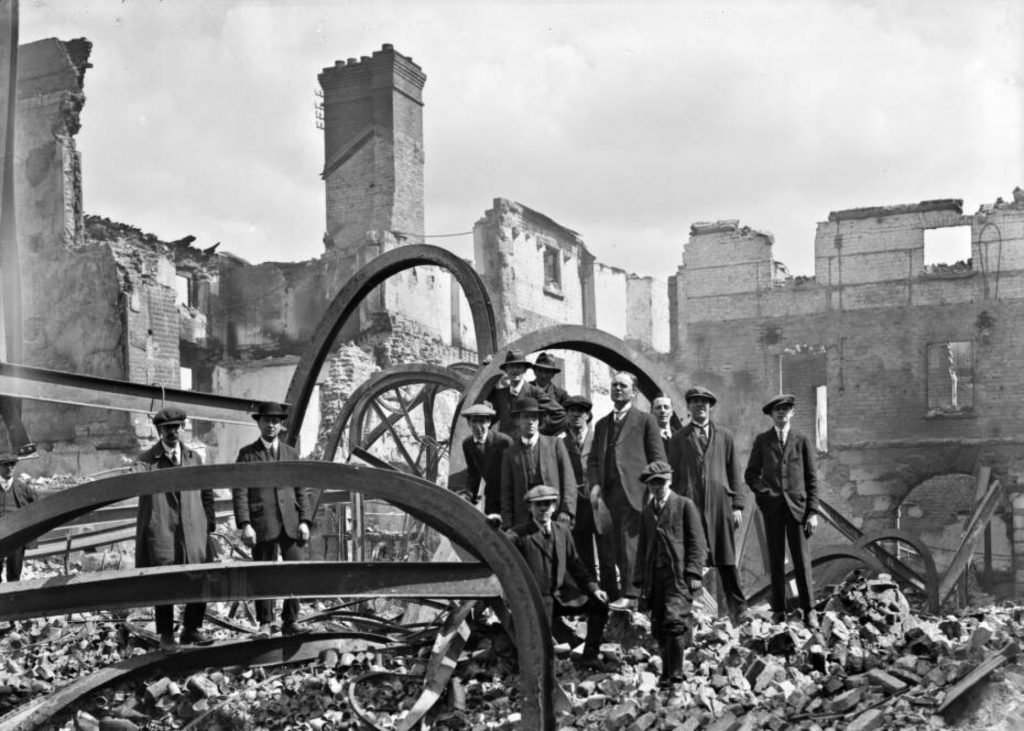
Spectators view the ruins of Hugh Moore’s Linen Hall after the 1916 Easter Rising, now the School of Architecture, DIT.

If the Easter Rising was a defeat for Irish nationalism, then why is it celebrated as Ireland’s national day? Most countries prefer to highlight a triumph, such as the signing of an auspicious document or the successful storming of a palace or prison. Here, the answer is that although the insurrection was crushed, with hindsight it can be seen to be the key turning point in the eventual establishment of an Irish Republic.

By 1918, with the attempt by Britain to introduce conscription and after two more years of war and declining living standards, the vast majority of people came to see the rebel leaders as having been right. Suddenly, the tide flowed away from the IPP, leaving both the Imperial administration and Ireland’s upper classes stranded.

Popular boycotts, a mass working class movement, soviets, general strikes and a guerrilla campaign undermined the ability of Britain to govern the country. By July 1921, British rulers understood that they had to retreat (although a few, such as General Macready, advocated a thorough re-invasion of Ireland with 100,000 troops). And in 1922 a treaty was agreed that gave 26 counties of Ireland a limited form of independence. This treaty split the nationalist movement and a cruel civil war took place over it. The Irish elite rallied heavily to the treaty and their resources ensured that after a brief moment where matters hung in the balance, the pro-treaty side were victorious.

The Ireland that was born in 1923 was truncated and far from fully independent. Gradually, over the years, the country was able to push back the remaining features of Empire, with the process not complete until after the Second World War. So there is no one moment that captures the celebratory feeling of national freedom. Instead, the rebellion that began the process is the focus of national enthusiasm for the fact that the country escaped the British empire.

The original 1916 commemoration video that Fine Gael tried to hide.

Unfortunately for Fine Gael and the inheritors of John Redmond’s political tradition, the period of anniversaries occured in a context that meant the insubordinate, revolutionary spirit of 1916 was not be buried under insipid rituals and empty media production. The insipid promotional video that highlighted the visit of the Queen of England to Ireland and didn’t mention the Easter Rising was ignominiously withdrawn and there was an attempt made to delete it everywhere. Fortunately, someone had already saved it to YouTube so you can see for yourself how cringeworthy and lacking in spirit the production was.

The 2016 commemorations took place in the aftermath of terrible recession where the majority of people in the country experienced a drop in income. For many this meant crossing a tipping point into homelessness. The hated water tax was still a live issue and millions of us were wondering why we should be made to pay for the collapse of banks that were in private hands. Also, there was and remains a sense here that the old goals of empire are still in play around the world, especially in the Middle East.
What this means for the commemoration of 1916 and those to come is that there is an edginess to the events: an extra emphasis on the anti-imperial message; a demand by women that their involvement in the rebellion be recognized and the emancipatory goals of 1916 be realised today; an appreciation by workers of the importance of James Connolly to the Rising. The government wanted the year 2016 to be a year of reconciliation between Ireland’s social classes and between Ireland and the UK. Instead, it was a year of celebration of revolt.

Filed Under: Irish Socialist History

‘Primitive Communism’: Did it Ever Exist?

10/11/2021 by Conor Kostick 12 Comments

The concept of primitive communism does not fit mega-settlements like Çatalhöyük
Çatalhöyük, in modern day Turkey, is one of many pre-historical cities that refute the concept of Primitive Communism.

A review of The Dawn of Everything: A New History of Humanity by David Graeber and David Wengrow and an explanation of why the concept of primitive communism is mistaken.

The way in which we imagine the first human societies is intimately connected to our current political beliefs. Conservatives believe in repression, the need for police, prisons and legal systems. To justify this, they argue that humans are inherently warlike and exploitative. Otherwise, we’d be in some kind of Mad Max scenario of everyone fighting each other over resources. And you don’t have to be an extreme conservative to still have a bleak take on humanity, based on your assumptions about the lives of hunter gatherers.

By contrast, for liberals and radicals, especially for Marxists, the idea that early humans existed in a state of primitive communism is an inspiring one. At the stage of primitive communism, it is believed, everything was shared and everyone looked after one another. Both conservatives and socialists look for evidence to support their views in anthropology and archaeology. And, as Graeber and Wengrow’s new book shows, both have created images of the distant past that are little better than fictions.

In this review of a book of enormous importance, I’m going to focus on what the evidence it presents and the arguments it makes mean for socialists. Conservatives can have their own battles over it.

Cover of The Dawn of Everything, a book that disproves the theory of primitive communism.
David Graeber & David Wengrow’s book, The Dawn of Everything is essential reading for socialists and anarchists

From Primitive Communism to Class Societies

In 1877, Frederick Engels wrote a polemical book, Anti-Dühring, which presented the following influential passage about the reason primitive communism gave way to class societies:

All historical antagonisms between exploiting and exploited, ruling and oppressed classes to this very day find their explanation in this same relatively undeveloped human labour. So long as the really working population were so much occupied with their necessary labour that they had no time left for looking after the common affairs of society – the direction of labour, affairs of state, legal matters, art, science, etc. – so long was it necessary that there should constantly exist a special class, freed from actual labour, to manage these affairs; and this class never failed, for its own advantage, to impose a greater and greater burden of labour on the working masses.

Almost all Marxists follow this idea: that for tens of thousands of years (100,000 BCE – 10,000 BCE), people lived barely above subsistence level. As Alex Callinicos puts it,  ‘Almost all the working day was taken up with necessary labour to meet society’s basic needs.’ An important conclusion that follows from this idea is that the eventual loss of egalitarianism among the small communities of hunter-gatherers was a tragic necessity. Although it brought exploitation, war, the oppression of women, and other injustices, the ending of primitive communism was a necessary step for science and art to advance.

A small surplus allowed a caste of priests, planners, builders and organisers to devote themselves full time to their duties. And over centuries, these people coalesced into a ruling elite. Despite the burden on the rest of the population, this was a necessary phase for humans to pass through, in order that these specialists could bring about the advances in the productive forces that would lead to food abundance (and widespread obesity); the discovery of the atom (and nuclear bombs); penicillin (and antimicrobial resistance); air travel (and global warming); etc.

Only now, with the enormous wealth that modern production can create, can we return to the lost spirit of sharing that existed in the era of primitive communism.

For many years I was a member of the Socialist Workers Party in the UK and Ireland. Before reading The Dawn of Everything, I might not have followed John Molyneux’s crude generalisation that ‘to the American Indian, private ownership of land was unnatural,’ but I definitely did repeat the argument expressed by Chris Harman, that a phase of primitive communism, where people lived in small groups of thirty to forty people, gave way to the first class societies as a result of an agricultural revolution, around 8,000 BCE, which was followed by an urban revolution around 4,000 BCE in Mesopotamia and 1,500 years later a similar development took place in Meso-America.

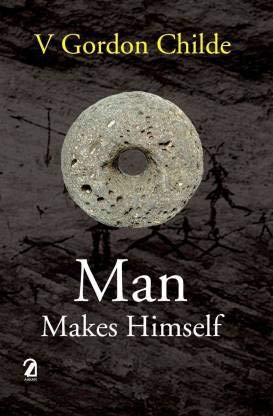
The very influential book Man Makes Himself by V.G. Childe
V. Gordon Childe’s ‘Man Makes Himself’ was enormously influential on the left

Harman leaned very heavily on the work of the Australian archaeologist, V. Gordon Childe and in particular Childe’s seminal works Man Makes Himself (1936) and What Happened in History (1942). Probably, most socialists and Marxists follow the schema in these books, which first formulated the idea of an agricultural and urban revolution having taken place that transformed human society and led to the first classes. No doubt those in the tradition of the Communist Party, the Socialist Party and perhaps socialist republicans and anarchists too, have their own pre-history ‘experts’, whose talks, writings, and educational materials explain the origin of classes in these terms.

Well, they were all wrong. We were all wrong.

Primitive Communism never existed

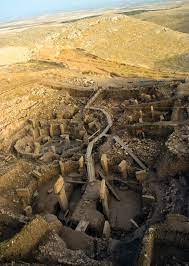
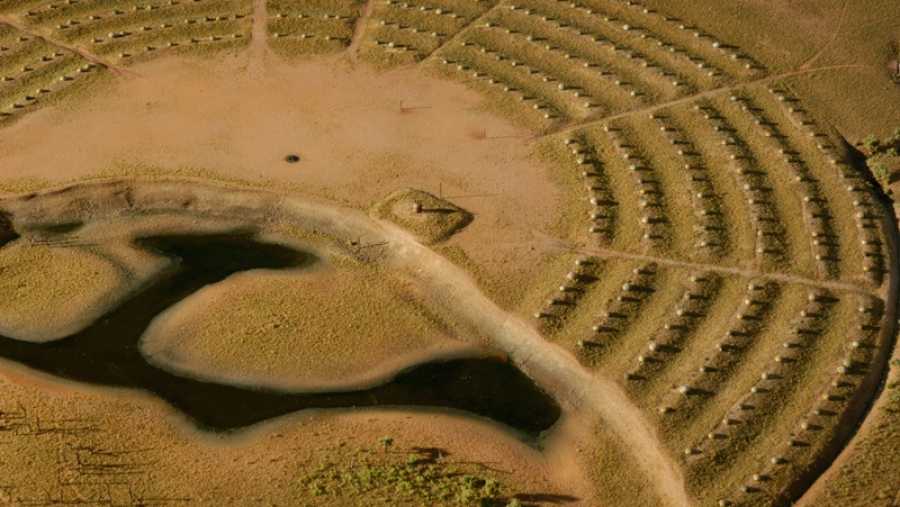
For some years now, the evidence has been growing for a pre-history of humanity that shows an extraordinary richness, both in terms of material production, like massive settlements of thousands of people, and in terms of cultural exchanges over immense distances. It will come as a surprise to everyone on the left who held to the ‘undeveloped human labour’ model for the origin of classes – just as it came as a surprise to me – to read of sites like Çatalhöyük in modern day Turkey, where perhaps 10,000 people flourished around 7,000 BCE. Or Göbekli Tepe, also in southern Anatolia, which dates from about 9,500 BCE and is another massive centre, whose stone pillars are covered in intriguing animal-dominated images. Poverty Point, in present day Louisiana, USA, is a site of massive earthen ridges distributed over 5km and constructed some time between 1700 BCE and 1100 BCE, that is, during the pre-farming period in the Americas.

Gobekli Tepe is another mass settlement from prehistory which cannot be reconcilled with the concept of Primitive Communism
Poverty Point shows a sophisticated culture involving thousands of people existed when the Americas were supposedly in a state of primitive communism.
Poverty Point, modern day Louisianna, shows a sophisticated culture involving thousands of people existed when the Americas were supposedly in a state of primitive communism.

With these examples and very many more, David Graeber and David Wengrow completely overthrow Childe’s timeline and his conclusions about the agricultural and urban revolutions. For millennia before the supposed agricultural revolution of the Near East, humans were experimenting with all sorts of ways of organising themselves, including moving to sites like Stonehenge for certain times of the year, then dispersing; mixing horticulture with hunting; and in settling together in their thousands. Large settlements came first, not agriculture.

The image of small, precarious bands of hunter-gathers that is so dominant in our image of pre-class societies is a backwards projection from people like the !Kung of the western edge of the Kalahari desert or the Inuit of the arctic. Pushed by modern societies to regions in which are difficult to exploit for profit and deeply affected by interaction with the rest of the world, it perhaps should not be too surprising that these examples turn out not to be good ones for the re-creation of the distant past.

Similarly, the idea that life was desperately precarious in the ‘primitive communist’ era is shattered by these examples. What makes us believe that people in these societies were barely surviving? Mainly, that it fits a schema where there has to be some reason why an elite would be allowed to dominate the population. Yet there’s no evidence to say that these early settlements were perpetually on the brink of starvation.

Given their stable existence for far longer periods than say New York, or Paris, or even Dublin, it might well be that the people of Teotihuacan – a Mesoamerican settlement near modern day Mexico City, whose peak was around 450 BCE when it had a population of around 200,000 spread over an area of ten square kilometres – would pity us if they could see us now. Pitied for several reasons, including the fact that we work far harder and longer than they did, just to pay rents and mortgages, let alone save up for a once-in-a-lifetime trip to Disneyland.

And yes, we have Netflix and they didn’t, but by the evidence of the sophistication of the legal practices of the population of Teotihuacan they might well have had more impressive self-government, storytellers, musicians, artists, sculptors, jewellery makers, and better drug taking experiences, and better games, etc. than we do. After all, in our day we have our own god to whom almost every aspect of our lives is sacrificed: Mammon. There’s no escaping the drive of the market, especially in music or art, where all sorts of anaemic production is foisted onto us.

Does the adoption of agriculture always lead to hierarchy?

Engels’s argument about the origin of classes is mistaken in the assumption that pre-agricultural societies required most people to be ‘occupied with their necessary labour’ for most of their time. And this book made me reconsider the logic of his next step: that therefore affairs of state, legal matters, art, science must fall to specialists who become an elite.

Modern day socialists have no problem imagining that workers today can have valid opinions on a wide variety of matters, including politics, law, art and science. So why would it be any different for our predecessors? Indeed, they probably had a lot more time for mass participation in such affairs, including the regulation of their societies. Over the thousands of years of society presented by modern archaeology, it seems that societies with permanent elites were the exception. Graeber and Wengrow give plenty of examples, indeed, where civilisations seem to have consciously been on guard against the formation of ruling elites and even carried out revolutions against those who tried to take over.

Taking Taosi in modern day north China as a case study, archaeologists have found evidence that around 2,000 BCE, ‘the city wall was razed flat, and … the original functional divisions destroyed, resulting in a lack of spatial regulation. Commoners’ residential areas now covered almost the entire site, even reaching beyond the boundaries of the middle-period large city wall. The size of the city became even larger, reaching a total area of 300 hectares. In addition, the ritual area in the south was abandoned. The former palace area now included a poor-quality rammed-earth foundation of about 2,000 square metres, surrounded by trash pits used by relatively low-status people. Stone tool workshops occupied what had been the lower-level elite residential area.’

Moreover, commoner graves suddenly appeared on the elite cemetery and in the palace district a mass burial with signs of torture and grotesque violations of the corpses appears to be an ‘act of political retribution.’ As Graeber and Wengrow observe, this strongly suggests a revolution against an elite and it was a probably a successful one given that the phase of commoner housing and burial on former elite grounds lasted two or three hundred years and the city grew in size. ‘At the very least,’ they conclude, ‘the case of Taosi invites us to consider the world’s earliest cities as places of self-conscious social experimentation, where very different visions of what a city could be like might clash – sometimes peacefully, sometimes erupting in bursts of extraordinary violence. Increasing the number of people living in one place may vastly increase the range of social possibilities, but in no sense does it predetermine which of those possibilities will ultimately be realised.’

‘Primitive Communism’ does not fit the archaeological evidence

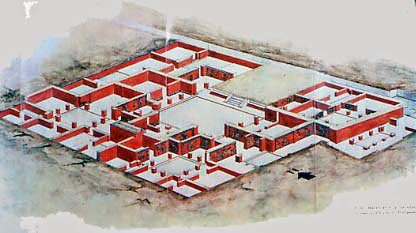
Another even more persuasive example of the mass participation of the population of an early city in their civic affairs is that of Teotihuacan, mentioned above. Again, the city went some way down the road of authoritarian rule, but around 300 CE reversed course to live without elites. Around that time, a practice of building massive pyramids stopped, as did the practice of human sacrifice. From around 200 CE a new phase of housing construction had taken place, accelerating after 300 CE: these were impressive masonry apartments laid out on regular plots from one end of the city to another until most of the city’s 100,000 residents had comfortable accommodation with integrated drainage and plastered floors and walls that were often painted with bright murals (reading about which will make any Irish reader living amidst a deep housing crisis envious).

Teotihuacan, near modern day Mexico City,  had a population of around 200,000 people in 450 BCE
A housing compound at Teotihuacan, near modern day Mexico City. Teotihuacan had self-government and a population of around 200,000 people in 450 BCE

Even the most modest households of Teotihuacan after 300 CE had what seems to be a comfortable lifestyle, with a varied diet and access to imported goods. When their vivid art depicts human activity, no one is of a greater size than any other (in contrast to the art of early class societies) and no one is depicted in a role of authority. One archaeologist has described the citizens as not just anti-dynastic but engaged in a utopian urban life. That this claim is more than plausible is demonstrated by a neglected text written by one of the Spanish conquerors of Mexico, Francisco Cervantes de Salazar’s unfinished Crónica de la Neuva España (c.1558 – 63).

Salazar describes how when the Spaniards dealt with the city of governing council of city called Tlaxcala they found no royal court to deal with but an urban council of representatives. One of the eldest (and farsighted) of these representatives was Xicotencatl the Elder, who advised against an alliance with the Spaniards even if that would lead to the defeat of their hated Aztec foes. Xicontenal pointed out that the Spanish invaders were, ‘like ravenous monsters thrown up by the intemperate sea to blight us, gorging themselves on gold, silver, stones, and pearls; sleeping in their own clothes; and generally acting in the manner of those who one day would make cruel masters… There are barely enough chickens, rabbits, or corn-fields in the entire land to feed their bottomless appetites… why would we – who live without servitude, and never acknowledged a king – spill our blood only to make ourselves into slaves?’

Another Spanish account describes the procedure for becoming a representative in Tlaxcala, which is summarised by Graeber and Wengrow as follows. ‘Those who aspired to a role on the council of Tlaxcala, far from being expected to demonstrate a personal charisma or the ability to outdo rivals, did so in a spirit of self-deprecation – even shame. They were required to subordinate themselves to the people of the city. To ensure that this subordination was no mere show, each was subject to trials, starting with mandatory exposure to public abuse, regarded as the proper reward of ambition, and then – with one’s ego in tatters – a long period of seclusion, in which the aspiring politician suffered ordeals of fasting, sleep deprivation, bloodletting and a strict regime of moral instruction. The initiations ended with a “coming out” of the newly constituted public servant, amid feasting and celebration.’

This tradition of complex safeguards against ambitious representatives coming to the fore strengthens the idea that Teotihuacan had no royal rulers. Nor is the idea of self-government and caution against the formation of elites with real power limited to the Americas. It was, after all, a feature of democracy in Ancient Greece that representatives were chosen by lottery, rather than vote, precisely to avoid the rich, ambitious, and charismatic politician being able to dominate proceedings. Just think how much healthier our own democracy would be if instead of having a majority of wealthy TDs who are networked into various business and property interests (25% are landlords), we chose them by lottery. Yes, we might get some duds but so too does the current Dáil: I’m thinking especially Michael and Danny Healy Rae. We’d be spectacularly unlucky if the lottery picked someone with more bizarre views than theirs.

Are there any weaknesses with The Dawn of Everything?

All books have their strengths and weaknesses. And in discussing a few areas I found problematic in The Dawn of Everything, I am not at all taking away from the core arguments, which I think are irrefutable: there was no ‘primitive communist’ stage of human existence; massive settlements appeared before the widespread development of agriculture; there was no necessary connection between underdeveloped agriculture and the appearance of class societies and these societies were every bit as intellectually and artistically rich as our own (probably more so).

I have a dislike of arguments that despite acknowledging weak foundations then charge towards their conclusions as if those weaknesses aren’t present. An extreme example is Donnchadh Ó Corráin’s The Irish Church, its Reform and the English Invasion, which is heavily dependent on a belief that a key document, Laudabiliter, is genuine. Yet there are strong reasons to think it a forgery. These are dismissed by Ó Corráin in a footnote and he’s thus able to present his conclusions as if they are much more convincing and certain than the evidence actually allows for.

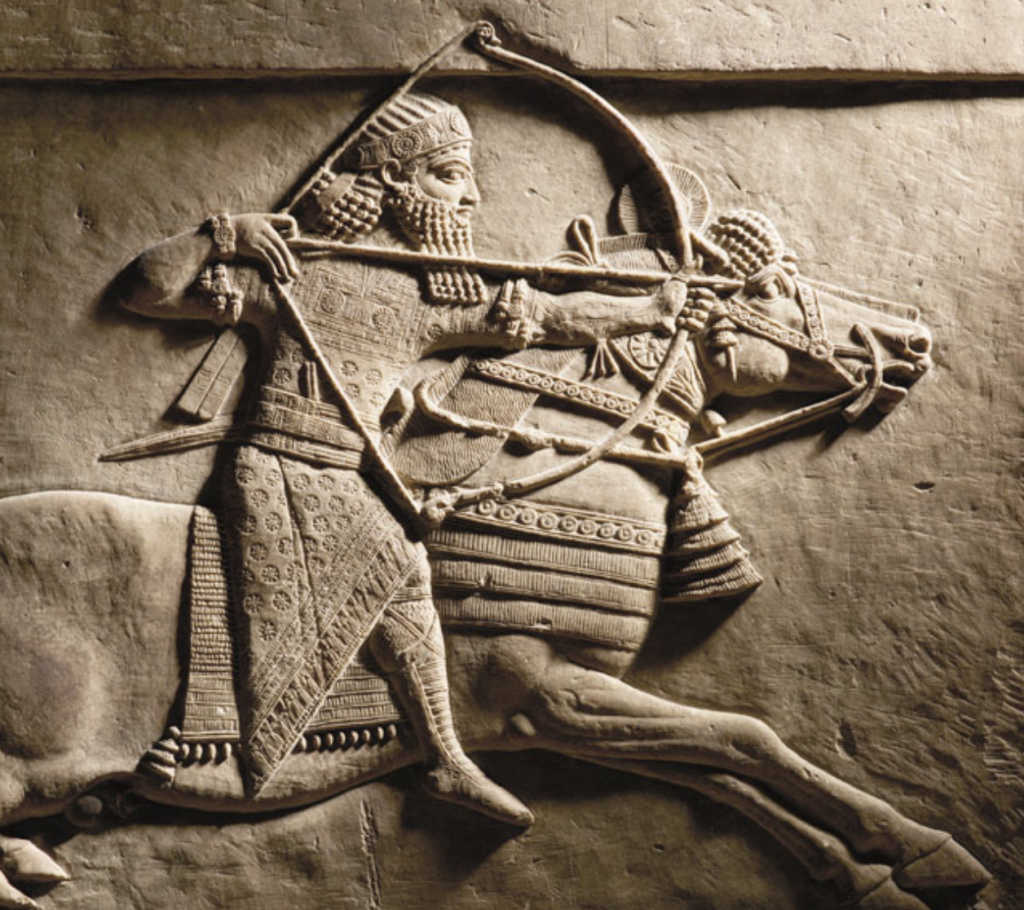
I have a concern that this type of practice is at work in The Dawn of Everything i.e. of a tendency to overstate the evidence in favour of their argument and under-represent caveats and doubts. What makes me say this is that for the most part, the case studies are entirely new to me and I am completely dependent on Graeber and Wengrow’s presentation of them. But I have some knowledge of the reign of Ashurbanipal, ruler of the Assyrian empire 668 – 631 BCE. According to The Dawn of Everything, despite the brutal conquests of emperors Sennacherib and Ashurbanipal, ‘when dealing with loyal subjects they were strikingly hands-off, often granting near-total autonomy to citizen bodies that made decisions collectively.’

Ashurbanipal, King of Assyria 668 - 631 BCE, had tight control of the cities of Assyria
Ashurbanipal King of Assyria had tight control of the cities under his rule.

The point Graeber and Wengrow are making here is that the Mesopotamian cities had town councils that were reflective of ‘participatory government’ and that ‘city dwellers (even under monarchies) largely governed themselves, presumably much as they had before kings appeared on the scene to begin with.’ The references for these ideas are a paper by Gojko Barjamovic discussing the term ‘citizens of Babylon’ in the sources and  the archaeology of Mashkan-shapir from around 2,000 BCE. Now, I’m perfectly happy with the idea that the earliest Mesopotamian cities, Uruk especially, had popular government and no royal rulers. But to use evidence from 1,500 years earlier to presume self-government was intact in Ashurbanipal’s day is too big a stretch. Moreover, Brajamovic’s argument is not that ‘citizens of Babylon’ was a term implying every cook could govern (a phrase Graeber and Wengrow use for these Mesopotamian cities) but rather that the ‘overlords’ and ‘superiors’ of Babylon were local figures who would meet to discuss important matters such as whether to stay loyal to Assyria or join a revolt against the empire.

To say that in a time of civil war, a body of people coming under the term LÚ.GN.KI.MEŠ (‘the citizens of the city GN’) were a distinct civic institution is interesting. The examples given by Brajamovic indicate there was in Babylon c.650, some kind of assembly of elders of local inhabitants, who held executive power. This body of citizens might well point to a pre-existing tradition of non-royal government. It does not, however, provide any evidence for popular self-government, of widespread involvement of the whole of the people in how the city was run. And even if we allow popular autonomy for Babylon around this time, it is clearly a mistake to make the generalisation that across Mesopotamia collective decision making allowed cities to run pretty much as they had been before the rise of royal power. By the time of Ashurbanipal, most Mesopotamian cities were being micro-managed down to the assignments of individual workers by the central authority via their governors and officials.

You don’t have to be a specialist in the field to see this. If you open up the State Archives of Assyria, and browse the letters from kings and princes to their servants, you’ll see no end of detailed instructions that show an absolute authority over the military, economic and religious affairs. Taking one at random: SAA 18.006:

A tablet of the crown prince to the deputy (governor) and Nabû-dini-a [mur]. Mar-Biti-ibni, a citizen of Der, helped thirteen men run away, and brought them where you are.

You (sg.) gave five of them to Šiyu, but eight (remain) in [yo]ur (pl.) presence.

No[w], send (pl.) […]!

There are thousands of these types of instruction for the Neo-Babylonian period, covering every aspect of city life. My concern therefore is that if Graeber and Wengrow are exaggerating their case here, which I think they are, might they be doing so for other case studies where I have no firm ground to stand on which allows me to interrogate their examples?

What does the collapse of the concept of Primitive Communism mean for the left?

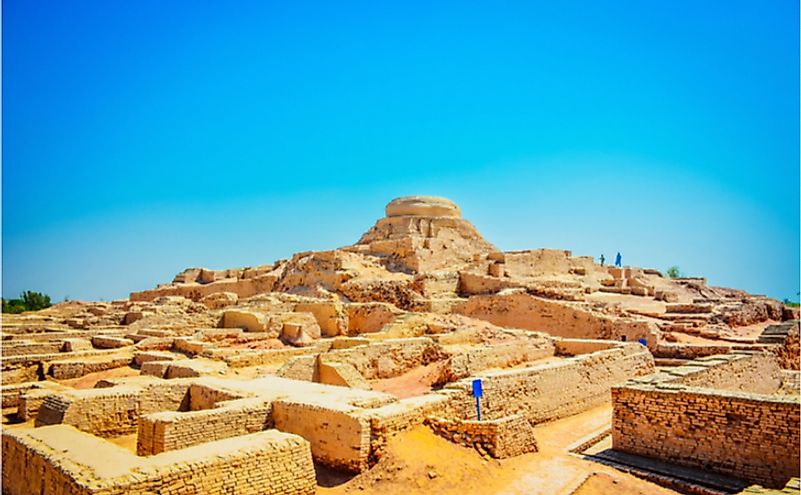
Whether or not Graeber and Wengrow have tried a little too hard to add extra examples to their case, the evidence of cities like Taljanky, Maidenetske, Nebelivka, Çatalhöyü, Göbekli Tepe, Poverty Point, Uruk, Mohenjo-daro, Teotihuacan, Liangchengzhen, Yaowangchen, and Caral, is that cities of thousands of inhabitants existed in pre-history. Talkanky and its neighbouring Ukrainian mega-settlements had a definite surplus produce from their sustainable mix of hunting and foraging, orchard keeping, livestock and household plots for grains. Yet over centuries there is little evidence for warfare or the development of a ruling class.

Mohenjo Daro was a mega-city of about 2500 BCE
Mohenjo Daro, in modern day Pakistan, was a mega-city around 2,500 BCE.

Engels’s idea about Primitive Communism and the transition to the first class societies turns out to be just as much a thought experiment as Rousseau’s idea that there was probably an innocent state of grace for humanity in our distant past, but that this time of noble savagery gave way to the appearance of injustice with the introduction of property relations. Engels is Rousseau plus the language of surplus value. Neither of their speculations have any foundation in the actual human experience.

What this means for those who believe in the possibility of humans living as equals again in the future, without war or exploitation, is very exciting. There have been dozens, perhaps hundreds, of examples of non-hierarchical societies that didn’t just exist as small foraging bands but also in communities of 10,000 – 100,000 people. Note that these were far from utopias, many of them practiced human sacrifice. But they governed themselves without a warrior aristocracy. It turns out that humans are good at creating sophisticated political systems to avoid being controlled by elites and that our predecessors were a lot better at it than us.

Graeber and Wengrow introduce their argument with the example of the Native American (Huron-Wendat) statesman Kandiaronk, who witnessed French society and provided a devastating critique of it. That his own world was superior in terms of quality of life is evident not just from the fact that no individuals died of destitution as they did in France, nor enslaved themselves for money, but that time after time, those Europeans who made the effort to learn the language and customs of the Iroquoian-speaking people chose to leave their European past behind and live out their lives with the native Americans.

Why do we assume the times we live in are superior to those of the distant past? In many important ways, including the distinct possibility we might bring about an apocalypse, ours is inferior. This book will play an important part in shifting our perception of our times and helping appreciate that we don’t have to live in a class society.

So is it a book to be welcomed by the socialists and the left? It certainly should be, but there are going to be large numbers of people in the old left who will resist it. First of all, there is a kind of Marxist – typically someone inclined to look at Russia or China through rose-tinted glasses – who has a notion that history passes through logical stages: primitive communism, agricultural revolution, urban revolution, slavery, feudalism, capitalism and communism. Probably, the most extreme form in which I ever encountered this argument was that of David Laibman’s Deep History, in which his Abstract Social Totality concept drove history through these stages.

Even parties with a less dogmatic approach to Marxism and with a more critical attitude towards nations calling themselves communist will also struggle to accept the evidence of The Dawn of Everything. Why? Because the Socialist Party, Socialist Workers Network, RISE, etc. come from a tradition that also has ossified their thinking about history into stages driven by changes in the forces and relations of production. I should know, for years I gave educational talks on the origins of class societies, on how one type of class society was overthrown and replaced by another, until we get to capitalism when the working class will end the dialectic of history.

To be clear, I still am convinced that only a world-wide revolution of the working class can bring about a sustainable, socialist world. And Marx’s concepts around exploitation and class struggle remain essential tools in analysing a particular historical moment, but the attempt to generalise an entire system for the progress of society out of what seemed to be the logical origins of history has fallen apart. The Dawn of Everything shows that we were just telling ourselves a story on the flimsiest of examples.

The concept of Primitive Communism and the Enlightenment

The problem many Marxists are likely to have with the book is not simply that they were mistaken about the evidence. That is easily corrected. It runs deeper. Typically, Marxism is considered a science (a ‘scientific research programme’ as Alex Callinicos puts it) by its practitioners and one that completes the Enlightenment. Where the bourgeoisie veered away from their own drive against superstition because clear-sighted rational thinking would expose the injustices of their own system, a philosophy based on the working class – who have nothing to lose by complete honesty and constant self-criticism – can implement the goals of the Enlightenment in full.

Framing Marxism in this way, as the culmination of the Enlightenment, inherits Rousseau’s belief that for all the faults of our modern world, there was no other way forward out of an ignorant past. Humans in prehistory might have been happier, possibly, and moral, perhaps, but they were unaware of the real workings of the universe. The various stages of history that we have passed through to progress to capitalism (ready to progress again to communism) were all necessary ones to reach our modern, rational world. Marxists who concentrate on structure and see the emphasis on human spirit in Economic and Philosophic Manuscripts of 1844 as an immature work that was surpassed by Capital and other later texts by Marx and Engels, are especially keen on this model. They will find it very hard to accept the findings of The Dawn of Everything.

And there’s another reason why the old left will struggle to champion this new book. Parties like the Socialist Party and the SWN, not to mention the Communist Party, have elderly leaders who don’t like to be challenged. Insofar as they are on record as having written about the origins of class society, these senior figures will have committed themselves to a position that is mistaken. And they won’t be comfortable with acknowledging that.

Personally, I think this book has to join the cannon of essential reading for socialists. Because at heart it is inspiring and leaves the reader believing in human emancipation. Dozens of early civilisations speak to our ability to live rich and sophisticated lives without a ruling elite.

Filed Under: Reviews

The social impact of artificial intelligence

15/04/2021 by Conor Kostick 1 Comment

The social impact of artificial intelligence
The social impact of artificial intelligence is distorted by the biases in human society

Novelists have been kind to artificial intelligence in recent times. In Kazuo Ishiguro’s 2021 book, Klara and the Sun, Klara is an AI designed to be a child’s companion and she is by far the most compassionate and self-sacrificing character in the book. In the rather darker Machines Like Me by Ian McEwan (2019), the mistreatment of an AI again arouses the reader’s indignation, because of the virtues of the artificial intelligence. As a device through which to view humanity, positing a consciousness that is more beautiful and unconditionally compassionate than we are can be a very powerful tool. But as an insight into the potential social impact of artificial intelligence, such depictions are quite outside of the current activities of AI.

Artificial intelligence as it currently stands is far removed from the conscious beings depicted in fiction. Software algorithms fed with data make computations that can be quite impressive but hardly deserve the label ‘intelligence’. There’s a squirrel who comes to my back yard, having discovered that I keep leaving seed balls in a bird feeder. This ingenious creature has learned to prise open the lid of the feeder and he or she is displaying far more intelligence than the most advanced AI software.

Where artificial intelligence is having an effective social impact is where the algorithms processing the data they are being fed are a) able to engage with absolutely vast amounts of input and b) where the algorithm is subject to constant improvement. Thanks to the fact that we live in a capitalist society, the main driving force behind the creation of AI with noticeable social impact are businesses and, more ominously, governments. This means that the early use cases for artificial intelligence include some extremely problematic, not to say dangerous, examples.

Positive social impacts of artificial intelligence

To start with a relatively benign example of the social impact of AI. Like a lot of people I mostly listen to music by streaming. And I want recommendations for new music to listen to. Nowadays, my recommendations typically come from an algorithm and not my friends. At a certain level, this works well. I click ‘like’ or ‘dislike’ to a piece of music and based on the profile this creates for me, as well as data provided by millions of other users, the suggestions I get are nearly always interesting and I definitely have found new music that I love thanks to such calculations.

The downside is that the algorithm favours music that already has thousands of likes, so this kind of process reinforces the enormous disparity that exists between bands and composers who are pushed into the stratosphere of international attention and those who might be far better artists but who cannot get off the ground. Moreover, the platforms currently offering this type of tool (e.g. Spotify, YouTube Music) pay the artists a pittance.

Other potentially positive social impacts from artificial intelligence include the rapidly advancing ability for software to parse human sentences and extract their meaning.

As a slight aside, I’ve never been enthusiastic about using the Turing Test to define consciousness because while the use of language is intimately bound up with being able to think, I’ve always felt that the definition is too narrow. Whatever a particular challenge, such as to play chess, go, or steal birdseed from a container, sooner or later the technology is going to be created that can accomplish the task.

Squirrels are more ingenious than any existing artifical intelligence

For an AI to be able to hold a conversation for a certain length of time in a fashion that makes it hard for a human to decide if they are talking to another human or the AI is tough. But we are within a decade of being able to achieve this if the time limit for the Turing conversation is limited to, say, thirty minutes. Siri can entertain my kids for about that length of time: they just say ‘hey Siri, tell me a joke’ and go from there.

Breaking down sentences and figuring out their meaning, in order to give an appropriate response, is something that chatbots are already effective at in narrow spheres.

In theory, this AI-driven technology could save our species a considerable amount of labour time. Every person whose current task involves speaking to someone in order to collect data could be spared to do something more interesting. And indeed, chatbots with artificial intelligence are everywhere answering customer queries, tracking parcels, taking payments, etc.

Harmful social impacts of artificial intelligence

One harmful societal consequence of artificial intelligence has been evident long before Marx sat down and studied how capitalism constantly replaces workers with new methods of production, which is that new technology is never introduced so that workers can enjoy more leisure time. The social impact of the introduction of artificial intelligence in the work process ought to be that workers can put their slippers on, enjoy a cocktail, and a – recommended by AI – new series on Netflix. Managers, however, typically calculate the returns on investment in chatbots by figuring how much they will save on their call centre costs and the deployment of this kind of software is often associated with layoffs instead of liberation.

Another, more subtle but potentially deeper societal hazard arising from artificial intelligence in the automation of conversation is that the very large companies, Google and IBM in particular, are dominating the conversational AI market, with algorithms trained as much of the corpus of human communication as they can get their hands on. But what if that corpus is male-centred, western-centred, biased against non-binary genders, etc? Then the algorithm will produce results that perpetuate and even deepen those biases.

Then too, with only 20% of the technical staff working on conversational AI being women, there is an additional likelihood that the algorithms they are building are gender biased. One obvious problem of racial bias in AI has already emerged in the US judicial system where officers have a software tool to score the likelihood a person guilty of an offence will reoffend. That tool was twice as likely to incorrectly identify African Americans as high risk for violent re-offense as a white person.

You only have to do an image search and you can see these biases in Google for yourself. Try searching CEO and scroll through your image results. In the west, about 27% of these images should be female. If you are seeing a lower proportion (and at the time of writing, I took a screenshot and scored 20%) then that demonstrates that the results of the search are reinforcing a bias in the dataset of images of CEOs.

A much more clearly negative social impact of artificial intelligence is its application to facial recognition. The Chinese tech company Alibaba has trained an algorithm to identify ethnic minorities via facial recognition, specifically the Uighurs of the Xinjiang region, against whom China has been carrying out an oppressive campaign.

Artificial intelligence in warfare

Worse still is the social impact of the military application of artificial intelligence. In Philip K Dick’s 1953 story Second Variety robots developed by the UN to stop a Soviet victory in the aftermath of a nuclear war overrun humanity (in a much more interesting way than this plot summary suggests). This type of scenario, where AI soldiers take military decisions, is already present in embryo, especially in the form of drone technology and also in missiles, with the US army having tendered for their Cannon-Delivered Area Effects Munition (C-DAEM).

C-DAEM missiles will be launched without human intervention, based on technology similar to face recognition but using lasers to identify targets with the profiles of tanks. The tender calls for the missile to fly up to 60km, slow down with a parachute or similar means, and while descending, identify targets autonomously. And, just as facial recognition software has its biases, these missiles will explode on vehicles based on the values of the data provided by the US military on the profiles of the tanks they anticipate destroying with C-DAEM. Pro-tip: don’t tie your Christmas tree to the roof of your car.

The most negative social impact of artifical intelligence is its application to warfare.
The most negative social impact of artifical intelligence is its application to warfare

There is a campaign called Stop Killer Robots to ban fully autonomous weapons. One reason for doing so is that even before the application of artificial intelligence to warfare it has been difficult to hold mass murders to account for war crimes. Imagine how much more difficult accountability becomes if it is the decision of a software algorithm that has resulted in attacks on civilians.

What would a society run by artificial intelligence look like?

Artificial Intelligence – in the form of software algorithms – are a new frontier for capitalism and as always when businesses charge into a new space, all sorts of harmful consequences arise, based on short-term considerations. Many NGOs, trade unions and even some governments are therefore hurrying to catch-up and urge regulation so that the more reckless companies are tamed. And that’s important. This is a sector that needs regulation, especially in regard to the creation of discriminatory algorithms.

But let’s run the timeline forward by a long way in our imaginations. Suppose, perhaps by a breakthrough in quantum computing, self-adjusting algorithms (those capable of ‘machine learning’ as the industry jargon puts it) become vastly more sophisticated and complex than anything which exists today. This might not be so far away, but should have happened by 2100 at least. Then humans would be living alongside AI companions capable of performing all the tasks that we do, including writing novels, composing music, inventing new jokes, creating vaccines for novel diseases, etc.

What will those companions be like? In 1987, Iain M. Banks wrote the first of his magnificent Culture novels, where he envisaged a far future in which AI drones look down paternalistically at the frivolous humans whom they care for. While still full of drama and, indeed, wars, this far future is essentially a utopia. No one except by choice suffers from poverty, hunger, homelessness, etc. Mostly, the humans pursue the arts (as well as take drugs, party and have lots of sex). And it’s a plausible scenario: even now the wealth exists to feed, house and provide free water and education to everyone on the planet.

Iain M Banks wrote about the positive social impact of artificial intelligence for society.
The Culture universe of Iain M Banks depicts a uptopia with the co-existence of humans and artificial intelligence

By 2100, alongside AI companions, we’ll be able to realise something like Bank’s Culture, providing we meet one condition. And unfortunately, while it’s a simple condition, it is a hard one to achieve. The benign AI scenario requires that humans themselves are free of any motivation to destroy each other automatically; free of prejudice in the structures of administration of society; free of discrimination in the cultural data (such as the entire contents of the internet) that the AI are learning from. To get a foundation for a harmonious relationship with the existence of massively powerful AI firstly requires we first of all have to revolutionise our own existence.

Filed Under: Independent Left Policies

The Kilmichael Ambush

15/10/2020 by Conor Kostick 15 Comments

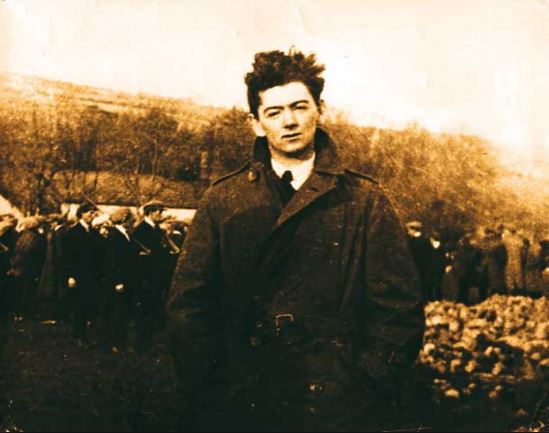
Tom Barry leader of the Flying Column, Cork III Brigade.
Tom Barry planned and carried out the Kilmichael Ambush

The Kilmichael Ambush took place on 28 November 1920, when Tom Barry, Commandant of the Third West Cork Flying Column, led his Irish Republican Army unit into battle against two lorries, each carrying ‘Auxiliaries’, veteran soldiers especially recruited to support the police and organise reprisals against the Irish national movement. The ambush was a major victory for the IRA.

Background to the Kilmichael Ambush

In November 1920, the War of Independence between the Irish national movement and the British authorities was at its height. Determined not to make any concessions in Ireland, partly for fear of the consequences for the rest of the empire, the British Cabinet had embarked on a policy of repression and intimidation. From 25 March 1920 a new military force, the ‘Black and Tans’ (called after the colour of their uniform) began to arrive in Ireland and their aim, as the Police Journal put it, was to make Ireland ‘an appropriate hell for rebels’.

Burning property, torturing suspects and assassinating whoever they chose without fear of legal consequence after the Restoration of Order in Ireland Act of August 1920, the Black and Tans attempted to crush the daily acts of resistance by Irish nationalists. The police were also supplemented by a 1,500 strong Auxiliary Division of soldiers, known as the ‘Auxies’, who were recruited from officers who had been in the Great War and who from August 1920 took the lead in attacks on suspected nationalists.

Yet despite the violence of the policy of reprisals, the national movement continued to undermine British rule. Everywhere, British courts, centres of administration and barracks were being boycotted in favour of Dáil Eireann, a new parliament for Ireland created by 73 Sinn Féin TDs elected in 1918. Mass strikes forced the release of political prisoners and protested the imposition of military rule. Dockers and railworkers refused to unload ships or move trains with military personnel or equipment.  And the Irish Republican Army – Volunteers now recognised and organised as the official troops of the Dáil – began to arm and strike back.

In the month before the Kilmichael Ambush, eighteen-year-old Kevin Barry had been hung in Mountjoy Jail, leading to huge popular anger and dismay, while on 21 November 1920, ‘Bloody Sunday’ had seen fourteen British agents shot dead by Michael Collins’s intelligence group. In reprisal, British troops went to Croke Park and fired on the crowd and players, also killing fourteen people. In Dublin castle, three prisoners were beaten and killed.

Preparing the IRA for the Kilmichael Ambush

From about the end of September 1920, the Cork III Brigade of the IRA had been operating a ‘flying column’. This was a full-time unit that was prepared to remain under arms and travel considerable distances, unlike the more typical IRA company, which mobilised for a task but then returned to civilian life when the mission was over. On 21 November 1920 a meeting of the Brigade Council took place with representatives from all the battalions. There it was decided to put the flying column on a regular footing with Tom Barry as Officer Commanding. The new Flying Column assembled at Clogher, Dunmanway, with an empty house for its headquarters. There, the thirty men received training from Tom Barry, although lack of ammunition meant they could only fire three rounds each. Three days training was all the preparation the unit obtained before facing into battle.

Tom Barry was only twenty-three at the time of the Kilmichael Ambush. But then, most of his men were in their 20s. When they were joined at the ambush point by Cornelius Cotter of Curradringagh, Cotter was much the oldest at 39. Although young, Barry had been in the Great War and until radicalised by news of the Easter Rising of 1916, had not considered himself to be in any way political. He did, however, see active service in Turkey and Egypt before his discharge on 7 April 1919.

The Cork III Brigade Flying Column had rifles from two sources. On 17 November 1919, Maurice Donegan, O/C 5th Battalion, Cork III Brigade had organised a successful raid on a British Naval Motor Launch in Bantry, through which he had obtained ten rifles, ten revolvers and plenty of ammunition. He reckoned that, ‘without them the Kilmichael Ambush could not have been carried out in the following year.’ Another cache of rifles came from the Volunteers of the post-1913 period. Denis McCullough, IRB Supreme Council, recalled how the Ancient Order of Hibernians had seized control of Volunteer rifles in Belfast,

… and hid them in the pavilion in Celtic Association Football Club grounds. They remained there for a long time, but sometime about 1919/20, the IRA traced their hiding place, raided Celtic Park, recovered the guns and sent them back to Dublin. I gather from Frank Thornton that they eventually were brought to Cork and were in use at the famous ambush in Kilmichael and other engagements in the West Cork area, where they were used to good effect.

A Mills bomb was used at the Kilmichael Ambush
The Kilmichael Ambush began with Tom Barry throwing a ‘Mills bomb’, a popular grenade used by the British army.

Each member of the flying column had 35 rounds of ammunition and in addition, the unit had two ‘Mills bombs’, i.e. hand grenades with an effective range of about 15 metres.

Setting off for the ambush

The local Auxiliaries had made Macroom Castle their base and IRA intelligence noted that on four successive Sundays two lorry-loads of Auxiliaries had travelled from Macroom to Gloun Cross, after which they varied their journeys. It seemed possible to plan an ambush of these lorries, provided the vehicles were intercepted north of Gloun Cross.

Location of the Kilmichael Ambush with respect to Cork
Location of the Kilmichael Ambush site, south of Macroom, west of Cork

The problem was that the deforested landscape made it impossible to find a spot sufficiently far from Macroom Castle that had any realistic line of retreat. Vice Commandant of the flying column, Michael McCarthy, and Tom Barry therefore picked an ambush position that gave a fair chance of victory in a battle that was likely to be a fight to the death. It was a stretch of road near Kilmichael where a couple of sharp turns in the road would help with slowing the lorries and some sizeable rocky outcrops provided cover near the road.

On the night of Saturday 27 November the IRA men gave their confessions to Canon O’Connell, P.P., Ballineen, who arrived for that purpose. The priest wished the men luck and referred to their being ‘in the middle of the Sassenachs’, that is, in an area heavily occupied by imperial forces.  Very early, around 2 a.m. under a sleet-filled night sky, on Sunday, 28 November 1920, Barry paraded the men and then led them towards the Kilmichael Ambush, avoiding all houses on the way and skirting junctions.

The Flying Column deploys at the ambush spot near Kilmichael

Having walked through the night and wet weather for over five hours and nearing their destination, it was discovered that fifteen-year-old signals Lieutenant Pat Deasy had followed the column. Although Pat was ordered home, his appeals, fatally, won through and he was placed in the company of Michael McCarthy.

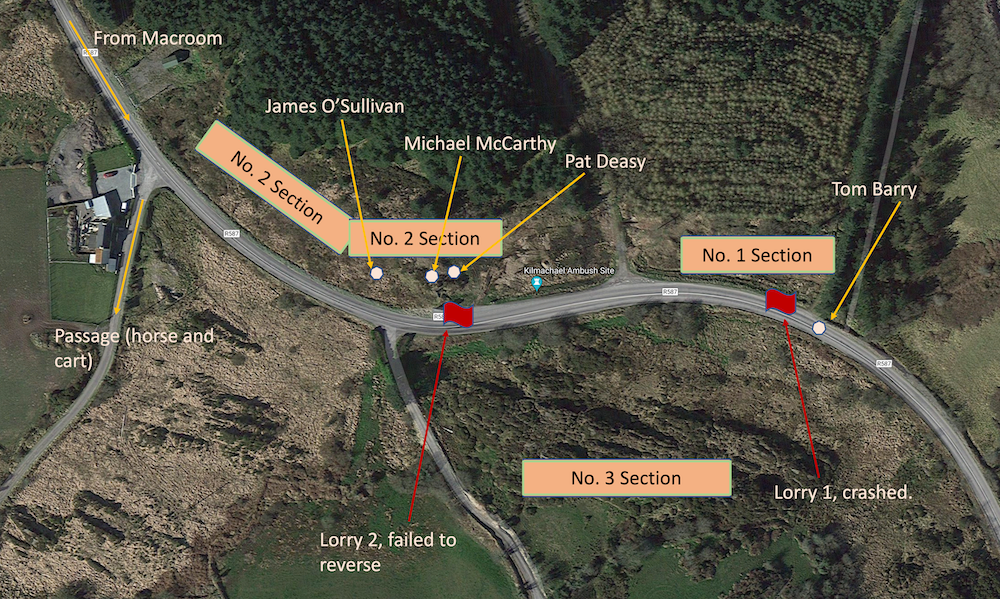
Map of IRA deployment at the Kilmichael Ambush
A map of the Kilmichael Ambush, showing IRA positions and those of the lorries of the Auxiliaries

Parading the men, Barry gave a speech about the importance of the battle to come. The Auxiliaries had been built up in British propaganda as undefeatable. This would be the first encounter between Auxiliaries and the IRA and for the sake of the whole nation, they had to win. It would be a fight to the end, the landscape did not permit retreat. With that, the flying column deployed in three sections for the ambush. At the east end of the road was Section 1, under the command of Barry. Their big challenge was to slow the enemy lorries so that rifle fire and possibly a Mills bomb would be effective in stopping the first vehicle. Since they had no land mines, Barry decided on a tactic that was highly risky for him personally, which was to simply stand on the road while wearing an IRA officer’s tunic and field equipment, which he had borrowed from Patrick O’Brien, Adjutant 3rd (Dunmanway) Battalion, Cork III Brigade. Surely, if only out of curiosity, the lorry would brake to examine such an unfamiliar sight? The rest of Section 1 were close to Barry, hidden behind a narrow stone wall which jutted out as far as the road.

IRA officer uniform as worn by Tom Barry at the Kilmichael Ambush
IRA officer uniform of the type worn by Tom Barry at the Kilmichael Ambush to cause the lorries of the Auxiliaries to slow down when approaching him.

Section 2 were to deal with the second lorry. They took up positions near to the road on the north side, but had to spread out in case the second vehicle did not come around the corner. The east end of this position was to witness the heaviest exchanges of fire and it was just as well that Jack Hennessy, Adjutant of Ballineen Company and Section Leader, of the Flying Column took measures to improve the natural cover.

My particular position was on a clump of rocks overlooking the road, but there was no protection on either side. We were in position at 8 a.m. and I built a wall of dry stones around our position and covered the stones with heath. This gave us a box to fight from in case the Auxies made an attempt to surround us if anything went wrong with our attack.

A third section was placed on the south side of the road, which was essential to ensure that as the Auxiliaries entered the Kilmichael Ambush they were caught in a cross-fire and would find it hard to obtain cover.

Having learned about the ambush, at 9 a.m. John Lordan, vice Officer-Commanding of the Bandon Battalion arrived with his rifle and was warmly welcomed by Tom Barry, being assigned to No. 2 section. With local Cornelius Cotter present with his side-by-side double barrel shotgun and assigned to Section 1, and with young Pat Deasy the ambush party was 34 strong.

All day long, the IRA soldiers lay in cover in the cold, damp air. No provision had been made for a supply of food, although nearby was a poor farming family whose girls brought the men a bucket of tea and shared what little bread they themselves had. Finally, as dusk was spreading over the wintery sky, between 4 p.m. and 5 p.m., there came almost simultaneously two sounds: that of a horse drawn cart and the distant rumble of lorries.

In the cart were five armed Volunteers who were replacements for the Flying Column from companies who had rotated their contribution to the column in order to share the experience of training. Shouting, ‘get them off the road. Gallop up the passageway. The Auxies are here. Keep galloping,’ a disaster was narrowly averted by a matter of seconds. After all the painful, freezing and starving hours of waiting, the ambush could have fallen apart had the Auxiliaries come across these IRA men prematurely.

The galloping horse took the late arrivals down the passage past the house at the western end of the ambush position, where they dismounted too late to participate in the battle. No sooner had these soldiers moved off the roadway when the first of two lorries came around the corner.

In 1946 the Irish army re-enacted the Kilmichael Ambush
In 1946 the Irish army re-enacted the Kilmichael Ambush at the exact site

The Fighting at the Kilmichael Ambush 28 November 1920

Merry and singing, the officers of the British army who had been gathered together at very high rates of pay to smash the Irish national movement were indeed curious as they saw a lone figure in uniform on the dusky road. The first lorry slowed down to a crawl at fifty yards from Barry, still edging towards him. Whistle in mouth, finger of the pin of his Mills bomb, Barry waited until the vehicle was thirty-five yards away. This was a long distance for the bomb, but there was a generous size of target, the uncovered cabin area of the lorry behind the windshield, and to wait for an even closer target was to risk the enemy acting first. He pulled the pin, threw the bomb and drew his automatic, the first shot of which signalled everyone else to open fire.

With a stunning explosion, the grenade landed perfectly beside the driver, killing him and another Auxiliary, probably District Inspector Francis Crake, the commanding officer. The lorry continued to roll on to within a few yards of Section 1 who had leapt into the road and were all firing furiously. The seven Auxiliaries in the back scrambled out and did their best to return fire but in a matter of minutes were all dead or wounded.

Witnessing the battle ahead and under fire himself, the driver of the second lorry tried to reverse but got stuck. The Auxiliaries in the vehicle threw themselves from it and began to return fire toward the rocks from where Section 2 were based. This exchange lasted some time, for one participant it felt like twenty minutes, although in reality it was probably more like ten.

Jack Hennessy was in the centre of the storm.

I was wearing a tin hat. I had fired about ten rounds and had got five bullets through the hat when the sixth bullet wounded me in the scalp. Vice Comdt. McCarthy had got a bullet through the head and lay dead. I continued to load and fire but the blood dripping from my forehead fouled the breach of my rifle. I dropped my rifle and took M McCarthy’s. Many of the Auxies lay on the road dead or dying. Our orders were to fix bayonets and charge on to the road when we heard three blasts of the O/C’s whistle. I heard the three blasts and got up from my position, shouting ‘hands up’. At the same time, one of the Auxies about five yards from me drew his revolver. He had thrown down his rifle. I pulled on him and shot him dead. I got back to cover, where I remained for a few minutes firing at living and dead Auxies on the road.

The battle was won when Barry and the rest of Section 1 reloaded as fast as they could, or picked up rifles and ammunition from the dead Auxiliaries around their lorry and then hurried along the road to within close range of the second lorry. Once these IRA men were able to open fire, the position of the Auxiliaries was hopeless and several of the British ex-officers shouted that they surrendered, throwing away their rifles. This was the moment Barry blew his whistle three times, summoning everyone to the road. But the fighting was not, in fact, at an end. Pulling revolvers, some of the Auxiliaries who had surrendered started shooting again, wounding two IRA men, including young Pat Deasy who had stood up at the whistle and took a bullet through his stomach.

Merciless now, Barry ordered an all-out attack and the Section 1 men continued to advance, shooting as they did so, until within ten yards of the last of the Auxiliaries to be killed. Then, in the silence, Barry blew his whistle again.

Jack Hennessy came down to the road with justified caution.

When I reached the road a wounded Auxie moved his hand towards his revolver. I put my bayonet through him under the ribs. Another Auxie tried to pull on John Lordan, who was too near to use his bayonet and he struct the Auxie with the butt of his rifle. The butt broke on the Auxie’s skull.

Seventeen of the eighteen Auxiliaries killed

As the members of the flying column dragged the corpses of their enemies into the road and searched them, the driver of the second lorry escaped. He had been hiding under the lorry and choose this moment to make a run for it. He chose well and despite being fired upon, escaped into the deepening gloom. Michael O’Driscoll, Coomhoola Company, 5th Battalion Cork III Brigade saw him making off across country.

I fired a couple of shots at him before realising that my sights were down. When I had my sights right, he had got into cover among some cattle and I lost him.

Unfortunately for the driver of the second lorry, despite an almost miraculous escape from the scene of the ambush, he was later seen at Droumcarra, where he arrived at nightfall. A group of unarmed men sympathetic to the IRA took him on with sticks and found his revolver was empty. Made a prisoner, the Auxiliary driver was handed over to Cornelius Kelleher, Officer Commanding Tarelton Company, Cork I Brigade. He was subsequently executed and buried in Andhala bog. Kelleher had been out riding his biycle with a dispatch for Barry and gone to investigate the ambush scene, witnessing the burning lorries before turning back to assist with the two bodies of the IRA dead and the dying Pat Deasy.

Of the eighteen Auxiliaries to have set off in the two lorries from Macroom Castle that day, seventeen were killed. The only survivor was an Auxiliary so badly injured that he never recovered the use of his limbs.

Having set fire to the lorries, the men of the flying column gathered seventeen rifles and seventeen revolvers, seven or eight Mills bombs, other military equipment and large weight of rifle and revolver ammunition. Perhaps most valuable of all was a sandbag filled with the papers and notebooks that were recovered with detailed information about the British military presence in the locality. As a result, when the column left the scene to march towards their safe house at Granure via Manch Bridge, progress was very slow and it was not until after midnight that they reached their billet, an abandoned cottage. The whole column slept on bundles of straw strewn about the floor after a late meal prepared by members of Ballinacarriga company.

Other IRA men and women from Cuman na mBan assisted the recovery of the flying column by mounting guard and acting as scouts despite the pouring rain. Mary O’Neill (later Walsh), Captain, South Bandon area, Cumann na mBan helped treat the wounded the following day when the column had moved on to Kilbrittain.

After the Kilmichael Ambush a number of the Column came into our area [Kilbrittain Branch] to rest. John Hennessy had a scalp bullet wound which was not dressed for two days. I cleaned and dressed the wound and he remained until it was healed. A Doctor said, later, only for the care he might have been blood poisoned.

Meanwhile the bodies of Michael McCarthy and James O’Sullivan, who had been short during the heavy fighting around the second lorry were taken by cart, with the wounded Pat Deasy to a farmhouse near Castletown-Kinneigh owned by the Buttimer family. At around 10 p.m. the teenager died. Understandably, the Buttimer’s were anxious to get the three bodies out of the house, anticipating that they would be burned out of their home as a reprisal. The corpses were temporarily buried in a bog for three days until they could be properly buried in Castletown-Kinneigh.

A burned out lorry after the Kilmichael Ambush
A burned out lorry in the aftermath of the Kilmichael Ambush

The trauma of warfare

It might be expected that this extraordinary victory led to a sense of triumph among the members of the flying column. Among the wider Irish national movement and internationally among opponents of the British empire it was hugely celebrated. But among the men themselves, the reaction was almost the opposite. And no wonder. All warfare is disgusting and this battle was particularly grim. James O’Sullivan had died when his face was smashed in by a ricochet from the bolt of his rifle. Pat Deasy had bled out in pain for hours. The Auxiliaries had been shot, some at very close range; they had also been bayonetted, or had their brains smashed out. One IRA man had received a mouthful of arterial blood from his enemy. The Auxiliaries had gone down screaming and cursing. Every combatant would have horrific memories for the rest of his life.

As Michael O’Driscoll observed. ‘Some of our men were pretty badly shaken. The fight had been short, sharp and very bloody.’ Tom Barry had noticed the cooling down of the men in the aftermath of the fight and that ‘a few appeared on the point of collapse because of shock.’ He gave orders for drilling and marching, to rally them. But even an experienced veteran like Barry was not immune to the consequences of violently destroying other human beings and his heart trouble in the days that followed might well have been a result of trauma as well as the marching and waiting for hours in the cold and wet.

Far from going on to relish battle, the victorious IRA men of the Kilmichael Ambush were disinclined to go through similar experiences again. Peter Kearney, Lt Battalion Staff (Scouting), 2nd Battalion, Cork I Brigade noted: ‘The 3rd Dunmanway Battalion had been falling away rather badly since the Kilmichael ambush. A number of men out of that battalion had fought at Kilmichael, but the strain had affected their nerves to such an extent that a number of the battalion officers were practically useless from that time on, and no resistance was being shown to the enemy who were very overbearing.’

Very few of the men ever showed any inclination to celebrate the ambush; they did not talk to their families about it and it is noticeable in RTE interviews around the anniversaries how curt they tend to be, as well as somewhat mocking of myth making.

Violence and Revolution: was the Kilmichael Ambush justified?

There is no doubt that the victory of the IRA against the Auxiliaries on 28 November 1920 was a massive blow to the morale not just of the British forces in Ireland but also their hangers-on. It was a justified action in that it contributed to the decline of imperial rule in Ireland. Those nationalists operating secretly within the British administration were able to observe the effect of the IRA’s action at Kilmichael. Liam Archer, a telegraphist at the G.P.O. described how, ‘one night I took a phone call from Auxiliary HQ, Beggars Bush. The Auxie led off with “Oh hell”. I said, “what’s up?” He answered, “my nerves are bad – we are all in a bad way,” and he then gave me the story of Kilmichael.’

Ned Broy, operating for Michael Collins within the police wrote,

During the second half of the year 1920 the Auxiliary force of the R.I.C. began to come into action against the I.R.A. In July, 1920, they numbered 500 and by 26 December of that year their strength was 1,227. British propaganda in Ireland lauded the new force to the skies. They were invincible; they were almost bullet proof, and the I.R.A. would never dare to attack or even face such redoubtable adversaries. The hangers on of Dublin Castle began to take new heart. They had found a trump card at last after having had to endure such a succession of disasters.

Just when this propaganda was at its height, on 28th November, 1920, a force of 18 Auxiliaries was annihilated at Kilmichael, near Macroom, in the Co. Cork. British propagandists alleged that, not satisfied with merely killing the Auxiliaries, the I.R.A. had then mutilated the bodies with axes. What really happened was that some of the Auxiliaries called out that they were prepared to surrender and when the I.R.A. moved forward in order to accept the surrender the Auxiliaries again commenced firing and killed three Volunteers. The remaining Volunteers resumed firing and did not desist until the whole Auxiliary force was wiped out.

This axe propaganda thus contradicted the main propaganda. The Volunteers, who were alleged to be afraid of attacking such supermen according to the new propaganda, were in so little dread of antagonising the remaining 1,200 Auxiliaries that they used axes on the dead Auxiliaries. This secondary propaganda again made the hearts sink of all the friends and minions of Dublin Castle. It caused an immediate loss of all cocksureness amongst these human barometers.

To recognise that armed resistance to the empire played a part in forcing Britain to the negotiating table is not at all the same thing, however, as saying it was always the right strategy to pursue or that it was the most effective one. Had the conflict between Britain and Ireland been a purely military affair, Britain would have won without any difficulty. With up to 100,000 troops available for the suppression of Ireland and with the IRA struggling to find arms and ammunition for more than a few thousand fighters, there was never any possibility of escaping the empire by conventional war. Insofar as the IRA were effective, it was because they were complementing a mass popular movement, one that was making Ireland ungovernable.

1919 – 1921 saw a risen Irish people refuse to acknowledge British authority in many facets of their lives. Taxes were paid to the Dáil, not to Britain; general strikes undermined internment and prevented the uncontrolled export of food for the empire; workers took over Limerick at the imposition of military passes; police and army premises were boycotted and struggled to function without the supplies; the courts collapsed with no one using them, preferring instead the new republican justice system. This background popular militancy was the context for IRA actions where the fighters could depend on support from the people around them, especially the working class.

Moreover, conservative nationalists were horrified by this independent spirit among the workers of Ireland and came to learn that a crucial instrument for regaining control of the situation was the IRA. When British authority collapsed outside of major towns and cities, it was the IRA that the landlords and richer farmers turned to in order to protect their property. And within the army, the distinction between those at the top and the rank and file grew more marked. Tom Barry observed this when he went to Dublin during the Truce of 1921 and,

could see the way headquarters was carrying on in Dublin – big carpeted suites of rooms in the Gresham Hotel and bottles of whiskey and brandy all round. I went in and told them they should be ashamed of themselves.

Those who chose the path of being a member of the IRA during the War of Independence deserve recognition for risking their lives and making enormous sacrifices to help the whole country escape a tyrannical and exploitative imperial power. It was not, however, a path that could even achieve temporary success without other people organising radical popular protests, especially among the working class.

Monument at the Kilmichael Ambush site

Was there a false surrender by British forces at the Kilmichael Ambush?

A section of Irish society has always hated the idea that the country was established out of revolutionary struggle against empire. Those at the top of business, civil service, media and government are a relatively close network who want nothing more than to be able to decide upon and implement policies that suit their interests without opposition from below. Figures like Leo Varadkar have a strong interest in history for this reason, to draw conclusions from the past that suit Fine Gael today, conclusions that discourage the idea that revolutionary change is possible. And they easily find supporters in academia who will assist them.

One such was Peter Hart, who as a PhD student under Professor David Fitzpatrick of Trinity College Dublin advanced an idea that was seized upon with much enthusiasm by his supervisor and which gathered considerable momentum. The IRA’s actions in the War of Independence, argued Hart, were sectarian. They were not revolutionaries but reactionaries, who targeted Protestants as ‘deviants’ and were engaged in ethnic cleansing against the Protestant community. As part of building up this hostile picture of the IRA, Hart delved deep into the events of the Kilmichael Ambush and did his very best to prove that there was no false surrender. His point being to portray Tom Barry as motivated by savagery and relishing murder. Just as the British newspapers at the time claimed that the Auxiliaries had been dismembered by axes in order to undermine the notion of the 1920 IRA as being champions of the Irish people, Hart was doing the same in the 1990s, with everyone eager to isolate the modern IRA (or find a permanent job at an Irish university) rushing to agree with him.

The biggest weakness to Hart’s contention was that to make it at all plausible, he had to cite eyewitness sources. Yet none of the eyewitnesses ever contradicted the surrender story and several supported it. So Hart got around the problem by making up the sources, something which as Niall Meehan points out, in other candidates would have led to a questioning their entitlement to a PhD.

In concentrating on undermining the account of Tom Barry, Hart overlooked the fact that many other people had written about the false surrender before the publication of Barry’s account. Niall Meehan explains that for this reason, the false surrender cannot have been his invention:

Seven months after the ambush, Lloyd George’s imperial adviser, Lionel Curtis, published one in the June 1921 edition of Round Table. Piaras Beaslaí published the second in 1926. The third was in 1932 from former Auxiliary Commander, FP Crozier. Fourth was Ernie O’Malley in 1936. The first published veteran account of a false surrender was by Stephan O’Neill in The Kerryman in 1937, reproduced in the first edition of Rebel Cork’s Fighting Story in 1947 (currently available from Mercier Press). McCann’s War by the Irish published one also in 1946. Finally, Barry’s appeared in 1949 in his internationally celebrated Guerilla Days in Ireland.

There was indeed a false surrender by at least some of the Auxiliaries at the Kilmichael Ambush, something which is supported by a variety of sources and contradicted by none once the fabricated ‘evidence’ is stripped away.

Public Meeting on the Centenary of the Kilmichael Ambush

Independent Left commemorated the centenary of the Kilmichael Ambush on Saturday 28 November 2020.

Public Meeting on the Kilmichael Ambush
Public Meeting to commemorate the Kilmichael Ambush 28 November 2020

Below is a recording of the commemoration, with the talk by Dr Níall Meehan and subsequent discussion. Over 70 people attended.

Here is Níall Meehan’s text of the talk.

Frequently Asked Questions about the Kilmichael Ambush

When was the Kilmichael Ambush?

About 4.30 p.m. on Sunday 28 November 1920

Was there a Kilmichael Ambush Commemoration 2020?

Unfortunately, due to COVID restrictions, numbers had to be very limited at the site. About 1,500 gathered, suitably distanced. But the planned re-enactment could not happen. There were online events such as by the Independent National Commemoration Committee. At 9 p.m. on the 28 November 2020 via Zoom, Independent Left held a public talk by Dr Níall Meehan (recording above).

Will there be a Kilmichael Ambush Commemoration in 2021?

Yes, and it will be huge and significant. Follow the Independent National Commemoration Committee on Facebook for details.

What’s the location of the Kilmichael Ambush?

The site of the Kilmichael Ambush is a stretch of road about 2km south of Kilmichael, 12km south-west of Macroom, some 50km west of Cork. See the map above.

Were there any British survivors of the Kilmichael Ambush?

Of the eighteen Auxiliaries who were ambushed at Kilmichael, sixteen were killed in the battle, one escaped only to be captured and executed the following day while one survived with terrible wounds.

Is there a book about the Kilmichael Ambush?

There is a vivid account of the ambush by the leader of the flying column in Tom Barry’s Guerilla Days in Ireland. Meda Ryan’s Tom Barry, IRA Freedom Fighter (2003) gives the best discussion of the issue of the false surrender and refutes the assertions of Peter Hart.

How many casualties were there in the Kilmichael Ambush?

Sixteen Auxiliaries and two members of the IRA’s flying column were killed at the battle. One more IRA man, the fifteen-year-old Pat Deasy died of his wounds at 10 p.m. that night and the following day the driver of the second lorry was executed, having been captured after running from the scene.

Is The Wind That Shakes the Barley based on the Kilmichael Ambush?

Yes, loosely, at this point:

https://www.youtube.com/watch?v=wC0NKIYf2zY

If you found this an interesting read, you might like The Connaught Rangers Mutiny, an account of the 1920 events in which Irishmen in the British Army refused to continue serving in the light of the repression of Ireland.

Filed Under: Irish Socialist History

What can Irish anarchists offer Revolutionaries?

14/08/2020 by Conor Kostick 2 Comments

Irish socialists Independent Left discuss revolution with Irish anarchists
Independent Left’s Conor Kostick discusses left politics, revolution, organising and Lenin with longstanding anarchist Kevin Doyle

Conor Kostick of Independent Left, former member of the SWP, and Kevin Doyle, a long time anarchist, former member of the Workers Solidarity Movement (WSM), in conversation about the question of how socialists and revolutionaries in Ireland – and beyond – should organise in order to be effective. And how Irish anarchists can contribute to left politics in answering this question.

What are the prospects for revolutionaries in Ireland?

CK: The conversation I’m hoping to have is about how socialists in Ireland can build a radical organisation. But what should it look like? A far left organisation that’s democratic, that involves everybody, that doesn’t have a hierarchy and a controlling small group of people with material interests in keeping the thing going? So, we’ll get onto all that. But maybe first we can start with something that I’m sure we agree on, which is that the world right now feels that it’s very much in need of a deep and profound change, a complete reorganisation, away from a capitalist society. It’s got all sorts of crazy things happening, as we record this. What’s your take on the state of the world today and the need for change?

KD: Well, I think one of the things that’s framed my current perspective is, on the one hand, there appears to be a growing sense out there generally, that there is no alternative to this capitalist system that’s there, despite the fact that it’s leading us to ruin, certainly in terms of the climate crisis. When I was first getting involved in politics, left ideas had a strong currency.

CK: When was that?

KD: I guess it would be the late 70s; I got involved in the Social Society in University College Cork. That was my early involvement. It was mainly Marxism, but there was a very good debate between Marxists and anarchists that I was just listening to, a bit gobsmacked because I didn’t really know too much about it. But, I learned a huge amount back then, about the debates in the socialist movement generally, between Marxist and anarchists, about how could you bring about fundamental change, could you use the state or not? They were very informative.

To me – I think maybe it was just my youthfulness – I certainly felt very optimistic then. I think a lot of left-wing people felt there was real opportunities ahead, but of course, very serious things happened, like Thatcherism and the defeat of the miners: these were milestones along the way that saw the collapse of the Soviet Union, which to some extent is a big issue, and which played a big part in undermining the dream of an alternative world being possible. Certainly, I feel I’ve come through a period in my life where left-wing ideas now are much more sort of marginalized to the big debate in society, on the one hand, and are not out there offering a real concrete alternative anymore like they were.

I certainly believe a revolutionary change is possible, and also a very credible alternative. But, I do think it’s a big uphill struggle for us to get ourselves better known, get our ideas more influential.

CK: Right. But, looking at the speed at which emergency measures had to be taken to cope with COVID, I think society has had a shock. You were saying people kind of just accept life as normal: that you can change a little bit here, a little bit there, but nothing fundamental can change. Then suddenly, people are talking about, ‘Well, can we nationalize all the private healthcare?’ ‘Can we give everybody 350 Euros a week?’

KD: Absolutely.

CK: If someone had told me five years ago that Leo Varadkar was going to give everybody in the country 350 Euros a week if they needed it, forget it. That would have seemed impossible.

KD: Impossible. They’d have locked you up and said, ‘He’s lost his head.’

CK: So, this is heartening to me because we keep talking about the ‘new norm’ in terms of our behaviour under the COVID rules. There could be other types of ‘new norm’, including our behaviour under socialism; our behaviour under anarchism. The idea that we’re so inflexible, that we’re locked into one way of behaving, I think that’s weakened considerably.

I suspect – although no one carries out these interesting surveys – that young people in particular will be quite open minded to the idea that there could be other ways of living, a new normal, where it’s normal to be kind and generous and not greedy.

KD: I think there’s always been surveys coming out every now and again, but I think there is a feeling among younger people that things should be different, and it could be different. We saw a bit of a glimpse of that in the recent election and so on and so forth. There is a fatigue with the way things are.

Let’s face it, people are being impoverished in the sense of their future, given the way things are now at. You’re going through an education system that ultimately can leave people with lots of debt, and the opportunities when you come out the other end of it are becoming much more difficult, much more limited, and the job market is extremely difficult for people. I think there’s a build-up of frustration that I think is there, and as perhaps you’re seeing, can easily tip off into quite a different way of looking at things.

CK: Now, when people start looking around for alternatives, what’s on offer? Well, it’s Sinn Féin here in Ireland, which occupies the space that Social Democracy occupies in a lot of other countries. Then, there is a very weak Social Democracy here in the form of – literally – the Social Democrats and Labour. Anarchists and revolutionary socialists would have a much more fundamental message than these parties. Do you want to just say a little bit about the end goal for you, if you could transform the world? If you could achieve an anarchist’s world; what are the main features of that?

Irish anarchists WSM Mayday
Irish Anarchists in the Workers Solidarity Movement marching Mayday 2007

What is the goal of anarchism?

KD: I think it is the idea of communism, but it’s communism with freedom. So, what do we mean by communism? I think the best way now to consider communism – if we leave aside the jargon and the extent to which the word has been hollowed out – what we’re seeing is that there is huge wealth in the world, and there are vast resources there. It would easily be possible for the reorganisation of how society is being run, to be done in such a way as to give everyone on the globe, a decent, comfortable living, and at the same time, not end up destroying the planet. I think anarchism is the idea that we could organise things better; we could give everyone more or less a lot of what they want; and also let people have a say in the type of society they are in. Abolish of many of the ills that are there: which is massive poverty, dreadful catastrophes that are happening to people, that are all really solvable.

Anarchism is about creating a very democratic, free form of socialism, that is probably very decentralised in terms of its organisational base, but does have a lot of coordination. A co-ordination that’s based on a participatory democratic model and sort of a horizontal form of democracy.

CK: That’s a fine aspiration that I would share and I think the technology that we have today makes it much easier to have a transparent, democratic mass movement. The examples in history we always look to would be the Soviets in Russia, the Workers’ Councils in Hungary in ‘56, and the Spanish takeovers, and even going back to the Paris Commune. But, imagine you could see those reps on your phone debating in the assemblies, all of it unfolding live in front of everyone.

KD: Technology is a massive boon to an alternative form of organisation. Twenty-five years ago it was like you would be thinking, ‘Oh, that’s science fiction,’ but there’s so much that is possible now.

CK: When we talk about democracy, we’re talking about a different kind of democracy to voting every now and again, one with real-time consultations, debates, forums, the ability to recall people who you can see misrepresenting you. So, that’s our shared aspiration and it’s a much deeper transformative vision than is offered by Sinn Féin, Labour, the Social Democrats and the Greens obviously.

So, let’s go into the question of how are we going to get this vision across, because the revolutionary left have an opportunity to articulate this more radical idea of a classless society, of a free society, and of a society that gets rid of poverty.

How do anarchists organise? Are there lessons for Irish socialists?

CK: The possibilities are amazing now, but how can we get that kind of socialist – really radical socialist – idea across now? A lot of people in Ireland are currently discussing how to do this. How does anarchism go about organising the radical left? How do you build… what I would call a ‘revolutionary party’. I don’t know if you would even share that language, but how do you coordinate this voice?

KD: In the Workers Solidarity Movement, we basically set about building an organisation. We didn’t describe it as a political party, but it was a political organisation and it sought to engage in all current activities in terms of what political struggles were happening. It was very much based on education, organising, explaining, trying to popularise our vision. We didn’t engage in standing in elections, but we did engage in the discussion around parliamentary elections or council elections, and tried to talk to people about why we weren’t interested in those particular avenues.

In terms of day-to-day work, it was very much about trying to spread ideas and then meeting probably every week. We were doing it in a very democratic way, and we spent time talking about meeting properly and meeting in a non-hierarchical way, inclusive of people. So, it was very much that sort of an engagement.

CK: I’ll just pause you just there because I’m really interested in that last point. Independent Left want to do this.

And I think other groups around the radical left now, such as RISE, are trying to think about this as well. You just said that you’d spend some time making sure that the organisation wasn’t hierarchical, and that it was inclusive. So, could you spell out what you’ve learned about how you do that?

KD: I’ll talk about the positives first, and then I’ll also just talk about what I think were definite problems. I think it probably is an important part of being an anarchist that you try and create an environment where people do feel they can participate. We put this into a lot of our organising political statements for the Workers Solidarity Movement: that we would try and keep each task practical and real, not just simply an aspiration. That is an important thing I feel myself, and I think it’s one of the attractive things about anarchism: that, there is a sense that you must actively try to work against the evolving of any hierarchy. Because, you can have the organisation changing all the time. Maybe some people are more experienced; maybe others get a bit more media attention than others, maybe different things can happen.

I think there’s obviously particular problems with the parliamentary model where, if you’re standing a candidate, it can change the dynamic. As an anarchist organisation, we try to actively work against hierarchy and we set that down in our written work.

CK: Apart from being conscious of the problem – which is valuable in itself – were there any actual structural procedures that you arrived at that helped give an equality of voice to every single member?

KD: Well, we rotated as many of the administrative positions and also as much of the practical political work as we could, and that was really almost everything. We did have elected personnel, a secretary or treasurer for periods of time, but no one was in these positions for longer than a couple of terms. Generally, it was about the more experienced or longer-involved members in the branches, taking a bit of an interest in involving other people. So, that meant just looking after people that they didn’t feel isolated.

I think there are a lot of basic things that can be done. It surprises me often that they’re not. I think people need to be treated decently. I’ve seen people in political parties been treated appallingly, and I just don’t understand how people put up with it. You do see people being treated very roughly and we would be completely against that.

The importance of Irish anarchists and socialists being part of the working class

CK: Bullying inside of revolutionary parties is not just a psychological phenomenon, it has its roots in what you were saying about the elected members: if there’s a status to be achieved, especially if with that status comes material effects on your lifestyle – employment by the party, celebrity roles in terms of meetings, publications and so on – that’s a very negative pull, and it gets people to behave badly, to jockey for these kinds of positions.

I think class comes into this question as well, because working class communities and activists are much less tolerant of bullying and generally inappropriate behaviours. You know the way that several of these far left parties recently have been wobbling because of sex scandals, because of abusive men? Now, I think if there was a closer connection between these socialists and the working class communities that they claim to be representing – a reality that they should be living and breathing – that kind of stuff is much less tolerated, it’s called out and it’s knocked on the head. So I wonder, if part of the solution is to be rooted, is to be connected. Not living in a lefty bubble.

KD: I think you’re absolutely right. The anarchist kind of movement as much as anyone else, can easily find itself within a ghetto of its own making. Probably one of the best experiences for me as an activist and as an anarchist was when the water tax campaign really started to get going. I think that was a very good thing for us as anarchists as well.

We played a part in it in Cork and Dublin, and in a few other places, and you’re absolutely right that, I think it sort of gave us a breath of fresh air as to how politics were connecting with people, and also about just taking us out of a slight sense of, “Oh, we’re part of the anarchist community,” so it’s a slightly rarefied environment that was immediately dispensed when you’re out there and you’re in a very big campaign, and people are interested in radical ideas, and they’re interested in the fact that you’re part of the campaign, and you’re saying things that are actually useful for them.

But, they’re also much more down there and they’re saying things, they’re challenging you all the time such as, ‘well, why aren’t you standing for election? For Christ’s sake, explain why?’ That’s good for people. It’s no longer theory, it’s actual, you’re being challenged, and it’s really good.

Can anarchist organising principles help left politics in Ireland work at large scales?

CK: Now, something we might disagree on, but maybe not, is, we’ve got this group (Independent Left), we are conscious that no person should dominate this organisation, that everybody – we mean this sincerely as opposed to rhetorically – that everybody has got life experience and skills that add something to the group. Therefore, you don’t have a guru, you don’t have someone who gives the line. We formulate our positions by kind of workshopping the ideas. So, we’ve got this model of complete involvement. Is it scalable to thousands, which it’s going to need to be? Or is this a model that only works when you have a small group?

KD: We have to practice a politics that is participatory, that is to some extent like the society we’re trying to create in the future. We have to like where we’re going. That’s part of the whole process, where we’re in a form of kind of pre-figuring the society of the future. The society of the future has to be a generally very positive, good place for people, that’s empowering to them.

But, the amount of work we used to have to do in the WSM, the pace at which we were trying to do things, I think in some ways the unrealistic aims we often had, created a dynamic that was very difficult to engage all the time in a very good way. We also had a lot of pressures. Work did fall on too few people. We had issues with the same people being too often the people who wrote the articles, and not enough time was put into other people learning skills, developing in ways that they wanted to. So, we had all those problems too. I think the Workers Solidarity Movement didn’t spend enough time resourcing itself as an organisation, because I think you get so caught up with the aims of growing, building, getting more of whatever is your next step, whether you want to get a counsellor elected or whatever: these become the only things that you judge yourself by.

But, the actual health of the organisation at a local level, is actually more important, and can get left behind if you spend too much time on pressing goals. A big thing for us back then used to be getting out newspapers. We were almost judging our progress by how many newspapers we could get out.

CK: I used to write the internal bulletin for the Socialist Workers Party in England. It was just all about that. About putting pressure on the branches to deliver. ‘Doncaster sold 70 papers on Saturday, York 42’, and it was always like trying to twist the arms of the branches that hadn’t done so well. It does create an atmosphere that is not fun. It’s hard work, and it’s a very dour, kind of serious, ‘we are sacrificing ourselves’ tone, which is actually a form of elitism.

Whereas, the revolution is going to be full of memes, it’s going to be funny: we’re going to mock the other side and we’re going to be inspiring each other with humor, instead of this whip lashing, ‘did you get out on the Saturday stall and get enough names?’

So, you’re saying that there are problems when you’re trying to scale. That there’s a minority perhaps really doing disproportionate amounts of work. Is there any way around this? Imagine you’ve got 1,000 anarchists in Ireland. Is there any avoiding having some sort of elected group of people running the show, some sort of apparatus of full timers, some sort of infrastructure with bank accounts and income?

KD: I think so. What’s very interesting, even if you look, say, at the Spanish anarchist movement (of the 1930s). It had really positive aspects in the fact that it had a very empowered, grassroots space. It was a big mass space, a working mass space, and when the revolution came, or when it came to taking on Franco, it was really that grassroots that won the day. People from that movement were ready to run and take on the fascists. And in certain areas the revolution followed. But there was no leader within the Spanish anarchist movement; there were personalities who were dominant, and there were all the sorts of problems that you get at scale: which are some areas being ignored, and other areas being far more influential.

I think when things do get big, it’s probably naive to think we won’t have these things. The point is that we don’t ignore them. I think we have to actively work against them and recognize that they are a problem of the society we’re coming from, and we need to deal with them if we’re ever going to get to the society we want to get to. Because definitely those personality issues and uneven power dynamics within the Spanish Anarchist movement certainly did have a negative effect when it came to the key moments of the revolution. So, it’s in the interest of all of us: if we put in all this effort to be successful, we don’t want to be beaten at the last hurdle because we haven’t dealt with these issues of participation and a horizontal organisation in the lead up to the revolution.

CK: Well, I do see the general spirit of what you’re saying, but I’d like us to think through what does it look like, a mass revolutionary party in the 2020s? I don’t think it looks like the Bolshevik model. I do think it could draw something from anarchism, because we could use technology to genuinely have constant levels of participation: no discussions behind the backs of the members. There’s no reason for that anymore. If you’re operating in a police state, fair enough, but we’re not. Even if we were, we could still have horizontal communication through different technological tools. On the other hand, I’m not advocating a kind of free for all. For example, do you remember, let’s take as a case study, there was someone in the name of anarchism, van Spronsen, attacked a US detention centre last year? He was openly anarchist and got himself killed.

People will come, especially when you’re a mass movement, with all sorts of baggage, some of which has to be called out. We don’t tolerate bullying, sexist behaviour and so on. If someone’s doing a solo run in the name of the WSM or mass anarchist movement, what does everybody else do about that?

Is anarchism individualist?

KD: Obviously for us in the WSM, we were very clear that we’re part of the ‘platform tendency’, which I suppose really is in essence that you agree principles and you agree to abide by them and you agree to work for them. Now, that might seem like a very straightforward proposal, but there are obviously currencies within anarchism that are individualists. There has been a tradition in anarchism where there is no authority, but this is a very marginal side to the anarchist movement actually. It gets far higher profile than it should do.

I think the general collectivist traditions of anarchism are very clear, that you cannot have people going off doing things that are harming other people in the name of the movement, or the revolution. The organisation has a right and a role in either reigning people in or removing them.

CK: Revoking their membership.

KD: That’s very necessary I think, and actually it’s a reality that one has to deal with. We’ve all come across people who go off doing a bad thing, and you can’t ignore that.

CK: So, a code of conduct basically, that people agree to, and if they don’t adhere to it, then they’re out. But, the decision making again has to be transparent because one of the ways in which the SWP controlled the breaches of code of conduct, both in the UK and Ireland, was through lack of transparency in that process, in fact literally, they had a body called the ‘Control Commission’ (a bit of a giveaway in hindsight), which would be four or five people who would meet in judgment in a very secretive way. That’s not going to work. It has to be the decision of everyone pretty much.

KD: The left: anarchists, socialists, Marxists have to have that as the bottom line.

WSM Irish Anarchist Poster No to Europe
Irish anarchist poster, participating in a referendum on Europe.

Irish revolutionaries, anarchists, left politics and elections

CK: Let’s look at election strategy, because we differ on this. I actually enjoyed my last two election outings a lot. I got a lot out of them when talking to people. We met some people who joined us, so lots of positives came out of it. In certain patches, we are pretty strong. John Lyons in particular and Niamh McDonald have a voice that’s heard, which is for the good when you’ve got all sorts of crazy right wing ideas surfacing now as well.

But you’re against it still, are you?

KD: Well, I suppose I see where you’re coming from in a sense. I was there during the ‘Together For Yes’, the Repeal movement, and we were all out as well. I found it actually a great experience to be knocking on people’s doors and talking to them. So, I totally identify with what you’re saying, that elections, whether they are for the councillor or for the Dáil, the parliament, they are great opportunities to get out there, and people are thinking and talking about politics. What’s the harm in that? That’s a great thing.

In the WSM, we never had the attitude that we should ignore elections. We tried to engage in them, but obviously we didn’t stand candidates. I don’t think anyone ever proposed that we even stand sort-of straw candidates. We always engaged with what was going on, but said, ‘Look, it’s not the way to bring change.’ I can see why many people are attracted to standing candidates, because you do get a lot of media attention, what’s wrong with that? It is an opportunity to measure a bit of your support, it’s an opportunity to engage with people. But parliamentary democracy is also there to draw resistance into a safer channel. I think that’s without a doubt the case, that the state is happy that many on the left and the far left are engaging with the state on its terms.

I think probably for us, there’s maybe a couple of points in addition there. First of all, look, it’s a very limited form of democracy that we’re asking people to adopt and buy into. Parliamentary democracy is a bit of a media circus and has become more so. It does create a bit of a dynamic, and then, it does tend to focus a lot of the resources of organisations. Now you might say, ‘well, that could be contained. We could keep that just to a small section.’ But generally, there has often been a tendency that organisations that start out small and with a bit of a parliamentary interest, then gradually become more and more orientated towards the parliament. The German Greens will be the classic example of how far that went in the end. A very grassroots, direct actionist movement in the beginning, and then towards the end they voted for coalition with the SPD and all that.

People Before Profit call for left coalition

CK: No, I totally share your critique of that trajectory. I’m concerned that People Before Profit are pulling like this on people like Richard Boyd Barrett. I knew Richard as a revolutionary for years, but I was quite shocked after the last election, when he came out with the idea of a left government in which they would participate. That’s just crazy, going into a coalition with the Sinn Féin, Greens, Labour and Social Democrats.

KD: I remember seeing a very good interview with Claire Daly a number of years back, I think it was just after she first got elected and she was saying, ‘Look, there’s no doubt. I won’t deny it. Once you go into the Dáil, you feel different. It’s a different place, and there are people looking at you and they’re watching you, and they’re interviewing you.’ She was just making the point quite well, that frankly, it is different when you get elected. No point in saying it’s not. They end up in this bubble of their own in this rarefied environment of the Dáil, and the media, and the whole array.

Anti Nazi League Ireland 1991
Irish Anti Nazi League 1991 with Conor Kostick (beside banner, right) and Richard Boyd Barrett (kneeling)

CK: I’ve known these people for decades and been side by side with them when we had nothing. In fact, I saw an old picture from the Irish Anti-Nazi League of 1991 recently, with Richard in it, and we’re all wearing scruffy jumpers with holes in; we were all on the dole. I think that what happens is not that they ever say, ‘I’m a reformist now,’ of course they don’t say that. It’s more like:  ‘I’m a revolutionary, but you’ve got to understand this is where people are at, people want a left alternative right now, so we’ve got to go along with that. But, we’re going to come out as revolutionaries when the right time is right.’

The problem is, if you commit to that kind of a strategy, you’re sending the wrong message. You’re not giving the critique that you used to give of the parliamentary system, of the need for a radical, fundamental alternative. You’re hoping to spring out like a Jack-in-the-box, and announce that you’ve actually been revolutionary all along. That’s not going to work because you’ve recruited a load of people who aren’t following you in that direction. Then, you end up accommodating them.

KD: An important point for me was with the water tax campaign, Cork is a little bit of a fish bowl in its own way. We had quite a good grassroots movement, very community based, but there was the Socialist Party running Mick Barry and so on, very much in the sense of, ‘Look, Mick’s involved in the water tax campaign in Cork,’ and he was. He was very involved and the party was very involved. But, you could see that very strong factor developing within the campaign after a while, which was the question: is the campaign going to really keep focusing on direct action and spreading its influence among communities, or is it more about getting Mick Barry elected for the Socialist Party?

It’s unrealistic to think that’s not going to happen, but certainly it created a bad environment inside the campaign.

CK: I’ve absolutely seen this dynamic at work myself. I’ve sat in committees  where the issue is a campaign or strike or something, but the conversation gets skewed towards how the party is going to benefit from it. So if your goal, concentration and focus is about winning seats, it’s very distorting on your campaigning. You inevitably start to jockey for position with potential rivals, which is not conducive to a healthy alliance between different people within the socialist left.

KD: I gather it was a much bigger problem in Dublin. It was limited enough in Cork, but it certainly had its own negative impact that I think we could have done without, that’s if it was going well enough anyway.

Revolutionaries, anarchists and hierarchies

CK: Moving on from elections, I suppose the main thing I wanted to gain from the conversation was advice on the involvement of all the members, of avoiding hierarchies. I haven’t really taken that away in any deeper way, at the moment. Your emphasis has been on the spirit, which is right I think. If you have the right spirit, that does go a long way towards keeping an organisation on track.

KD: I suppose what I could add from some of the things that came up, say, in the Workers’ Solidarity Movement over the years is that there was definitely instances where we put more into a written document, to say, ‘Look, bad behaviour is unacceptable. Here are the procedures for dealing with complaints in the organisation.’ We didn’t have that in the early days. It was much more of an aspirational thing, a couple of lines stating that there can’t be any bullying, sexism, anything, just a revolutionary organisation, and so on and so forth. But, it was necessary with time to put in more detailed procedures. I think that was a good thing. Some of that arose out of things that had happened outside the campaign, or outside the WSM I think, but had involved, I think in one case, an activist who was sexually assaulted, and then that made us all think about this.

It was difficult. I think not everyone was on-board right away with some of the things. It was a good example of how within revolutionary organisations you’d think, ‘Well, we should all be on one page on these things,’ but often that’s not what happens. Many women comrades will say it’s simply not that straightforward. We all have to deal with sexism in the organisation. These things don’t just go away because it’s a revolutionary organisation. They’re real problems and you have to actively campaign against them. Actually, I think it’s often been around issues of gender that these aspects of unspoken power in organisations are now appearing.

CK: I think that’s right. That’s been the weak link for the people who are controlling these far left groups.

KD: I think that maybe we on the left haven’t faced up to the challenge that the ideas of revolutionary change are the possession of a minority of people. Now, this is a bigger problem I think in some traditions than others. But it can often be the case that some people do know a lot more about the theory and are more articulate and so on. In a way, they are often the people who come to control an organisation over time.

I think we’re naive in any organisation not to see that that’s a possible problem, and being vigilant about it. Having a good way with ideas, or being able to talk about them and being able to be articulate about them, has to be really watched, because it can be the biggest pull. That’s a very significant issue I think, that perhaps within the Leninist tradition was hidden under the whole notion of the ‘cadre’ and that cadre based on the Vanguard and a great deal of ill was caused by that hierarchical format.

Lenin stroking a cat

Lenin, the revolutionary party and anarchism

CK: I’m actually a fan of Lenin. But, the Lenin I’m a fan of is not the Lenin that you get in the SWP. I wrote about this, about Tony Cliff’s version of Lenin.

KD: Which part do you like about him?

CK: This is very relevant for us now. When really big events are unfolding, you start with the Larry Goodmans and the billionaires, and they influence the government, and they influence the heads of the media. They have their agenda and their policy, and it’s very, very powerful. That pulls the middle class, the well-meaning, the liberal. The liberals then pull the left and everybody ends up being drawn behind the solutions to the crisis of the most powerful. It’s like when the Great War began, the left got pulled in behind the agenda of the capitalist powers, and very few people stood out against it. Lenin was one of them. That’s just to take one of the biggest issues.

So, he was fiercely independent of capitalism. When he thought something was right, he stuck to his guns, and he didn’t cave in to the pressures that we talked about earlier in terms of electoral pressure or any softening of the revolutionary message. At the same time as holding to his revolutionary position, he strove to try and communicate that. People don’t read Lenin that much anymore, but I do, and I find him inspiring. It’s inspiring that you can face such incredible odds and believe in such fundamental change, and then see it realized.

KD: He had a decisive influence.

CK: I’m not going to defend him after the revolution, but especially in the build up to it, and particularly when he’s quoting anarchists and Marx in State and Revolution – which is a brilliant anarchist pamphlet – that’s all great stuff. Lenin did some terrible things as the revolution was going down, that I absolutely wouldn’t stand over. But that’s not who he was for most of his life, coming up to 1917 and in 1917 itself. In 1917, he’s brilliant. He was really brilliant. Like I was saying about the Great War, somebody in Russia had to say, ‘Down with Kerensky’. ‘All power to the soviets’. ‘Down with the constitutional assembly’. And even his own party weren’t saying this. So, that’s a very big difference with anarchists, because they hate Lenin, right? They don’t see any good in any part of his life, because they’re retrospectively viewing him back from Kronstadt, all the way to 1903 and the split with the Mensheviks, they are seeing a dictator. But there’s quite a big difference in my mind between Lenin and Stalin. I would never make the same case for the young Stalin. When you read about the young Stalin, he was still a thug. He never had the kind of integrity that I find in Lenin’s writings.

KD: I’ve been recently reading some material connected with the Kronstadt Rebellion and so on, so I was looking again at the period after, once the revolution had happened. I agree with you to a considerable extent about Lenin’s role in the lead up to the revolution, but I think you could certainly see the real dangers of his format of organizing, and his personality, and how they had a catastrophic effect on the revolution afterwards, because they very much did, I think, undermine the grassroots or the factory committees and so on. Now, I think it was a difficult time for the revolution…

CK: When you frame it that way, yes. But when you say it was a difficult time, it was an awful time. As early as 1919, only ten percent of the people who made that revolution were still in the factories. So, the possibility of having a recallable delegate system had collapsed. All the faults, all the poison that may have existed in embryonic form flourished without being checked, without being challenged.

KD: We’ll have to go through it another time.

Leadership within revolutionary and anarchist organisations

CK: Yes, because what I’d like to keep the focus on is something that you said there before we got into this, which is that the Leninist model as propounded by the Socialist Party, the Socialist Workers Party, and so on, had this guru-like effect. It has a language that justifies leadership in very revolutionary terms, ‘cadre’, the ‘university of the working class’. There’s a self-importance which is reinforced by this kind of political model. ‘We are the university of the working class’, and therefore within that, we’ve got our university lecturers.

So, I’m agreeing with you that this kind of model of Lenin that’s been adopted since whenever, probably from the ‘80s, probably post Miners’ Strike, has distorted them. Therefore, you’ve got this dynamic inside of an organisation where people who’ve read a lot and have maybe been around a lot are very influential inside of their organisations, very. To the point that they’re not challenged as much as they should be.

Your approach to dealing with that is to consciously say, ‘it doesn’t matter how much you’ve read, you’re going to make mistakes. Who is going to correct those mistakes?’ It’s got to be the new members and the class itself, the communities you’re in, calling you on your mistakes, right?

The internal history of the Socialist Party and the Socialist Workers Party, is seamless. They never made any mistakes . Whereas, human history or individual history is full of painful mistakes. So I think you’re on the right track in saying you want to have a spirit that does not ever defer to that figure (who is usually male) and is the authority in these parties. Now, having said all that, obviously we’re very respectful of people’s experience and of their passions and their interests. If someone has had an interest in revolution, and is maybe a big fan of Rosa Luxemburg, and has really read a lot about her, obviously we defer to that. We listen to that. We want to benefit from that, not just in an educational way. The pace at which the world changes means you’ve got to make quick decisions and they’ve got to be right. If you’re on the streets in Seattle, or somewhere in Portland and Trump invades with the National Guard, you may be heading towards insurrection in a matter of weeks.

You’ve got to call that. You can be in a situation that’s moving very, very fast and people lose their bearings in those situations. Sometimes someone who has read a lot about revolutions, and has had maybe a certain amount of life experience and glimpses of revolutionary struggle, is a very good person to have in your party to call it. So, there’s a contradiction here between needing expertise in revolution, which doesn’t come easily, and not giving that expert free license.

KD: I agree there’s a tension there, but I don’t think it’s a problem that can’t be handled because I do think, if one puts in place the ethos, and, also, if the process of involvement of people in an organisation and in the campaigns that your organisation is involved in is one of empowerment, and one where they’re listened to, then they won’t become passive to the process of being in a political organisation. They’ll become what we want people to become, which is more empowered and more likely to speak up. It’s not to say that setting things up the right way is the solution, but it certainly is half the battle, because I think then the process of keeping people more involved will occur. One of the things I would say that I feel now from my years of involvement is that I think it’s vital to spend more time on resourcing organisations than we do.

I think we get too caught up in winning the next battle against capitalism, which is always a great thing to do if you can win them, but our organisations are vital in terms of their inner harmony, but also in terms of their inner health, in terms of what we want. Because if we don’t have health in our own organisations, it becomes a toxic environment. As you say, we all know where that can lead.

CK: I think we’ve arrived at somewhere which is helpful to me now. This is good. We’ve got past the obstacles. I’ve suddenly got an image of what a mass revolutionary left looks like as opposed to our small little ones. Because, for years, the Socialist Party and Socialist Workers Party, they elect the same committees (insofar as it’s an election). It’s a contrived form of election, because it’s a presented panel, which has never had serious opposition in twenty years. But if you’re conscious that this is a problem and alert to it, then I think that the contradiction I drew attention to is solvable. I agree with you. It’s solvable partly technologically these days, because you could rotate those positions, so you can have a completely different leadership, whilst still involving the experienced members. Why not give new people the experience of leading a party?

KD: In the long run, it’s better. The whole thing about that system is that the other side can say, ‘Take me to your leader so we can cut your head off’. The many-headed hydras are much more difficult, if I’m using the right analogy.

CK: Yeah, exactly. So why would the TDs and the counsellors necessarily be the leadership? They don’t have to be. Let’s have a fresh, exciting new leadership. Maybe they will make mistakes, but because we’re in a constant flow of dialogue with one another, we’re chatting on Facebook, we’re swapping memes on WhatsApp, therefore we can have an argument about it. We can have a special Zoom meeting about it in the COVID era, and we all come. You can have no problem calling 50 people at 24 hours’ notice. The older people who maybe have got some experience could win the argument. You don’t have to be the general secretary – with your hands on the purse strings, appointing the full timers – to still have political leadership.

So, I absolutely do see that it should be a model where we’re sharing these roles, and there’s no person who stays in a significant position for long. What is sad to see is my old comrades who seem to have a policeman in their heads so that it’s not that the leadership of these parties is unchallengeable because they’re manipulating the democratic structures. It’s because people have become so accustomed to a lack of really passionate arguments, and a lack of voting, and a lack of swapping things around, they’ve just sat still through it all. They think that’s the best revolutionary practice. The best revolutionary practice is for me to go along with what the long-established leadership is saying.

KD: That’s the thing, isn’t it? I think you’ve hit upon another important thing as well is that, I think you’ll attract certain people to certain things. You do attract more passive people to more hierarchical party structures. I know of a number of individuals within parties I won’t mention, but I often do feel like saying, ‘Look, why have some of them stayed in there and allowed themselves to be treated so badly?’ I think that’s the other side, the flip side of the coin is that, sometimes these hierarchically structured parties actually attract in people who accept an awful lot of things that they shouldn’t be accepting, because they’re in parties of social change, but they end up with very passive, meek people, who then get further bullied.

So in a way, if you create that sort of party at the beginning, you’re going to have the two sides. You’re going to attract power hungry people, and you’re also going to attract meek people who will be bullied. But, we can flip the whole thing upside down and create the opposite type of a political organisation, and really create the environment where people who are sort of megalomaniacs don’t thrive in it. The opposite happens actually, they leave because no one’s listening to them.

CK: That’s a good note to end on!

Filed Under: Irish Political Parties

  • « Go to Previous Page
  • Page 1
  • Page 2
  • Page 3
  • Page 4
  • Page 5
  • Interim pages omitted …
  • Page 9
  • Go to Next Page »

Copyright © 2024 · Aspire Pro on Genesis Framework · WordPress · Log in